
News
Texas Conservatives Test How Far They Can Extend Abortion and Gender-Transition Restrictions Beyond State Lines
“Texas conservatives test how far they can extend abortion and gender-transition restrictions beyond state lines” was first published by The Texas Tribune, a nonprofit, nonpartisan media organization that informs Texans — and engages with them — about public policy, politics, government and statewide issues.
Sign up for The Brief, The Texas Tribune’s daily newsletter that keeps readers up to speed on the most essential Texas news.
In the months since Texas outlawed abortion and prohibited adolescents from receiving gender-transition care, women have flooded abortion clinics in nearby states and parents with transgender children have moved to places where puberty blockers and hormone therapy remain legal.
So now, Texas conservatives are testing the limits of their power beyond state lines.
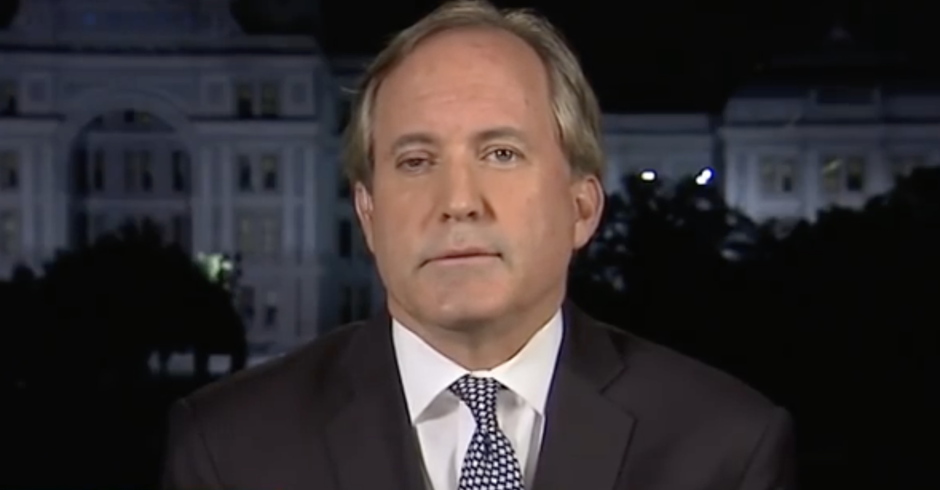
Some cities and counties have passed so-called travel bans aimed at stopping Texans from driving to abortion appointments in other states. Meanwhile, Attorney General Ken Paxton has demanded medical records from at least two out-of-state clinics that provide gender-affirming care to minors.
“This request from the Texas Attorney General is a clear attempt to intimidate providers of gender-affirming care and parents and families seeking that care outside of Texas and other states with bans,” Dr. Izzy Lowell, a Georgia physician who received one such demand letter, said in a statement.
These recent efforts to restrict or scrutinize what Texans do out-of-state raise an important question: Just how far does Texas’ authority over its residents extend?
The question of extraterritoriality — when and whether a state can impose its laws beyond its borders — is largely unresolved, legal experts say. It just hasn’t come before the courts that often. And while the right to travel is well-established in the U.S. Constitution, the local travel bans are enforced through private lawsuits, a legal loophole the U.S. Supreme Court has so far allowed to stand.
When the U.S. Supreme Court allowed states to set their own laws on abortion, it put them on a political crash course with each other. These recent legal maneuvers from conservatives in Texas indicate a willingness to wade into a Constitutional morass the country hasn’t dealt with since the lead-up to the Civil War.
“Slavery is probably the best historical parallel to what we’re seeing now,” said Kermit Roosevelt, a law professor at Penn Carey Law at the University of Pennsylvania. “Obviously, that didn’t end well. Well, it did, because we abolished slavery federally, but it was a tough road.”
Extraterritoriality, Texas-style
In most cases, state laws align pretty well with each other. All states prohibit murder and they all criminalize child abuse. When there’s conflict, it’s usually over wonky things like environmental regulations and what food additives can be used to make candy, and everyone works together to find a common-sense solution.
Even on more controversial issues, like gambling and marijuana laws, states with stricter rules usually just turn a blind eye as their residents flood casinos and dispensaries just over state lines.
“Maybe a state like Wyoming prosecutes someone who bought marijuana in Colorado and came back to Wyoming, but it doesn’t set off a battle where Wyoming is trying to get someone back from Colorado or get evidence from Colorado,” said Darryl Brown, a law professor at the University of Virginia School of Law. “States just haven’t disagreed with each other so sharply that they have come to loggerheads about this.”
Until recently.
When the Supreme Court overturned Roe v. Wade, allowing states to set and enforce their own laws about abortion, it put red and blue states at odds with each other on an extremely hot-button political issue. All states still agree murder is bad. They just don’t all agree on whether abortion is considered murder.
In 1974, just after Roe was decided, the high court ruled in Bigelow v. Virginia that a “state does not acquire power or supervision over the internal affairs of another State merely because the welfare and health of its own citizens may be affected when they travel to that State.”
But in a Columbia Law Review article, legal scholars David Cohen, Greer Donley and Rachel Rebouché note that, in addition to being an old ruling that focused on First Amendment arguments, Biglow relied in part on Roe v. Wade.
“The current U.S. Supreme Court, now that it has eviscerated Roe, could revisit Bigelow’s anti-extraterritoriality principle,” they wrote.
Roosevelt, the Pennsylvania law professor, said if you remove politically heated issues like abortion or gender-affirming care from the equation, it can make sense to let states punish bad actors and protect vulnerable residents anywhere in the country.
“Imagine states have different laws about the degree of violence that parents can inflict on children in order to chastise them,” Roosevelt said. “Is it really OK if a Texas parent takes their child to the state that allows whipping just in order to whip them? I think we’d all agree, probably not.”
But much like disagreements over whether abortion is murder, states now sharply disagree on whether providing a trans child access to puberty blockers and hormone therapy constitutes child abuse. Major medical groups, trans people and LGBTQ+ advocates say such care is lifesaving for kids who face higher rates of suicide attempts and mental health problems than their cisgender peers. But Republicans and others who oppose letting kids access gender-affirming care say medical providers have latched on to a “social contagion” to misguide parents and push life-altering treatments on kids.
In Texas, Gov. Greg Abbott previously ordered the state’s child welfare agency to investigate parents who provide their trans children with gender-affirming care even after lawmakers failed to explicitly add such treatments to the state’s definition of child abuse.
But as Paxton will likely learn with these recent administrative subpoenas to medical providers in Washington and Georgia, nothing requires states to help each other with cross-border investigations. And, in some cases, it’s even prohibited.
Washington is one of 22 states that have passed or enacted “shield laws,” that protect health care workers from extraterritorial investigations. While these laws tend to focus on abortion providers, nine states, including Washington, specifically include protections for gender-affirming care.
“If Texas wants to arrest someone who’s in Washington State, one of their residents, Washington doesn’t have to arrest that person and extradite them back to Texas,” Brown said.
Most notably, many of these shield laws, including the one in Washington, prohibit sharing patients’ confidential information, even if they’re issued a subpoena to do so. Seattle Children’s Hospital, which received one of Paxton’s administrative subpoenas, has sued Texas to protect records of transgender patients.
Karen Loewy, senior counsel and director of constitutional law practice at Lambda Legal, said there is nothing in the law lawmakers passed last session to ban gender-affirming care for minors that regulates what happens outside the state. The letters Paxton sent don’t mention the gender-affirming care ban, but instead came on behalf of a consumer protection investigation, which doesn’t give Paxton jurisdiction to subpoena information from non-Texas entities, Loewy said.
“More than anything it’s designed to scare Texas families,” Loewy said. “This more smacks of efforts to just send a loud and clear message that the Attorney General’s Office is going to do everything — whether in its power or not — to cut off access to care that trans kids in Texas really need.”
Paxton’s office has been silent as to the intent of the letters since they became public in December.
A warning sign
In Georgia, Lowell received Paxtons demand for her patient’s medical information the day it was due. The physician’s mail had been stopped for weeks after an arsonist set fire to QueerMed, her gender-affirming care clinic.
Her lawyers had to negotiate with Paxton’s office to get a one-week extension to review the letter. Lowell ultimately declined to turn over patient information.
Jeff Graham, executive director of the LGBTQ+ advocacy group Georgia Equality, said political rhetoric and misinformation can exacerbate the threats LGBTQ+ people and their medical providers face. Paxton’s demands are a warning sign, even if the attorney general knows they might fail, he said.
“People around the country really should be paying attention to [what happened at QueerMed] because it’s showing the lengths that these politicians are going to strip people from their ability to make medical decisions for themselves and their families,” Graham told The Texas Tribune.
The attorney general’s office has not sought records from any out-of-state abortion clinics, according to a review of its civil investigative demand letters. But conservative legal activist and former Texas Solicitor General Jonathan Mitchell has tried to get abortion funds to hand over records of clients they have helped obtain abortions out-of-state. A federal judge in Austin, in addition to rejecting Mitchell’s request for the records, has ruled that abortion funds are likely safe from prosecution if they help Texans pay for abortions elsewhere.
But this is unlikely to stop conservative efforts to block people from accessing certain health care outside Texas.
“There’s a lot of states with laws that seem to permit them to go after out-of-state conduct, and a lot of political activists or politicians saying that we really need to do this,” said Roosevelt. “But I’m not aware of states actually doing the most aggressive thing, which is trying to prosecute an abortion provider or health care provider in another state.”
Local travel bans
Four counties and a handful of cities in Texas have passed local ordinances that prohibit using county roads to transport someone out of state to get an abortion.
These ordinances are enforced through private lawsuits instead of by government entities, the same novel legal mechanism that Texas used to ban abortions after about six weeks of pregnancy in 2021. The Supreme Court, while expressing frustration with the constitutional workaround, allowed the six-week abortion ban to stand, saying the private enforcement mechanism didn’t allow for pre-enforcement review.
In general, it’s much easier for a state or local government to regulate what happens within its borders than to try to enforce their laws in other places. But efforts to restrict travel, even within a state or county, likely will run afoul of the constitutional right to travel, which Noah Smith-Drelich, a law professor at the Chicago-Kent College of Law, said is better thought of as several intersecting rights.
“The constitutional provisions that protect your right to travel from, for example, Texas to Washington, include some provisions that may not protect your right to travel within the state of Texas,” Smith-Drelich said. “I think it’s a reflection of just how important, how fundamental travel is, that there are multiple different constitutional protections that say you can’t limit travel without a really good reason.”
The Supreme Court has not often been called to litigate the right to travel, Smith-Drelich said, but it’s an example judges often point to in other decisions as a fundamental right that’s not up for debate. It’s also historically been an ideologically neutral legal question.
“I don’t know that it’d be optimistic about challenging Texas’ restrictions on travel, in service of preventing abortion outside of Texas, in front of the 5th Circuit,” Smith-Drelich said, referring to the conservative court that hears federal appeals originating in Texas. “But I wouldn’t be as pessimistic about that as I would probably most efforts to limit Texas’s anti-abortion efforts.”
And, much like Paxton’s letters seeking out-of-state medical records, these bans don’t have to be enforced to incite fear among health care providers or abortion seekers and those helping them cross state lines.
History lessons
For legal scholars and historians, these efforts are a little too reminiscent of another period in U.S. history, when individual states’ laws began to sharply diverge over a highly contentious issue.
“States have very different policies on lots of different stuff, but they tend to just keep those policies within their own borders,” Brown said. “What’s unusual here and what was unusual about slavery is that states were extending their own policy or enforcing their own policy in states that didn’t agree with them.”
In the 1800s, as some states abolished slavery and others clung to it more tightly, free states began passing personal liberty laws saying they would not cooperate with efforts to return escaped enslaved people to their enslavers.
Slave states, especially border states, pushed for and won the federal Fugitive Slave Act of 1850, which required free states to work with the federal government to return enslaved people to their enslavers in the South. This helped tip the nation into the Civil War.
Reconstruction, the period of putting the nation back together after the Civil War, marked a shift in the balance of power between states and the federal government.
“States lost some of what you might have described as their sovereignty or independence through that,” said Smith-Drelich. “Part of what we’ve seen through U.S. history is this move to becoming more of a country and less of a confederacy of states, and Reconstruction was a big part of that.”
The 2022 Dobbs decision, allowing states to set their own laws around abortion, in many ways represents a significant reversal of that trend. While both major political parties are angling to pass a federal law that would either prevent or preserve abortion access, the current status quo all but guarantees increased state-on-state litigation to undermine and frustrate each other’s goals.
As the Civil War demonstrated, these state-level feuds can have ripple effects far beyond the contentious political issue of the day. The American experiment requires states to work together relatively amicably under the auspices of one, overarching federal government. It’s one of the things that makes the United States different from the European Union.
“In order for us to work as a united country, states have to be able to make laws that apply in their own states,” Smith-Drelich said. “And part of that means that they can’t really be making laws apply outside of their own state.”
But it remains to be seen whether the courts will see their way to maintaining that balance of power, especially without much precedent to guide them. And after a decades-long push to reshape the federal court system in the conservative image, especially in Texas, these precedent-setting cases have the potential to radically change certain accepted — but not often litigated — rights.
“Sometimes, I feel like the law is clear enough that the Supreme Court is going to follow it,” Roosevelt said. “But I don’t think the law is very clear here. And abortion is definitely an issue where the justices care intensely. So I think if you want to predict what’s going to happen, you basically have to just look at who’s on court.”
We can’t wait to welcome you to downtown Austin Sept. 5-7 for the 2024 Texas Tribune Festival! Join us at Texas’ breakout politics and policy event as we dig into the 2024 elections, state and national politics, the state of democracy, and so much more. When tickets go on sale this spring, Tribune members will save big. Donate to join or renew today.
This article originally appeared in The Texas Tribune at https://www.texastribune.org/2024/02/09/texas-abortion-transgender-care-outside-state-borders/.
The Texas Tribune is a member-supported, nonpartisan newsroom informing and engaging Texans on state politics and policy. Learn more at texastribune.org.
Enjoy this piece?
… then let us make a small request. The New Civil Rights Movement depends on readers like you to meet our ongoing expenses and continue producing quality progressive journalism. Three Silicon Valley giants consume 70 percent of all online advertising dollars, so we need your help to continue doing what we do.
NCRM is independent. You won’t find mainstream media bias here. From unflinching coverage of religious extremism, to spotlighting efforts to roll back our rights, NCRM continues to speak truth to power. America needs independent voices like NCRM to be sure no one is forgotten.
Every reader contribution, whatever the amount, makes a tremendous difference. Help ensure NCRM remains independent long into the future. Support progressive journalism with a one-time contribution to NCRM, or click here to become a subscriber. Thank you. Click here to donate by check.
 |



U.S. Secretary of State Marco Rubio will travel to Capitol Hill on Tuesday in an effort to head off a potential “revolt” from lawmakers angered by the Trump administration’s decision to attack Iran without notifying Congress — let alone without seeking its authorization — a move critics say violates the U.S. Constitution.
The House and Senate are set to vote this week on resolutions to put guardrails on President Donald Trump‘s ability to use unilateral military force, Politico reports.
Secretary Rubio on Monday said that “Congress can vote on whatever they want. But there’s no law that requires us” to obtain congressional approval before going to war.
“Look, that is fine if they want to take a war powers vote,” Rubio told reporters. “They can do that. They’ve done that. They’ve done that a bunch of times. But there’s no – people keep saying that we have – there’s no law that requires the President to have done anything with regards to this. To begin with, no presidential administration has ever accepted the War Powers Act as constitutional – not Republican presidents, not Democratic presidents.”
READ MORE: FBI Agents Probing Iranian Threats Fired Over Mar-a-Lago Investigation Ties
On Tuesday afternoon, Rubio will be joined by Defense Secretary Pete Hegseth, Chair of the Joint Chiefs of Staff Gen. Dan Caine and CIA Director John Ratcliffe, to brief members of Congress on the President’s military actions in Iran.
Politico adds that “lawmakers on both sides are decrying a lack of details from the administration — including evidence that Iran posed an imminent threat to the U.S. that would necessitate military action.”
Some prominent Democrats blasted Rubio’s claim that there is no law that requires the administration to obtain congressional approval.
“There is a law,” wrote U.S. Rep. Ted Lieu (D-CA). “It’s called the frickin Constitution of the United States.”
But Speaker of the House Mike Johnson pushed back on efforts to put guardrails on the President.
“The idea that we would take the ability of our commander in chief … to finish this job, is a frightening prospect to me,” he said.
READ MORE: White House Fires Back as Right Wing Influencer Fuels MAGA Rift
Image via Reuters

On Saturday, President Donald Trump authorized massive military action against Iran. On Sunday, the Director of the Federal Bureau of Investigation, Kash Patel, put FBI counterintelligence teams on high alert for threats to the homeland, after a Texas gunman killed two Americans and wounded 14 others in an attack the Bureau is investigating as a possible act of terrorism.
Not part of any FBI investigation will be at least a dozen staffers, including agents, who reportedly were fired last week for their roles in Special Counsel Jack Smith’s investigation of President Donald Trump’s possibly unlawful removal, retention, and refusal to return dozens of classified documents and other items from the White House, which he kept at Mar-a-Lago.
“The ouster of at least a dozen staffers from a counterintelligence unit, known as CI-12, which operates out of the Washington Field Office, was ordered by FBI Director Kash Patel, according to four former officials familiar with the dismissals,” The New York Sun reported on Monday in an exclusive. “The dismissals came just days before the start of Operation Epic Fury and, separately, a deadly mass shooting at a bar in Austin, Texas, by a man reportedly wearing a sweatshirt that said, ‘Property of Allah,’ beneath which was a T-shirt that was ’emblazoned with a design similar to the Iranian flag,’ CBS News reported Monday.”
The Sun reported that the CI-12 unit “focuses on media leaks, global espionage, and international threats against America emanating from countries such as Cuba and Iran, former FBI officials tell the Sun.”
“More broadly, CI squads are the lead domestic teams for investigating insider threats and foreign intelligence activity on American soil.”
The FBI’s raid on Mar-a-Lago, which took place on August 8, 2022, came months before Jack Smith was appointed Special Counsel by then-Attorney General Merrick Garland. President Trump called the raid a “travesty of justice.”
During Trump’s first term as president, CI-12 in 2020 “assisted in monitoring potential retaliatory actions by Iranian-backed actors on American soil following a U.S. drone strike near Baghdad International Airport that killed Iran’s Islamic Revolutionary Guard Corps major general Qasem Soleimani.” Trump ordered that operation, according to former FBI officials.
Recently, Director Patel expressed outrage after learning that the FBI, under Smith’s direction, had “secretly obtained his phone records, along with those of Trump aide and current White House chief of staff Susie Wiles, as part of Mr. Smith’s investigations into Mar-a-Lago as well as into January 6.”
In a statement to Reuters, Patel said: “It is outrageous and deeply alarming that the previous FBI leadership secretly subpoenaed my own phone records — along with those of now-White House Chief of Staff Susie Wiles — using flimsy pretexts and burying the entire process in prohibited case files designed to evade all oversight.”
Hours later, the FBI dismissed the dozen staffers and agents.
The Sun noted that those “fired were also believed to have been involved in efforts to obtain phone records of Mr. Patel and Ms. Wiles, according to reports.”
Image via Reuters

The White House was forced to fire back after a prominent conservative influencer and podcaster criticized President Donald Trump‘s various and rapidly-shifting reasons for attacking Iran in a massive and ongoing military exercise that the president and defense chief have called “war.”
Matt Walsh, who hosts his right-wing podcast on The Daily Wire and has four million followers on X, on Monday expressed his confusion with the administration’s talking points.
“So far we’ve heard that although we killed the whole Iranian regime, this was not a regime change war,” he began. “And although we obliterated their nuclear program, we had to do this because of their nuclear program. And although Iran was not planning any attacks on the US, they also might have been, depending on who you ask. And although we are not fighting this war to free the Iranian people, they are now free, or might be, depending on who seizes power, and we have no idea who that will be.”
“The messaging on this thing is,” he said, “to put it mildly, confused.”
READ MORE: ‘Tone Deaf’: An ‘Exhausted’ Trump Ripped for Iran Speech Focused on Ballroom and Drapes
White House Press Secretary Karoline Leavitt responded to Walsh just hours later, saying that Trump on Saturday had “released a statement laying out clear objectives to the American people for Operation Epic Fury.”
According to Leavitt, they include destroying Iran’s missiles and Navy, ensuring Iran’s proxies cannot destabilize the region or the world, stopping them from making and using IEDs, guaranteeing Iran can never have a nuclear weapon, and preventing the Iranian regime from threatening America.
“Simply put,” she wrote, “the terrorist Iranian regime would not say yes to peace.”
“For 47 years, the Iranian regime has actively and intentionally facilitated the killing of Americans while chanting ‘death to America’ and funding other bloodthirsty terrorists seeking to destroy the United States and all of Western Civilization. Prior American leaders were too weak and cowardly to do anything about it. Now, President Donald J. Trump is correcting decades of cowardice and holding those responsible for the deaths of Americans accountable.”
But Politico’s White House bureau chief Dasha Burns noted that Walsh “is among many right wing voices questioning the administration’s actions in Iran.”
READ MORE: Why Drivers Should Brace for a Rapid Gas Price Surge This Week: Expert
“I have heard repeated warnings from Republican sources that the WH needs to do more to get MAGA on side,” she added.
Sean Davis, co-founder of the right-wing website The Federalist, reposted Walsh’s remarks and shared similar ones of his own.
“Is the goal to eliminate the Iranian regime or free the Iranian people or degrade their nuclear capability or degrade the conventional weapons capability or eliminate their regional hegemony or to cut off their oil supply to China or to help Israel or what?” Davis asked. “The lack of any coherent message seems to suggest the lack of any coherent objective.”
Former Trump ally and former U.S. Rep. Marjorie Taylor Greene (R-GA), who months ago broke with Trump, wrote: “And just like that we are no longer a nation divided by left and right, we are now a nation divided be those who want to fight wars for Israel and those who just want peace and to be able to afford their bills and health insurance.”
READ MORE: Trump ‘Throwing Spaghetti at the Wall’ as He Workshops War Goals With Journalists: Report
Image via Reuters

FBI Agents Probing Iranian Threats Fired Over Mar-a-Lago Investigation Ties

‘Tone Deaf’: An ‘Exhausted’ Trump Ripped for Iran Speech Focused on Ballroom and Drapes

White House Fires Back as Right Wing Influencer Fuels MAGA Rift

Why Drivers Should Brace for a Rapid Gas Price Surge This Week: Expert

Rubio Scrambles to Contain Iran War Revolt
Rubio Scrambles to Contain Iran War Revolt
FBI Agents Probing Iranian Threats Fired Over Mar-a-Lago Investigation Ties
White House Fires Back as Right Wing Influencer Fuels MAGA Rift
‘Tone Deaf’: An ‘Exhausted’ Trump Ripped for Iran Speech Focused on Ballroom and Drapes
Why Drivers Should Brace for a Rapid Gas Price Surge This Week: Expert

 News4 days ago
Trump Says ‘I Don’t Like’ That Bill Clinton Was Deposed Over Epstein But ‘They Went After Me a Lot More’

 News4 days ago
Trump Orders Government to Drop Anthropic After AI Company Refuses Pentagon Demands

 News4 days ago
Senate Dems Give Trump Administration 90 Days to Refund Tariffs

 BIGOTS GONNA BIGOT4 days ago
Trans Kansans, ACLU File Lawsuit Against State Invalidating Driver’s Licenses
 News17 hours ago
FBI Agents Probing Iranian Threats Fired Over Mar-a-Lago Investigation Ties
 News21 hours ago
‘Tone Deaf’: An ‘Exhausted’ Trump Ripped for Iran Speech Focused on Ballroom and Drapes
 News19 hours ago
White House Fires Back as Right Wing Influencer Fuels MAGA Rift
 News23 hours ago
Why Drivers Should Brace for a Rapid Gas Price Surge This Week: Expert