
News
Billionaire Harlan Crow Bought Property From Clarence Thomas. The Justice Didn’t Disclose the Deal
ProPublica is a Pulitzer Prize-winning investigative newsroom. Sign up for The Big Story newsletter to receive stories like this one in your inbox.
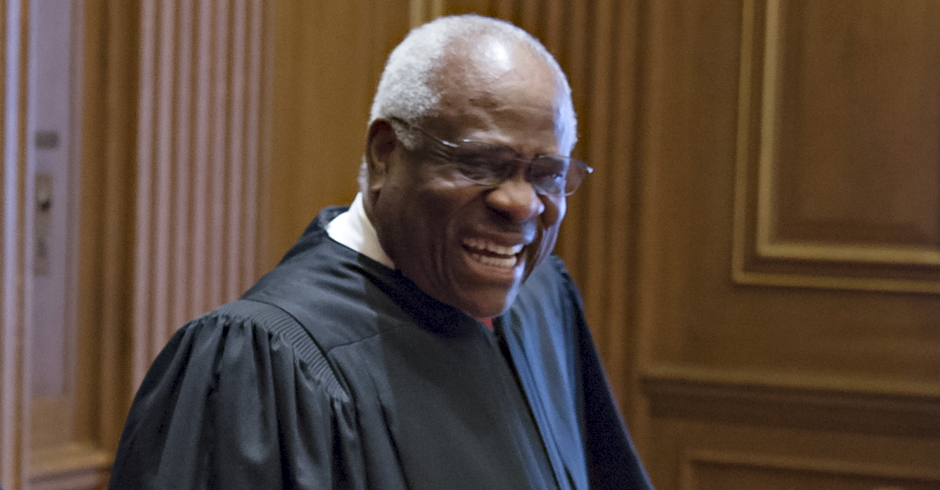
In 2014, one of Texas billionaire Harlan Crow’s companies purchased a string of properties on a quiet residential street in Savannah, Georgia. It wasn’t a marquee acquisition for the real estate magnate, just an old single-story home and two vacant lots down the road. What made it noteworthy were the people on the other side of the deal: Supreme Court Justice Clarence Thomas and his relatives.
The transaction marks the first known instance of money flowing from the Republican megadonor to the Supreme Court justice. The Crow company bought the properties for $133,363 from three co-owners — Thomas, his mother and the family of Thomas’ late brother, according to a state tax document and a deed dated Oct. 15, 2014, filed at the Chatham County courthouse.
The purchase put Crow in an unusual position: He now owned the house where the justice’s elderly mother was living. Soon after the sale was completed, contractors began work on tens of thousands of dollars of improvements on the two-bedroom, one-bathroom home, which looks out onto a patch of orange trees. The renovations included a carport, a repaired roof and a new fence and gates, according to city permit records and blueprints.
A federal disclosure law passed after Watergate requires justices and other officials to disclose the details of most real estate sales over $1,000. Thomas never disclosed his sale of the Savannah properties. That appears to be a violation of the law, four ethics law experts told ProPublica.
The disclosure form Thomas filed for that year also had a space to report the identity of the buyer in any private transaction, such as a real estate deal. That space is blank.
“He needed to report his interest in the sale,” said Virginia Canter, a former government ethics lawyer now at the watchdog group CREW. “Given the role Crow has played in subsidizing the lifestyle of Thomas and his wife, you have to wonder if this was an effort to put cash in their pockets.”
Thomas did not respond to detailed questions for this story.
In a statement, Crow said he purchased Thomas’ mother’s house, where Thomas spent part of his childhood, to preserve it for posterity. “My intention is to one day create a public museum at the Thomas home dedicated to telling the story of our nation’s second black Supreme Court Justice,” he said. “I approached the Thomas family about my desire to maintain this historic site so future generations could learn about the inspiring life of one of our greatest Americans.”
Crow’s statement did not directly address why he also bought two vacant lots from Thomas down the street. But he wrote that “the other lots were later sold to a vetted builder who was committed to improving the quality of the neighborhood and preserving its historical integrity.”
ProPublica also asked Crow about the additions on Thomas’ mother’s house, like the new carport. “Improvements were also made to the Thomas property to preserve its long-term viability and accessibility to the public,” Crow said.
Ethics law experts said Crow’s intentions had no bearing on Thomas’ legal obligation to disclose the sale.
The justice’s failure to report the transaction suggests “Thomas was hiding a financial relationship with Crow,” said Kathleen Clark, a legal ethics expert at Washington University in St. Louis who reviewed years of Thomas’ disclosure filings.
There are a handful of carve-outs in the disclosure law. For example, if someone sells “property used solely as a personal residence of the reporting individual or the individual’s spouse,” they don’t need to report it. Experts said the exemptions clearly did not apply to Thomas’ sale.
The revelation of a direct financial transaction between Thomas and Crow casts their relationship in a new light. ProPublica reported last week that Thomas has accepted luxury travel from Crow virtually every year for decades, including private jet flights, international cruises on the businessman’s superyacht and regular stays at his private resort in the Adirondacks. Crow has long been influential in conservative politics and has spent millions on efforts to shape the law and the judiciary. The story prompted outcry and calls for investigations from Democratic lawmakers.
In response to that reporting, both Thomas and Crow released statements downplaying the significance of the gifts. Thomas also maintained that he wasn’t required to disclose the trips.
“Harlan and Kathy Crow are among our dearest friends,” Thomas wrote. “As friends do, we have joined them on a number of family trips.” Crow told ProPublica that his gifts to Thomas were “no different from the hospitality we have extended to our many other dear friends.”
It’s unclear if Crow paid fair market value for the Thomas properties. Crow also bought several other properties on the street and paid significantly less than his deal with the Thomases. One example: In 2013, he bought a pair of properties on the same block — a vacant lot and a small house — for a total of $40,000.
In his statement, Crow said his company purchased the properties “at market rate based on many factors including the size, quality, and livability of the dwellings.”
He did not respond to requests to provide documentation or details of how he arrived at the price.
Thomas was born in the coastal hamlet of Pin Point, outside Savannah. He later moved to the city, where he spent part of his childhood in his grandfather’s home on East 32nd Street.
“It had hardwood floors, handsome furniture, and an indoor bathroom, and we knew better than to touch anything,” Thomas wrote of the house in his memoir, “My Grandfather’s Son.”
He inherited his stake in that house and two other properties on the block following the death of his grandfather in 1983, according to records on file at the Chatham County courthouse. He shared ownership with his brother and his mother, Leola Williams. In the late 1980s, when Thomas was an official in the George H.W. Bush administration, he listed the addresses of the three properties in a disclosure filing. He reported that he had a one-third interest in them.
Thomas was confirmed to the Supreme Court in 1991. By the early 2000s, he had stopped listing specific addresses of property he owned in his disclosures. But he continued to report holding a one-third interest in what he described as “rental property at ## 1, 2, & 3” in Savannah. He valued his stake in the properties at $15,000 or less.
Two of the houses were torn down around 2010, according to property records and a footnote in Thomas’ annual disclosure archived by Free Law Project.
In 2014, the Thomas family sold the vacant lots and the remaining East 32nd Street house to one of Crow’s companies. The justice signed the paperwork personally. His signature was notarized by an administrator at the Supreme Court, Perry Thompson, who did not respond to a request for comment. (The deed was signed on the 23rd anniversary of Thomas’ Oct. 15 confirmation to the Supreme Court. Crow has a Senate roll call sheet from the confirmation vote in his private library.)
Thomas’ financial disclosure for that year is detailed, listing everything from a “stained glass medallion” he received from Yale to a life insurance policy. But he failed to report his sale to Crow.
Crow purchased the properties through a recently formed Texas company called Savannah Historic Developments LLC. The company shares an address in Dallas with Crow Holdings, the centerpiece of his real estate empire. Its formation documents were signed by Crow Holdings’ general counsel. Business records filed with the Texas secretary of state say Savannah Historic Developments is managed by a Delaware LLC, HRC Family Branch GP, an umbrella company that also covers other Crow assets like his private jet. The Delaware company’s CEO is Harlan Crow.
A Crow Holdings company soon began paying the roughly $1,500 in annual property taxes on Thomas’ mother’s house, according to county tax records. The taxes had previously been paid by Clarence and Ginni Thomas.
Crow still owns Thomas’ mother’s home, which the now-94-year-old continued to live in through at least 2020, according to public records and social media. Two neighbors told ProPublica she still lives there. Crow did not respond to questions about whether he has charged her rent. Soon after Crow purchased the house, an award-winning local architecture firm received permits to begin $36,000 of improvements.
Crow’s purchases seem to have played a role in transforming the block. The billionaire eventually sold most of the other properties he bought to new owners who built upscale modern homes, including the two vacant lots he purchased from Thomas.
Crow also bought the house immediately next door to Thomas’ mother, which was owned by somebody else and had been known for parties and noise, according to property records and W. John Mitchell, former president of a nearby neighborhood association. Soon the house was torn down. “It was an eyesore,” Mitchell said. “One day miraculously all of them were put out of there and they scraped it off the earth.”
“The surrounding properties had fallen into disrepair and needed to be demolished for health and safety reasons,” Crow said in his statement. He added that his company built one new house on the block “and made it available to a local police officer.”
Today, the block is composed of a dwindling number of longtime elderly homeowners and a growing population of young newcomers. The vacant lots that the Thomas family once owned have been replaced by pristine two-story homes. An artisanal coffee shop and a Mediterranean bistro are within walking distance. Down the street, a multicolored pride flag blows in the wind.
Image: Public domain photo by Preston Keres/USDA
Enjoy this piece?
… then let us make a small request. The New Civil Rights Movement depends on readers like you to meet our ongoing expenses and continue producing quality progressive journalism. Three Silicon Valley giants consume 70 percent of all online advertising dollars, so we need your help to continue doing what we do.
NCRM is independent. You won’t find mainstream media bias here. From unflinching coverage of religious extremism, to spotlighting efforts to roll back our rights, NCRM continues to speak truth to power. America needs independent voices like NCRM to be sure no one is forgotten.
Every reader contribution, whatever the amount, makes a tremendous difference. Help ensure NCRM remains independent long into the future. Support progressive journalism with a one-time contribution to NCRM, or click here to become a subscriber. Thank you. Click here to donate by check.
 |





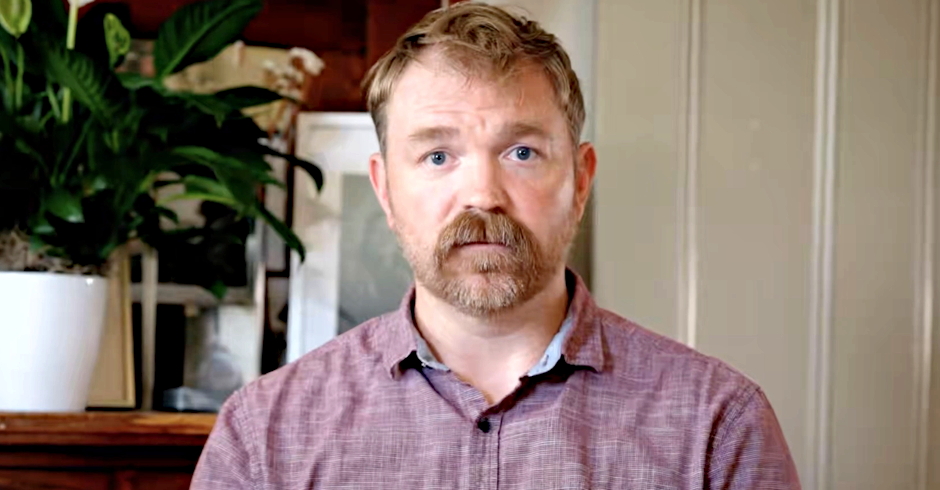
Maine Democratic U.S. Senate nominee Graham Platner is under fire after releasing a video declaring that new allegations against him are false, yet he is “taking time to reflect” on a path forward.
Politico on Monday afternoon reported that a woman who dated Platner, Jenny Racicot, “says he forced her to have sex with him nearly five years ago despite her repeated objections, an allegation Platner denies.”
“Racicot said she had an on-and-off relationship with Platner,” Politico reported, “for more than two years before he entered her rural Maine home uninvited one night in late 2021, deeply intoxicated, and forced himself on her while she repeatedly told him to stop. She said she cut off contact with him after telling him the encounter was not consensual.”
In a video posted to social media eleven minutes after the Politico story dropped, Platner says, “I wanted to directly address the troubling, serious, and false allegations against me. Any accusation of nonconsensual behavior is categorically false.”
He said he and his supporters “were united in a love of Maine, a belief that our politics must change, in a focus on defeating Susan Collins.”
“So, regardless of the inaccuracy of the reporting, but mindful the political reality will inflict, we are taking the time to reflect on the best path forward for the state that I love, the people that I love, the movement I belong to, and the goal of defeating Susan Collins.”
“Those were the goals when we launched this campaign. And they remain my goals today.”
“Throughout it all, you never turned your back on me. And I will not turn my back on you now. Every one of you deserves to see that vision come to fruition and see Susan Collins defeated. And we will use every tool at our disposal to do so.”
The Bulwark’s Tim Miller, a political commentator who served as the communications director for the Jeb Bush 2016 presidential campaign, blasted Platner.
“I’m sorry but ‘we are taking time to reflect on the best path forward’ is not an option on the table,” Miller wrote. “Either it’s false and you campaign with vigor or it’s true and you get out / apologize to everyone you let down.”
Journalist Ryan Grim, commenting on Platner’s video, noted that Platner “strongly suggests he is considering dropping out. Already Troy Jackson and Chellie Pingree, both gubernatorial candidates, are being kicked around in Maine circles as potential replacements.”
Several others, including Puck News’ Peter Hamby, predicted Platner will be dropping out.
Platner had postponed several campaign events before the Politico story was published.
— Graham Platner for Senate (@grahamformaine) July 6, 2026

President Donald Trump is facing backlash after posting a video of children — including showing their unblurred faces — graduating from kindergarten, with some of the girls purportedly wearing hijabs.
“President Trump posted a captionless video of graduating kindergarteners on Truth Social on Monday, goading his supporters into verbally attacking little children simply for being Muslim,” The New Republic reported. “The clip is from Gateway STEM Academy, a majority-Black K-8 public charter school in St. Paul, Minnesota. It shows about 21 children in caps and gowns on stage singing a song together. Most of the girls are wearing hijabs.”
The original post of the video which Trump reposted reads: “Public school in St. Paul, Minnesota. Every girl is in a hijab … in kindergarten.”
Trump did not add any comments. TNR called the post “Islamophobic, weird, and creepy,” while noting that the comments section of Trump’s post was filled with calls “by racist, xenophobic MAGA supporters” to “deport the children and ban hijabs.”
TNR also noted that it “should come as no surprise that Trump isn’t above attacking children who just learned how to read, but this post is still particularly discomforting—and will certainly contribute to the already potent level of anti-Muslim sentiment in the U.S. and in Minnesota.”
Critics blasted Trump.
“There is something deeply unsettling about the president of the United States—the most powerful person in the world—going after kindergarten schoolchildren in Minnesota because they wore hijabs, as Trump has done this morning on his website,” The Bulwark’s Sam Stein wrote.
One social media commentator wrote, “Trump posted an unblurred video of more than a dozen Muslim kindergartners to Truth Social, exposing the children’s faces while targeting them for their religion.”
Another added, “Trump is a bigot. The president took to Truth Social to attack kindergarteners in hijabs. These are little kids. The president isn’t just a bigot, he’s also a coward.”
The original video was posted to the X social media platform in June.
U.S. Rep. Nancy Mace (R-SC) at the time commented, “If you are in a public school in America, you should be speaking english.”
Image via Reuters

President Donald Trump’s apparent efforts to delay releasing the $5.8 million civil judgment to E. Jean Carroll are being met with a warning by the journalist’s legal team, who suggest there could be a legal maneuver for Trump to employ to forgo paying the judgment in either of the two cases he lost.
According to The Guardian, on July 4, U.S. District Judge Lewis Kaplan ordered Trump to release the $5.8 million judgment, which is in escrow, to Carroll by this coming Tuesday — or explain why he would not do so.
Carroll’s attorneys think Trump may be trying to buy time to mount another legal strategy, telling the judge that Trump’s request for an extension “appears to be little more than yet another play for time.”
“The case is separate from Trump’s appeal of a Manhattan civil jury’s 2024 award of $83.3m to Carroll for defamation,” The Guardian explains. “But her lawyers have suggested a legal scenario in which the president might seek to conjoin the cases and further delay payment of both.”
Carroll’s attorney Roberta Kaplan (no relation to the judge) wrote, “We can only assume that defendant is seeking … to buy time so he can try to concoct some new basis to put off paying plaintiff presumably in connection with his forthcoming petition and motion for a rehearing.”
Trump’s former attorney, Justin Smith, in one of his final acts, wrote to the Supreme Court suggesting that his client would be appealing the $83.3 million civil judgment.
Smith argued that the Supreme Court “may wish to consider the petitions together,” given they involve the same parties.
The larger judgment case involves possible questions of presidential immunity, and that has Carroll’s attorneys concerned.
“A conjoined case, Carroll’s lawyers fear, could result in both judgments being wiped out,” The Guardian reports.
The president has also made clear he is no fan of Judge Kaplan, after the jurist made several rulings that “angered” Trump.
“What else can you expect from a Trump Hating, Clinton appointed judge, who went out of his way to make sure that the result was as negative as it could possible be,” Trump wrote on Truth Social in 2023, “speaking to, and in control of, a jury from an anti-Trump area which is probably the worst place in the US for me to get a fair ‘trial’.”
Image via Reuters

Platner Scorched Over ‘Taking Time’ Video After New Accusation

Trump Sparks Fury Online After Posting Unblurred Video of Muslim Kindergartners in Hijabs

One Legal Maneuver Threatens to Undo Everything E. Jean Carroll Won

Inside the Group Helping MAGA Voters Walk Away — And What Finally Pushed Them