
CORRUPTION
‘Did Not Further Investigate’: FBI Director Reveals Trump White House Was in Charge of FBI’s Tips About Brett Kavanaugh
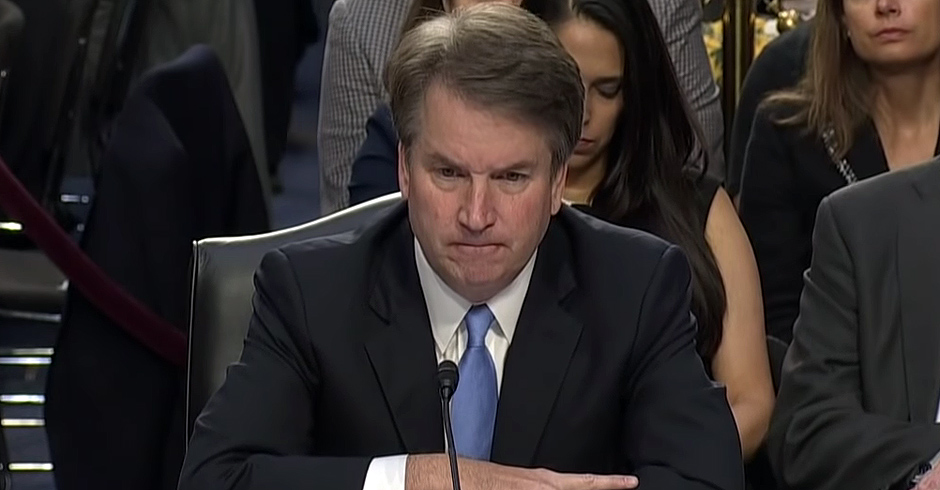
FBI Director Chris Wray admitted in a Senate hearing on Thursday that the FBI forwarded to the White House the hundreds of tips it received about Brett Kavanaugh in the fall of 2018, during his Supreme Court confirmation process, but did not first investigate those tips. Kavanaugh had been credibly accused of sexual misconduct by three women, and those accusations threatened to derail his confirmation.
The revelation came as the FBI Director was questioned by Senator Sheldon Whitehouse during a Judiciary Committee hearing, and was forced to admit that the Democratic Senator from Rhode Island was “correct” when he said the FBI “did not further investigate” the tips it received “that related to Kavanaugh” and were forwarded to the White House.
After multiple women accused then-Judge Kavanaugh of sexual misconduct during his confirmation process the Judiciary Committee agreed to temporarily halt its confirmation hearings until a supplemental FBI background investigation could be conducted.
READ MORE: Brett Kavanaugh Caught Lying in SCOTUS Opinion Against Voting Access During the Pandemic: Report
On Thursday Senator Whitehouse asked Wray, “is it true that after Kavanaugh related tips were separated from other tips, they were forwarded to White House counsel without investigation?”
Wray appeared to try to circumvent the direct question.
“I apologize in advance that it’s been frustrating for you,” Wray began. “We’ve tried to be clear about our process,” he claimed.
Sen. Whitehouse interjected, asking him to just “answer the question.”
“So when it comes to the tip line, we wanted to make sure the White House had all the information we had, so when the hundreds of calls started coming it, we gathered those up, reviewed them and provided them to the White House,” Wray explained before Whitehouse interrupted.
“Without investigation?” he asked, to clarify.
READ MORE: Watch: Ted Cruz Slams His Boot on the Desk in Senate Hearing With FBI Director Wray
“We reviewed them and then provided them to the White House,” Wray said.
There is no indication the White House was equipped or prepared to investigate the hundreds of tips, something the American public was told the FBI would be doing.
“You reviewed them for the purposes of separating from tip line traffic but did not further investigate the ones that related to Kavanaugh, correct?” Whitehouse asked.
“Correct,” Wray confirmed.
Wray also confirmed, as Whitehouse said, that “the FBI took direction from the White House as to whom the FBI would question.”
“So it is true,” Wray admitted.
There was no confirmation from Wray that any of the tips were investigated.
Reporting on the exchange between Wray and Whitehouse, Esquire’s Charles Pierce wrote, “the second background investigation into Kavanaugh was a White House-directed bag job of no value whatsoever.”
Snopes on Thursday also confirmed that the “administration of former U.S. President Donald Trump directed the one-week, follow-up background investigation of Brett Kavanaugh in 2018, according to sworn testimony from U.S. Federal Bureau of Investigation Director Christopher Wray.”
The Trump White House, Wray suggested, was in charge of deciding which tips about its own Supreme Court justice nominee, Brett Kavanaugh, the Bureau would be allowed to investigate.
Senator Whitehouse on Twitter later Thursday announced: “Wray confirms: Kavanaugh tips from tip line were sent to Trump White House without investigation; and Trump White House directed what witnesses FBI would interview.”
“The White House has found no corroboration of the allegations of sexual misconduct against Supreme Court nominee Brett Kavanaugh after examining interview reports from the FBI’s latest probe into the judge’s background,” The Wall Street Journal reported on October 4, 2018.
That report then went to the Senate Judiciary Committee members, who in an 11-10 vote, elected to support the nomination and send it to the full Senate for a vote.
Kavanaugh was confirmed on October 6, 2018, by a 50-48 vote.
There its no indication, based on Director Wray’s remarks Thursday, that the hundreds of tips it received were fully investigated, and there was no discussion of how many, if any, interviews based on those tips were conducted for the supplemental background investigation report on which Kavanaugh’s confirmation was, in part, based.
Watch below or at this link:
Sen. Whitehouse grills Director Wray’s about how the FBI handled its sham investigation into Brett Kavanaugh during his confirmation process pic.twitter.com/IrfFrbYQEO
— Aaron Rupar (@atrupar) August 4, 2022
Enjoy this piece?
… then let us make a small request. The New Civil Rights Movement depends on readers like you to meet our ongoing expenses and continue producing quality progressive journalism. Three Silicon Valley giants consume 70 percent of all online advertising dollars, so we need your help to continue doing what we do.
NCRM is independent. You won’t find mainstream media bias here. From unflinching coverage of religious extremism, to spotlighting efforts to roll back our rights, NCRM continues to speak truth to power. America needs independent voices like NCRM to be sure no one is forgotten.
Every reader contribution, whatever the amount, makes a tremendous difference. Help ensure NCRM remains independent long into the future. Support progressive journalism with a one-time contribution to NCRM, or click here to become a subscriber. Thank you. Click here to donate by check.
 |

CORRUPTION
‘My Friends Will Get Hurt’: MTG Says Trump Told Her Why He Doesn’t Want to Reveal Epstein Conspirators’ Names

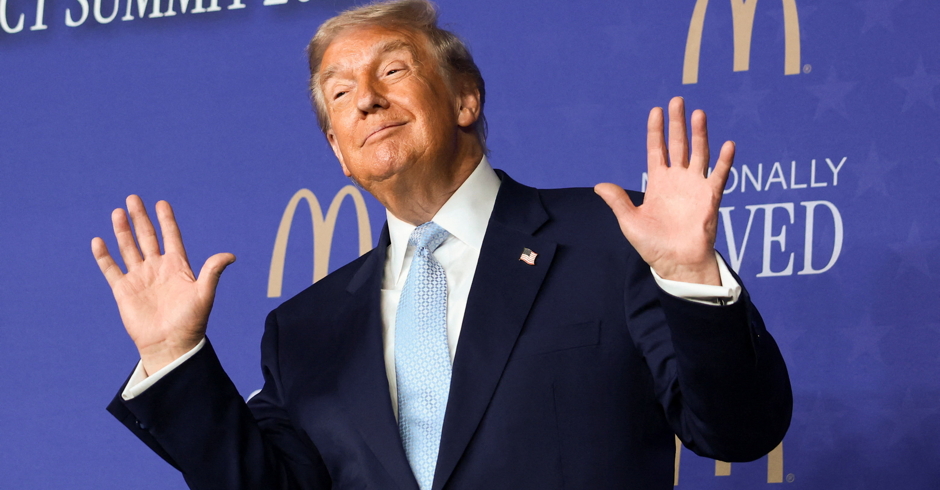
Rep. Marjorie Taylor Greene (R-GA) said that President Donald Trump was reticent to reveal the identities of any of the men accused of abusing children in the Epstein files was because “My friends will get hurt.”
Greene made the allegation in a new interview with The New York Times published Monday morning. She said that Trump told her the reason while on a call after a press conference where Greene said she may expose the names of some of those listed in the files related to disgraced financier and convicted sex criminal Jeffrey Epstein.
Trump had called Greene in her office, and a staff member told the Times that the entire office could hear the president shouting at Greene over a speakerphone. The article alleges that she was confused why Trump was so upset, and her question led to the remark.
READ MORE: DOJ Issues ‘Bizarre’ Disclaimer Defending Trump in Latest Epstein Files Dump
Greene also alleges that she asked Trump to invite some of Epstein’s victims to the White House, but he balked at the suggestion. Trump reportedly told her that the women abused by Epstein hadn’t done anything to warrant a White House invitation. Greene says this is the last time she talked with the president.
She says the outburst blindsided her as previously she had believed Trump’s assertions that he was not in the Epstein files.
“The story to me was that I’d seen pictures of Epstein with all these people. And Trump is just one of several. And then, for me, I’d seen that Bill Clinton is on the flight logs for his plane like 20-something times. So, for people like me, it wasn’t suspicious. And then we’d heard the general stories of how Epstein used to be a member of Mar-a-Lago, but Trump kicked him out. Why would I think he’s done anything wrong, right?” Greene told the Times about her beliefs prior to the phone call.
Though Greene was formerly a staunch ally of Trump, her interest in the Epstein files caused Trump to turn on her. She joined with Reps. Thomas Massie (R-KY) and Ro Khanna (D-CA) to force a House vote compelling the Department of Justice to release all of its files on the Epstein case, with the only redactions to protect victims’ names.
The bill ultimately passed both House and Senate and was signed by Trump, giving the DOJ a December 19 deadline to release the information, But when the date rolled around, only a portion of the files were released. What was available was heavily redacted, with names of co-conspirators and others blacked out.
Shortly after Trump called her a “traitor” on his Truth Social platform over her calls to release the Epstein files, Greene announced that she would be resigning from the House January 5, midway through her term.
Image via Reuters

A new video appears to show ICE agents detain a man in a Walmart parking lot, and then steal his groceries on Christmas Eve.
The video, originally posted to TikTok by the anti-ICE organization People Over Papers on Christmas Day went viral across platforms. The account @LongTimeHistory shared the clip on X, where it received over 1.5 million views.
ICE detain father shopping on Christmas Eve—then steal his family's groceries.
3 agents divvy up his already bought food—taking what they want for themselves.
"Can I just get wife's number to call and let her know?" woman asks.
"No, guess he should've complied," agent says.… pic.twitter.com/Z202WqA9GG
— LongTime🤓FirstTime👨💻 (@LongTimeHistory) December 25, 2025
The incident took place at a Walmart parking lot in Yakima, Washington, about two hours away from Seattle. In the video, ICE agents appear to arrest and detain a man. The woman recording the video asks the man repeatedly for his name and phone number so she can let his family know what’s happened. He identifies himself as Emilio Moreno before he’s put in an unmarked ICE vehicle.
READ MORE: Sotomayor Slams SCOTUS Over Ruling ‘Declaring All Latinos Fair Game to Be Seized’ by ICE
The woman then asks one of the ICE agents for the man’s number. He refuses the request, telling her Moreno will be allowed to call his family from the facility.
“No, you don’t. You didn’t let my husband call. He’s in f*ckin’ Mexico right now,” she replies.
The agent then accuses her husband of fighting back—which she says he wasn’t. She asks the agent if he was the one who arrested her husband, and he confirms he is. While this conversation is going on, other ICE agents can be seen removing things from Moreno’s shopping cart; though it is unclear where the agents are placing the purchased food, @LongTimeHistory alleges they took the groceries for themselves.
The video was shot by volunteers documenting ICE activity in parking lots for Walmart and WinCo stores, according to the Yakima Herald. One of the activists, Ezequiel Morfin Jr., a board member of the activist organization Latino Votes, said that he was nearly run over in the Walmart parking lot.
“Our main goal today was that someone does not have to get picked up and separated from their families on Christmas Eve,” Morfin told the Herald.
“Are these guys Christians? Do they believe in God, or are they Christian Nationalists?” Morfin added. “Couldn’t they just pause for a day or two?”
CORRUPTION
Despite Jeffrey Epstein ‘Hoax’ Comments, Speaker Claims Trump ‘Wants Everything To Come Out’

In an attempt to walk back his previous claim that President Donald Trump had been an FBI informant in the case against sex offender Jeffrey Epstein, Speaker of the House Mike Johnson (R-La.) said that Trump wants to see all the files released. This runs counter to many statements from Trump calling the files’ release “foolish” and that the files themselves are a “hoax.”
On Friday, video of Johnson telling CNN’s Manu Raju that Trump had been an FBI informant in the Epstein case went viral. Over the weekend, Johnson’s office released a statement clarifying that he meant Trump “was the only one more than a decade ago willing to help prosecutors expose Epstein for being a disgusting child predator.”
Mike Johnson claims that his comments about Trump being an FBI informant to take down Epstein have been “common knowledge for a long time”
(This is a lie) pic.twitter.com/SRBV6SJwhR
— Aaron Rupar (@atrupar) September 8, 2025
In a new video, Raju asks Johnson again about the claim. Though Johnson said he didn’t know if he “used the right terminology,” the fact that Trump was willing to assist prosecutors and had previously ejected Epstein from Mar-a-Lago was “common knowledge.” Raju asked if Trump had been “asked to wear a wire,” but Johnson said he had no knowledge of that, only that Trump “was helpful in trying to get Epstein for law enforcement.”
READ MORE: Trump Launches Bizarre Epstein Files ‘Scam’ Rant When Asked About Russiagate
“The President and I have talked about the Epstein evils many times. He’s disgusted by it as everybody else. He has long had a history of acknowledging that, and he has said repeatedly he wants everything to come out, all credible information, everything for the American public to decide,” Johnson added.
Despite Johnson’s statement, Trump has had varied reactions to the Epstein files. While many in his orbit said his administration would release the Epstein files in full during his 2024 campaign, Trump himself was less keen on the idea, according to Time. While Trump suggested he may release the files, he also warned of inaccuracies in the data.
In a June 2, 2004 appearance on Fox & Friends, Trump said, “I guess I would [declassify the Epstein files. I think that less so, because you don’t know—you don’t want to affect people’s lives if there’s phony stuff in there, because there’s a lot of phony stuff in that whole world. But I think I would.” A few months later, Trump told Lex Fridman that he’d “certainly take a look” at releasing the client list.
On the other hand, Vice President JD Vance, during the campaign told comedian and podcaster Theo Von, “Seriously, we need to release the Epstein list. That is an important thing.” FBI Director Kash Patel also repeatedly called for “ALL of it to be released” during the campaign. Former advisor Elon Musk called for Trump to beat former Vice President Kamala Harris, because if he won “that Epstein client list is going to become public. And some of those billionaires behind Kamala are terrified of that outcome.”
Trump’s own son also demanded the release of the client list during the campaign.
“Everyone knows Bill Clinton was on Jeffrey Epstein’s plane and island a lot. Literally no one is at all surprised that he’s all over the release. What we want to know is ALL THE OTHER NAMES that the government has been hiding & running cover for. That will actually be revealing!” Donald Trump Jr. wrote on X (formerly Twitter) in January 2024.
But after Trump’s election, his administration released a portion of the Epstein files—though most of the files released had already been publicly available. Trump had also dismissed calls from fellow Republicans to release the rest of the files.
“Their new SCAM is what we will forever call the Jeffrey Epstein Hoax, and my PAST supporters have bought into this ‘bullsh*t,’ hook, line, and sinker,” he wrote on Truth Social this July.
Around the same time, he called Republicans still interested in the Epstein files “former supporters” who had been “duped by the Democrats.”
On Monday, Politico reported that the House Oversight Committee had received additional files from the Epstein estate. The committee is led by James Comer (R-Ky.). It is yet unclear what from these latest files will be released publicly and when.
Comer’s fellow Kentucky Republican, Rep. Thomas Massie, has been behind a push to compel the Department of Justice to release all information on Epstein publicly. Massie and Rep. Ro Khanna (D-Ca.) say they have the votes to force the DOJ to release the information.
Image via Reuters

Conservative Talk Radio Host’s Brutal New Label for Trump: ‘Clown’

Conservative Insider Throws Cold Water on GOP’s Midterm Confidence

What Democratic Voters Actually Want

Letter From Deep Red Florida Torches ‘Low Self-Esteem’ MAGA Voters

Conservative Columnist Torches Trump ‘Cultists’ Over Their ‘Two-Step Around Reality’
Conservative Columnist Torches Trump ‘Cultists’ Over Their ‘Two-Step Around Reality’
Letter From Deep Red Florida Torches ‘Low Self-Esteem’ MAGA Voters
Conservative Insider Throws Cold Water on GOP’s Midterm Confidence
Conservative Talk Radio Host’s Brutal New Label for Trump: ‘Clown’
What Democratic Voters Actually Want

 News1 day ago
Helicopter Circles as Gloved Officers Test Grass Over Apparent ?86 47? Mall Message

 News4 days ago
Letter From Deep Red Trump Country Blasts President as ‘Low-IQ Idiot’

 News3 days ago
Hard-Right Groups Expanded Power Across the Trump Administration in 2025: Report
 News4 days ago
Democrats Are Bleeding Voters in Dozens of Swing Districts: Report

 News2 days ago
Johnson Scrambles to Defend Trump’s ‘I Love the Inflation’ Remark — Critics Don’t Buy It
 News4 days ago
CNN Fact-Checker Scorches Trump Over the Price of Gas
 News3 days ago
GOP Leader Skips Trump’s Bill Signing—Then Pins Three-Year High Inflation on His Iran War

 News3 days ago
‘Hated and Alone’: Steve Schmidt Scorches Trump Ahead of His 80th Birthday