News
FBI to Investigate if GOP Operatives Offered to Pay Women to Fabricate Sexual Misconduct Lies About Mueller
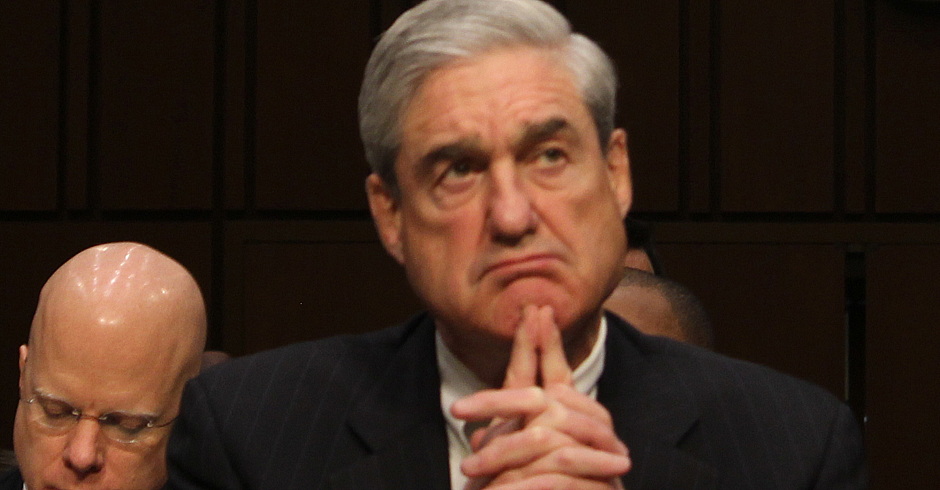
The FBI has been asked by special counsel Robert Mueller’s office to look into whether a group of Republican operatives has been offering women money to fabricate stories of sexual misconduct by the former FBI director.
As The Atlantic’s Natasha Bertrand reports, a spokesman for Mueller confirmed on Tuesday that the office recently referred a case to the FBI that involves right-wing activist Jack Burkman allegedly offering to pay women $20,000 each to make up false stories about the special counsel harassing them sexually.
Mueller’s office was alerted to the potential scheme by several journalists who said that a woman had told them that Burkman offered to pay her in exchange for bogus Mueller dirt.
“[He] offered to pay off all of my credit card debt, plus bring me a check for $20,000 if I would do one thing,” the woman told reporters in an email obtained by Bertrand. “He said (and I will never forget exactly what it was) ‘I want you to make accusations of sexual misconduct and workplace harassment against Robert Mueller, and I want you to sign a sworn affidavit to that effect.”
Burkman himself this week teased that he was going to drop a scandal on Mueller, when he promised on Thursday to “reveal the first of Special Counsel Robert Mueller’s sex assault victims.”
Some sad news. On Thursday, November 1, at the Rosslyn
Holiday Inn at noon, we will reveal the first of Special Counsel Robert
Mueller’s sex assault victims. I applaud the courage and dignity and
grace and strength of my client. pic.twitter.com/wZVQeHD45r— Jack Burkman (@Jack_Burkman) October 30, 2018
Image by Medill DC via Flickr and a CC license
Enjoy this piece?
… then let us make a small request. The New Civil Rights Movement depends on readers like you to meet our ongoing expenses and continue producing quality progressive journalism. Three Silicon Valley giants consume 70 percent of all online advertising dollars, so we need your help to continue doing what we do.
NCRM is independent. You won’t find mainstream media bias here. From unflinching coverage of religious extremism, to spotlighting efforts to roll back our rights, NCRM continues to speak truth to power. America needs independent voices like NCRM to be sure no one is forgotten.
Every reader contribution, whatever the amount, makes a tremendous difference. Help ensure NCRM remains independent long into the future. Support progressive journalism with a one-time contribution to NCRM, or click here to become a subscriber. Thank you. Click here to donate by check.
 |




Iran is using America’s playbook against the Trump administration. It has mastered long-standing strategies the U.S. used against Iran to its own benefit.
That’s according to author Edward Fishman, who writes in a New York Times opinion piece, “Iran has learned the lessons of American foreign policy. It has used the tools at its disposal to exacerbate risk, forcing private actors to become unwitting tools of its statecraft.”
Fishman says, “While the Trump administration’s war aims have vacillated between regime change, denuclearization and military degradation, it now has one overriding objective: reopening the strait.”
Iran appears to hold all the cards there.
Closing the Strait of Hormuz, analysts believed, “would require Iran to lay thousands of sea mines and render the strait physically impassable,” making it an unlikely move — especially as Iran also relies on the strait for shipping.
READ MORE: ‘Blank Check’: Trump’s Board of Peace to Get $1.25 Billion From State Department
But Iran, using America’s strategies, “has shown it can disrupt the strait at far lower cost.”
How?
Target just a small number of ships, and let others realize there is a possible threat — effectively shutting down traffic on the Strait.
Fishman explains that this is the same strategy the U.S. used against Iran for decades: threaten international banks to break with Tehran, sanctioning only a small number to convey a broader message.
“By threatening to cut off foreign banks from the dollar unless they severed ties with Iran, they effectively isolated the country from the international financial system,” Fishman explains. “The United States rarely had to follow through on its threats. In a strategy one U.S. official described as ‘killing the chicken to scare the monkeys,’ Washington deployed these so-called secondary sanctions sparingly. On the few occasions they were applied, everyone else got the message. Sanctioning a single Chinese bank was enough to shift the risk tolerance of the rest.”
What happens if other countries adapt this approach?
“If the world deals with the United States by fighting back, rather than negotiating,” Fishman writes, “stability will be harder to achieve — and more costly once won.”
READ MORE: Trump Unleashes Unhinged Early Morning Tirade Targeting Enemies and Allies
Image via Reuters

President Donald Trump’s Board of Peace will be receiving $1.25 billion from the U.S. State Department, taxpayer funds that had been designated for international disasters and peacekeeping, Semafor reported in an exclusive.
Trump’s Board of Peace has drawn criticism for its highly centralized structure, under which Trump serves as chairman for life and controls who succeeds him. He also wields unilateral control over the organization’s actions, including where and how it spends its funds.
U.S. Senator Catherine Cortez Masto (D-NV) is introducing legislation that would redirect $1 billion of the $1.25 bill to the Low-Income Home Energy Assistance Program.
“Instead of giving President Trump a $1 billion blank check to fund a ‘Board of Peace’ that has offered no transparency about how it is investing its money, let’s focus on helping American families afford their monthly power bill,” Cortez Masto told Semafor.
READ MORE: Trump Unleashes Unhinged Early Morning Tirade Targeting Enemies and Allies
Trump has pledged the U.S. will provide the Border Patrol of Peace a total of $10 billion.
Trump has sole discretion on which nations are invited to join, and he is requiring a $1 billion payment to the Board of Peace for permanent membership. The president rescinded his invitation to Canada after its prime minister indicated Canada would not pay the $1 billion fee.
According to reports, the organization could be filled with authoritarian leaders, and it is being seen as a possible rival to the United Nations.
“The Board of Peace has had a rough landing,” reported Bloomberg News’ UK political editor Alex Wickham in January, noting that “it’s been criticized by Israel, questioned by Europe and has Russia’s friends celebrating.”
READ MORE: Trump Is So Desperate to End the War He Doesn’t Even Want to Call It One: Columnist
Image via Reuters
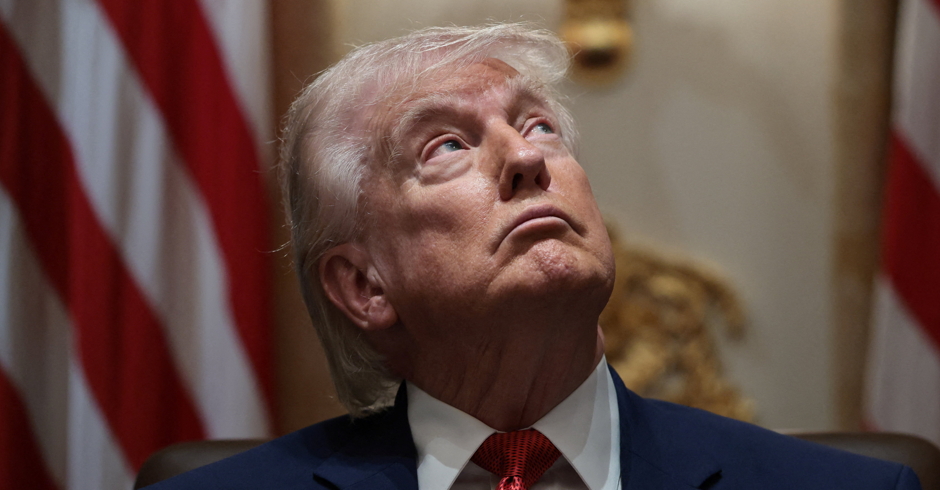
President Donald Trump’s early-morning tirade against Republicans, Democrats, NATO, and Iran revealed a commander in chief seemingly anxious to end his Iran war — which he now wants to recast as a “military operation” — even as he insisted the Middle Eastern nation is “begging” for a deal, one he warned may not come.
“Even Trump, it seems, may be losing patience with the war he started,” writes Bill Kristol at The Bulwark, suggesting that he “may be looking for an off ramp.”
“The Wall Street Journal reported last night that Trump ‘has told associates in recent days that he wants to avoid a protracted war in Iran and that he hopes to bring the conflict to an end in the coming weeks’ because it’s ‘distracting from his other priorities,'” Kristol noted.
While Trump has indicated that he is in negotiations with Iran — which they have at times denied — he has threatened to continue, and even ramp up his attacks, as he sends more troops to the area.
Kristol noted that Trump “may now be dramatically expanding” the war with troops on the ground.
READ MORE: Trump Unleashes Unhinged Early Morning Tirade Targeting Enemies and Allies
“Republicans on the Hill are frustrated,” saying that they’re not getting enough answers, Kristol continued, while noting that “they’re unwilling to act. Which means this is not just Trump’s war. It is the GOP’s war.”
But, “Trump and some Republicans don’t want to call it a war,” Kristol observed. “Trump said last night that he’s avoiding describing the conflict as a ‘war’ because Congress hasn’t authorized it.”
“I won’t use the word ‘war’ because they say, if you use the word ‘war,’ that’s maybe not a good thing to do,” Trump said. “They don’t like the word ‘war,’ because you’re supposed to get approval, so I’ll use the word ‘military operation,’ which is what it really is.”
Kristol added that “in his same speech last night Trump did use the word ‘war,’ saying, ‘The war essentially ended a few days after we went in.’ On Tuesday, Trump had pointed out that ‘people don’t like me using the word ‘war,’ so I won’t, but the Democrats call it a war.'”
READ MORE: The GOP’s Secret Weapon? A ‘Known Unknown’ That Could Swing the Midterms: Columnist
Image via Reuters

Trump Unleashes Unhinged Early Morning Tirade Targeting Enemies and Allies

Trump Is So Desperate to End the War He Doesn’t Even Want to Call It One: Columnist

‘Blank Check’: Trump’s Board of Peace to Get $1.25 Billion From State Department

How Iran Hoodwinked Trump With America’s Own Strategies: Columnist
How Iran Hoodwinked Trump With America’s Own Strategies: Columnist
‘Blank Check’: Trump’s Board of Peace to Get $1.25 Billion From State Department
Trump Is So Desperate to End the War He Doesn’t Even Want to Call It One: Columnist
Trump Unleashes Unhinged Early Morning Tirade Targeting Enemies and Allies

The GOP’s Secret Weapon? A ‘Known Unknown’ That Could Swing the Midterms: Columnist
 News2 days ago
‘Big Embarrassment’: Trump Team Mocked After Admitting Lack of Evidence Against Fed Chair
 News3 days ago
Supreme Court Signals ‘Likely’ Defeat Ahead for Trump: Report

 News3 days ago
Trump Makes New Threat After Telling ICE ‘No Masks’ at Airports

 News3 days ago
Trump Now ‘On the Hook’ for TSA Crisis: Report

 News3 days ago
‘Near Collapse’: US Aviation ‘Teetering on the Brink of Failure’ Report Says

 News2 days ago
Trump Taps ‘Alpha Male’ Influencer as New Envoy for American Tourism and Values
 News1 day ago
The GOP’s Secret Weapon? A ‘Known Unknown’ That Could Swing the Midterms: Columnist
 News2 days ago
Donald Trump’s ‘Serious’ War Mistake: Columnist