
News
Anti-LGBTQ Bills Filed in States This Year Rapidly Approaching 400 – Already More Than in All of 2022: ACLU

The American Civil Liberties Union (ACLU) is tracking 385 anti-LGBTQ bills filed by lawmakers across 38 states targeting the vulnerable community on at least seven broad issues including schools and education, healthcare, free speech, access to accurate IDs, public accommodations, weakening of civil rights laws, marriage, and more. The number of anti-LGBTQ bills introduced has more than tripled since mid-January, and far exceeded the total number of bills introduced in all of 2022, which was 278.
Oklahoma has the most anti-LGBTQ bills so far at 35, followed by Missouri (34), Texas (29 bills), Tennessee (26), Iowa (28), Mississippi (24), Indiana. and North Dakota (17 each), South Carolina (16), Kansas, Virginia, and West Virginia (12 each), and Arizona, Florida, and Kentucky (11 each).
The ACLU says its list is updated weekly (although it increased as NCRM was writing this article) and says it only includes bills filed through last Friday, March 3.
“While not all of these bills will become law, they all cause harm for LGBTQ people,” the ACLU notes.
Studies have shown that when an anti-LGBTQ bill is introduced, LGBTQ people, and especially LGBTQ youth, suffer heightened emotional distress.
Not all bills cover only a single issue. For example, in Florida, HB 1421 attacks issues related to health care, public accommodations, and civil rights.
Civil rights attorney and activist Alejandra Caraballo, a Harvard Law School Cyberlaw Clinic instructor who also tracks anti-LGBTQ legislation, says “HB 1421 not only bans care for minors, it will severely limit and disrupt access to care for all trans adults by eliminating most providers and private insurance coverage.”
The new gender affirming care ban in Florida, HB 1421 not only bans care for minors, it will severely limit and disrupt access to care for all trans adults by eliminating most providers and private insurance coverage. https://t.co/YMNiOyyBzm pic.twitter.com/dZw9uv1pHD
— Alejandra Caraballo (@Esqueer_) March 3, 2023
That bill’s sponsor, Florida Republican state Rep. Randy Fine served up his own take on the anti-trans legislation: “The butchering of children will be illegal in Florida, Florida citizens will not be obligated to pay for the sexual mutilation of adults, and those tricked into this evil will have 30 years to sue those who misled them. That’s HB 1421 and I am proud to file it.”
Fine is no stranger to extremism. Last year he issued what appeared to be a threat against President Joe Biden, after the President addressed the nation hours after 19 second, third, and fourth-grade school children and two teachers were massacred in one of the nation’s worst mass shootings. Previously, Fine was once investigated but not prosecuted for cyberintimidation, among other allegations.
Image: BalkansCat/Shutterstock
Enjoy this piece?
… then let us make a small request. The New Civil Rights Movement depends on readers like you to meet our ongoing expenses and continue producing quality progressive journalism. Three Silicon Valley giants consume 70 percent of all online advertising dollars, so we need your help to continue doing what we do.
NCRM is independent. You won’t find mainstream media bias here. From unflinching coverage of religious extremism, to spotlighting efforts to roll back our rights, NCRM continues to speak truth to power. America needs independent voices like NCRM to be sure no one is forgotten.
Every reader contribution, whatever the amount, makes a tremendous difference. Help ensure NCRM remains independent long into the future. Support progressive journalism with a one-time contribution to NCRM, or click here to become a subscriber. Thank you. Click here to donate by check.
 |





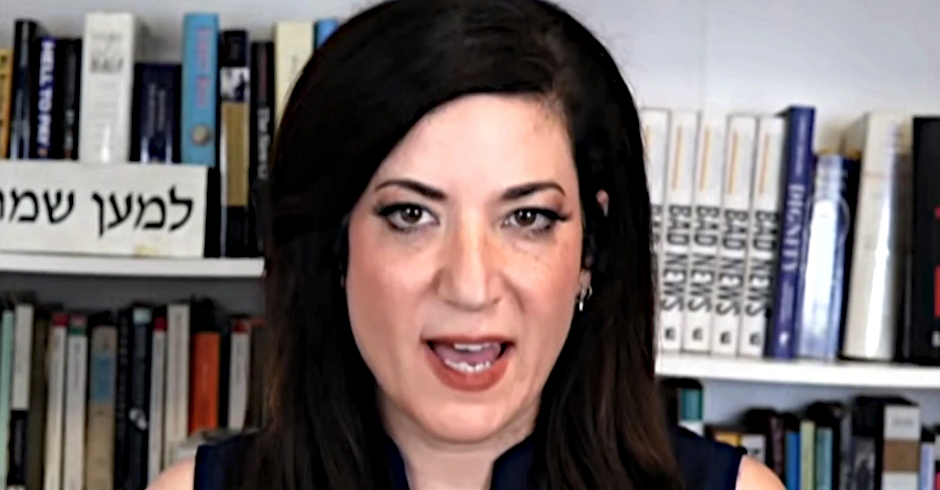
The Trump White House is attacking one of its loyal media figures after she berated Vice President JD Vance over President Donald Trump’s Iran deal.
“The problem is, that it’s an absolutely disastrous deal that has brought us to our knees, weeks before our 250th birthday,” NewsNation host Batya Ungar-Sargon said in a clip she posted to social media, which Mediaite reported.
“This is an utter humiliation of the United States, and everybody knows it,” she continued. “Everybody knows it, but especially Iran knows it. They are celebrating this. They are still calling us the enemy.”
“And while Iran celebrates this and sneers at us for totally capitulating when we had complete military superiority over them,” she said, “JD Vance is out there criticizing Israel, making up fantasies about how it is Israel’s fault, and Israel wants Iran to be a failed state. And if only Israel would lay down its arms and allow Hezbollah to keep attacking it, there would be peace in the Middle East.”
Ungar-Sargon called Vance’s remarks “disgusting,” “utterly deplorable,” and a “complete Tucker Carlsonification of the Vice President of the United States.”
She warned, “if this was a dry run for Vance 2028,” for president, “we sure learned a lot.”
On social media, Ungar-Sargon added: “VP JD Vance just brought the US to its knees with a humiliating deal weeks before our 250th birthday and he has the audacity to blame … Israel! … for the terrible situation we’re in.”
The White House’s Rapid Response team blasted Ungar-Sargon.
“The only humiliation here is Batya desperately begging for an additional brain cell because her failing TV … show is even more irrelevant than the likes of Kaitlan Collins and Fake Tapper,” the White House declared. “Only a moron of her caliber could still doubt President Trump’s leadership.”
In 2024, Ungar-Sargon wrote, “American Jews should vote for Trump because he is the candidate who stands most clearly for the things that have defined us for centuries.”
VP JD Vance just brought the US to its knees with a humiliating deal weeks before our 250th birthday and he has the audacity to blame … Israel! … for the terrible situation we’re in. We’re watching the Tucker Carlsonifcation of our Vice President in real time. pic.twitter.com/WL8BdQu6L7
— Batya Ungar-Sargon (@bungarsargon) June 18, 2026
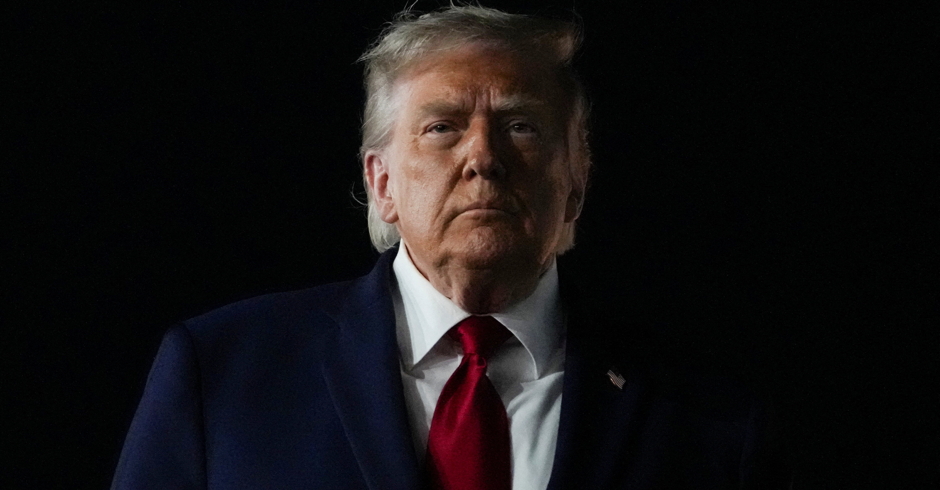
Veteran journalist Jonathan Alter has published a fictitious yet “all-too-plausible” scenario whereby President Donald Trump attempts to overturn the results of the 2026 election — especially in the Senate — which could narrowly move to Democratic control in November. He suggests that it will take two sets of citizens: the general public and former U.S. presidents, among others, to defeat what he sees as the current president’s “slow-motion rolling coup attempt,” which he says is “already underway.”
Writing at Washington Monthly, Alter acknowledges that Democratic control of the House after the November election is likely, while control of the Senate is possible but not the “big blue wave” or “tsunami” he sees in the House.
Calling him a “chaos agent,” Alter explains that Trump’s “fear of impeachment and a Senate trial are making him desperate and more dangerous.”
“It’s easy to miss that a slow-motion rolling coup attempt is already underway, staged by Stephen Miller and, of course, Trump himself,” Alter writes. “When Trump told The New York Times early this year that he regretted not seizing voting machines in 2020, that was a clear signal that he will likely try to do so after the midterms.”
Ultimately, Alter predicts in his war-gamed scenario that democracy will prevail but not before a months-long constitutional crisis.
“The resolution of the crisis came after more than two months of efforts by President Trump to overturn the results of the midterm elections with unfounded accusations of vote fraud,” Alter writes, as if it were January 2027. “His efforts sparked mass protests, which gave him a pretext to invoke emergency powers and interfere in elections that, under the U.S. Constitution, are handled by the states.”
Alter points to several critical events when Trump telegraphed his intentions.
January 6, 2026: “You gotta win the midterms, because if we don’t win the midterms, they’ll find a reason to impeach me,” Trump told Republicans on the fifth anniversary of what some have called his coup attempt.
That same month: “There is one thing. My own morality. My own mind. It’s the only thing that can stop me, and that’s very good,” Trump told The New York Times.
Also that month, he told Reuters, “When you think of it, we shouldn’t even have an election.”
Alter also points to two critical documents that presumably could give Trump broad emergency powers.
One, the National Presidential Security Memorandum (NPSM-7) that, Alter writes, “grants the president broad wartime powers to designate Americans as possible terrorists if the federal government considers them or their sponsors ‘anti-American,’ ‘anti-capitalist,’ ‘anti-Christian’ or ‘hostile to traditional American views on family, religion and morality.'”
The second, Presidential Emergency Action Documents (PEADs), “which were developed during the Eisenhower Administration as a single instructional book in case of a nuclear attack on Washington.”
Alter continues his war-gamed scenario: “With Mr. Trump now running a police state, former presidents, vice presidents, and Supreme Court justices finally came off the sidelines. On December 22, a hastily-organized Committee on Election Integrity issued an open letter in support of certification of the legitimate winners and filed an amicus brief in a case before the U.S. Supreme Court, arguing that the president’s use of NPSM-7 and PEAD powers—intended for nuclear war—was unconstitutional in domestic politics.”
Read the entire article here.
Image via Reuters

Political strategist James Carville has a warning for President Donald Trump: be afraid, because everyone is leaking.
Carville responded to a viewer’s remarks about a recent Maggie Haberman and Jonathan Swan article. The viewer, citing Carville himself, said, “people in the Trump White House are leaking, like, crazy.”
“Don’t trust anybody,” Carville warned. “They got tapes, everybody. They’re — everybody in the administration is s—— all over you, and they’re just getting warmed up.”
“The other effect, come after November, is these people realize that their careers are for all intents and purposes gone,” Carville explained. “No one’s gonna want to hire anybody out of the Trump administration, and the way that you get right with history is start leaking.”
“And you position yourself as the person that tried to tell them,” he warned administration officials. “That’s the only future you have. Leak like a sieve, leak like a broken faucet, leak everywhere.”
“You’re already leaking,” he continued. “Everybody’s leaking on you, everybody’s leaking on everybody else. Trust no one.”
“That’s what, that’s my message to anybody that works in this administration, and if, I’ll give you one piece of advice, Donald Trump, everybody is out for you, even your own people,” Carville said.
“Be scared. Be very afraid.”
It’s unclear which article the viewer was referencing, but Haberman and Swan have a new book about to be released, “Regime Change: Inside the Imperial Presidency of Donald Trump.”
Axios earlier this week reported, “Top White House officials believe New York Times reporters Maggie Haberman and Jonathan Swan obtained audio recordings of Situation Room meetings for their forthcoming book, ‘Regime Change.'”
“We’re afraid some of our most sensitive conversations were being recorded,” an administration source told Axios. “And we have no idea which ones.”
Axios also noted that it has heard that “President Trump is furious about the blow-by-blow accounts.”
On Thursday, The New York Times reported that Haberman and Swan’s book “reveals a host of details and surprising exchanges as President Trump pushed to drastically expand his power.”
Among them, that the “top echelon of White House officials was fixated on the Jeffrey Epstein scandal,” that “Trump wanted revenge against those he felt had wronged him — even when he couldn’t remember their names,” and that “Trump enjoyed comparisons of his power to that of Mao and Genghis Khan.”
Also, the Times noted, one morning White House Press Secretary Karoline Leavitt found Trump with “a tube of super glue in his hand,” as he “was trying to adorn the marble fireplace mantel with new golden decorations.”
Image via Reuters

Trump Used Vulgar Epithet to Attack His Own Commerce Secretary: Report

Trump White House Turns on ‘Moron’ MAGA Loyalist ‘Begging for an Additional Brain Cell’

Trump Is a ‘Mountain of Degeneracy’ Driving America’s ‘Dignity Crisis’: Steve Schmidt

‘Be Very Afraid’: Carville Warns Trump ‘Everybody Is Out for You’

Veteran Journalist War-Games Trump’s ‘Rolling Coup’ — and How It Fails
Trump White House Turns on ‘Moron’ MAGA Loyalist ‘Begging for an Additional Brain Cell’
Veteran Journalist War-Games Trump’s ‘Rolling Coup’ — and How It Fails
‘Be Very Afraid’: Carville Warns Trump ‘Everybody Is Out for You’
Trump Is a ‘Mountain of Degeneracy’ Driving America’s ‘Dignity Crisis’: Steve Schmidt
Trump Used Vulgar Epithet to Attack His Own Commerce Secretary: Report
 News2 days ago
‘Better Without It’: Trump Now Trashes the Deal He Once Called the Best Ever

 News3 days ago
Activist Minister Slams Regal Movie Theaters for Running War ‘Propaganda’ Before Films
 News3 days ago
Susan Collins Doesn’t Regret Kavanaugh Vote After Roe Repeal: ‘Didn’t Impact Maine’
 News2 days ago
Carville Predicts When Trump Will Resign — and Why

 News1 day ago
Conway: Macron Is Trolling ‘Ignoramus’ Trump at Versailles

 News3 days ago
Josh Hawley Slams Baseball League for Punishing Players Over Anti-Pride Night Demonstration

 CRIME3 days ago
Anti-Black Hate Crimes Per Capita Highest in Pacific Northwest Than Rest of U.S.

 News2 days ago
World Leaders Laugh as Trump Arrives Late to G7 With Odd Excuse: ‘I’m the Boss’