Equality Forum: Legal Panel (Part I): Chewing Over Prop 8
The New Civil Rights Movement’s John Culhane is the official blogger for Equality Forum, Philadelphia’s internationally known and always interesting cavalcade of events that celebrates, informs and provokes on all (or many, anyway) things LGBT. John will be sharing reports daily over the next few days. Read all John’s Equality Forum posts here.Â
You could tell that National Legal Panel had some serious heft: The event (like the National Politics Panel, which followed) was held in the Constitution Center on Friday, and introduced by a public relations/education leader there. And then there was the way the panelists filed in — in single file, from stage right, while being announced like the day’s contestants on Jeopardy!
The credentials and background of the panelists, along with the absurd depth of their knowledge, justified this folderol. Moderator Jennifer Pizer is the Legal Director at the Williams Institute (LGBT research initiative) at UCLA; William Eskridge is a Yale law professor who has written extensively on many issues related to the LGBT community, but perhaps especially about marriage equality; Hayley Gorenberg is the Deputy Director of Lambda Legal and has litigated many high-profile cases; and Janson Wu is a staff attorney for the Gay and Lesbian Legal Defenders (“GLAD”) who has also been successful in cases brought in New England to secure LGBT rights — especially with regard to the vile Defense of Marriage Act.
In fact, the panelists had so much to say that one post can’t do the panel justice. In this Part I, let’s talk about Eskridge’s analysis of the Prop 8 litigation. (Stay tuned for a second post in a day or two.)
Pizer’s effective style was to get each panelist to catch the audience up on recent developments by asking a series of provocative, yet open-ended questions. Eskridge began the discussion by asking us how many thought there’d be full marriage equality in the U.S. within five, then ten, then twenty years. When he moved from ten to twenty years, the “yes” vote jumped from about half to almost all. And, as it turned out, that’s what Eskridge thinks, too. Instead of saying that directly, he used the progress of the Proposition 8 litigation to make his point. He’s hoping for a narrow win that would toss out Prop 8 — and thereby restore marriage equality to California — but leave other anti-equality laws intact.
As we know, Prop 8 is now before the Ninth Circuit court of appeals. The Prop 8 opponents (our side!) have won in both the federal district (trial) court and before a three-judge panel of the Ninth Circuit. Next, the judges are soon to decide whether to rehear the case en banc (in a group of twelve judged), or decline to do so, in which case the matter could be appealed to the U.S. Supreme Court right away. (The Court would not be obligated to hear the case; in that event, the decision by the Ninth Circuit that Prop 8 is unconstitutional would stand).
The most interesting aspect of Eskridge’s presentation was his discussion of the narrow basis on which the Ninth Circuit had decided the case — a basis, it turns out, that Eskridge had advocated in an amicus brief he filed with the court. Instead of asking the appellate court to affirm the lower court’s broad ruling that excluding same-sex couples from marriage is a violation of both their right to equal protection under the law and of the fundamental right to marry, the Eskridge brief, asked the court to rule that Prop 8 is unconstitutional only because it bears a close resemblance to another Supreme Court case, Romer v. Evans. In Romer, the court ruled that an amendment to the Colorado state constitution that prevented localities from providing gays and lesbians with legal protections was a violation of equal protection of the law in the most fundamental way. Eskridge drew three clear parallels between that case and Prop 8:
(1) Voters took away a fundamental right from a discriminated-against minority (before Prop 8, same-sex couples had a right to marry that the California Supreme Court had identified from principles in the state’s constitution);
(2) The rationalizations for Prop 8 sweep too broadly. Let’s put this in terms non-lawyers can understand, by using an example. One of the procreation arguments advanced to justify the measure is that marriage is needed to increase the chances that opposite-sex couples who “accidentally procreate” will stay together. But how is this end served taking away the right of same-sex couples to marry?
(3) The campaigns and the effect of the initiative was to “effect a status denigration†on a particular class — in express defiance of Romer. For example, ads emphasized that school children might now draw the inference that same-sex relationships were just as good as opposite-sex ones. Well, they should, if gays and lesbians are equal citizens. So these ads and the whole tenor of the campaign, then reflected in the vote, was in part to create a sort of forbidden caste system. That’s in defiance of Justice Kennedy’s quote in Romer that “the Constitution neither knows nor tolerates classes among citizens.”
Why pitch your legal tent on such a narrow piece of land? Eskridge, like many, thinks that Justice Anthony Kennedy’ vote will be decisive. And since Kennedy wrote Romer and might be reluctant to issue a ruling that would decide the marriage equality issue once and for all, this laser-focus might make sense.
We’ll see, but probably not too soon. This case probably has another year or two of twists and turns before the last word is spoken.
 Were he born 10,000 years ago, John Culhane would not have survived to adulthood; he has no useful, practical skills. He is a law professor who writes about various and sundry topics, including: disaster compensation; tort law; public health law; literature; science; sports; his own personal life (when he can bear the humanity); and, especially, LGBT rights and issues. He teaches at the Widener University School of Law and is a Senior Fellow at the Thomas Jefferson School of Population Health.
He is also a contributor to Slate Magazine, and writes his own eclectic blog. You can follow him on Facebook and Twitter if you’re blessed with lots of time.
John Culhane lives in the Powelton Village area of Philadelphia with his partner David and their twin daughters, Courtnee and Alexa. Each month, he awaits the third Saturday evening for the neighborhood Wine Club gathering.

Enjoy this piece?
… then let us make a small request. The New Civil Rights Movement depends on readers like you to meet our ongoing expenses and continue producing quality progressive journalism. Three Silicon Valley giants consume 70 percent of all online advertising dollars, so we need your help to continue doing what we do.
NCRM is independent. You won’t find mainstream media bias here. From unflinching coverage of religious extremism, to spotlighting efforts to roll back our rights, NCRM continues to speak truth to power. America needs independent voices like NCRM to be sure no one is forgotten.
Every reader contribution, whatever the amount, makes a tremendous difference. Help ensure NCRM remains independent long into the future. Support progressive journalism with a one-time contribution to NCRM, or click here to become a subscriber. Thank you. Click here to donate by check.
 |

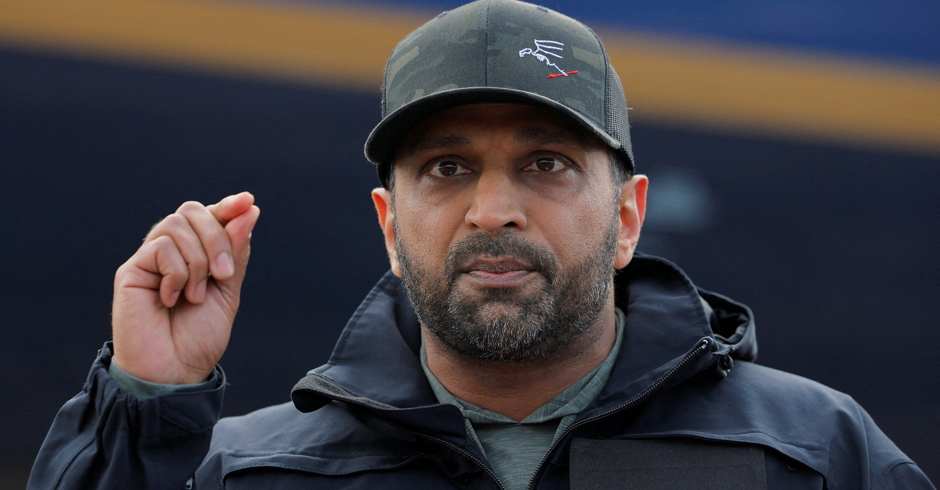
On Saturday, President Donald Trump authorized massive military action against Iran. On Sunday, the Director of the Federal Bureau of Investigation, Kash Patel, put FBI counterintelligence teams on high alert for threats to the homeland, after a Texas gunman killed two Americans and wounded 14 others in an attack the Bureau is investigating as a possible act of terrorism.
Not part of any FBI investigation will be at least a dozen staffers, including agents, who reportedly were fired last week for their roles in Special Counsel Jack Smith’s investigation of President Donald Trump’s possibly unlawful removal, retention, and refusal to return dozens of classified documents and other items from the White House, which he kept at Mar-a-Lago.
“The ouster of at least a dozen staffers from a counterintelligence unit, known as CI-12, which operates out of the Washington Field Office, was ordered by FBI Director Kash Patel, according to four former officials familiar with the dismissals,” The New York Sun reported on Monday in an exclusive. “The dismissals came just days before the start of Operation Epic Fury and, separately, a deadly mass shooting at a bar in Austin, Texas, by a man reportedly wearing a sweatshirt that said, ‘Property of Allah,’ beneath which was a T-shirt that was ’emblazoned with a design similar to the Iranian flag,’ CBS News reported Monday.”
The Sun reported that the CI-12 unit “focuses on media leaks, global espionage, and international threats against America emanating from countries such as Cuba and Iran, former FBI officials tell the Sun.”
“More broadly, CI squads are the lead domestic teams for investigating insider threats and foreign intelligence activity on American soil.”
The FBI’s raid on Mar-a-Lago, which took place on August 8, 2022, came months before Jack Smith was appointed Special Counsel by then-Attorney General Merrick Garland. President Trump called the raid a “travesty of justice.”
During Trump’s first term as president, CI-12 in 2020 “assisted in monitoring potential retaliatory actions by Iranian-backed actors on American soil following a U.S. drone strike near Baghdad International Airport that killed Iran’s Islamic Revolutionary Guard Corps major general Qasem Soleimani.” Trump ordered that operation, according to former FBI officials.
Recently, Director Patel expressed outrage after learning that the FBI, under Smith’s direction, had “secretly obtained his phone records, along with those of Trump aide and current White House chief of staff Susie Wiles, as part of Mr. Smith’s investigations into Mar-a-Lago as well as into January 6.”
In a statement to Reuters, Patel said: “It is outrageous and deeply alarming that the previous FBI leadership secretly subpoenaed my own phone records — along with those of now-White House Chief of Staff Susie Wiles — using flimsy pretexts and burying the entire process in prohibited case files designed to evade all oversight.”
Hours later, the FBI dismissed the dozen staffers and agents.
The Sun noted that those “fired were also believed to have been involved in efforts to obtain phone records of Mr. Patel and Ms. Wiles, according to reports.”
Image via Reuters

The White House was forced to fire back after a prominent conservative influencer and podcaster criticized President Donald Trump‘s various and rapidly-shifting reasons for attacking Iran in a massive and ongoing military exercise that the president and defense chief have called “war.”
Matt Walsh, who hosts his right-wing podcast on The Daily Wire and has four million followers on X, on Monday expressed his confusion with the administration’s talking points.
“So far we’ve heard that although we killed the whole Iranian regime, this was not a regime change war,” he began. “And although we obliterated their nuclear program, we had to do this because of their nuclear program. And although Iran was not planning any attacks on the US, they also might have been, depending on who you ask. And although we are not fighting this war to free the Iranian people, they are now free, or might be, depending on who seizes power, and we have no idea who that will be.”
“The messaging on this thing is,” he said, “to put it mildly, confused.”
READ MORE: ‘Tone Deaf’: An ‘Exhausted’ Trump Ripped for Iran Speech Focused on Ballroom and Drapes
White House Press Secretary Karoline Leavitt responded to Walsh just hours later, saying that Trump on Saturday had “released a statement laying out clear objectives to the American people for Operation Epic Fury.”
According to Leavitt, they include destroying Iran’s missiles and Navy, ensuring Iran’s proxies cannot destabilize the region or the world, stopping them from making and using IEDs, guaranteeing Iran can never have a nuclear weapon, and preventing the Iranian regime from threatening America.
“Simply put,” she wrote, “the terrorist Iranian regime would not say yes to peace.”
“For 47 years, the Iranian regime has actively and intentionally facilitated the killing of Americans while chanting ‘death to America’ and funding other bloodthirsty terrorists seeking to destroy the United States and all of Western Civilization. Prior American leaders were too weak and cowardly to do anything about it. Now, President Donald J. Trump is correcting decades of cowardice and holding those responsible for the deaths of Americans accountable.”
But Politico’s White House bureau chief Dasha Burns noted that Walsh “is among many right wing voices questioning the administration’s actions in Iran.”
READ MORE: Why Drivers Should Brace for a Rapid Gas Price Surge This Week: Expert
“I have heard repeated warnings from Republican sources that the WH needs to do more to get MAGA on side,” she added.
Sean Davis, co-founder of the right-wing website The Federalist, reposted Walsh’s remarks and shared similar ones of his own.
“Is the goal to eliminate the Iranian regime or free the Iranian people or degrade their nuclear capability or degrade the conventional weapons capability or eliminate their regional hegemony or to cut off their oil supply to China or to help Israel or what?” Davis asked. “The lack of any coherent message seems to suggest the lack of any coherent objective.”
Former Trump ally and former U.S. Rep. Marjorie Taylor Greene (R-GA), who months ago broke with Trump, wrote: “And just like that we are no longer a nation divided by left and right, we are now a nation divided be those who want to fight wars for Israel and those who just want peace and to be able to afford their bills and health insurance.”
READ MORE: Trump ‘Throwing Spaghetti at the Wall’ as He Workshops War Goals With Journalists: Report
Image via Reuters

While making his first remarks to the nation from the White House about his military attack on Iran that began on Saturday, President Donald Trump came under fire for taking time to discuss his $400 million ballroom and drapes.
“We have a lot of great service members here with us, too, in this beautiful building, isn’t it? Beautiful?” Trump told the audience. “We’re adding on to the building a little bit. We’re improving the building. See that nice drape?”
“When that comes down, right now, you see a very, very deep hole, but in about a year and a half from now, you’re gonna see a very, very beautiful building. And there’s your entrance to it, right there. In fact, it looks so nice, I don’t think I’ll even, I think I’ll save money on the doors, ’cause it can’t get more beautiful than that.”
“I picked those drapes in my first term. I always liked gold, but I think we can save a lot of money. I just saved… I just saved curtains. But, uh, it will be. It will be spectacular. It’ll be the most beautiful ballroom,” he said.
READ MORE: Why Drivers Should Brace for a Rapid Gas Price Surge This Week: Expert
Critics blasted the president’s remarks.
“American troops are dead and Trump is on TV talking about the drapes…” remarked The Lincoln Project.
“Trump just explained about the attack on Iran that ‘I don’t get bored. There’s nothing boring about this.’ Despite that, he is now talking at some length about gold drapes and ‘the most beautiful ballroom,'” commented columnist Niall Stanage.
“In a war that’s already killed four Americans, Trump says it could last beyond 4-5 weeks because he doesn’t get ‘bored,'” observed Scripps News’ Simon Kaufman. “Moments later, he moves on from Iran and talks about ballroom renovations and drapes.”
“Trump demonstrating his mental disfigurement by bragging about his ballroom and chuckling immediately after claiming that ‘we grieve’ for 4 US soldiers killed in the war he just initiated,” wrote journalist John Harwood. “Trump does not possess empathy and does not grieve for any other person’s misfortune.”
Noting that the president sounded “exhausted and not good,” foreign policy journalist Laura Rozen observed “the difference” in Trump’s “demeanor and affect when talking about the war and then the ballroom is so different.” She also said that “it is evident the war is becoming more of a s — — than he expected.”
“It’s worth noting that Trump is putting infinitely more effort into selling his ballroom to the American people than anyone in his administration is on selling the attack on Iran,” wrote conspiracy theories expert Mike Rothschild.
“Trump started an unnecessary war in the Middle East with no real strategy, there’s already American military loss of life and this guy is obsessing over the damn drapes and his $400 million gilded ballroom project,” remarked former political commentator Tara Setmayer. “How is this making America great????”
“Bragging about his ‘beautiful ballroom’ while he’s supposed to be explaining the somber decision to go to war,” wrote The New Yorker’s Susan Glasser. “It’s one of the most politically tone deaf things I’ve ever seen from a POTUS, including this one…”
Trump: We have a lot of great service members here with us, in this beautiful building. Isn’t it beautiful? We are adding on to the building a little bit. We are improving the building. When that comes down right now, you see a very deep hole. But in about a year and a half from… pic.twitter.com/5qM0zpfkVN
— Acyn (@Acyn) March 2, 2026
READ MORE: Trump ‘Throwing Spaghetti at the Wall’ as He Workshops War Goals With Journalists: Report
Image via Reuters

Why Drivers Should Brace for a Rapid Gas Price Surge This Week: Expert

Trump ‘Throwing Spaghetti at the Wall’ as He Workshops War Goals With Journalists: Report

‘Tone Deaf’: An ‘Exhausted’ Trump Ripped for Iran Speech Focused on Ballroom and Drapes

White House Fires Back as Right Wing Influencer Fuels MAGA Rift

FBI Agents Probing Iranian Threats Fired Over Mar-a-Lago Investigation Ties
FBI Agents Probing Iranian Threats Fired Over Mar-a-Lago Investigation Ties
White House Fires Back as Right Wing Influencer Fuels MAGA Rift
‘Tone Deaf’: An ‘Exhausted’ Trump Ripped for Iran Speech Focused on Ballroom and Drapes
Why Drivers Should Brace for a Rapid Gas Price Surge This Week: Expert
Trump ‘Throwing Spaghetti at the Wall’ as He Workshops War Goals With Journalists: Report

 News3 days ago
Trump Says ‘I Don’t Like’ That Bill Clinton Was Deposed Over Epstein But ‘They Went After Me a Lot More’

 News3 days ago
Trump Orders Government to Drop Anthropic After AI Company Refuses Pentagon Demands
 News4 days ago
Pete Hegseth Says Scouting America Agreed to Drop DEI Policies

 News3 days ago
Senate Dems Give Trump Administration 90 Days to Refund Tariffs

 BIGOTS GONNA BIGOT4 days ago
Trans Kansans, ACLU File Lawsuit Against State Invalidating Driver’s Licenses
 News14 hours ago
Why Drivers Should Brace for a Rapid Gas Price Surge This Week: Expert
 News15 hours ago
Trump ‘Throwing Spaghetti at the Wall’ as He Workshops War Goals With Journalists: Report
 News12 hours ago
‘Tone Deaf’: An ‘Exhausted’ Trump Ripped for Iran Speech Focused on Ballroom and Drapes