
News
Texas Diverts $359.6 Million From Prisons to Keep Greg Abbott’s Border Mission Operating
“Texas diverts $359.6 million from prisons to keep Greg Abbott’s border mission operating” was first published by The Texas Tribune, a nonprofit, nonpartisan media organization that informs Texans — and engages with them — about public policy, politics, government and statewide issues.
Sign up for The Brief, our daily newsletter that keeps readers up to speed on the most essential Texas news.
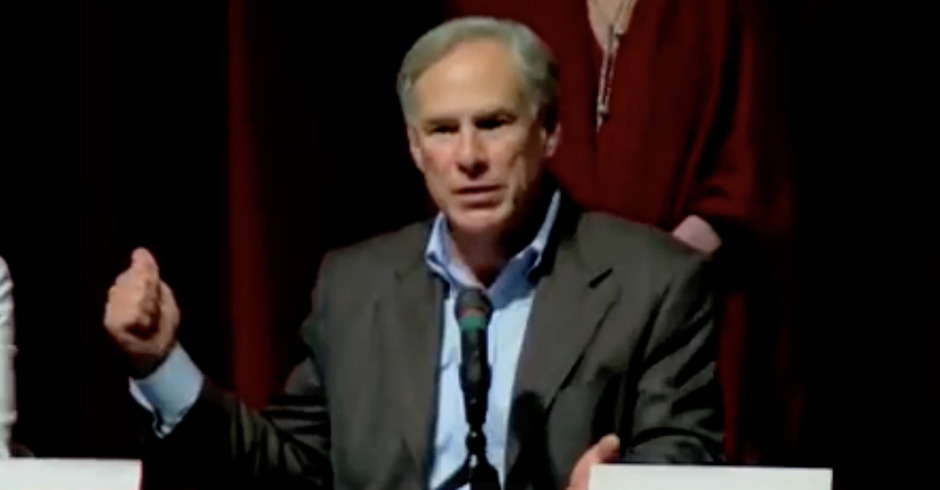
Gov. Greg Abbott said on Thursday that he and other state leaders are pulling $359.6 million out of the state prison system’s budget to fund his Operation Lone Star border security operation through the next 10 months.
So far, more than $4 billion has been spent to keep thousands of Department of Public Safety troopers and Texas National Guard members stationed along the Texas-Mexico border and other areas of the state.
This latest infusion was among $874.6 million in “emergency” budget transfers authorized by Abbott at the request of the Texas Legislative Budget Board, composed of GOP state leaders and budget writers.
The transfers will support not only Operation Lone Star but also fund public school security measures, COVID-19 response expenses and a new elementary school in Uvalde, the site of a mass shooting in May, according to the governor’s office.
The proposal from the Legislative Budget Board said the lack of funds for border security, public health and school security constituted an emergency.
The money for Operation Lone Star is being transferred from the Texas Department of Criminal Justice directly into Abbott’s disaster fund, which he uses to distribute money for the operation.
Of that, $339 million will go to the Texas Military Department to pay for Texas National Guard troops involved in the operation, while another $20.6 million will go to other agencies not named in the letter that also support the operation.
Abbott’s office did not immediately respond to questions regarding the specifics of the Operation Lone Star funding, including which other agencies would be getting the money and what their involvement is.
In addition to border funding, state leaders authorized the use of $15 million to build a replacement for Uvalde’s Robb Elementary, the site of the shooting on May 24 that left 19 students and two teachers dead.
Another $400 million will go toward security measures in school districts statewide — paying for upgrades and replacements to doors, windows, fencing and communications systems at schools. That money would come from a surplus in the Texas Education Agency’s Foundation Schools Program, which funds public schools, as allowed in the 2022-23 budget, according to the Legislative Budget Board.
“These funds will continue to support the community of Uvalde in the wake of such a devastating tragedy earlier this year and will help bolster the safety of Texans,” said Texas House Speaker Dade Phelan. “School security will be a priority for the Texas House during the 88th Legislature, and this additional funding is a meaningful step we can take in the meantime.”
To cover COVID-19-related expenses, $100 million will be moved from the Texas Department of State Health Services’ public health preparedness budget and transferred to the Texas Division of Emergency Management, which worked closely with DSHS on the state’s pandemic response. A spokesperson for DSHS said the transfer from that agency would be done with federal American Rescue Plan Act funds and would not have an impact on the agency’s budget. ARPA funds are intended to help states recover from the economic hardships created by the pandemic.
The new funds are authorized to be spent only through next August, when the current biennium ends. Any funding beyond that for Operation Lone Star and other programs supported by Thursday’s transfers will need to occur in the next budget cycle, Abbott said.
The authorization letter did not detail how many schools, what kind of pandemic expenses or how many troops the new funding would finance.
Additional funding for both school safety and border security will also be considered during the next legislative session, which begins in January, Phelan and Lt. Gov. Dan Patrick said in an emailed statement.
Sweeping money out of Texas prisons
Leaders of the two agencies charged with carrying out Operation Lone Star on the state’s border with Mexico — the Texas Military Department and DPS — have been signaling the need for another infusion of money to continue the operation at its current pace.
Military department officials had said that funding for the current level of National Guard presence on the border, about 5,000 troops, would run out in September.
Three weeks ago, that agency’s director said he was confident that the money would come through.
Earlier this month, DPS Director Steve McCraw reminded budget officials that their last appropriation for the agency’s role in Operation Lone Star was set to end in November.
DPS did not get any new funding for Operation Lone Star on Thursday, but officials said the agency, which has involved troopers and other resources into the effort, will continue its involvement using the agency’s existing border security funds and will be considered for additional funding for the operation during the next session, state leaders said.
Operation Lone Star’s finances have come under increased scrutiny for the past year. In September 2021, the Texas Legislature approved nearly $2 billion to ramp up the border operation — only to see the governor repeatedly transfer more money from other agencies to the initiative ever since.
Abbott — with the backing of GOP legislative and budget leaders — has moved money several times from the state prison system and other agencies to keep Operation Lone Star in place. It’s the cornerstone of his immigration policy — and a high-priority issue in his campaign for reelection.
The $359.6 million being transferred out of TDCJ is the same amount of ARPA dollars allocated to the agency by state lawmakers last year.
In April, $53.6 million was taken from TDCJ funds for the operation, just three months after Abbott moved $426.9 million from the system to fund Operation Lone Star through the spring.
The Texas prison system itself is beset by understaffing and rising health care costs, and officials there are asking lawmakers for $90 million for staff raises in the next biennium. Last August, TDCJ had about 67% of its officer positions filled. Some larger prisons in Texas had less than 40% of its officer positions filled.
A TDCJ spokesperson told The Texas Tribune that the transfer of the money would not negatively impact the agency, saying that the same amount would be allocated to the agency for “pandemic related expenses” but did not elaborate on where that funding would come from or when.
Previous budget transfers to Operation Lone Star have come from the Texas Department of Family and Protective Services, which oversees child and adult welfare investigations, the state’s juvenile justice system and Texas Health and Human Services, among other agencies.
Since Operation Lone Star launched a year and a half ago, Abbott has taken drastic measures to curb illegal immigration, including starting construction of a state-funded border wall, deploying thousands of National Guard members, arresting and jailing migrants on state criminal charges and spending millions on bus tickets to send migrants to other cities run by Democrats.
At the time of the launch, Abbott cited an urgent need to stop the flow of drugs and undocumented immigrants into the state through Mexico.
But the initiative has become a political wedge between those who sharply criticize President Joe Biden’s immigration policies and critics who call it a blank check for a governor facing a tough reelection in November and an ineffective financial boondoggle for Texas taxpayers.
Abbott has repeatedly blamed Biden for an increase in migrant crossings and called for the federal government to reinstate former President Donald Trump’s tougher immigration policies.
Senate Finance Chair Joan Huffman, a Houston Republican, said on Thursday that the border program was vital to protecting public safety and must continue.
“As the crisis at our border continues, it is critical that the legislature continues to fund Operation Lone Star as the flow of illegal immigrants, weapons, and drugs has hit unprecedented levels,” Huffman said. “Because the federal government has completely neglected this emergency, imagine how unsafe communities across the country would be had Texas not stepped up to provide its full support.”
Abbott’s office has said it will hold off on asking for specific funding for Operation Lone Star until lawmakers can address it during budget hearings. Patrick, who is running against Democrat Mike Collier in the November election, predicted more action on border security in the upcoming session.
“Securing the safety of our children and our southern border are issues of paramount importance,” Patrick said in the authorization letter. “This action ensures that Texas is in a strong position to confront these issues head-on during the upcoming legislative session.”
Jolie McCullough contributed to this report.
This article originally appeared in The Texas Tribune at https://www.texastribune.org/2022/10/27/operation-lone-star-greg-abbott-budget/.
The Texas Tribune is a member-supported, nonpartisan newsroom informing and engaging Texans on state politics and policy. Learn more at texastribune.org.
Enjoy this piece?
… then let us make a small request. The New Civil Rights Movement depends on readers like you to meet our ongoing expenses and continue producing quality progressive journalism. Three Silicon Valley giants consume 70 percent of all online advertising dollars, so we need your help to continue doing what we do.
NCRM is independent. You won’t find mainstream media bias here. From unflinching coverage of religious extremism, to spotlighting efforts to roll back our rights, NCRM continues to speak truth to power. America needs independent voices like NCRM to be sure no one is forgotten.
Every reader contribution, whatever the amount, makes a tremendous difference. Help ensure NCRM remains independent long into the future. Support progressive journalism with a one-time contribution to NCRM, or click here to become a subscriber. Thank you. Click here to donate by check.
 |




Professor of Law Richard Hasen, an elections law expert, is denouncing Supreme Court Justice Samuel Alito as a “coward” who is either lying to himself or the American public, after authoring what has been called the “earthquake” decision in Louisiana v. Callais, which sharply erodes the Voting Rights Act.
Alito’s “disastrous” majority opinion in Callais “essentially gutted what remains of the Voting Rights Act,” but he “claims to have done no such thing. The question is why,” Hasen posits.
Hasen charges that Justice Alito was too “afraid” to share his actual opinion, and so he found ways to “get away with overturning Section 2 of the Voting Rights Act through technical minutiae rather than through a direct hit.”
Section 2, passed in 1965, is the provision of the Voting Rights Act that protects minority voters from discriminatory voting laws and maps.
Hasen argues that Alito’s opinions in both Callais and Brnovich v. Democratic National Committee “necessarily imply” that “Congress cannot do anything to protect minority voting rights short of banning intentional discrimination despite the 14th Amendment’s equal protection guarantee, despite the 15th Amendment’s ban on race discrimination in voting, and despite the fact that both amendments explicitly give Congress the power to enforce the measures by ‘appropriate legislation.'”
READ MORE: Trump Attacks ‘Very Disloyal’ GOP Senator — Calls for Him to Lose Primary
He notes that Alito managed to render Section 2 of the Voting Rights Act “essentially toothless,” while leaving the six-decade-old landmark law on the books.
“Since Brnovich,” he writes, “no plaintiffs have brought successful suits under Section 2 challenging a law alleged to suppress votes.”
Indeed, Alito’s opinions in both cases are “extreme overkill,” handing states “multiple pathways” to defeat a Section 2 claim.
Hasen explains that for Alito, “to discriminate against Louisiana Democrats is not to discriminate against Louisiana’s Black voters, despite the overwhelming overlap between the two groups.”
But for Hasen, the most “galling” issue is that Alito “goes out of his way to disclaim he is making radical change while putting multiple stakes through the heart of Section 2.”
He offers some possibilities of why Alito has acted in this way.
“Maybe Alito is worried that a ruling forthrightly saying what he is doing would sully the reputation of the court, which has already faced public criticism for killing off another key part of the Voting Rights Act in 2013’s Shelby County decision,” Hasen writes. “Perhaps he is worried that a frontal kill of Section 2 would energize Democrats, leading to greater losses for Republicans in the midterm elections and in future elections.”
Regardless, Hasen concludes, no one “is fooled by Justice Alito’s act of cowardice, unless it is Justice Alito himself. If that’s the case, he is more deluded than he seems to think the rest of us are.”
READ MORE: Trump Stalls J6 Lawsuits From Officers and Lawmakers With Immunity Push: Report
Image via Reuters

In a double-barreled attack, President Donald Trump has targeted a two-term sitting Republican U.S. Senator, calling for him to be voted out during the GOP primary — which is tight and barely weeks away — while criticizing him for his vote on impeachment and his opposition to the president’s pick for Surgeon General.
Calling U.S. Senator Bill Cassidy (R-LA) “a very disloyal person” who won election thanks to his endorsement, the president blasted him for his Senate vote to convict him “on what has now proven to be a total Hoax and Scam.”
Accusing Cassidy of “intransigence and political games,” Trump charged that he has “stood in the way of Robert F. Kennedy Jr.’s Nominee, Casey Means, for the important position of U.S. Surgeon General.”
Just sixteen days before the GOP primary, Trump did not hold back.
“Hopefully all of the Great Republican People of Louisiana, which I won, BIG, three times, will be voting Bill Cassidy OUT OF OFFICE in the upcoming Republican Primary!”
READ MORE: Trump Stalls J6 Lawsuits From Officers and Lawmakers With Immunity Push: Report
According to The Hill, Senator Cassidy is currently polling behind two of his GOP primary challengers among likely Republican voters.
Cassidy got just 21 percent support, U.S. Rep. Julia Letlow received 27 percent, and state treasurer John Fleming received 28 percent, according to an Emerson poll. Although Trump endorsed Congresswoman Letlow in January, she has yet to pull into the lead.
In 2021, Cassidy was one of just seven Republican senators who voted to convict Trump for inciting the January 6 attack on the Capitol. Of the seven, just three are currently serving: Cassidy, Susan Collins, and Lisa Murkowski.
Minutes after his attack, Trump announced his nomination of Fox News contributor Dr. Nicole B. Saphier to become Surgeon General, after calling Means “a strong MAHA Warrior” who “understands the MAHA Movement better than anyone, with perhaps the possible exception of ME!”
Image via Reuters

President Donald Trump is holding up lawsuits from police officers and Democratic lawmakers suing in federal court by pursuing immunity claims, Bloomberg News reports. The plaintiffs say he bears legal responsibility for inciting the January 6, 2021 riots at the U.S. Capitol.
Trump is appealing a March decision by a federal judge who rejected his bid to have the cases thrown out.
The president’s personal attorneys are also arguing that he should not be required to submit any information, documents, or evidence to the plaintiffs until his immunity appeal is resolved — a position that, if granted, could extend the litigation by years even if Trump loses.
U.S. District Judge Amit Mehta has repeatedly rejected Trump’s immunity claims. Because Judge Mehta ruled that Trump was not acting in his official capacity, the Justice Department was denied its request to become the defendant in place of Trump.
Last month, Politico reported, Judge Mehta ruled that Trump’s January 6 speech at the Ellipse was a political act and therefore not eligible for immunity. The U.S. Supreme Court ruled presidents have broad criminal immunity for official acts.
“President Trump has not shown that the Speech reasonably can be understood as falling within the outer perimeter of his Presidential duties,” Mehta wrote. “The content of the Ellipse Speech confirms that it is not covered by official-acts immunity.”
Politico also reported that the appeals process will likely generate years of additional litigation, keeping the cases alive through the end of Trump’s presidency.
READ MORE: Trump Running Out of Options in $83 Million Case After Court Rejects Rehearing Bid
Image via Reuters

Trump Stalls J6 Lawsuits From Officers and Lawmakers With Immunity Push: Report

‘Ego’ and ‘Ignorance’: Economist Explains Why Strait of Hormuz Won’t Open Any Time Soon

Trump Attacks ‘Very Disloyal’ GOP Senator — Calls for Him to Lose Primary

‘Lying’ Samuel Alito Is a ‘Coward’: Elections Expert
‘Lying’ Samuel Alito Is a ‘Coward’: Elections Expert
Trump Attacks ‘Very Disloyal’ GOP Senator — Calls for Him to Lose Primary
Trump Stalls J6 Lawsuits From Officers and Lawmakers With Immunity Push: Report
‘Ego’ and ‘Ignorance’: Economist Explains Why Strait of Hormuz Won’t Open Any Time Soon

Trump Running Out of Options in $83 Million Case After Court Rejects Rehearing Bid

 News4 days ago
Trump ‘Frustrated’ by Ballroom Legal Battles — So GOP Wants You to Pay for It: Report

 News4 days ago
‘Hateful’: Melania Trump Demands ABC ‘Take a Stand’ Against Jimmy Kimmel

 News3 days ago
King Charles Discreetly Rebukes Trump in Historic Address to Congress: Report
 News4 days ago
‘This Will Backfire’: DeSantis’s New Redistricting Map Is Already in Trouble
 News2 days ago
Trump Running Out of Options in $83 Million Case After Court Rejects Rehearing Bid
 News4 days ago
Democrats Still Haven’t Fixed Why Voters Dislike Them — And It Could Cost Them: Columnist

 News3 days ago
FCC Poised to Review Disney Licenses Amid Trump Pressure Over Kimmel Joke: Report
 News3 days ago
Coming Price Spike Made Worse by Trump Could Deal ‘Fatal Blow’ to GOP: Report