Sarah Palin Tea Party Event Boots Christine O’Donnell From Lineup
Has Christine O’Donnell been kicked out of the Tea Party? Failed Tea Party senatorial candidate Christine O’Donnell may not be a witch, but she’s no longer a welcome member of the Tea Party either. Tea Party of America, which is hosting “Restoring America,” an event Saturday headlined by former Alaska Governor Sarah Palin, has rescinded its invitation to Christine O’Donnell after receiving many “emails from a lot of tea party folks that were very disappointed that she would be speaking,” Tea Party of America’s cofounder, Charlie Gruschow, said, according to a report in the Wall Street Journal. “We decided not to have her speak,†Gruschow said. “We felt it was in the best interest of the movement.â€
WATCH: Christine O’Donnell Walks Off Piers Morgan Rather Than Talk Gay Marriage
Recently, O’Donnell was excoriated after appearing on “Piers Morgan Tonight” for walking off the set after spending over two minuted refusing to discuss topics that are in her recent memoir, Troublemaker, such as homosexuality, same-sex marriage, and Don’t Ask, Don’t Tell.
Criticism came not only from those on the Left, but from Tea Party leaders themselves.
Characterizing her performance as a “temper tantrum,†Judson Phillips, founder and head of Tea Party Nation wrote, “if you are going to play in the big leagues, you have to play by the rules. CNN and Piers Morgan are pretty far to the left but this time Morgan is right and O’Donnell was not only wrong, but extremely unprofessional to walk out of the interview.
“She was on the show to talk about her book, which Morgan commented on favorably. O’Donnell refused to answer the question about gay marriage, saying it is in the book. If you write a book, be expected to answer questions about what you put in the book.â€
“Piers Morgan was not asking anything inappropriate. Christine O’Donnell’s immature and unprofessional response makes the Tea Party movement look bad. Was she ashamed of her position on gay marriage? Did she not feel competent enough to defend her beliefs? We will never know.
“Conservatives everywhere should be able to articulate their political positions and the reasons behind them without throwing a temper tantrum when they are asked to defend them.
“We may have just seen Christine O’Donnell’s last prime time performance. I am sure she is a nice person but she does not understand what she has to do if she is going to be a national figure.
“If she does not understand this, perhaps fading from the scene might not be a bad thing for her.â€

Enjoy this piece?
… then let us make a small request. The New Civil Rights Movement depends on readers like you to meet our ongoing expenses and continue producing quality progressive journalism. Three Silicon Valley giants consume 70 percent of all online advertising dollars, so we need your help to continue doing what we do.
NCRM is independent. You won’t find mainstream media bias here. From unflinching coverage of religious extremism, to spotlighting efforts to roll back our rights, NCRM continues to speak truth to power. America needs independent voices like NCRM to be sure no one is forgotten.
Every reader contribution, whatever the amount, makes a tremendous difference. Help ensure NCRM remains independent long into the future. Support progressive journalism with a one-time contribution to NCRM, or click here to become a subscriber. Thank you. Click here to donate by check.
 |


Justice Samuel Alito claimed that comments from President Donald Trump and former Secretary of Homeland Security Kristi Noem were not “overtly racial” in a ruling stripping protections from Haitian and Syrian refugees.
The Supreme Court ruled 6-3 along ideological lines Thursday morning in Mullin v. Doe that the Trump administration could revoke Temporary Protected Status from Haitian and Syrian refugees. The reasoning was that the decision to revoke TPS was not “motivated by race,” but a general objection to the TPS program.
“Citing statements made by President Trump and former Secretary of Homeland Security Kristi Noem, one set of respondents advances an equal protection claim that Haiti’s TPS designation was terminated because of the racial makeup of that country’s population. But, ironically, one of respondents’ other arguments undermines the equal protection claim by offering a strong, race-neutral explanation for Haiti’s termination: namely, that the current administration, which has terminated every TPS designation that has come up for renewal, simply opposes the TPS program, at least as it has been implemented in the past,” Alito wrote.
READ MORE: No, Haitian Immigrants Aren’t Eating Cats in Ohio
TPS has been the law of the land since 1990. The law allowed refugees from war-torn countries or countries that suffered devastating natural disasters to live in the United States. Though TPS was always intended to be temporary, as the name suggests, history moves slowly and many people would have to stay in the United States lest they be hurt or killed in their homelands.
In the case of Haiti, Alito said that while “it is a very poor country, and living conditions there are unquestionably difficult… poverty and deprivation are no reflection on character, and there is no justification for denigrating the character of Haitians who suffer from and bear no responsibility for their country’s ills.”
But Alito dismissed claims that the Trump administration’s decision to revoke TPS designations were based on race.
“None of the cited statements by either the President or the Secretary was overtly racial, and in substance all expressed policy views that could rest on race-neutral justifications,” Alito wrote.
“Political discourse by prominent public figures is increasingly couched in terms that would have scandalized the public just a short time ago, and the statements cited by Miot respondents—especially those concerning Haiti and Haitian immigrants to this country—exemplify this development. But whatever one may think of the cited statements, they are insufficient to show that the termination of Haiti’s TPS designation was based on the race of the Haitian people. Ironically, both Doe and Miot respondents identify a strong, race-neutral explanation of these officials’ statements: the present administration’s general stance on immigration and its obvious antipathy toward past administrations’ TPS policies,” he continued.
As cited in the dissent by Justice Elena Kagan, the comments that are not “overtly racial” include—using her framing language:
- Haitians are “eating the dogs . . . . They’re eating the cats. They’re eating—they’re eating the pets of the people that live [in Springfield, Ohio].”
- Haitians are also eating “other things too that they’re not supposed to be.”
- Haitians in the United States “probably have AIDS.”
- Haiti is a “shithole country,” which is “filthy, dirty, [and] disgusting.”
- And: Haitian immigration is “like a death wish for our country.”
- Haitians, along with some others, are “poisoning the blood” of our country.
- “Why is it we only take people from shithole countries” like “Haiti [and] Somalia”? “Why cannot we have some people from Norway [and] Sweden?”
“The majority briefly replies that those remarks are not ‘overtly racial,’. .. but it is hard to know what that means. Haitians are Black. (Norwegians and Swedes not so much.) The references—of filth, disease, and primitiveness—are shot through with racial stereotypes and tropes. It is hard to imagine the statements being made today of any White community,” Kagan wrote. “The statements fairly shout, in their racial undertones and overtones alike, that race entered into the President’s resolve to remove Haitians from this country.”
She added that it is not an “either/or” decision that either TPS was revoked from Haiti and Syria due to antipathy for the program or it was racially motivated, but that both can be true.
“If in addition to race-neutral reasons, race entered into the picture—even as a subsidiary factor—the Haiti TPS decision is irretrievably tainted. And here, the President’s own statements show that race did enter in— that, within what was surely a multi-cause decision, it was a motivating factor. Because that is all the Haiti plaintiffs need to show on their equal protection claim, the District Court was right to find that it is likely to succeed,” Kagan wrote.
This is the second win the SCOTUS has handed Trump Thursday on immigration issues. In another ruling, Alito wrote the decision to allow border police to block asylum seekers from entering the United States. In that case, Justice Sonia Sotomayor compared the majority’s decision to turning away Jewish refugees from Nazi Germany.
Image via Shutterstock
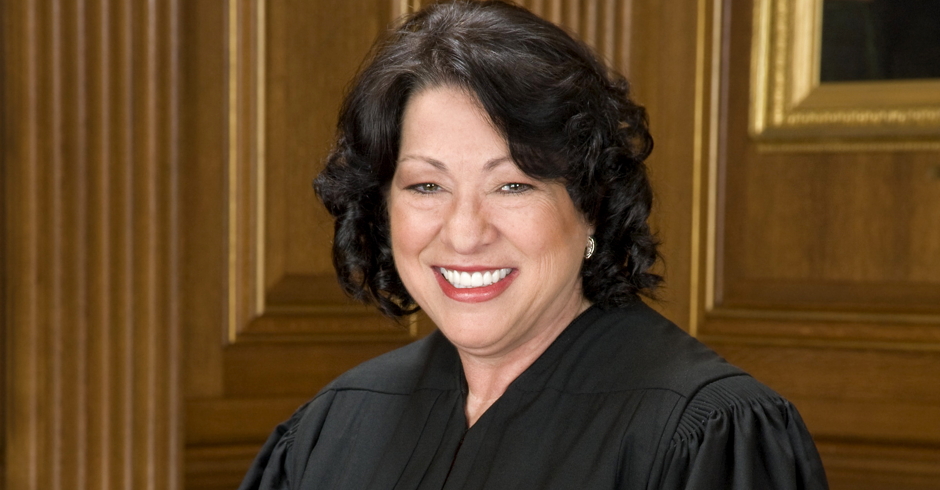
Justice Sonia Sotomayor compared Thursday’s Supreme Court ruling that asylum seekers have not entered the U.S. at the border to one of the most shameful parts of U.S. history.
The Supreme Court issued four rulings on Thursday. One of them was in Mullin v. Al Otro Lado, which challenged a 2016 U.S. Customs and Border Patrol policy where border patrol officers stood at the U.S. border and kept asylum seekers from entering the country. The immigration activist group Al Otro Lado challenged the rule, arguing it “withheld inspection and asylum processing from aliens who arrive at the border.”
The Court decided 6-3 along ideological lines that the policy was legal, with Justice Samuel Alito invoking “ordinary speech” to explain his reasoning.
READ MORE: ‘Alarm Bells’ as Trump Turns to Civil War White Supremacists in SCOTUS Case
“This case presents a straightforward question: whether an alien who seeks to enter the United States from Mexico ‘arrives in the United States’ when he or she is still in Mexico. In the decision below, the United States Court of Appeals for the Ninth Circuit answered ‘yes.’ That is wrong. In ordinary speech, no one would say that a person “arrives in” a place—for example, a house, a city, or a country—before the person enters that place. The context in which the phrase ‘arrives in the United States’ is used in the immigration statutes at issue here supports an ordinary-meaning reading. So does the presumption against extraterritoriality. We therefore reverse,” Alito wrote.
Justice Clarence Thomas wrote his own concurrence, which defended President Donald Trump’s power in determining immigration policy, writing “Congress, for its part, has no enumerated power to require the President to bring certain aliens into the country. The Constitution grants Congress the power to ‘establish an uniform Rule of Naturalization.’ … But, the class members in this case are not naturalized or even on the path to naturalization.”
“So, any statute that forced the President to allow aliens to cross the border against his will would appear to exceed Congress’s enumerated powers, and a court could not enforce it against the President,” Thomas added.
Sotomayor wrote a blistering dissent which, according to journalist Steve Vladeck, was read from the bench. In her dissent, Sotomayor tells the story of the M.S. St. Louis, a ship that set sail from Europe in 1939 with over 900 Jewish refugees fleeing Nazi Germany. The M.S. St. Louis sailed to Cuba and the United States. Both Cuba and the United States turned it away. In the United States’ case, it was due to strict immigration quotas and, as she writes, “the relevant quota was already filled for that year.”
The M.S. St. Louis sailed to Canada where it was again turned away, and went back to Europe.
“Tragically, over 500 of the refugees that had attempted to flee were trapped in Western Europe under German control, and over 250 of them died during the Holocaust. Most of them were ‘murdered in the killing centers of Auschwitz and Sobibór’ and ‘the rest died in internment camps, in hiding, or attempting to evade the Nazis,'” she wrote.
“Congress passed the Refugee Act in 1980 because it did not want this country to repeat the mistakes of its past. Yet if the refugees on the M. S. St. Louis were to walk up to a port of entry on our southern border today, the majority’s interpretation would allow immigration officers to refuse even to consider their asylum applications by physically blocking them from stepping foot onto U. S. soil,” Sotomayor added.
“The consequences of today’s decision are predictable. More people will die. More people will attempt to cross the border illegally, and some will make it while others will not. More dissenting people will be forced to walk along the U. S.-Mexico border in dangerous conditions, trying to find a port that will inspect them. More people will turn back and be subjected to violence because of something they cannot or should not have to change about themselves, such as their race, religion, nationality, or political opinion. Because this is neither what Congress said nor what its words permit, I respectfully dissent.”
Alito responded to Sotomayor’s dissent from the bench, Vladeck said—adding “That’s … unusual.” However, he declined to say what the substance of Alito’s response was. Audio for the ruling will be released this October, as is standard SCOTUS protocol.
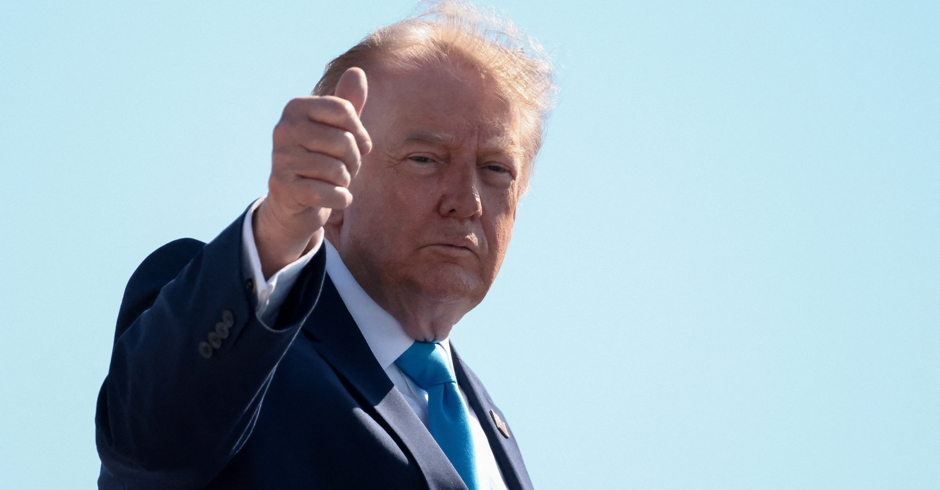
President Donald Trump shared a clip from Fox News to boast about the increase in ships crossing the Strait of Hormuz since earlier this month. It’s still far below the number from before the Iran conflict started.
On Tuesday evening, Trump shared a clip to his social media platform Truth Social. It showed Fox News commentator Larry Kudlow talking about the increase in traffic through the strait. Kudlow served under Trump during his first term as the director of the National Economic Council. The clip opens with a table graphic showing 32 crossings of the Strait of Hormuz between June 12-14, and 93 from June 19-21.
Prior to the February 28 attacks that kicked off the Iranian conflict, there were 138 crossings per day on average, according to the BBC. When converted to the same three-day span of the Fox News graphic, that means 414 crossings on average—meaning the strait is only seeing 22.5% of the traffic prior to the conflict.
READ MORE: Trump Holds Housing Bill Hostage, Mike Johnson Says He’ll Sign It Anyway
Kudlow ignored the discrepancy, and instead used the figure to praise Trump’s mastery of international politics.
“You were basically almost halfway back of the original shortage of world oil supply, which was about 20% out of 100 billion barrels a day, so 20 billion barrels a day,” Kudlow said. “Whatever the IRGC people may or may not say—they’re like Baghdad Bob during the Iraqi war… they’re saying, for example, the Strait of Hormuz is closed, all right, and we’re having record transits right now.”
Kudlow then pivoted to a general defense of Trump’s Iran conflict, saying “women in the streets of Tehran are not wearing their hijabs, walking around in short skirts on motorcycles, saying things and singing songs, it’s as though they’ve lost the morality play that they tried to do.” He added that energy and gas prices are “coming down”—which AAA confirms— and says that funds given to Iran as part of the expected deal will be used to purchase commodities from America.
“So I think you know Trump is absolutely in control. There’s so much hand-wringing going on here, probably for political reasons, but I think he’s on the right track,” Kudlow said.
Earlier this month the House voted to stop the Iranian conflict, and the Senate was expected to stop it as well. But Wednesday night, the Senate backtracked and voted 50-47 against advancing the war powers resolution to Trump’s desk, according to NBC News. Trump would have then been forced to veto it, but this saves face for the president.
“Wow! The Senate just changed its vote on Iran from 50-48 against, to 50-47 for. Rand Paul and Bill Cassidy changed. Thank you to Leader John Thune, Lindsey Graham, Bernie Moreno, and all. This vote puts Iran on notice!” Trump wrote on Truth Social.
Image via Reuters

AOC Says Reflecting Pool Is ‘Swamp’ Because GOP Doesn’t ‘Understand First Thing About Science’

Trump DOJ Nominee Surprised By Questions About Tweets Insulting Judiciary Committee Members

Trump Brags About Increase in Strait of Hormuz Traffic, Despite Being Far Below Pre-War Numbers

Sotomayor Compares Asylum Ruling to U.S. Turning Away Jewish Refugees in WWII

Alito Says Trump’s Comments About Haitians Eating Cats Weren’t ‘Overtly Racial’
Alito Says Trump’s Comments About Haitians Eating Cats Weren’t ‘Overtly Racial’
Sotomayor Compares Asylum Ruling to U.S. Turning Away Jewish Refugees in WWII
Trump Brags About Increase in Strait of Hormuz Traffic, Despite Being Far Below Pre-War Numbers
AOC Says Reflecting Pool Is ‘Swamp’ Because GOP Doesn’t ‘Understand First Thing About Science’
Trump DOJ Nominee Surprised By Questions About Tweets Insulting Judiciary Committee Members

 News3 days ago
Marjorie Taylor Greene Says She’s ‘Done Supporting’ The GOP: ‘Party Betrays Its Voters’

 News3 days ago
Federal Judge Quashes ‘Retaliatory’ Subpoenas Against Minnesota Gov. Tim Walz

 IDIOCY3 days ago
GOP Rep Demands Biden’s Pardons to Be ‘Declared Null and Void’
 BAD PRESIDENT3 days ago
Large Majority of Americans Say Iran Conflict Should End, Hasn’t Met Any of Trump’s Goals
 News22 hours ago
AOC Says Reflecting Pool Is ‘Swamp’ Because GOP Doesn’t ‘Understand First Thing About Science’

 News3 days ago
Donald Trump Says Iran ‘Will Agree to Major Weapons Inspections’ to Ensure ‘Nuclear Honesty’
 News1 day ago
Three of The Four Republicans Who Voted to Release The Epstein Files Won’t Be in the House in 2027
 HUMILIATING23 hours ago
Trump DOJ Nominee Surprised By Questions About Tweets Insulting Judiciary Committee Members