
News
Sotomayor Compares Asylum Ruling to U.S. Turning Away Jewish Refugees in WWII
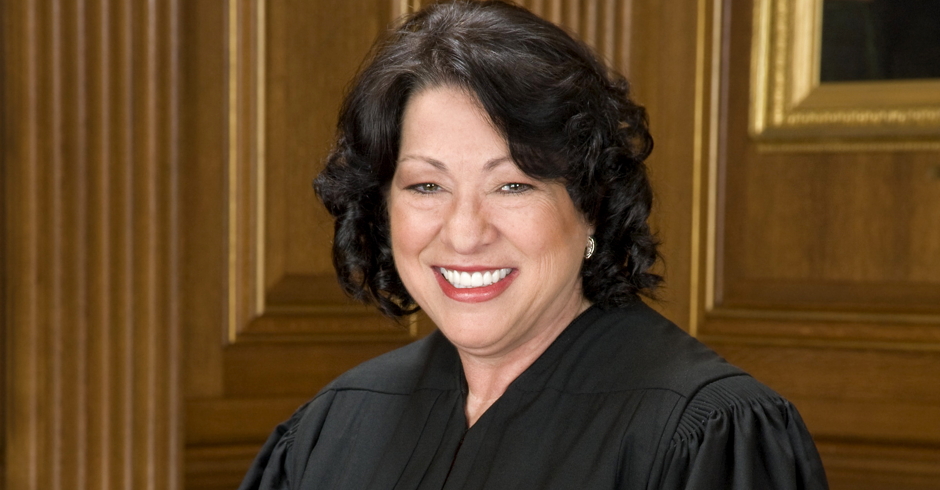
Justice Sonia Sotomayor compared Thursday’s Supreme Court ruling that asylum seekers have not entered the U.S. at the border to one of the most shameful parts of U.S. history.
The Supreme Court issued four rulings on Thursday. One of them was in Mullin v. Al Otro Lado, which challenged a 2016 U.S. Customs and Border Patrol policy where border patrol officers stood at the U.S. border and kept asylum seekers from entering the country. The immigration activist group Al Otro Lado challenged the rule, arguing it “withheld inspection and asylum processing from aliens who arrive at the border.”
The Court decided 6-3 along ideological lines that the policy was legal, with Justice Samuel Alito invoking “ordinary speech” to explain his reasoning.
READ MORE: ‘Alarm Bells’ as Trump Turns to Civil War White Supremacists in SCOTUS Case
“This case presents a straightforward question: whether an alien who seeks to enter the United States from Mexico ‘arrives in the United States’ when he or she is still in Mexico. In the decision below, the United States Court of Appeals for the Ninth Circuit answered ‘yes.’ That is wrong. In ordinary speech, no one would say that a person “arrives in” a place—for example, a house, a city, or a country—before the person enters that place. The context in which the phrase ‘arrives in the United States’ is used in the immigration statutes at issue here supports an ordinary-meaning reading. So does the presumption against extraterritoriality. We therefore reverse,” Alito wrote.
Justice Clarence Thomas wrote his own concurrence, which defended President Donald Trump’s power in determining immigration policy, writing “Congress, for its part, has no enumerated power to require the President to bring certain aliens into the country. The Constitution grants Congress the power to ‘establish an uniform Rule of Naturalization.’ … But, the class members in this case are not naturalized or even on the path to naturalization.”
“So, any statute that forced the President to allow aliens to cross the border against his will would appear to exceed Congress’s enumerated powers, and a court could not enforce it against the President,” Thomas added.
Sotomayor wrote a blistering dissent which, according to journalist Steve Vladeck, was read from the bench. In her dissent, Sotomayor tells the story of the M.S. St. Louis, a ship that set sail from Europe in 1939 with over 900 Jewish refugees fleeing Nazi Germany. The M.S. St. Louis sailed to Cuba and the United States. Both Cuba and the United States turned it away. In the United States’ case, it was due to strict immigration quotas and, as she writes, “the relevant quota was already filled for that year.”
The M.S. St. Louis sailed to Canada where it was again turned away, and went back to Europe.
“Tragically, over 500 of the refugees that had attempted to flee were trapped in Western Europe under German control, and over 250 of them died during the Holocaust. Most of them were ‘murdered in the killing centers of Auschwitz and Sobibór’ and ‘the rest died in internment camps, in hiding, or attempting to evade the Nazis,'” she wrote.
“Congress passed the Refugee Act in 1980 because it did not want this country to repeat the mistakes of its past. Yet if the refugees on the M. S. St. Louis were to walk up to a port of entry on our southern border today, the majority’s interpretation would allow immigration officers to refuse even to consider their asylum applications by physically blocking them from stepping foot onto U. S. soil,” Sotomayor added.
“The consequences of today’s decision are predictable. More people will die. More people will attempt to cross the border illegally, and some will make it while others will not. More dissenting people will be forced to walk along the U. S.-Mexico border in dangerous conditions, trying to find a port that will inspect them. More people will turn back and be subjected to violence because of something they cannot or should not have to change about themselves, such as their race, religion, nationality, or political opinion. Because this is neither what Congress said nor what its words permit, I respectfully dissent.”
Alito responded to Sotomayor’s dissent from the bench, Vladeck said—adding “That’s … unusual.” However, he declined to say what the substance of Alito’s response was. Audio for the ruling will be released this October, as is standard SCOTUS protocol.
Enjoy this piece?
… then let us make a small request. The New Civil Rights Movement depends on readers like you to meet our ongoing expenses and continue producing quality progressive journalism. Three Silicon Valley giants consume 70 percent of all online advertising dollars, so we need your help to continue doing what we do.
NCRM is independent. You won’t find mainstream media bias here. From unflinching coverage of religious extremism, to spotlighting efforts to roll back our rights, NCRM continues to speak truth to power. America needs independent voices like NCRM to be sure no one is forgotten.
Every reader contribution, whatever the amount, makes a tremendous difference. Help ensure NCRM remains independent long into the future. Support progressive journalism with a one-time contribution to NCRM, or click here to become a subscriber. Thank you. Click here to donate by check.
 |





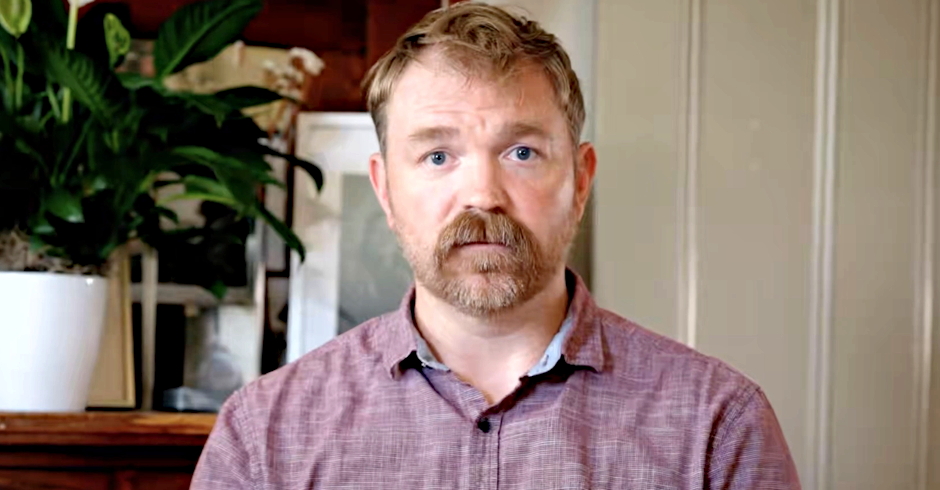
Maine Democratic U.S. Senate nominee Graham Platner is under fire after releasing a video declaring that new allegations against him are false, yet he is “taking time to reflect” on a path forward.
Politico on Monday afternoon reported that a woman who dated Platner, Jenny Racicot, “says he forced her to have sex with him nearly five years ago despite her repeated objections, an allegation Platner denies.”
“Racicot said she had an on-and-off relationship with Platner,” Politico reported, “for more than two years before he entered her rural Maine home uninvited one night in late 2021, deeply intoxicated, and forced himself on her while she repeatedly told him to stop. She said she cut off contact with him after telling him the encounter was not consensual.”
In a video posted to social media eleven minutes after the Politico story dropped, Platner says, “I wanted to directly address the troubling, serious, and false allegations against me. Any accusation of nonconsensual behavior is categorically false.”
He said he and his supporters “were united in a love of Maine, a belief that our politics must change, in a focus on defeating Susan Collins.”
“So, regardless of the inaccuracy of the reporting, but mindful the political reality will inflict, we are taking the time to reflect on the best path forward for the state that I love, the people that I love, the movement I belong to, and the goal of defeating Susan Collins.”
“Those were the goals when we launched this campaign. And they remain my goals today.”
“Throughout it all, you never turned your back on me. And I will not turn my back on you now. Every one of you deserves to see that vision come to fruition and see Susan Collins defeated. And we will use every tool at our disposal to do so.”
The Bulwark’s Tim Miller, a political commentator who served as the communications director for the Jeb Bush 2016 presidential campaign, blasted Platner.
“I’m sorry but ‘we are taking time to reflect on the best path forward’ is not an option on the table,” Miller wrote. “Either it’s false and you campaign with vigor or it’s true and you get out / apologize to everyone you let down.”
Journalist Ryan Grim, commenting on Platner’s video, noted that Platner “strongly suggests he is considering dropping out. Already Troy Jackson and Chellie Pingree, both gubernatorial candidates, are being kicked around in Maine circles as potential replacements.”
Several others, including Puck News’ Peter Hamby, predicted Platner will be dropping out.
Platner had postponed several campaign events before the Politico story was published.
— Graham Platner for Senate (@grahamformaine) July 6, 2026

President Donald Trump is facing backlash after posting a video of children — including showing their unblurred faces — graduating from kindergarten, with some of the girls purportedly wearing hijabs.
“President Trump posted a captionless video of graduating kindergarteners on Truth Social on Monday, goading his supporters into verbally attacking little children simply for being Muslim,” The New Republic reported. “The clip is from Gateway STEM Academy, a majority-Black K-8 public charter school in St. Paul, Minnesota. It shows about 21 children in caps and gowns on stage singing a song together. Most of the girls are wearing hijabs.”
The original post of the video which Trump reposted reads: “Public school in St. Paul, Minnesota. Every girl is in a hijab … in kindergarten.”
Trump did not add any comments. TNR called the post “Islamophobic, weird, and creepy,” while noting that the comments section of Trump’s post was filled with calls “by racist, xenophobic MAGA supporters” to “deport the children and ban hijabs.”
TNR also noted that it “should come as no surprise that Trump isn’t above attacking children who just learned how to read, but this post is still particularly discomforting—and will certainly contribute to the already potent level of anti-Muslim sentiment in the U.S. and in Minnesota.”
Critics blasted Trump.
“There is something deeply unsettling about the president of the United States—the most powerful person in the world—going after kindergarten schoolchildren in Minnesota because they wore hijabs, as Trump has done this morning on his website,” The Bulwark’s Sam Stein wrote.
One social media commentator wrote, “Trump posted an unblurred video of more than a dozen Muslim kindergartners to Truth Social, exposing the children’s faces while targeting them for their religion.”
Another added, “Trump is a bigot. The president took to Truth Social to attack kindergarteners in hijabs. These are little kids. The president isn’t just a bigot, he’s also a coward.”
The original video was posted to the X social media platform in June.
U.S. Rep. Nancy Mace (R-SC) at the time commented, “If you are in a public school in America, you should be speaking english.”
Image via Reuters
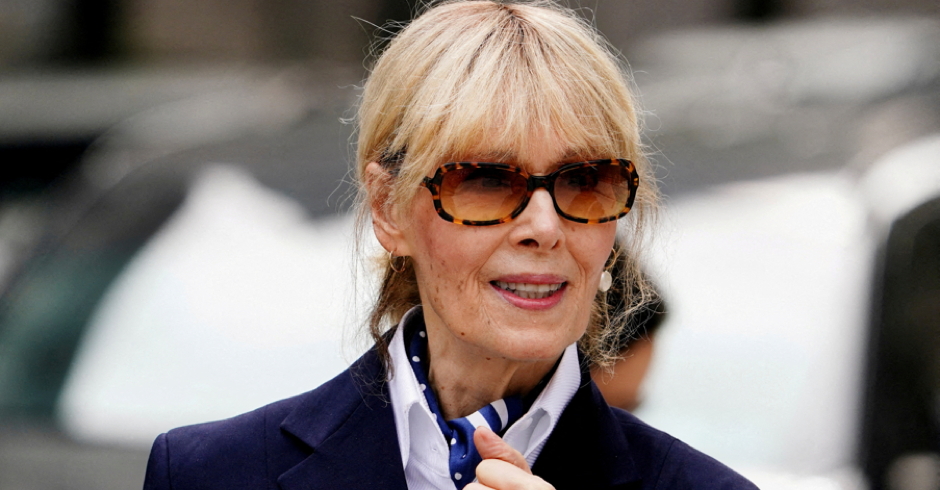
President Donald Trump’s apparent efforts to delay releasing the $5.8 million civil judgment to E. Jean Carroll are being met with a warning by the journalist’s legal team, who suggest there could be a legal maneuver for Trump to employ to forgo paying the judgment in either of the two cases he lost.
According to The Guardian, on July 4, U.S. District Judge Lewis Kaplan ordered Trump to release the $5.8 million judgment, which is in escrow, to Carroll by this coming Tuesday — or explain why he would not do so.
Carroll’s attorneys think Trump may be trying to buy time to mount another legal strategy, telling the judge that Trump’s request for an extension “appears to be little more than yet another play for time.”
“The case is separate from Trump’s appeal of a Manhattan civil jury’s 2024 award of $83.3m to Carroll for defamation,” The Guardian explains. “But her lawyers have suggested a legal scenario in which the president might seek to conjoin the cases and further delay payment of both.”
Carroll’s attorney Roberta Kaplan (no relation to the judge) wrote, “We can only assume that defendant is seeking … to buy time so he can try to concoct some new basis to put off paying plaintiff presumably in connection with his forthcoming petition and motion for a rehearing.”
Trump’s former attorney, Justin Smith, in one of his final acts, wrote to the Supreme Court suggesting that his client would be appealing the $83.3 million civil judgment.
Smith argued that the Supreme Court “may wish to consider the petitions together,” given they involve the same parties.
The larger judgment case involves possible questions of presidential immunity, and that has Carroll’s attorneys concerned.
“A conjoined case, Carroll’s lawyers fear, could result in both judgments being wiped out,” The Guardian reports.
The president has also made clear he is no fan of Judge Kaplan, after the jurist made several rulings that “angered” Trump.
“What else can you expect from a Trump Hating, Clinton appointed judge, who went out of his way to make sure that the result was as negative as it could possible be,” Trump wrote on Truth Social in 2023, “speaking to, and in control of, a jury from an anti-Trump area which is probably the worst place in the US for me to get a fair ‘trial’.”
Image via Reuters

Platner Scorched Over ‘Taking Time’ Video After New Accusation

Trump Sparks Fury Online After Posting Unblurred Video of Muslim Kindergartners in Hijabs

One Legal Maneuver Threatens to Undo Everything E. Jean Carroll Won

Inside the Group Helping MAGA Voters Walk Away — And What Finally Pushed Them