
News
‘Illegal’: Tennessee House Republicans Expelling Two Black Democrats Violates First Amendment Says Former US Attorney
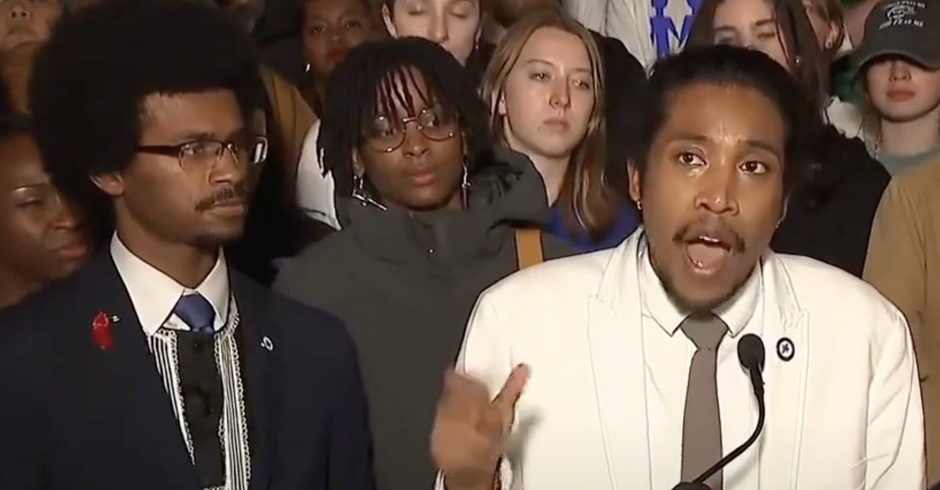
Tennessee House Republicans, led by Speaker Cameron Sexton, voted to expel two Black Democratic Representatives on Thursday, but also voted against the expulsion of a white Democrat. The actions of that right-wing super-majority legislative body are “illegal” and violate the First Amendment, argues former U.S. Attorney Joyce Vance.
“What happened in Tennessee on Thursday was outrageous and stupid and petty, and then the legislature went on to advertise their racism. It was also illegal,” Vance, a professor of law and well-known MSNBC/NBC News contributor, wrote overnight in her Substack newsletter. “It shouldn’t take long for the next stage of this to play out in the courts. But that doesn’t excuse the fact that it happened in the first place.”
Thursday evening, Republicans voted to expel state Rep. Justin Jones and state Rep. Justin Pearson. The vote to expel state Rep. Gloria Johnson failed. All three were “charged” with violating House decorum – House rules, by standing in the well and speaking in support of the thousands of protestors exactly one week earlier, who came to the state house to demand lawmakers enact gun control policies after the school mass shooting in Nashville last week.
Vance pointed to the late Julian Bond, a leader of the Civil Rights Movement and a co-founder of the Southern Poverty Law Center, who passed away in 2015.
He was also a four-term Member of the Georgia House of Representatives, but his path in the 1960’s to be able to actually represent his district was only first decided at the ballot box. Ultimately it had to be decided by the U.S. Supreme Court.
“White members of the Georgia House challenged Bond’s right to be seated,” Vance writes, after Bond issued a statement against the Vietnam War.
Bond fought to be seated but a Georgia House committee voted against him. He took it to the courts, and lost in a 2-1 federal district court ruling. He brought his case to the U.S. Supreme Court, and while waiting for that appeal to be heard so much time had passed he had to run for re-election. He won.
Although Georgia House members again refused to seat him, Bond finally won at the Supreme Court.
“The unanimous Supreme Court decision in Bond’s favor relied upon a famous First Amendment case, New York Times v. Sullivan, holding that although a state may impose a requirement that legislators take an oath of allegiance, it cannot limit their capacity to express views on local or national policy,” Vance explains, adding: “'[D]ebate on public issues should be uninhibited, robust, and wide-open,’ the Court wrote, citing the decision in Sullivan.”
Vance also points to the ruling’s conclusion, which reads:
“Legislators have an obligation to take positions on controversial political questions so that their constituents can be fully informed by them, and be better able to assess their qualifications for office; also so they may be represented in governmental debates by the person they have elected to represent them. We therefore hold that the disqualification of Bond from membership in the Georgia House because of his statements violated Bond’s right of free expression under the First Amendment.”
Jones and Pearson both spoke eloquently and passionately on the House floor to defend their right to represent their constituents, while some Republicans barely tried to hide their apparent contempt and disdain for both Black men.
Reinforcing her allegations of obvious racism against the two now-former lawmakers, Vance sums up her argument: “A challenge to those members’ First Amendment rights cannot be dressed up as a violation of decorum rules; it’s still a violation of First Amendment rights. And when two Black representatives are expelled while a white one narrowly avoids expulsion, no amount of dissembling can erase the obvious conclusion.”
Enjoy this piece?
… then let us make a small request. The New Civil Rights Movement depends on readers like you to meet our ongoing expenses and continue producing quality progressive journalism. Three Silicon Valley giants consume 70 percent of all online advertising dollars, so we need your help to continue doing what we do.
NCRM is independent. You won’t find mainstream media bias here. From unflinching coverage of religious extremism, to spotlighting efforts to roll back our rights, NCRM continues to speak truth to power. America needs independent voices like NCRM to be sure no one is forgotten.
Every reader contribution, whatever the amount, makes a tremendous difference. Help ensure NCRM remains independent long into the future. Support progressive journalism with a one-time contribution to NCRM, or click here to become a subscriber. Thank you. Click here to donate by check.
 |

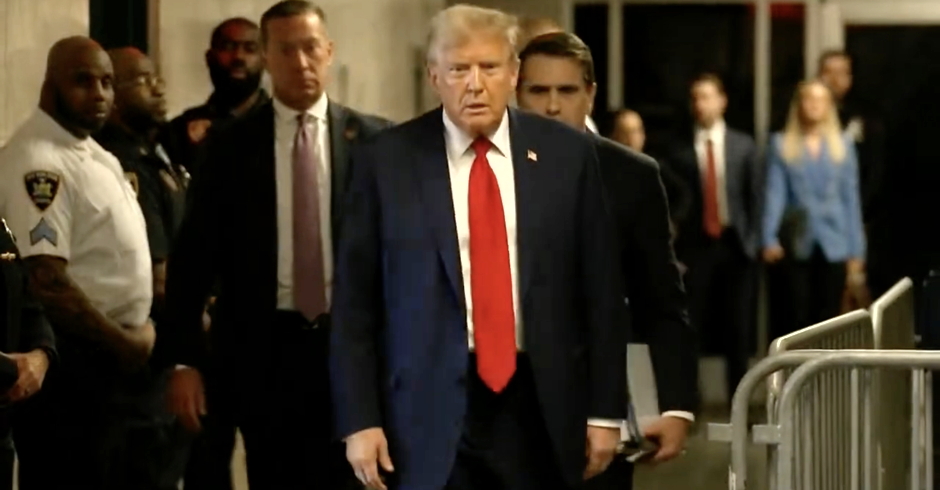
Donald Trump’s Friday morning claim Manhattan’s Criminal Courts Building is “heavily guarded” so his supporters cannot attend his trial was torched by a top CNN anchor. The ex-president, facing 34 felony charges in New York, had been urging his followers to show up and protest on the courthouse steps, but few have.
“I’m at the heavily guarded Courthouse. Security is that of Fort Knox, all so that MAGA will not be able to attend this trial, presided over by a highly conflicted pawn of the Democrat Party. It is a sight to behold! Getting ready to do my Courthouse presser. Two minutes!” Trump wrote Friday morning on his Truth Social account.
CNN’s Kaitlan Collins supplied a different view.
“Again, the courthouse is open the public. The park outside, where a handful of his supporters have gathered on trials days, is easily accessible,” she wrote minutes after his post.
READ MORE: ‘Assassination of Political Rivals as an Official Act’: AOC Warns Take Trump ‘Seriously’
Trump has tried to rile up his followers to come out and make a strong showing.
On Monday Trump urged his supporters to “rally behind MAGA” and “go out and peacefully protest” at courthouses across the country, while complaining that “people who truly LOVE our Country, and want to MAKE AMERICA GREAT AGAIN, are not allowed to ‘Peacefully Protest,’ and are rudely and systematically shut down and ushered off to far away ‘holding areas,’ essentially denying them their Constitutional Rights.”
On Wednesday Trump claimed, “The Courthouse area in Lower Manhattan is in a COMPLETE LOCKDOWN mode, not for reasons of safety, but because they don’t want any of the thousands of MAGA supporters to be present. If they did the same thing at Columbia, and other locations, there would be no problem with the protesters!”
After detailing several of his false claims about security measures prohibiting his followers from being able to show their support and protest, CNN published a fact-check on Wednesday:
“Trump’s claims are all false. The police have not turned away ‘thousands of people’ from the courthouse during his trial; only a handful of Trump supporters have shown up to demonstrate near the building,” CNN reported.
“And while there are various security measures in place in the area, including some street closures enforced by police officers and barricades, it’s not true that ‘for blocks you can’t get near this courthouse.’ In reality, the designated protest zone for the trial is at a park directly across the street from the courthouse – and, in addition, people are permitted to drive right up to the front of the courthouse and walk into the building, which remains open to the public. If people show up early enough in the morning, they can even get into the trial courtroom itself or the overflow room that shows near-live video of the proceedings.”
READ MORE: Justices’ Views on Trump Immunity Stun Experts: ‘Watching the Constitution Be Rewritten’
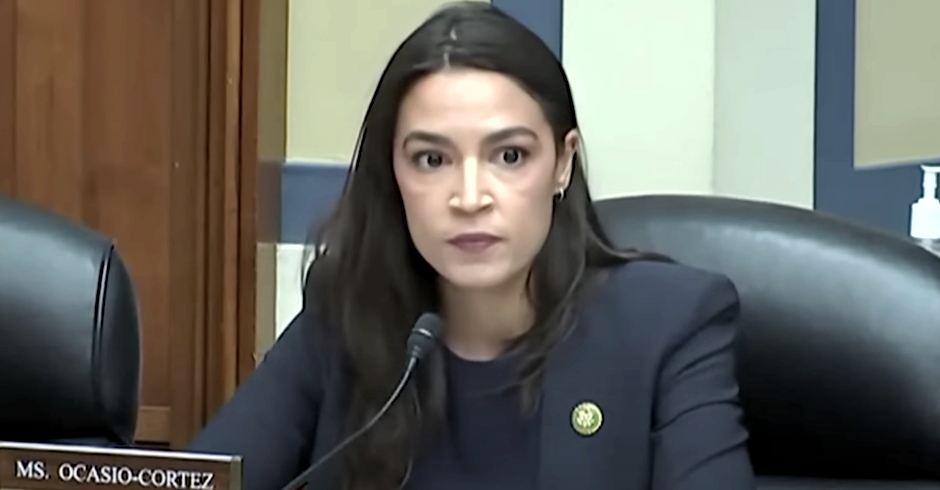
Democratic U.S. Rep. Alexandria Ocasio-Cortez is responding to Thursday’s U.S. Supreme Court hearing on Donald Trump’s claim he has “absolute immunity” from criminal prosecution because he was a U.S. president, and she delivered a strong warning in response.
Trump’s attorney argued before the nation’s highest court that the ex-president could have ordered the assassination of a political rival and not face criminal prosecution unless he was first impeached by the House of Representatives and then convicted by the Senate.
But even then, Trump attorney John Sauer argued, if assassinating his political rival were done as an “official act,” he would be automatically immune from all prosecution.
Justice Sonia Sotomayor, presenting the hypothetical, expressed, “there are some things that are so fundamentally evil that they have to be protected against.”
RELATED: Justices’ Views on Trump Immunity Stun Experts: ‘Watching the Constitution Be Rewritten’
“If the president decides that his rival is a corrupt person, and he orders the military, or orders someone to assassinate him, is that within his official acts for which he can get immunity?” she asked.
“It would depend on the hypothetical, but we can see that could well be an official act,” Trump attorney Sauer quickly replied.
SCOTUS Justice Sonia Sotomayor: “If the president … orders someone to assassinate [a rival], is that within his official acts for which he can get immunity?”
Trump attorney D. John Sauer: “It would depend on the hypothetical, but we can see that could well be an official act.” pic.twitter.com/RddEEYIUrR
— The Recount (@therecount) April 25, 2024
Sauer later claimed that if a president ordered the U.S. military to wage a coup, he could also be immune from prosecution, again, if it were an “official act.”
The Atlantic’s Tom Nichols, a retired U.S. Naval War College professor and an expert on Russia, nuclear weapons, and national security affairs, was quick to poke a large hole in that hypothetical.
“If the president suspends the Senate, you can’t prosecute him because it’s not an official act until the Senate impeaches …. Uh oh,” he declared.
RELATED: Justices Slam Trump Lawyer: ‘Why Is It the President Would Not Be Required to Follow the Law?’
U.S. Rep. Alexandria Ocasio-Cortez blasted the Trump team.
“The assassination of political rivals as an official act,” the New York Democrat wrote.
“Understand what the Trump team is arguing for here. Take it seriously and at face value,” she said, issuing a warning: “This is not a game.”
Marc Elias, who has been an attorney to top Democrats and the Democratic National Committee, remarked, “I am in shock that a lawyer stood in the U.S Supreme Court and said that a president could assassinate his political opponent and it would be immune as ‘an official act.’ I am in despair that several Justices seemed to think this answer made perfect sense.”
CNN legal analyst Norm Eisen, a former U.S. Ambassador and White House Special Counsel for Ethics and Government Reform under President Barack Obama, boiled it down: “Trump is seeking dictatorial powers.”
Watch the video above or at this link.
READ MORE: ‘They Will Have Thugs?’: Lara Trump’s Claim RNC Will ‘Physically Handle the Ballots’ Stuns
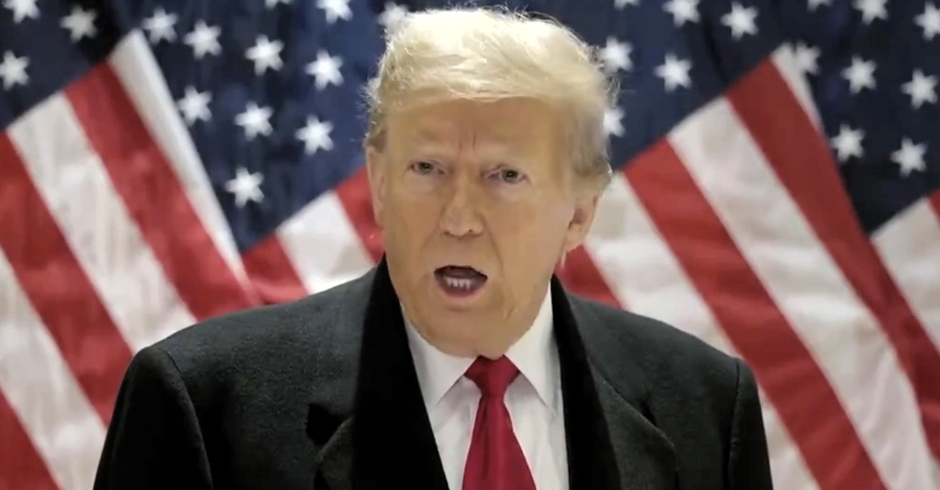
Legal experts appeared somewhat pleased during the first half of the Supreme Court’s historic hearing on Donald Trump’s claim he has “absolute immunity” from criminal prosecution because he was the President of the United States, as the justice appeared unwilling to accept that claim, but were stunned later when the right-wing justices questioned the U.S. Dept. of Justice’s attorney. Many experts are suggesting the ex-president may have won at least a part of the day, and some are expressing concern about the future of American democracy.
“Former President Trump seems likely to win at least a partial victory from the Supreme Court in his effort to avoid prosecution for his role in Jan. 6,” Axios reports. “A definitive ruling against Trump — a clear rejection of his theory of immunity that would allow his Jan. 6 trial to promptly resume — seemed to be the least likely outcome.”
The most likely outcome “might be for the high court to punt, perhaps kicking the case back to lower courts for more nuanced hearings. That would still be a victory for Trump, who has sought first and foremost to delay a trial in the Jan. 6 case until after Inauguration Day in 2025.”
Slate’s Mark Joseph Stern, who covers the courts and the law, noted: “This did NOT go very well [for Special Counsel] Jack Smith’s team. Thomas, Alito, and Kavanaugh think Trump’s Jan. 6 prosecution is unconstitutional. Maybe Gorsuch too. Roberts is skeptical of the charges. Barrett is more amenable to Smith but still wants some immunity.”
READ MORE: ‘To Do God Knows What’: Local Elections Official Reads Lara Trump the Riot Act
Civil rights attorney and Tufts University professor Matthew Segal, responding to Stern’s remarks, commented: “If this is true, and if Trump becomes president again, there is likely no limit to the harm he’d be willing to cause — to the country, and to specific individuals — under the aegis of this immunity.”
Noted foreign policy, national security and political affairs analyst and commentator David Rothkopf observed: “Feels like the court is leaning toward creating new immunity protections for a president. It’s amazing. We’re watching the Constitution be rewritten in front of our eyes in real time.”
“Frog in boiling water alert,” warned Ian Bassin, a former Associate White House Counsel under President Barack Obama. “Who could have imagined 8 years ago that in the Trump era the Supreme Court would be considering whether a president should be above the law for assassinating opponents or ordering a military coup and that *at least* four justices might agree.”
NYU professor of law Melissa Murray responded to Bassin: “We are normalizing authoritarianism.”
Trump’s attorney, John Sauer, argued before the Supreme Court justices that if Trump had a political rival assassinated, he could only be prosecuted if he had first been impeach by the U.S. House of Representatives then convicted by the U.S. Senate.
During oral arguments Thursday, MSNBC host Chris Hayes commented on social media, “Something that drives me a little insane, I’ll admit, is that Trump’s OWN LAWYERS at his impeachment told the Senators to vote not to convict him BECAUSE he could be prosecuted if it came to that. Now they’re arguing that the only way he could be prosecuted is if they convicted.”
READ MORE: Biden Campaign Hammers Trump Over Infamous COVID Comment
Attorney and former FBI agent Asha Rangappa warned, “It’s worth highlighting that Trump’s lawyers are setting up another argument for a second Trump presidency: Criminal laws don’t apply to the President unless they specifically say so…this lays the groundwork for saying (in the future) he can’t be impeached for conduct he can’t be prosecuted for.”
But NYU and Harvard professor of law Ryan Goodman shared a different perspective.
“Due to Trump attorney’s concessions in Supreme Court oral argument, there’s now a very clear path for DOJ’s case to go forward. It’d be a travesty for Justices to delay matters further. Justice Amy Coney Barrett got Trump attorney to concede core allegations are private acts.”
Due to Trump attorney’s concessions in Supreme Court oral argument, there’s now a very clear path for DOJ’s case to go forward.
It’d be a travesty for Justices to delay matters further.
Justice Amy Coney Barrett got Trump attorney to concede core allegations are private acts.⬇️ pic.twitter.com/F3qXi47ZT6
— Ryan Goodman (@rgoodlaw) April 25, 2024
NYU professor of history Ruth Ben-Ghiat, an expert scholar on authoritarians, fascism, and democracy concluded, “Folks, whatever the Court does, having this case heard and the idea of having immunity for a military coup taken seriously by being debated is a big victory in the information war that MAGA and allies wage alongside legal battles. Authoritarians specialize in normalizing extreme ideas and and involves giving them a respected platform.”
The Nation’s justice correspondent Elie Mystal offered up a prediction: “Court doesn’t come back till May 9th which will be a decision day. But I think they won’t decide *this* case until July 3rd for max delay. And that decision will be 5-4 to remand the case back to DC, for additional delay.”
Watch the video above or at this link.
READ MORE: ‘Doesn’t Care if Pregnant Women Live or Die’: Alito Slammed Over Emergency Abortion Remarks

Noem Defends Shooting Her 14-Month Old Puppy to Death, Brags She Has Media ‘Gasping’

President Hands Howard Stern Live Interview After NY Times Melts Down Over Biden Brush-Off

CNN Smacks Down Trump Rant Courthouse So ‘Heavily Guarded’ MAGA Cannot Attend His Trial

‘Assassination of Political Rivals as an Official Act’: AOC Warns Take Trump ‘Seriously’

Justices’ Views on Trump Immunity Stun Experts: ‘Watching the Constitution Be Rewritten’
 News3 days ago
‘Assassination of Political Rivals as an Official Act’: AOC Warns Take Trump ‘Seriously’

 News3 days ago
‘To Do God Knows What’: Local Elections Official Reads Lara Trump the Riot Act
 News3 days ago
Justices Slam Trump Lawyer: ‘Why Is It the President Would Not Be Required to Follow the Law?’
 News3 days ago
Justices’ Views on Trump Immunity Stun Experts: ‘Watching the Constitution Be Rewritten’
 OPINION2 days ago
President Hands Howard Stern Live Interview After NY Times Melts Down Over Biden Brush-Off
 OPINION2 days ago
Noem Defends Shooting Her 14-Month Old Puppy to Death, Brags She Has Media ‘Gasping’
 News2 days ago
CNN Smacks Down Trump Rant Courthouse So ‘Heavily Guarded’ MAGA Cannot Attend His Trial