Social Media Is The Missing Link To Achieving Marriage Equality
The passage of Proposition 8 in California’s 2008 election achieved many results. First, it effectively banned same-sex marriage. Second, it united and mobilized millions of gay Americans who had become complacent and assumed that gay marriage would come to pass quickly and effortlessly. Third, it forced us to re-examine the dynamics and demographics of our proponents and opponents.
As I wrote in Intellistocracy the day after the election,
“Looking at exit poll data, a composite of the person who voted “yes†to ban same-sex marriage in California is someone who is married (60%), and has children (68%), attends church weekly (84%), does not work full-time (57%), is an Independent or Republican (66%), and voted for Bush in 2004 (80%). This person also is likely to live in the suburbs (59%), and is very worried about another terrorist attack (65%).”
Supporting these findings was a study “released under the auspices of the National Gay and Lesbian Task Force Policy Institute” in January 2009:
“The study found that four factors — party identification, ideology, frequency of religious service attendance and age — drove the “yes†vote for Proposition 8. For example, more than 70 percent of voters who were Republican, identified themselves as conservative, or who attended religious services at least weekly supported Proposition 8. Conversely, 70 percent or more of voters who were Democrat, identified themselves as liberal, or who rarely attended religious services opposed the measure. More than two-thirds (67 percent) of voters 65 or older supported Proposition 8, while majorities under 65 opposed it.”
It has been widely discussed that one of the major factors that enabled Prop 8 to pass was that the No On 8 campaign did not enlist sufficient community support and did not engage those who were on the fence. We didn’t go into churches. We didn’t engage enough moderates. We didn’t battle falsehoods propagated by the Right. We didn’t educate sufficiently ourselves or others. We didn’t show typical gay families. We didn’t get the under 65 crowd to evangelize enough. Some say we didn’t fight hard enough or use all our resources. We just didn’t engage. Back to the NGLTF study:
“The study found that overall support for marriage equality has increased by 9 percent since 2000, with support increasing among every age group under age 65, across all racial and ethnic groups and among Protestants, Catholics and Jews. There are three “holdout†groups where voting patterns have not changed: Republicans, conservatives, and those 65 and older. The largest gain — up 16 percent — was among voters 45-64 years of age, followed by a 13 percent increase among voters 18-29.”
In all likelihood, we are never going to have a solid impact on these three groups. As time moves forward there will be less of a battle for what is now the 65 and older demographic. As America becomes more polarized and the Conservative movement grows, we are not going to be able to change hearts or minds there. Our best bet is to focus on where we can have the greatest impact: under 65 voters who are on the fence. Here we come the the heart of the matter.Â
From The Taskforce:
“These figures point the way to winning marriage equality for same-sex couples sooner rather than later,†said Jaime Grant, Ph.D., director of the National Gay and Lesbian Task Force Policy Institute. “Convincing the Republican Party that continued gay bashing will cripple its future is one; another is accelerating the already strong surge in support among young voters.â€
A Forrester Research study shows that the largest group of interactive media users are in the 18 to 26 age range. Exit poll data shows that 36% of the 18 to 24 age group voted for Prop 8. 41% of the 25 to 29 age group votes for Prop 8. This is a significant group that responds well to community building on such social networking sites like Facebook, MySpace, and Twitter.Â

To move public opinion forward in the 27 to 50 age groups, Forrester shows blogs are a better format and reach more of that group. 55% of the 30 to 44 age group and 54% of the 45 to 64 age group voted for Prop 8. A concerted blog campaign and partnership with existing bloggers could have a positive effect on these groups.Â
Social media was responsible for the many candlelight vigils and protests that sprung up across the nation seemingly overnight, without much effort or organization. And, just weeks after the passage, a SurveyUSA news poll found that 8% of Californians responded “yes†when asked, “Have the protesters changed your opinion on Prop 8?”.
Regardless of the results of last week’s Prop 8 challenge in the California Supreme Court, there are forty seven other states in which we need to have a stronger impact and presence.
In short, it’s time to take decisive action to do what we did not in the campaign leading up to the Prop 8 vote: change hearts and minds. And our most effective tool to reach those very segments of the population we need to most is to utilize the same tool they are using: social media.
Enjoy this piece?
… then let us make a small request. The New Civil Rights Movement depends on readers like you to meet our ongoing expenses and continue producing quality progressive journalism. Three Silicon Valley giants consume 70 percent of all online advertising dollars, so we need your help to continue doing what we do.
NCRM is independent. You won’t find mainstream media bias here. From unflinching coverage of religious extremism, to spotlighting efforts to roll back our rights, NCRM continues to speak truth to power. America needs independent voices like NCRM to be sure no one is forgotten.
Every reader contribution, whatever the amount, makes a tremendous difference. Help ensure NCRM remains independent long into the future. Support progressive journalism with a one-time contribution to NCRM, or click here to become a subscriber. Thank you. Click here to donate by check.
 |


Speaker of the House Mike Johnson (R-LA) took to X to brag about what he and his fellow House Republicans accomplished in 2025, despite Congress passing a record low number of bills.
“In 2025, the @HouseGOP delivered real results and one of the most consequential Republican agendas in history. We passed 441 America FIRST bills, codified 70 of @POTUS‘s Executive Orders, and rolled back dozens of disastrous Biden-era regulations — and we’re just getting started,” Johnson wrote.
In 2025, the @HouseGOP delivered
real results and one of the most consequential Republican agendas in history.We passed 441 America FIRST bills, codified 70 of @POTUS's Executive Orders, and rolled back dozens of disastrous Biden-era regulations — and we’re just getting… pic.twitter.com/maPZIiTRoW
— Speaker Mike Johnson (@SpeakerJohnson) December 31, 2025
The tweet included a short video laying out things House Republicans have done. In addition to the items listed in the tweet, the video gives credit to the GOP for having “secured the southern border,” “cut billions in wasteful government spending,” “protected women’s and girls’ sports,” and “passed bills to lower health care premiums for all Americans.”
READ MORE: Public Turns on GOP as Shutdown Fallout Deepens: Report
While Johnson brags about the accomplishments of the House under his leadership, the House set records for inactivity. The 119th Congress passed fewer than 40 bills this year, which the Washington Post reports as a record for the lowest legislative output in the first year of a presidency. Johnson’s House also set a record for fewest votes cast at 362.
The House was also shut down for the longest time in history this year—43 days. The shutdown was an attempt to force a vote on a temporary funding bill. In addition to the shutdown, Johnson prematurely took the House into recess this summer in an attempt to avoid a vote on compelling the Department of Justice to release all files on sex offender Jeffrey Epstein. And this month, he again adjourned the House before a plan could be voted on to cover expiring health care tax credits, despite many Republicans pushing for a vote.
Though the 119th Congress broke records for inactivity, so too did the last Congress. The 118th Congress passed fewer than 150 bills across its two-year term, according to Axios. The Speaker of the House for the majority of the Congress was again Johnson, who replaced previous speaker Kevin McCarthy after nine months in the position.
Image via Reuters
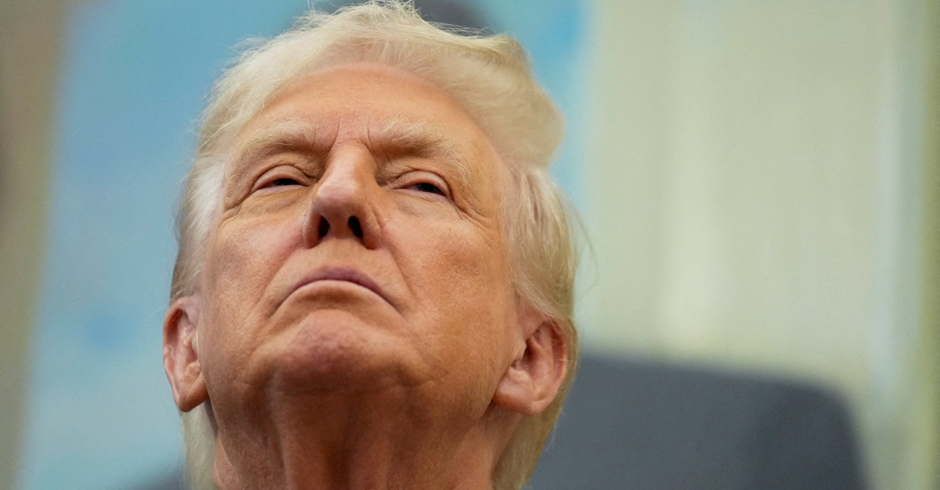
Despite President Donald Trump repeatedly making the absurd promise of cutting drug prices by “1,500%”—meaning that people would be paid to get their medicines—major drug manufacturers are intending to raise prices on 350 medications.
Medicines expected to see a rise in costs include COVID vaccines and a cancer treatment, according to reporting by Reuters. Last year, about 250 drugs got a price increase. That increase was about 4%, which is the median increase of the new prices this year.
The news comes almost two weeks after the White House announced new agreements meant to give Americans the “most-favored-nation” price. The MFN price is the same as the “lowest prices paid by other developed nations,” the Trump administration said in a statement. However, it appears the lower prices will apply only to the government’s TrumpRx prescription drug marketplace.
READ MORE: Trump Promises to Lower Drug Costs as House GOP Tries to Cut $880B From Medicaid
“Patients will be able to see massive price reductions on numerous products when purchasing directly through TrumpRx as a result of today’s actions,” the White House said.
While at least 350 drugs are going to get a price bump, about nine drugs are expected to get a price cut. Those include the anti-diabetes drug Jardiance, which is expected to have its price slashed by 40%. Jardiance is one of 10 drugs the White House negotiated a lower price for.
Critics of the plan point out that while TrumpRX may see lower prices, it may not hold for all consumers.
“These deals are being announced as transformative when, in fact, they really just nibble around the margins in terms of what is really driving high prices for prescription drugs in the U.S.,” Dr. Benjamin Rome, a health policy researcher at Brigham and Women’s Hospital in Boston, told Reuters.
He added that manufacturers appear to be setting two prices: one for direct-to-consumer sales and a negotiated price for insurance companies.
The Centre for Economic Policy Research agrees with Dr. Rome, saying that the main reason behind high drug prices is patent monopolies, according to The Hill.
Image via Reuters
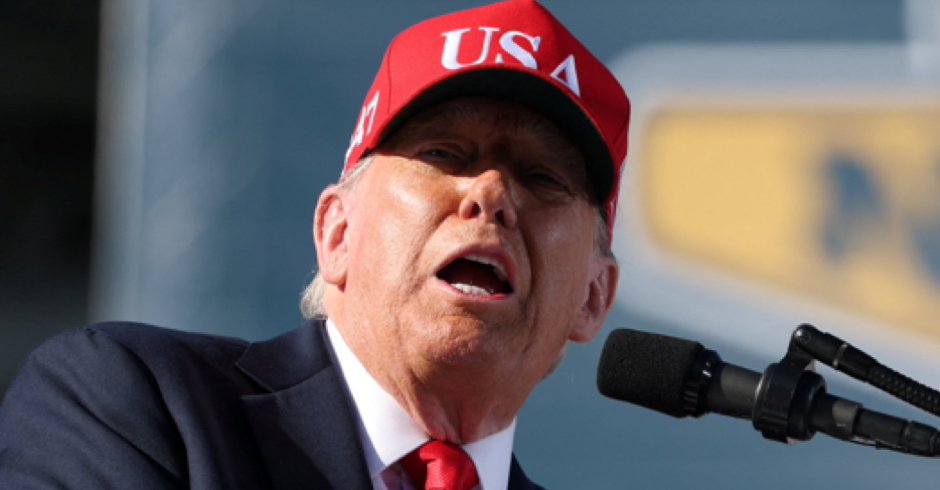
Wednesday morning, President Donald Trump repeated a racist conspiracy theory about Rep. Ilhan Omar (D-MN) and called for Somali immigrants to be deported to “perhaps the worst, and most corrupt, country on earth.”
“Much of the Minnesota Fraud, up to 90%, is caused by people that came into our Country, illegally, from Somalia. ‘Congresswoman’ Omar, an ungrateful loser who only complains and never contributes, is one of the many scammers. Did she really marry her brother? Lowlifes like this can only be a liability to our Country’s greatness. Send them back from where they came, Somalia, perhaps the worst, and most corrupt, country on earth. MAKE AMERICA GREAT AGAIN!!!” Trump wrote on Truth Social.
READ MORE: Third Video Exposes Lauren Boebert Again Falsely Suggesting Ilhan Omar Is a Terrorist
Omar, a frequent Trump critic and progressive Congresswoman, is a Somali refugee and the first Somali American to serve in Congress. She first came to the United States in 1995 as an asylee, and became a citizen at 17 in 2000.
She is also the target of various racist conspiracy theories. Trump refers to one that was going around since 2016, that Omar married her brother in order to obtain U.S. citizenship. The claim has been widely debunked.
This is not the first time Trump has invoked the racist conspiracy theory. In 2019, he made the allegations on national television during a White House press gaggle.
“There’s a lot of talk about the fact that she was married to her brother. I know nothing about it. I hear that she was married to her brother,” Trump said at the time. “I don’t know but I’m sure that somebody would be looking at that.”
Though Omar applied for a marriage license in 2002 to wed Ahmed Hirsi, they did not go through with a civil wedding and the license was never filed. In 2009, after Omar had become a citizen, she wed British national Ahmed Nur Said Elmi, though the couple separated in 2011 with Omar officially filing for divorce in 2017. Omar is, obviously, not related to either Hirsi or Elmi.
The claim first appeared on a Somali-community discussion forum and was picked up by a conservative blog, Powerline, though no evidence beyond the original post was offered.
“For someone like me, who left a war-torn country at the age of 8, who got refugee status to come to America, where in the world am I finding a sibling 15 years, 20 years later to seek to do what people accuse me of?” Omar told the Minneapolis Star Tribune in 2018, according to Snopes.
Trump’s reference to Minnesota fraud is about a video that was released this week by YouTuber Nick Shirley. Shirley’s video alleges widespread fraud in Minnesota’s child care industry. The video has gone viral among right-wing politicians and influencers with over 2 million views, according to CNN.
The video claims that child care centers, primarily those run by Somali immigrants, are not actually providing services. However, CBS News reports that not all of the locations cited by Shirley had active licenses. Of the active centers, state regulators visited them all and found no recorded evidence of fraud.
Image via Reuters

Mike Johnson Brags About House Accomplishments When It Broke Record For Fewest Bills Passed

Despite Trump Promising to Cut Drug Prices by ‘1,500%’, 350 Medicines to Become More Expensive

Donald Trump Repeats Racist Conspiracy Theory About Ilhan Omar

Marjorie Taylor Greene Calls for ‘2026 Tax Revolt’

Trump Slams Colorado Day After Vetoing Water Pipeline Project

 News3 days ago
Congresswoman Appeals Ruling That Would See Her Tried for Felony Assault at ICE Facility

 CORRUPTION3 days ago
‘My Friends Will Get Hurt’: MTG Says Trump Told Her Why He Doesn’t Want to Reveal Epstein Conspirators’ Names

 LGBT3 days ago
.Meow Wants to Use Internet Domain Registration to Help the Queer Community

 News3 days ago
Trump Refuses to Say If Military or CIA Struck Venezuelan Facility
 News1 day ago
Marjorie Taylor Greene Calls for ‘2026 Tax Revolt’
 News1 day ago
Trump Slams Colorado Day After Vetoing Water Pipeline Project
 News1 day ago
Donald Trump Repeats Racist Conspiracy Theory About Ilhan Omar
 News1 day ago
Despite Trump Promising to Cut Drug Prices by ‘1,500%’, 350 Medicines to Become More Expensive