News
Will The Very Anti-Gay, Mormon-Owned Brigham Young University Be Allowed to Join The Big 12 Conference?
Testing NCAA’s Commitment to Inclusion:Â Big 12 Conference Considers Membership Application of BYU
The National Collegiate Athletic Association (NCAA) has in recent years emerged as an advocate for equality in college athletics. Its website includes a number of LGBT resources and statements affirming its commitment to inclusion. Moreover, it has matched its words with action, using its economic power to protect LGBT athletes and fans from discrimination.
Its commitment to inclusion will soon be tested again as one of its “power conferences†considers the membership application of Brigham Young University, a school notorious for its discrimination against LGBT students, faculty, and staff.
NCAA as Advocate for Inclusion
In the spring of 2015, when Indiana Governor Mike Pence (now the Republican Party’s candidate for Vice President) signed into law an odious “Religious Freedom Restoration Act†that would have allowed businesses to refuse service to LGBT patrons on the basis of “sincerely held religious beliefs,†NCAA president Mark Emmert spoke out forcefully against the legislation and implied that the NCAA, which is headquartered in Indianapolis, was prepared not only to relocate its headquarters, where some 500 employees work, but also to move any future championships and tournaments scheduled to be played in the state.
“[Inclusion and diversity] are values that are fundamental to what college athletics are all about and what higher education is all about,†Emmert said. “For us personally in the NCAA, this is a big deal. We’re very proud of the inclusive environment in our office. We’re very proud of the environment that we’ve created here and we don’t want to lose that. We don’t want to have it put at risk.â€
He added, “We hold lots and lots of events. We’re going to have our national convention here, our offices are here. We have to say, ‘What are we going to do if this law goes into effect in July? What’s our relationship with the state of Indiana going to be?’â€
In the face of massive negative reaction to the “Religious Freedom Restoration Act,†the bill was significantly revised and its invitation to discriminate removed. Hence, Emmert did not have to go through with the implied threat.
More recently, in response to North Carolina’s discriminatory HB2, a law that nullified protections on the basis of sexual orientation and gender identity and prohibited transgender people from using public restrooms that do not conform to the gender on their birth certificates, the NCAA Board of Governors took steps to protect participants and spectators from discrimination at NCAA events.
On April 27, 2016, the NCAA  announced that it had added a new requirement for sites hosting or bidding on NCAA events: they must demonstrate how they will provide “an environment that is safe, healthy, and free of discrimination, plus safeguards the dignity of everyone involved in the event.â€
Explaining that the Association considers the promotion of inclusiveness in race, religion, sexual orientation, and gender identity a vital element in protecting the well-being of student-athletes and creating a culture of fairness, Kirk Schulz, president of Kansas State University and chair of NCAA’s Board of Governors, said “The higher education community is a diverse mix of people from different racial, ethnic, religious, and sexual orientation backgrounds. So it is important that we assure that community—including our student-athletes and fans—will always enjoy the experience of competing, and watching, at NCAA championships without concerns of discrimination.â€
Inasmuch as NCAA championships and tournaments often inject millions of dollars into the economies of host cities and states, the new requirement serves notice that failure to protect LGBT people from discrimination may be costly, as will so-called “religious liberty†bills that encourage discrimination against LGBT people.
On July 22, the Association released a questionnaire that cities that are interested in hosting future NCAA events must complete, along with specific steps they intend to follow to make certain that all participants and fans are protected from discrimination.
Big 12 Expansion
The NCAA will soon face a major test of its commitment to LGBT rights and inclusion. One of its premier conferences, the Big 12, which now consists of only ten universities, mainly in the Southwest and the Great Plains, recently announced that it would explore plans to expand, at least to its original size of twelve and possibly beyond.
The Big 12, which shrank as a result of a series of conference realignments over the past twenty years, has slipped behind the SEC, the Big Ten, and the Pac-12 conferences on a number of measures. It now consists of the following members: Baylor, Iowa State, Kansas, Kansas State, Oklahoma, Oklahoma State, Texas, Texas Christian University, and West Virginia.
Upon the conference’s announcement that it had authorized commissioner Bob Bowlsby to begin negotiations with prospective candidates, Brigham Young University, currently a member of no conference but with a large national fan base and a big stadium, indicated interest in being considered for membership. Indeed, among sports writers and fans, BYU quickly became the leading candidate for admission, along with such other schools as the University of Houston, Colorado State University, University of Cincinnati, Boise State University, and the University of Memphis, among others.
In response to the speculation that BYU would be granted membership in the Big 12, Athlete Ally, an organization devoted to ending homophobia and transphobia in sports, along with more than twenty other organizations, issued a letter on August 8 opposing membership for BYU.
Signed by such organizations as the National Center for Lesbian Rights, the National Center for Transgender Equality, the National LGBTQ Task Force, GLAAD, Campus Pride, Soulforce, and the National Organization for Women, the letter asserted that “Adding BYU would be inconsistent with Big 12 Conference membership values.â€
It pointed out that “BYU . . . actively and openly discriminates against its LGBT students and staff. It provides no protections for LGBT students. In fact, through its policies, BYU is very clear about its intent to discriminate against openly LGBT students, with sanctions that can include suspension or dismissal for being openly LGBT or in a same-sex relationship.â€
The letter noted that “BYU’s anti-LGBT policies violate both Big 12 guidelines and NCAA guidelines†and argues that adding BYU would undermine Big 12 values.
[Salt Lake City television station KSL reported on the letter and interviewed Athlete Ally founder Hudson Taylor.]
Indeed, the Big 12 Conference Handbook includes several references to discrimination, diversity, gender equity, and fairness. For example, in addition to affirming the conference’s commitment to observe Title IX requirements that prohibit discrimination on the basis of gender and sexual orientation, the Conference Handbook also says, “The Conference shall not schedule (nor participate in) any regular or postseason competition or event at sites, venues or facilities which have membership restrictions or practices which result in discrimination on the basis of gender.â€
The Handbook also spells out a policy on Diversity: “Consistent with NCAA Constitution 2.7, the Conference and its Member Institutions are committed to cultural diversity, promoting respect and sensitivity to the dignity of every person and fostering participation of all in competition, administration and governance. It is the obligation of each Member Institution to refrain from discrimination prohibited by federal and state law, and to demonstrate a commitment to fair and equitable treatment of all student-athletes and athletics department personnel.â€
As part of its Diversity policy, the Conference pledges to “Encourage an atmosphere throughout the Conference among staff and student athletes that demonstrates respect and support for each individual. As such, within the context of Conference events, the Conference will not tolerate disparaging comments, remarks, or jokes about any group of people including racist, sexist, or homophobic comments, remarks, or jokes.â€
It is difficult to see how BYU can meet such requirements.
Brigham Young University
BYU is owned and operated by the Church of Jesus Christ of Latter Day Saints (Mormons), a religion that has been at the very center of efforts to deprive LGBT people of equal rights in the United States and abroad. In many ways, BYU is less a university as generally understood than an indoctrination project of the Mormon Church, which sometimes refers to it as the “Lord’s University.â€
It severely restricts academic freedom and limits any criticism by faculty members or students that contradicts church doctrine or policy.
[The video below, from BYU’s admissions office, hyperbolically describes the school as a “world-class institution of higher learning.”]
BYU also imposes on students and faculty an Honor Code that is rigorously enforced and almost absurdly detailed. The code covers everything from academic honesty, dress and grooming standards, the use of alcohol and tobacco to what rooms guests in residential housing may enter. Not only are gambling, obscene or indecent conduct or expressions, disorderly or disruptive conduct, and involvement with pornographic, erotic, indecent, or offensive material prohibited, but so is “any other conduct or action inconsistent with the principles of The Church of Jesus Christ of Latter-day Saints.”
At one time homosexual impulses as well as homosexual behavior were punished (including by aversion therapy and reparative therapy, among other means). Now the recently revised Honor Code distinguishes between homosexual orientation and homosexual behavior, with only the latter subject to punishment. The university apparently believes that punishing someone on the basis of their homosexual conduct is more acceptable in polite society than persecuting someone on the basis of their homosexual orientation.
The section on “Homosexual Behavior†reads as follows:
“Brigham Young University will respond to homosexual behavior rather than to feelings or attraction and welcomes as full members of the university community all whose behavior meets university standards. Members of the university community can remain in good Honor Code standing if they conduct their lives in a manner consistent with gospel principles and the Honor Code.
One’s stated same-gender attraction is not an Honor Code issue. However, the Honor Code requires all members of the university community to manifest a strict commitment to the law of chastity. Homosexual behavior is inappropriate and violates the Honor Code. Homosexual behavior includes not only sexual relations between members of the same sex, but all forms of physical intimacy that give expression to homosexual feelings.â€Â
The video below, posted in 2012 by BYU student members of an unrecognized student group called “Understanding Same-Gender Attraction,†recounts the painful experiences of several LGBT students who have come out under very difficult conditions. The video is heartbreaking both because of what these young people have had to endure and, equally, because they seem to have reached a spectacularly erroneous conclusion as to how to make things get better. The LDS Church should be deeply ashamed of the spiritual terrorism it has inflicted on these and millions of other LGBT young people.
As a private university governed by a religious organization, BYU has been granted an exemption from certain Title IX requirements by the Department of Education’s Office of Civil Rights. It is also exempt from Utah’s nondiscrimination statutes. Hence, however repugnant the university’s discriminatory policies are, they are not illegal.
Moreover, no one is forced to attend such a repressive institution (though, of course, many LDS youth experience enormous family and community pressure to attend the “Lord’s University”). People who voluntarily subject themselves to the policing strictures of BYU’s Honor Code may deserve sympathy, but they cannot claim to having been duped since the university widely publicizes its expectations and values.Â
But simply because BYU’s discrimination is both legal and well known does not make it acceptable.
Response to Athlete Ally’s Letter
In response to the letter asking the Big 12 conference to reject Brigham Young University’s application for membership, the university’s athletic director Tom Holcomb issued a brief statement via Twitter: “LGBT players, coaches and fans are always welcome to the BYU campus. Everyone should be treated with respect, dignity and love.”
Another university spokesman said, “BYU welcomes as full members of the university community all whose conduct meets university standards. We are very clear and open about our honor code, which all students understand and commit to when they apply for admission. One’s stated sexual orientation is not an issue.”
Such a statement, of course, does not address the real issues posed by the letter. The question is not only whether visitors are treated with respect, or whether students are aware of the Honor Code, but also, and more pertinently, whether the discrimination practiced by Brigham Young University against its LGBT faculty and students, including student-athletes, is consistent with the values of the NCAA.
Unsurprisingly, supporters of BYU are casting themselves as victims, saying that intolerant gay bullies are advocating discrimination against them for their religious beliefs. Some are even alleging that the letter abridges the university’s First Amendment rights.
But Athlete Ally is not challenging BYU’s right to believe or practice their religious beliefs. Rather, it is challenging the NCAA to practice its own widely-touted commitment to diversity and inclusion.Â
Even BYU Law School professor Lynn Wardle recognizes that BYU has “no right to join” the Big 12. “It’s a free association issue,” not a First Amendment issue, he told Salt Lake Tribune reporter Peggy Fletcher Stack. However, he believes the attempt to keep BYU out of the Big 12 is simply “an opportunity to put pressure on BYU and embarrass it.”
By minimizing the issue of discrimination, Wardle is typical of his co-religionists in refusing to acknowledge the consequences of the discrimination practiced by his church.
In contrast, several openly gay Big 12 athletes and former athletes have expressed trepidation about traveling to BYU to compete. Former University of Oklahoma pole vaulter Tanner Williams said “I would like to see any athlete feel comfortable to be who they are in the Big 12. Adding a school that is homonegative can destroy that type of atmosphere.”
He stated that he would refuse to travel to BYU for a meet were he still competing. “LGBT athletes should not have to compete at a school where they do not feel comfortable or accepted,” he said.
Former TCU football player Vince Pryor also told Salt Lake Tribune reporter Aaron Falk that he would be apprehensive about traveling to BYU.
Pryor said that he would be disappointed were BYU welcomed into the Big 12 without making a change. “This is a huge opportunity for people on both sides of the fence, the Big 12 and BYU, to make a statement about what kind of organization and what kind of conference they’re going to be.”
Outsports co-founder Cyd Zeigler recently pointed out that other current and prospective members of the Big 12 also have problematic records of LGBT acceptance, but noted that “Probably no school has a longer, darker history in oppressing LGBT students and student-athletes than BYU.”
Pointing to the mental and emotional torment that BYU forces upon its LGBT students, he concludes that “Adding BYU to the Big 12 would be a complete rejection of the equality of LGBT people by the conference.”
Conclusion
It is not known exactly when the Big 12 will make its decision concerning Brigham Young University’s bid to join the conference. The decision could come at any time, but many observers believe that it will be announced in October, when its governing board has a regularly scheduled meeting.
BYU brings much to the table, including a huge fan base, good facilities, and a passion for sport. However, it also brings a great deal of baggage. In addition to its long and ugly history of homophobia, the university is also under investigation for its handling of sexual assaults. Allegedly, women who have reported sexual assaults have themselves been punished for violations of the Honor Code.
The reputation of the LDS Church has been damaged by its political activities directed against equal rights, but its leaders seem not to have learned very much. More importantly, church leaders seem unconcerned about the suffering they cause their own LGBT members and fail to connect the dots between their homophobic policies and statements and the alarming rates of suicide among LDS youth.
I do not harbor any illusions that sports activists will change BYU’s homophobic policies, but they deserve commendation for highlighting those polices and pointing out their inconsistency with NCAA’s stated commitment to inclusion.
Their efforts need to be placed in the context of the sports activism of the 1960s and 1970s, when athletes played a role in drawing attention to the LDS Church’s discriminatory racial policies that barred Blacks from the priesthood and from participating in most temple ordinances. A number of athletes and several universities, including Stanford, protested those policies by refusing to compete with BYU.
After decades of pressure, in 1978 church leaders finally announced that they had received a “revelation” that “every faithful, worthy man in the church may receive the Holy Priesthood.”
The NCAA has previously shown that it has the courage of its convictions. I hope that it will once again affirm its commitment to equal rights and and refuse to turn a blind eye to BYU’s blatant discrimination.
Â
Image by Ken Lund via Flickr and a CC licenseÂ
Enjoy this piece?
… then let us make a small request. The New Civil Rights Movement depends on readers like you to meet our ongoing expenses and continue producing quality progressive journalism. Three Silicon Valley giants consume 70 percent of all online advertising dollars, so we need your help to continue doing what we do.
NCRM is independent. You won’t find mainstream media bias here. From unflinching coverage of religious extremism, to spotlighting efforts to roll back our rights, NCRM continues to speak truth to power. America needs independent voices like NCRM to be sure no one is forgotten.
Every reader contribution, whatever the amount, makes a tremendous difference. Help ensure NCRM remains independent long into the future. Support progressive journalism with a one-time contribution to NCRM, or click here to become a subscriber. Thank you. Click here to donate by check.
 |

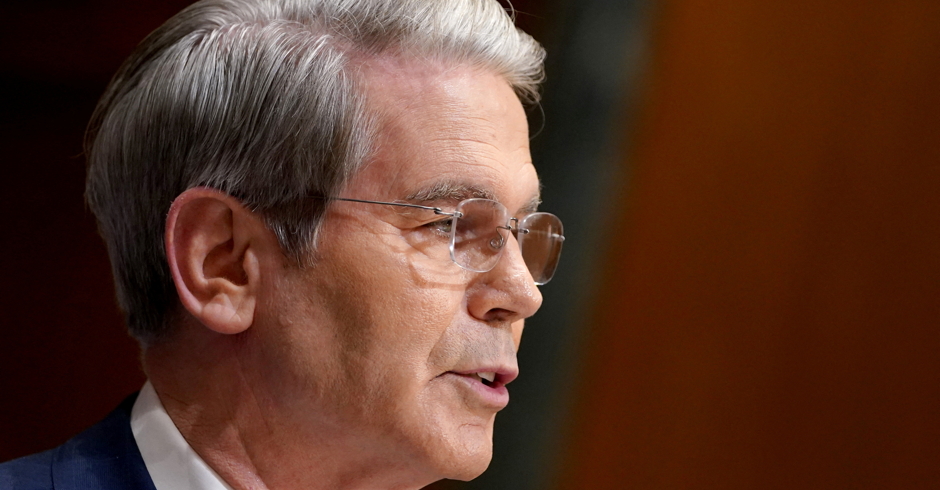
Secretary of the Treasury Scott Bessent delivered an alternative interpretation of the U.S. Supreme Court’s ruling on Friday that struck down the legal basis for the president’s sweeping global tariffs, which the justices ruled was an unlawful use of executive authority.
“President Trump will always put our national security and Americans first,” Bessent told the Economic Club of Dallas, as Mediaite reported.
“Let’s be clear about what today’s ruling was and what it wasn’t. Despite the misplaced gloating from Democrats, ill-informed media outlets, and the very people who gutted our industrial base — the court did not rule against President Trump’s tariffs,” Bessent insisted.
Rather, he continued, the six justices “simply ruled that IEEPA authorities cannot be used to raise even $1 of revenue.”
He vowed that the Trump administration would “invoke alternative legal authorities” to replace the vehicle used to collect tariffs, which he said would be “virtually” equal to the level that was previously being collected.
The Secretary, commenting on whether consumers will get refunds from the approximately $175 billion in tariffs already collected, also said, “I got a feeling the American people won’t see it.”
READ MORE: Bush-Era ‘Torture Memo’ Author Warns Trump to Stop Smearing SCOTUS Over Tariff Ruling
Image via Reuters
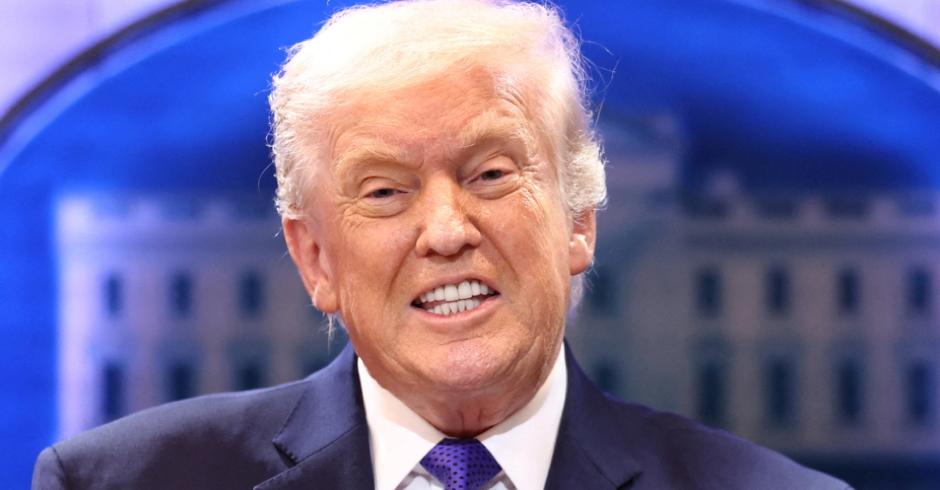
A former Bush Justice Department official is warning President Donald Trump against smearing the U.S. Supreme Court after the justices delivered a highly anticipated ruling that struck down the legal foundation of his sweeping global tariffs — a major setback for his economic agenda.
“It’s my opinion that the court has been swayed by foreign interests and a political movement that is far smaller than people would ever think,” the president said on Friday, as the Guardian reported. Trump said he was “ashamed” of the six justices who sided with the majority opinion. “Absolutely ashamed for not having the courage to do what’s right for our country.”
“They’re just being fools and lapdogs for the Rinos [Republicans in name only] and the radical left Democrats, and not that they should have anything at all to do with it,” Trump added. “They’re very unpatriotic and disloyal to our constitution.”
John Yoo, the prominent Bush administration Deputy Assistant Attorney General known for writing what have been called the “torture memos,” appeared on Fox News on Friday and warned the president.
READ MORE: Donald Trump’s Very Bad Day
“I think President Trump would be wise to no longer call the justices somehow tools of foreign influence,” he said, reminding him that the Roberts Supreme Court has been giving him “a number of wins.”
Yoo also noted that, had he been at the DOJ under President Trump, he would have been “shuddering” when he heard him speak about the court as he did, “because President Trump has got a number of other big cases pending at the court, like whether it can fire the heads of independent commissions, whether it can fire a governor of the Federal Reserve Board, whether redistricting can go on.”
Even Fox News is telling Trump to pump the brakes on accusing SCOTUS of being controlled by foreign actors, reminding him he has other “big cases” before the court.
John Yoo: “I think President Trump would be wise to no longer call the justices somehow tools of foreign influence.”
— Justin Baragona (@justinbaragona.bsky.social) February 20, 2026 at 2:31 PM
READ MORE: ‘Can’t Play Cute With Me’: Trump Tries to Spin Big-Power Snub of Peace Board
Image via Reuters
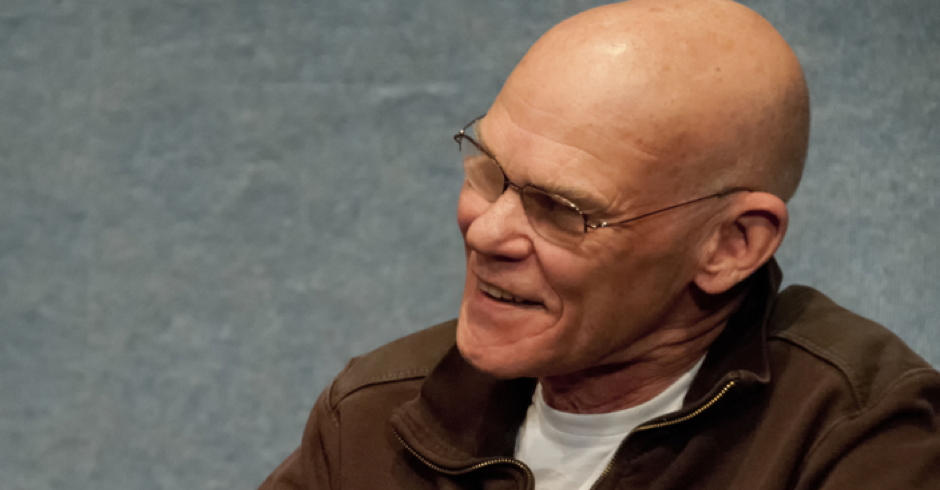
Political commentator and strategist James Carville says the Epstein files scandal is not ever going to go away.
“It’s never gonna go away, and if you think about it, it can’t go away,” Carville told to Al Hunt on their Politicon podcast.
“What do you have?” he continued. “You have a really rich guy, filthy rich … with a glamorous woman who’s harvesting young women around the world. You got princes, and Ivy League professors, and politicians, and bankers, and sports organizers, and didn’t get all of that. And then you got a dead body.”
“And then you got secrecy everywhere, and it’s not going away 30 years from now. They’re gonna still be digging through that stuff. They lied about everything,” Carville said.
READ MORE: Donald Trump’s Very Bad Day
“There’s nothing you can say to make this go away,” he continued. “And there’s so much s — — we don’t know.”
“You know, I didn’t — I must say, six months ago, I did not think that the Epstein issue would still be with us, and certainly not with us through the 2026 campaign,” Hunt said. “I was wrong.”
“There are three reasons it’s not going away. Number one, the dissembling, by the White House, and its subsidiary, the Justice Department — there clearly is a cover up of some stuff,” he added.
“Two, Ro Khanna, a liberal Democrat, and Tom Massey, a conservative Republican, are leading the fight for full exposure. They have proven to be bulldogs, and they won’t give up,” Hunt said.
He added that the third reason the Epstein files are here to stay “is those victims, the women who have courageously spoken up against the sexual abuse trafficking of Epstein and his accomplice, Maxwell, won’t be silenced until the Justice Department ends this limited hangout approach.”
Hunt also pointed to “a headline in Wednesday’s Washington Post, quote, Epstein fallout rattles the globe. Many powerful people face consequences,” which he noted was “true in every place but the Trump administration.”
READ MORE: ‘Can’t Play Cute With Me’: Trump Tries to Spin Big-Power Snub of Peace Board
Image via Shutterstock

‘Major Blow’: Supreme Court Rejects Legal Basis for Trump’s Tariffs

Donald Trump’s Very Bad Day

‘Did Not Rule Against Trump’s Tariffs’: Bessent Offers Alternative Interpretation

Bush-Era ‘Torture Memo’ Author Warns Trump to Stop Smearing SCOTUS Over Tariff Ruling

Epstein Files Scandal Is ‘Never Going to Go Away’: Carville
‘Did Not Rule Against Trump’s Tariffs’: Bessent Offers Alternative Interpretation
Bush-Era ‘Torture Memo’ Author Warns Trump to Stop Smearing SCOTUS Over Tariff Ruling
Epstein Files Scandal Is ‘Never Going to Go Away’: Carville
Donald Trump’s Very Bad Day
‘Major Blow’: Supreme Court Rejects Legal Basis for Trump’s Tariffs
 News4 days ago
‘Republicans Have to Lose’: Far Right Extremist Leader Puts Trump on Notice
 News4 days ago
How Trump Used Jesse Jackson’s Death to Argue He’s Not a Racist
 News3 days ago
Trump Administration Hit With Lawsuit for Removing Pride Flag
 News3 days ago
Trump’s Wild 24 Hour Truth Social Frenzy
 News2 days ago
‘You’re Kidding Right?’: WH Press Secretary Stunned Over ‘Falsely Called Racist’ Question
 News2 days ago
Five of the Wildest Things Trump Said at His Black History Month Celebration
 News3 days ago
Massie Warns of Growing GOP ‘Defections’

 News3 days ago
‘Gaslight America’: Marjorie Taylor Greene Blasts Trump Ahead of His Trip to Georgia