
News
‘Terrible, Wrong and Brutal for Minorities’: Appeals Court Guts Voting Rights Act
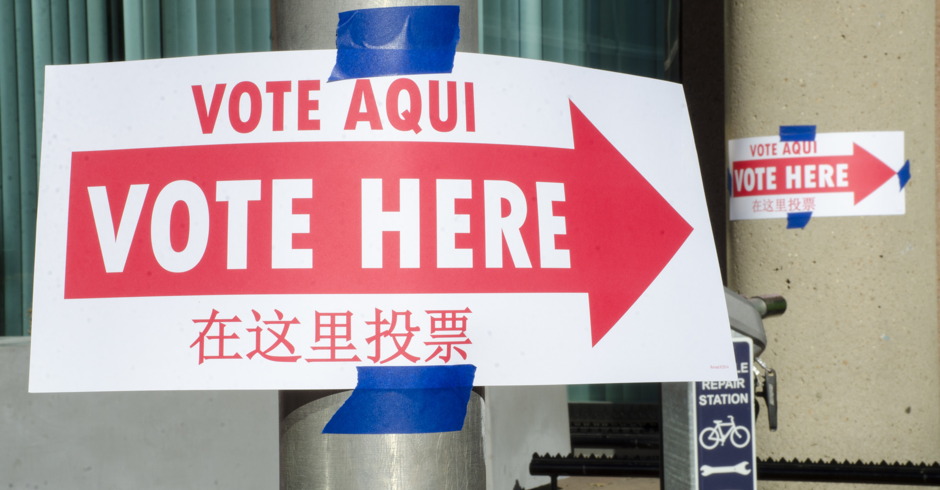
Legal experts are sounding the alarm over Monday’s Appeals Court ruling they warn “decimates” the Voting Rights Act and will be “brutal” for minority voters.
In a 2-to-1 ruling, the highly-conservative Eighth Circuit Court of Appeals ruled private plaintiffs, for example, voters and civil rights groups, do not have the right to sue to have section 2 of the Voting Rights Act (VRA) enforced. Only the U.S. Dept. of Justice, the court ruled, can sue under section 2.
“It will be a devastating near-death blow to the Voting Rights Act if it remains the law,” Wendy Weiser, the director of the Democracy Program at the Brennan Center for Justice, told The New York Times. “Radical theories that would previously have been laughed out of court have been taken increasingly seriously by an increasingly radical judiciary.”
The ruling appears to only apply to the Eight Circuit’s jurisdiction, which is Arkansas, Iowa, Minnesota, Missouri, Nebraska, North Dakota, and South Dakota, NBC News reports.
“It’s hard to overstate how important and detrimental this decision would be if allowed to stand,” warned UCLA professor of law Rick Hasen, the pre-eminent voice on election law and campaign finance. He added, “the vast majority of claims to enforce section 2 of the Voting Rights Act are brought by private plaintiffs, not the Department of Justice with limited resources. If minority voters are going to continue to elect representatives of their choice, they are going to need private attorneys to bring those suits.”
READ MORE: ‘Careful Scalpel’: Appeals Court Likely to Uphold Trump Gag Order but Narrow It Experts Say
In his headline Hasen wrote the ruling “Would Decimate the Rights of Minority Voters; Supreme Court Review Almost Certain.”
Professor of law Steve Vladeck, a CNN contributor, noted that not only has the U.S. Supreme Court reviewed section 2 case from private plaintiffs before, it has specified the Voting Rights Act is still operable because private plaintiffs have the ability to sue under section 2. Until now.
#SCOTUS in Shelby County: We don’t need preclearance to enforce the Voting Rights Act because private suits remain available to challenge specific violations of the Act directly under section 2.
Eighth Circuit: About those private suits… https://t.co/if8tw3ZZki
— Steve Vladeck (@steve_vladeck) November 20, 2023
“The 8th Circuit has gutted the last remnants of the Voting Rights Act,” declared MSNBC legal analyst Joyce Vance, a professor of law and former U.S. Attorney.
NPR called suing under section 2, “a key path for enforcing the Voting Rights Act.” Similarly to Hasen, they wrote the ruling “may set up the next U.S. Supreme Court fight that could further limit the reach of the Voting Rights Act’s protections for people of color.”
“Private individuals and groups, who did not represent the U.S. government, have for decades brought the majority of Section 2 cases to court,” NPR added. “Those cases have challenged the redrawing of voting maps and other steps in the elections process with claims that the voting power of people of color has been minimized.”
Indeed, Marc Elias, the top Democratic attorney who won all but one of more than 60 lawsuits brought by Trump and his allies in the 2020 election, explained: “In past 40 years, there have been at least 182 successful Section 2 cases–only 15 were brought solely by DOJ.”
Professor of law Eric Segall, author of “Originalism as Faith,” and “Supreme Myths: Why the Supreme Court Is Not a Court and Its Justices Are Not Judges,” issued a dire warning.
READ MORE: Hate Group Stages Boycott of Macy’s Thanksgiving Day Parade Over Nonbinary Broadway Actors
“Terrible, wrong and brutal for minorities,” Segall called it, noting that in that ruling the Eight Circuit was “trying to finish what Justice Roberts and Judge Bill Pryor wanted for decades: the eventual judicial repeal of the entire VRA.”
Monday’s ruling was written by a Trump-appointed judge, and upholds a lower court ruling also written by a Trump-appointed judge.
“Jesus Christ,” exclaimed The Nation’s justice correspondent Elie Mystal. “This is THE WAY the Voting Rights Act works. It’s THE WAY we enforce the 15th freaking amendment. I think [Chief Justice John] Roberts and [Justice Amy Coney] Barrett will join the liberals to reverse this when it gets to SCOTUS, but my God, letting Trump judges on the federal bench was a terrible plan.”
Image by GPA Photo Archive/US Dept. of State via Flickr and a CC license
Enjoy this piece?
… then let us make a small request. The New Civil Rights Movement depends on readers like you to meet our ongoing expenses and continue producing quality progressive journalism. Three Silicon Valley giants consume 70 percent of all online advertising dollars, so we need your help to continue doing what we do.
NCRM is independent. You won’t find mainstream media bias here. From unflinching coverage of religious extremism, to spotlighting efforts to roll back our rights, NCRM continues to speak truth to power. America needs independent voices like NCRM to be sure no one is forgotten.
Every reader contribution, whatever the amount, makes a tremendous difference. Help ensure NCRM remains independent long into the future. Support progressive journalism with a one-time contribution to NCRM, or click here to become a subscriber. Thank you. Click here to donate by check.
 |







CNN data analyst Harry Enten says President Donald Trump is dragging down Republican Senate candidates in six battleground states Democrats hope to win to flip the chamber in November — and Trump will bear the blame if Democrats retake the majority. Democrats need to pick up four of the six to help turn the Senate blue.
“Donald John Trump is an anchor dragging down these Republican candidates across the board,” Enten said. “If they lose the Senate, it will be because of Donald Trump becoming so unpopular, especially on the cost of living.”
The issue of affordability will “drag those Republicans down and boost the Democrats to a Senate majority,” he added.
According to polling Enten cited, Trump is underwater in Alaska, Texas, Iowa, Ohio, North Carolina, and Maine — and on affordability, he is down by double digits in those six states.
“If Democrats are going to take back control of the United States Senate it will be in large part because of one man and one man alone,” Enten said. “And it is this man right here, Donald John Trump, because he is an anchor, he is an anchor, on Republicans running for the United States Senate.”
Enten compared Trump’s popularity in 2024 to recent polling in those six states. Just two years ago his net approval rating was plus eight points. Now, it is negative 11 points.
“In 2024, on average, he won those states by eight points,” Enten explained. “And most of them he won by double digits. But look where he is now on his net approval rating. Down down, he goes into the Ohio River. Look at this, he’s at minus 11 points. It’s a nearly 20 points switcheroo in the negative direction.”
“So Donald Trump across the board, across the board, in each of the six key Senate states is now underwater in all of them, despite winning in five of six of them.”
“Why have the people in these states so turned against the President of the United States in five of the six of these that he won? It comes down to the cost of living.”
Enten showed that Trump is underwater on affordability — voters’ number one issue — by 22 points in Alaska, 21 points in Texas, 24 points in Iowa, 26 points in Ohio, 29 points in North Carolina, and 36 points in Maine.
If affordability remains an issue in November, “it will drag those Republicans down and boost the Democrats to a Senate majority.”
Image via Reuters

In a wide-ranging discussion spanning recent Supreme Court decisions, the direction of the Democratic Party, and corruption, longtime Democratic political strategist James Carville shared his fear for the future of the nation.
“I’m really scared for the United States,” Carville declared on his Politicon podcast with Al Hunt.
Carville explained that “four people on the Supreme Court … don’t believe in birthright citizenship,” which is “as clear as a bell, is right there in the Constitution.”
He was referring to the decision this week that overturned President Donald Trump’s executive order ending birthright citizenship. Some appeared dismayed that the decision, which is based on the 14th Amendment to the U.S. Constitution, was not unanimous.
“I, frankly, was very depressed by that Supreme Court final couple days,” Hunt added. “I mean, the narrative, which is what they wanted was, well, they called balls and strikes.”
“I mean,” Hunt continued, “birthright citizenship was enacted by constitutional amendment, in 1868, the 14th Amendment, and, you know, suddenly Sam Alito and Clarence Thomas and Neil Gorsuch, and really Brett Kavanaugh, say, ‘Hey, you know, we’ve been wrong for 170 years,’ or whatever it is.”
Carville explained that the 14th Amendment “says that people who are born here are citizens thereof.”
“It’s not a … They didn’t do you a favor. They didn’t do you a favor, it wasn’t some act of objectivity.”
“They don’t believe in the 14th Amendment,” Carville lamented. “They don’t believe in any of the Reconstruction Amendments. They never have, and they have never believed in the First Amendment.”
Ratified after the Civil War, the Reconstruction Amendments are the 13th, 14th, and 15th Amendments that abolished slavery, enacted birthright citizenship, and guaranteed certain equal protections and voting rights.
“Look at just what they doing in the wrecking ball, what the whole thing is,” Carville said.
He then moved to news of President Donald Trump’s financial disclosures this week.
“We know Trump’s made $2 billion since he’s been there,” Carville exclaimed, referring to his recent time in the White House.
“I’m just really fearful for the United States. I mean, in ways that I don’t think I could have ever been. It’s just, it’s beyond awful.”

Trump White House press secretary Karoline Leavitt‘s old congressional campaign still owes creditors more than $326,000 — and they have little chance of collecting, according to a NOTUS report citing a new Federal Election Commission (FEC) filing.
The debts of the campaign, from 2022, are largely from supporters who donated more than federal law permits. The total of those excessive contributions amounts to more than $210,000. NOTUS reports that federal law requires campaigns to not spend those funds, but Leavitt’s campaign currently has no cash on hand.
Leavitt, a congressional candidate from New Hampshire, lost her 2022 race to Democrat Chris Pappas. Her campaign has made no progress in raising funds to retire those debts, NOTUS notes, according to her committee’s filing.
Many political campaigns carry debt — sometimes hundreds of thousands or even millions of dollars — for years after the election, NOTUS reported. “But the Leavitt campaign debt is different, since a significant portion requires refunds for contributions that exceeded the legal limit by hundreds or thousands of dollars.”
While an FEC complaint was filed in 2022, there’s been no update.
The FEC “has been unable to take enforcement action of any sort since May 1, 2025, when the campaign finance regulator entered a de facto shutdown after losing the minimum number of commissioners to perform such high level duties.” Trump has nominated two new commissioners, but they are awaiting Senate confirmation, and no hearing has been announced.
The New Hampshire Bulletin last year reported that “campaigns are required to repay donors anything over the limit, which at the time was $2,900 per election, within 60 days, per FEC regulations. Leavitt’s campaign appears to not have done that based on this disclosure.”
Last year, OpenSecrets reported that by law, “federal political candidates are not personally liable for their committees’ campaign debt,” and her campaign’s “options for making creditors whole are limited.”
Candidates like Leavitt could “personally contribute money to their campaign committee, which in turn may pay people and companies owed money. But federal records indicate that this is rare.”
Image via Reuters

‘Fox & Friends’ Ditches Trump’s Fair After Days of ‘Bare Lawns and Thin Crowds’

Carville: ‘I’m Really Scared for the United States’

Letter From Deep Red Arkansas Scorches Pro-Trump ‘Patriotism’

Karoline Leavitt’s Campaign Still Owes Creditors Over $300,000: Report

Underwater in Six Key States Trump to Blame if Democrats Win Back the Senate: CNN Analyst
Underwater in Six Key States Trump to Blame if Democrats Win Back the Senate: CNN Analyst
Carville: ‘I’m Really Scared for the United States’
Karoline Leavitt’s Campaign Still Owes Creditors Over $300,000: Report
‘Fox & Friends’ Ditches Trump’s Fair After Days of ‘Bare Lawns and Thin Crowds’
Letter From Deep Red Arkansas Scorches Pro-Trump ‘Patriotism’
 News3 days ago
Questions Swirl After Tight-Lipped Clarence Thomas Visits House

 News2 days ago
Trump Is Screaming Another Coup Out Loud: Columnist

 News3 days ago
The GOP’s Secret Plan to Save Control of Congress Relies on This One Group

 News3 days ago
‘Tremendous Loss’: Supreme Court Deals Trump Triple Blow
 News3 days ago
Trump Vows to Keep Fighting a Case the Supreme Court Just Ended

 News2 days ago
Mitch McConnell Was Hospitalized Two Weeks Ago — We Still Don’t Know Why
 News3 days ago
Supreme Court Declares War on Democracy: Krugman

 News2 days ago
Defense Contractor Is Quietly Paying for Trump’s Latest ‘Unannounced’ White House Project