Vote. There Really Is No Choice.
In a free society, perhaps most sacred is the right to vote.
An opportunity for your voice to be heard. This is not the time to be cynical, and take it from one of the biggest there is.
I’m under no illusions, of course.
By and large, the presidency is simply a figurehead position of our oligarchical corporatocracy.
In this our military industrial complex, the oligarchs have pitted us against one another in a two-party system as a distraction, while corporations and banks get richer and more powerful.
In the final debate, Mitt Romney forgot the plot, and started parroting his agreement with President Obama on most of his foreign policy initiatives. From illegal unmanned drones in undeclared war zones to Afghanistan withdrawals, he was supposed to offer us “a choice” while our defense industry sold weapons to undermine every policy principle expressed by the candidates.
Such that a discussion about energy policy failed to discuss what the implications of deregulation might look like. Not a whisper about climate change or devastating oil spills. With debate moderators that shouldn’t be allowed to moderate a high school debate, let alone Presidential one. It took the devastation of the unprecedented storm — Sandy (which should more aptly have been called Hurricane Infahoe or Hurricane Chevron) — to wake up Americans. Although New Orleans hadn’t forgotten.
Look at the evidence. We have our identical polar opposite mirror hatreds. Democrat and Republican. Nuanced to extreme representations of how we identify ourselves are embodied by our politicians and media figureheads. Nancy Pelosi and John Boehner, John McCain and Joe Lieberman, Dianne Feinstein and Kay Bailey Hutchinson, Alan Grayson and Alan West, Rachel and Greta, Schulz and Hannity, Lawrence and Bill, the excommunicated Keith and Glenn, and the funnymen, John Stewart and Dennis Miller (was the latter actually funny). It would be nice if the right had a Bill Maher to balance things off, but they don’t.
The vicious storm, still wreaking havoc on hundreds of thousands of lives, to momentarily remind us what role government does serve (as opposed to making women pay for unnecessary vaginal ultrasounds) and what bipartisanship looks like, no matter the ideological differences or shapes and sizes of the politicians representing us.
But what we’ve learned in the last twelve years is that our elections do count, and that it does make a difference who’s in office.
From George W. Bush’s ban on stem cell research, to President Obama’s repeal of Don’t Ask, Don’t Tell, along with the appointments of John Roberts, Samuel Alito, Elena Kagan and Sonia Sotomayor, sitting on the Supreme Court.
In 2000, we saw the chilling Rehnquist/Scaila/Thomas selections hit paydirt for Republicans with the installation of a President. Culminating nine years later in a re-positioning of the court that brought us Citizen’s United, the single most significant decision relating to the funding of our political system, opening the floodgates of anonymous corporate donations. In his dissent, Justice Stevens declared:
“At bottom, the Court’s opinion is thus a rejection of the common sense of the American people, who have recognized a need to prevent corporations from undermining self government since the founding, and who have fought against the distinctive corrupting potential of corporate electioneering since the days of Theodore Roosevelt. It is a strange time to repudiate that common sense. While American democracy is imperfect, few outside the majority of this Court would have thought its flaws included a dearth of corporate money in politics.”
Despite Samuel Alito’s unprecedented and rude muttering aloud “not true” to the President during his Statement of the Union address in 2010 when the issue was raised in an unequivocal condemnation of the Court’s decision.
And despite his criticism, President Obama has hardly proved inept in navigating the post Citizens United campaign funding waters. While corporations like BP and Chevron laughed all the way to Board Room…and then banks.
The ugly, poisonous fruits of that decision is where we find ourselves today.
During the Republican primaries, along with Karl Rove’s American Crossroads and Crossroads GPS, we got to learn more about people like the egomaniacal Koch brothers, the ostentatious, multibillionaire political bankrollers like Sheldon Addleson and Foster Friess, (showing that they could sure as hell influence an election, if not buy one).
Desperate surrogates like Donald Trump, pissing all over the remaining shreds of dignity in our political discourse made a mockery of the process by which we elect what is supposed to represent the most powerful position in the world. Even if illusory.
According to Melissa Harris Perry on her show on MSNBC, a whopping $9.8 billion will be spent this year on 13,000 statewide Congressional and municipal races.
On Saturday, Harris Perry interviewed Scot Ross of One Wisconsin Now, who has been investigating the influence of money on Wisconsin’s politics, and who revealed that the little known Bradley Foundation, “since the Supreme Court declared George Bush the Victor of the 2000 election, they`ve spent in the neighborhood of $1 billion in propaganda to push forward a right-wing agenda.”
The Bradley Foundation, headed by Terry Considine and far larger than the Koch brothers, funds some of the better known “think tanks,” such as the American Enterprise Institute, Hoover Institute and Manhattan Institute. And has given money to and owns a stomach-churning, staggering array of right wing ideologues and politicos.
Among the valuable contributions they’ve brought to the election process — along with the junk science they fund in order to debunk climate change, and their push to privatize anything that is capable of yielding a profit — is a highly orchestrated, systematic voter suppression strategy.
One which includes positioning millions of poll workers in precincts around the country, the effect of which may yet have huge implications on this election.
Enough people across the political spectrum are concerned enough with the Citizens United decision, that chances of changing it might actually be realistic. Yet there are still dots we must continue to connect following this election. Terry Considine might be a good place to start. We don’t know the half of it yet.
Before a moderator could pull it, markomalley, at Free Republic.com asked a simple question. Would there be something illegal with Freeping an election? Followed by a strategy to disrupt the voting process. These are the kind of people Terry Considine is relying on to fulfill his agenda. Along with Mitt Romney.
One thing is certain, aside from the endless greed, lies and manipulation that define our fractured, almost unworkable political election process. No matter how much money they flood the process with, no matter how many obstacles they throw in the way, and no matter how much they try to suppress your vote. Whether by spreading vicious lies and insidious propaganda on billboards, web sites and position papers, or paying to elect the likes of Jon Huster, Ohio’s Secretary of State — the new Katherine Harris — to brazenly defy the courts and shamelessly make the fundamental right to vote, a tricky, scary, expensive proposition.
They cannot buy your vote. That alone is reason to do whatever it takes to vote this election.
Vote. There really is no choice.
Â
 Clinton Fein is an internationally acclaimed author, artist, and First Amendment activist, best-known for his 1997 First Amendment Supreme Court victory against United States Attorney General Janet Reno. Fein has also gained international recognition for his Annoy.com site, and for his work as a political artist. Fein is on the Board of Directors of the First Amendment Project, “a nonprofit advocacy organization dedicated to protecting and promoting freedom of information, expression, and petition.†Fein’s political and privacy activism have been widely covered around the world. His work also led him to be nominated for a 2001 PEN/Newman’s Own First Amendment Award.
Enjoy this piece?
… then let us make a small request. The New Civil Rights Movement depends on readers like you to meet our ongoing expenses and continue producing quality progressive journalism. Three Silicon Valley giants consume 70 percent of all online advertising dollars, so we need your help to continue doing what we do.
NCRM is independent. You won’t find mainstream media bias here. From unflinching coverage of religious extremism, to spotlighting efforts to roll back our rights, NCRM continues to speak truth to power. America needs independent voices like NCRM to be sure no one is forgotten.
Every reader contribution, whatever the amount, makes a tremendous difference. Help ensure NCRM remains independent long into the future. Support progressive journalism with a one-time contribution to NCRM, or click here to become a subscriber. Thank you. Click here to donate by check.
 |


A federal appeals court handed President Donald Trump a loss on Wednesday in his quest for the entire court to re-hear his appeal in the $83 million E. Jean Carroll civil defamation case.
CNN reports that the court’s decision now allows the president to petition the U.S. Supreme Court to hear his claims arguing presidential immunity. The high court established broad criminal immunity for all presidents in 2024 for official acts.
A panel of judges earlier had affirmed a jury verdict that Trump had defamed Carroll in 2022 when he “denied her allegations of sexual assault, said she wasn’t his type, and suggested she made up the allegations to sell copies of her new book,” according to CNN.
Separately, the following year, a jury found Trump liable for sexual abuse and defamation “over an alleged assault that occurred in the mid-1990s at a New York department store and for statements he made in 2019 denying it happened.”
Trump has argued that the U.S. Department of Justice should have been substituted for him as the defendant. Since the DOJ cannot be sued for defamation, the case would have been ended.
Courthouse News adds that the majority of judges on Wednesday “concluded the court had correctly held that presidential immunity is waivable and that had Trump indeed waived it in the Carroll case.”
“If any other litigant had failed to raise an affirmative defense in this way, there would be no question as to whether he waived his right to assert it,” U.S. Circuit Judge Denny Chin wrote.
Trump has denied all wrongdoing.
READ MORE: ‘Mockery of the Law’: Supreme Court Weakens Voting Rights Act in ‘Earthquake’ Ruling
Image via Reuters
Republicans are reaching back into their old playbook to try to attract voters to support them in the midterms: tax cuts.
But their efforts are tied to lowering taxes on capital gains — such as stocks and homes — which could disproportionately favor wealthy Americans.
Bloomberg News reports that some Republicans want to tie capital gains taxes to inflation, which could reduce the tax burden.
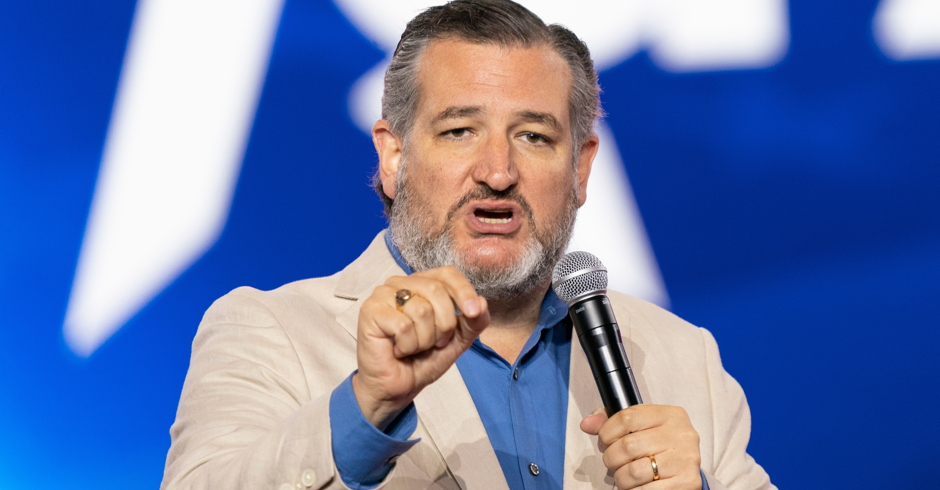
“It would be the biggest step we could do to counteract the massive inflation under Joe Biden and the Democrats and have a positive impact on affordability, particularly affordability of housing, between now and the midterms,” Senator Ted Cruz (R-TX) told Bloomberg.
Cruz argued that the proposal would encourage homeowners to sell existing homes, which could free up the housing supply. He also said it would encourage Americans to sell stocks.
READ MORE: ‘Mockery of the Law’: Supreme Court Weakens Voting Rights Act in ‘Earthquake’ Ruling
“Despite enthusiasm among key Republicans, the proposal faces challenges. For starters, another big tax and spending bill would require near unanimous support in the fractured GOP,” Bloomberg reported. “Republicans have discussed compiling a fresh tax-cut package this year to serve as a follow-up to Trump’s 2025 ‘One Big Beautiful Bill’ to demonstrate to voters that they are taking steps to address unease about the economy.”
Bloomberg reported that the “disproportionate benefit for the wealthy would hand Democrats another attack line heading into a midterms where the party has already painted Republicans’ recent sweeping budget law as a give-away to the rich.”
Brendan Duke, Senior Director for Federal Budget Policy at the Center on Budget and Policy Priorities, noted: “Only 1% of the benefits would go to the bottom 80%–after raising taxes on them thru tariffs, cutting Medicaid & SNAP, and letting ACA enhancements expire.”
Critics slammed the GOP proposal.
“I can’t think of a better indictment of the Republican party and the con they’ve played on working class people than their go-to idea for addressing affordability is a capital gains tax cut,” wrote Neera Tanden, who served as the Director of the Domestic Policy Council under President Joe Biden.
“Not for nothing, but this is another broken trickle-down hack idea,” declared Lincoln Project co-founder Reed Galen.
READ MORE: King Charles Discreetly Rebukes Trump in Historic Address to Congress: Report
Image via Shutterstock
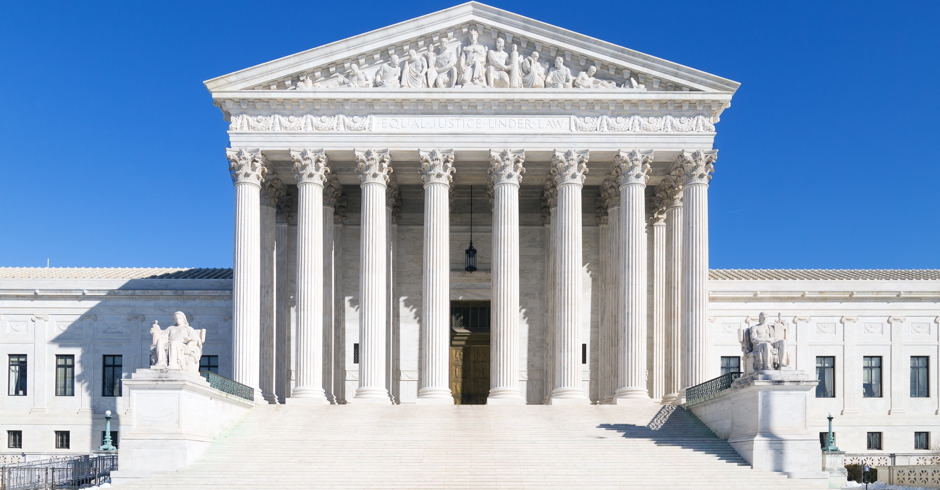
The majority-conservative Roberts Supreme Court on Wednesday further eroded the Voting Rights Act, tossing out Louisiana’s congressional district map after a group of non-African American voters sued, arguing the map constituted an unconstitutional racial gerrymander. Legal experts are warning the decision “will threaten Black and brown political representation for generations in Southern states.”
Justice Samuel Alito wrote the 6-3 ruling in the case, Louisiana v. Callais, with all six Republican-appointed justices in the majority and all three Democratic appointees dissenting. Justice Elena Kagan, writing for the dissenters, warned that the consequences would be “far-reaching and grave” and that Section 2 of the Voting Rights Act was now “all but a dead letter.”
USA Today reported that the “decision could ultimately reduce the number of Black and Hispanic members of Congress and boost Republicans’ chances of winning more seats in the U.S. House, where they have a thin majority.”
“It will now be easier for Republicans to draw maps that favor their party,” the paper observed, “particularly in the South where a voter’s race closely aligns with party preference.”
Critics and legal experts blasted the Court’s decision.
“Today’s VRA decision is intellectually dishonest and wrong,” wrote noted Democratic attorney Marc Elias. “The conservatives basically said: Black people can vote for their preferred candidates, as long as they prefer the right candidates — which will be Republicans. An [absolute] mockery of the law and stain on the court.”
READ MORE: King Charles Discreetly Rebukes Trump in Historic Address to Congress: Report
Elias also wrote that in its decision, the Supreme Court “kneecapped the Voting Rights Act (VRA), the landmark civil rights law that restricted racial gerrymandering and racial discrimination in voting for more than fifty years.”
The Democracy Docket social media account added: “Today’s decision will threaten Black and brown political representation for generations in Southern states.”
Democracy Docket, which was founded by Elias, also warned that today’s Supreme Court decision could usher in an additional 27 Republican-held seats in Congress and secure “GOP House control for at least a generation.”
Election law expert Rick Hasen slammed the Alito decision.
“It is hard to overstate what an earthquake this will be for American politics,” he wrote at his Election Law Blog. “Justice Alito knows exactly what he’s doing: make it seem like he’s not gutting the Voting Rights Act through technical language, turning both the statute and the Constitution on its head. It’s the product of his long mission: to favor the white Republicans he seems to think he represents on the Supreme Court, rather than all Americans.”
NAACP President Derrick Johnson wrote that the decision “is a devastating blow to what remains of the Voting Rights Act, and a license for corrupt politicians who want to rig the system by silencing entire communities.”
“The Supreme Court betrayed Black voters, they betrayed America, and they betrayed our democracy,” he added, calling it “a major setback for our nation” that “threatens to erode the hard-won victories we’ve fought, bled, and died for.”
READ MORE: Trump ‘Frustrated’ by Ballroom Legal Battles — So GOP Wants You to Pay for It: Report
Image via Shutterstock

Trump Running Out of Options in $83 Million Case After Court Rejects Rehearing Bid

‘Mockery of the Law’: Supreme Court Weakens Voting Rights Act in ‘Earthquake’ Ruling

GOP’s Midterm Fix for Voter Anxiety Is Tax Cuts — For the Wealthy: Report
Trump Running Out of Options in $83 Million Case After Court Rejects Rehearing Bid
GOP’s Midterm Fix for Voter Anxiety Is Tax Cuts — For the Wealthy: Report
‘Mockery of the Law’: Supreme Court Weakens Voting Rights Act in ‘Earthquake’ Ruling

King Charles Discreetly Rebukes Trump in Historic Address to Congress: Report

Trump White House Blames Democrats’ ‘Unhinged Rhetoric’ for Inciting WHCD Attack

 News3 days ago
Trump ‘Frustrated’ by Ballroom Legal Battles — So GOP Wants You to Pay for It: Report

 News3 days ago
‘Hateful’: Melania Trump Demands ABC ‘Take a Stand’ Against Jimmy Kimmel
 News3 days ago
‘This Will Backfire’: DeSantis’s New Redistricting Map Is Already in Trouble
 News2 days ago
King Charles Discreetly Rebukes Trump in Historic Address to Congress: Report
 News3 days ago
Democrats Still Haven’t Fixed Why Voters Dislike Them — And It Could Cost Them: Columnist

 News2 days ago
FCC Poised to Review Disney Licenses Amid Trump Pressure Over Kimmel Joke: Report
 News2 days ago
Coming Price Spike Made Worse by Trump Could Deal ‘Fatal Blow’ to GOP: Report
 News2 days ago
Trump White House Blames Democrats’ ‘Unhinged Rhetoric’ for Inciting WHCD Attack