Obama’s Commencement Address At Booker T. Washington High School
THE WHITE HOUSE
Office of the Press Secretary
____________________________________________________________________________________________________________________________________________________
May 16, 2011
Remarks of President Barack Obama
Booker T. Washington High School Commencement
Monday, May 16, 2011
Memphis, Tennessee
Â
As Prepared for Delivery –
Â
Thank you, Chris. Hello, Memphis! And congratulations to the Class of 2011! You know, being President is a great job. I get a cool plane. I have a theme song. But what I enjoy most is having a chance to come to a school like Booker T. Washington High School and share this day with its graduates.
Â
I am so proud of each and every one of you. You made it – and not just through high school. You made it past Principal Kiner. I can tell she is not messing around. I’ve only been in Memphis a couple of hours, but I’m pretty sure I’d do whatever she told me to do.
Â
I had the chance to meet her and her daughter, Amber a little while ago. Amber actually goes to another high school. Turns out, she was worried that the boys would be afraid to talk to her with her mom lurking in the hallways. This is why my next job will be principal at Sasha and Malia’s high school. And then president of their college.
Â
Let me also say to Alexis and Vashti – I heard that you were a little nervous about speaking today, but now I’m nervous about following you. You both did a terrific job. And we’ve had some great performances by Shalonda, Tecia, Paula, and the jazz band.
Â
Last but not least, I want to recognize all the people who helped you reach this milestone: the parents and grandparents, aunts and uncles, sisters and brothers, friends and neighbors who have loved you and stood behind you every step of the way. And I want to acknowledge the devoted teachers and administrators of Booker T. Washington who believed in you, who kept the heat on you, and who have never treated teaching as a job – but as a calling.
Â
Every commencement is a day of celebration. But this one is especially hopeful. That’s because some people say that schools like BTW just aren’t supposed to succeed in America. You’ll hear them say, “The streets are too rough in those neighborhoods.â€Â Or “The schools are too broken.â€Â Or “Those kids can’t learn.â€
Â
Well, we are here today because every single one of you stood up and said, “Yes we can.â€Â Yes we can learn. Yes we can succeed. You decided that you weren’t going to be defined by where you came from, but by where you want to go – by what you want to achieve, by the dreams you hope to fulfill.
Â
Just a couple of years ago, this was a school where only about half the students made it to graduation. For a long time, just a handful headed to college each year.
Â
But at BTW, you changed all that. You created special academies for ninth graders, to start students off on the right track; you made it possible for kids to take AP classes and earn college credits; you even have a team that takes part in robotics competitions so students can learn with their hands by building and creating. And you didn’t just create a new curriculum. You created a new culture – a culture that prizes hard work and discipline; a culture that shows every student here that they matter, that their teachers believe in them. As Principal Kiner says, the kids have to know that you care, before they care what you know.
Â
Because you created this culture of caring and learning, today we are standing in a very different Booker T. Washington High. Today, this is a place where more than four out of five students are earning a diploma – a place where 70 percent of the graduates will continue their education; where many will be the very first in their families to go to college.
Â
Today, BTW is a place that has proven why we can’t accept any excuses when it comes to education; that in the United States of America, we should never accept anything less than the best our children have to offer. As your teacher Steve McKinney, a.k.a. Big Mac, said in the local paper, “[W]e need everyone to broaden their ideas about what is possible. We need parents, politicians, and the media to see how success is possible, how success is happening every day…â€
Â
That’s why I came here today – because if success can happen here at Booker T. Washington, it can happen anywhere in Memphis. It can happen throughout Tennessee. And it can happen all across America.
Â
Ever since I became President, my administration has been working hard to make sure that we build on the progress that’s taking place at schools like this. We’ve got to encourage the kind of change that’s led not by Washington, D.C., but by teachers and principals and parents; by entire communities; by ordinary people standing up and demanding a better future for their children. We have more work to do so that every child can fulfill his or her God-given potential. And here Tennessee has been a leader, one of the first winners of the nationwide “Race to the Top†we’ve launched to reward the kind of results you’re getting at BTW.
Â
This isn’t just an issue for me. I’m standing here as President is because of the education I received. My father left my family when I was two years old. And I was raised by a single mom who struggled at times to provide for me and my sister. But my mother and my grandparents pushed me to excel in school. And they kept pushing me, especially on those rare occasions where I’d slack off or get into trouble. I’m sure no one here’s ever done something like that.
Â
I’m lucky they kept pushing. I’m lucky my teachers kept pushing. Because education made all the difference in my life. And it’s going to make an even greater difference in your lives – not just for your own success, but for our country’s success. We live in a new world. Believe or not, when you’re looking to get a job, you’re not just competing against people in Nashville or Atlanta, but in places like Beijing and Mumbai. That’s some tough competition. And you need to be prepared for it. As a country, we need all of our young people to be ready – to earn those high school diplomas, to earn those college diplomas, to get certified in a trade or profession.
Â
Through education, you can also better yourselves in other ways. You learn how to learn – how to think critically and find solutions to unexpected challenges.  I remember we used to ask our teachers, “When am I going to need algebra?â€Â Well, you may not have to solve for x to get a good job or be a good parent. That’s true. But you will need to think through tough problems. You will need to think on your feet. So, math teachers, you can tell your students that the President says they need algebra.
Â
Education also teaches you the value of discipline – that the greatest rewards come not from instant gratification, but from sustained effort and hard work. It’s a lesson that’s especially important today, in a culture that prizes flash over substance, that tells us the goal in life is to be entertained, that says you can be famous just for being famous.
Â
Finally, with the right education, both at home and at school, you can learn how to be a better human being. For when you read a great story or learn about an important person in history, it helps you imagine what it would be like to walk in someone else’s shoes, to know their struggles. The success of our economy will depend on your skills, but the success of our community will depend on your ability to follow the Golden Rule – to treat others as you would like to be treated. We’ve seen how important this is even in the past few weeks, as communities in Memphis and across the South have banded together to deal with flood waters and to help each other in the aftermath of terrible tornadoes and storms.
Â
All of these qualities – empathy, discipline, the capacity to solve problems and think critically – these skills don’t just change how the world sees us. They change how we see ourselves.  They allow each of us to seek out new horizons and opportunities with confidence – with the knowledge that we’re ready, that we can face obstacles and challenges and unexpected setbacks. That is the power of your education. That is the power of the diploma you receive today.
Â
It’s something that Booker T. Washington himself understood. He entered this world a slave on a southern plantation. But he would leave it as the leader of a growing civil rights moment and the President of the world-famous Tuskegee Institute.
Â
You see, Booker T. Washington believed that change and equality would be won in the classroom. So he convinced folks to help him buy farmland. Once he had the land, he needed a school. So he assigned his first students to actually build the chairs and desks and even a couple of the classrooms. And you thought your teachers were tough.
Â
Booker T. Washington ran a tight ship. He’d even ride the train to Tuskegee and scare some of the new students. This was before YouTube and TMZ, so the kids didn’t recognize him right away. He’d walk up to them and say, ‘Oh, you’re heading to Tuskegee. I heard the work there is hard. I heard they give the students too much to do. I hear the food is terrible. You probably won’t last three months.’ But the students would reply that they weren’t afraid of hard work. They were going to complete their studies no matter what Booker T. Washington threw at them.
Â
The truth is, not a single one of the graduates here today has had it easy. Not a single one of you were handed anything on a silver platter. You had to work for it. You had to earn it. But most of all, you had to believe in yourselves.
Â
I think of Chris’s story, and what he’s faced in his life – losing his father to violence at such a young age, but knowing in his heart that he could take a different path. I think of all the graduates here who had to leave their homes when their apartments were torn down, but who took two buses each morning to come back to BTW.
Â
I think of Eron Jackon. Eron has known a lot of setbacks in her young life. There was a period when she lashed out. She got into trouble. She made mistakes. And when she first came to Booker T. Washington, she struggled.
Â
There are plenty of people out there who would have counted Eron out. There are plenty of people who would have thought of her as another statistic. But that’s not how the teachers at Booker T. Washington saw her. And, more importantly, that’s not how Eron saw herself. She kept coming back to school. She didn’t give up. She didn’t quit. And in time, she became a great student. She remembered what Principal Kiner told her. “You can’t let the past get you down. You have to let it motivate you.â€
Â
Now, Eron is graduating, and she’s going to keep studying to get her barber’s certificate so she can cut hair and save for college. She’s working toward her dream of becoming a lawyer. Eron’s got a bright future ahead of her.
Â
Each of you has a unique story to tell; each of you knows what it took for you to get here. But in reaching this milestone, there is also a common lesson shared by every graduate in this hall today. Chris said it himself in a recent interview.
Â
“It’s not where you are or what you are,†he said. “It’s who you are.â€
Â
Yes, you’re from South Memphis. Yes, you’ve always been underdogs. No one has handed you a thing. But that also means that whatever you accomplish in your lives, you’ll have earned it. Whatever rewards and joys you reap, you’ll appreciate them that much more because they will have come through your sweat and tears; the product of your efforts and talents. You’ve shown more grit and determination in your childhoods than a lot of adults ever will.
Â
That’s who you are.
Â
So, Class of 2011, the hard road doesn’t end here; your journeys have just begun. And your diploma isn’t a free pass – it can’t protect you against every setback or challenge or mistake. You’ve got to keep working hard. You’ve got to keep pushing yourselves. But if you do, I am confident about your futures. I am hopeful and excited about all that you can achieve. And I know that, armed with the skills and experiences you’ve gained at Booker T. Washington High School, you are ready to make your mark on the world.
Â
Thank you. God bless these graduates. And may God bless the United States of America.
Â
Now, let’s hand out some diplomas.
Â
###
Â
Â
Enjoy this piece?
… then let us make a small request. The New Civil Rights Movement depends on readers like you to meet our ongoing expenses and continue producing quality progressive journalism. Three Silicon Valley giants consume 70 percent of all online advertising dollars, so we need your help to continue doing what we do.
NCRM is independent. You won’t find mainstream media bias here. From unflinching coverage of religious extremism, to spotlighting efforts to roll back our rights, NCRM continues to speak truth to power. America needs independent voices like NCRM to be sure no one is forgotten.
Every reader contribution, whatever the amount, makes a tremendous difference. Help ensure NCRM remains independent long into the future. Support progressive journalism with a one-time contribution to NCRM, or click here to become a subscriber. Thank you. Click here to donate by check.
 |


Former Republican Rep. Marjorie Taylor Greene said on Monday that she is “done supporting” her former party—but don’t expect her to join the Democratic party anytime soon.
Greene announced her disillusionment with the GOP on Monday afternoon in a tweet.
“Tucker is not the only one who is done supporting the Republican Party. There is A LOT of us that are absolutely fed up and will not support a party that betrays its voters and country. That does not mean we are turning into Democrats either. But we are DONE with the America LAST Republican Party,” Greene wrote.
Tucker is not the only one who is done supporting the Republican Party.
There is A LOT of us that are absolutely fed up and will not support a party that betrays its voters and country.
That does not mean we are turning into Democrats either.
But we are DONE with the America…
— Marjorie Taylor Greene 🇺🇸 (@mtgreenee) June 22, 2026
She referred to comments made last week by pundit Tucker Carlson. Carlson appeared on the Can’t Be Censored podcast Thursday, saying he would refrain from supporting either major party, and admitted “I’m not sure what I’m going to do.”
READ MORE: ‘Gaslight America’: Marjorie Taylor Greene Blasts Trump Ahead of His Trip to Georgia
“How could I or any American voter support a political party that’s not loyal to the United States. That puts the interests of a foreign country above those of its own citizens. It’s not possible to vote for people like that, and I’m not going to,” Carlson said, according to Mediaite, referring to America’s long-time ally Israel.
Greene famously broke with President Donald Trump earlier this year when she called for the release of the FBI files relating to disgraced financier and sex criminal Jeffrey Epstein. A former staunch ally of Trump, the two started trading barbs. Greene resigned from the House this January. Greene has long called for an isolationist foreign policy, criticizing America’s involvement in Ukraine as well as the current conflict with Iran.
Given that Greene said she has no plans on moving leftward in her politics, it’s unclear if she will refrain from voting or if she’ll throw her lot in with a third party. While American politics are primarily driven by the two major parties, a number of smaller parties also exist.
Greene may find a home in the Libertarian party, the third-largest party by voter registration. The Libertarian party has drifted rightward since its founding in 1971. While initially economically conservative but politically liberal, after 2022, the paleolibertarian Mises Caucus gained control of the party. Paleolibertarianism was developed by anarcho-capitalists, and embraces cultural conservatism. Some of the most widely known paleolibertarians include former Representative Ron Paul and the current president of Argentina, Javier Milei.
Third parties struggle to gain traction in the United States. The closest a third party has come to widespread support was the Reform Party, founded by H. Ross Perot during the 1996 presidential election after he won 18.9% of the popular vote in the 1992 presidential election as an independent candidate. Reform won 8.4% of the popular vote in the 1996 election, but no third-party or independent candidate has been as successful as Perot since.
However, the electoral college makes it difficult for a third-party presidential candidate to be elected at all. Third-party presidential candidates are often seen as spoilers for the major candidates. Perot is often believed to have won votes away from President George H.W. Bush in 1992, giving the election to President Bill Clinton. In 2000, Green Party candidate Ralph Nader was similarly accused of acting as a spoiler for Vice President Al Gore, leading to the election of President George W. Bush.
Third parties, however, have a better track record in down-ballot races. For example, Kshama Sawant won election to the Seattle City Council in 2014 as a member of the Socialist Alternative party. She held office until 2024, when she declined to seek reelection. She is currently running for a seat in the House of Representatives as an independent.
Image via Shutterstock
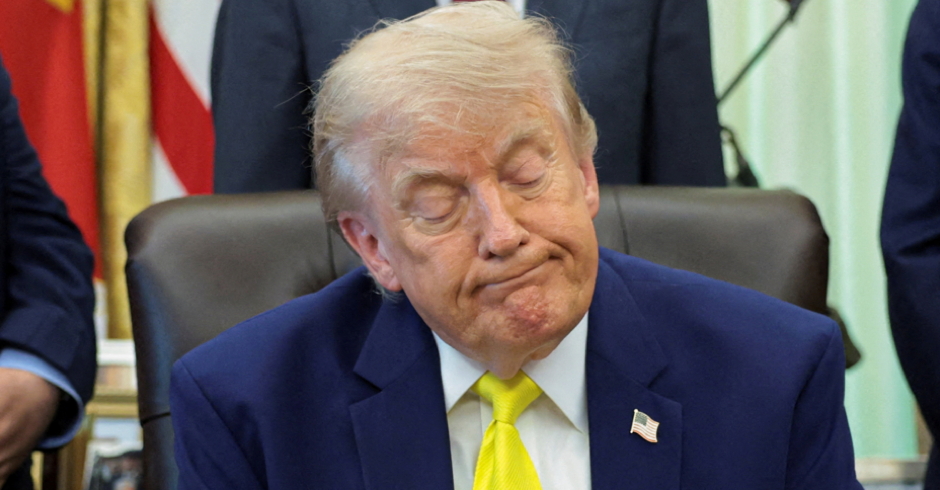
President Donald Trump announced on Monday that Iran “will agree” to allow weapon inspectors into the country in a slightly confusing social media post.
“Everybody is fully aware that Iran will agree to have Major Weapons Inspections in order to ensure ‘Nuclear Honesty’ long into the future,” the president wrote on his social media platform Truth Social.
Vice President JD Vance has been handling the negotiations with Iran to end the military conflict started by the United States and Israel at the end of February. Vance said earlier today that inspectors from the International Atomic Energy Agency would be allowed to enter Iran. The inspectors could be in the country as soon as Monday, according to the Washington Post.
READ MORE: Large Majority of Americans Say Iran Conflict Should End, Hasn’t Met Any of Trump’s Goals
Trump’s wording, however, is somewhat hard to parse. When he says “everyone is fully aware,” is Trump referring to Vance’s Monday announcement that had been widely reported? Or is Trump attempting to cast doubt, suggesting Iran may somehow be pulling a fast one, allowing inspections to provide cover for a weapons program?
Either way, the allowing of weapons inspectors into Iran is similar to what former President Barack Obama’s administration negotiated for in 2015. The Obama-era deal called for IAEA inspectors to make sure Iran was complying with the deal, and was not developing nuclear weapons. But in 2018, after Trump ended the agreement, Iran started to block IAEA inspectors from parts of their nuclear program. Since then, IAEA inspectors do not know the status of Iran’s enriched uranium, according to the Washington Post.
One year ago from Monday, the U.S. struck Iranian sites believed to hold stockpiles of enriched uranium. Since then, Trump has claimed that the strike “completely and totally obliterated” the country’s nuclear enrichment facilities, however, this has never been verified. Even at the time, the Pentagon said that Iran’s nuclear program had only been “degraded…by two years.” Trump’s national intelligence director testified prior to the strike that there was no evidence that Iran’s existing nuclear program was meant to build weapons, according to the Military Times.
Iran has long promised not to build or obtain nuclear weapons. In 1970, Iran signed the Nuclear Non-Proliferation Treaty which deemed the country a non-nuclear state.
While Trump has warned that Iran could have a nuclear bomb “within six months,” the first report from the International Atomic Energy Agency since the Iran conflict started says that there has been no major change to the country’s nuclear program, according to Reuters.
Image via Reuters

Six grand jury subpoenas were quashed by a federal judge Wednesday, when it was decided that the subpoenas were filed to retaliate against Democratic Minnesota Gov. Tim Walz’s administration and the city governments of Minneapolis and St. Paul.
Chief Judge Patrick J. Schiltz of the District of Minnesota made his ruling public on Monday, granting the motion requested by the Minnesota officials to quash grand jury subpoenas related to Minnesota declaring itself to be a “sanctuary” state.
Last December, the Department of Homeland Security deployed over 3,000 agents to Minnesota as part of the largest immigration-related operation in the department’s history, Operation Metro Surge. After the killings of Renee Good and Alex Pretti by DHS agents, the state of Minnesota as well as the twin cities challenged Operation Metro Surge in court, prompting President Donald Trump to rail against the local officials on social media.
READ MORE: Trump Dangles Another Insurrection Act Threat for Minnesota
Days after Minnesota, Minneapolis and St. Paul filed suit, news reports revealed that the Department of Justice had begun to investigate Walz and Minnesota Mayor Jacob Frey. Trump administration officials said that by not supporting the actions of DHS, Walz and Frey were breaking the law.
The Minnesotan officials argued that the subpoenas were “issued as part of an unconstitutional effort to coerce” them into working with DHS and ICE.
Judge Schiltz found that though grand juries traditionally “have broad investigatory powers,” the subpoenas had exceeded those powers. Schiltz agreed that the subpoenas were in violation of the Tenth Amendment, allowing states some degree of autonomy from the federal government.
Schiltz wrote that he had “no doubt” the subpoenas were issued for the “forbidden purposes” of attempting to “harass” or “coerce” Walz and Frey “into taking official action…. a blatantly unlawful and unethical use the grand-jury process.”
“On the one hand, the evidence that the challenged subpoenas were issued for unlawful reasons is overwhelming. On the other hand, the Department has struggled-without success-to identify a single plausible investigatory justification for the subpoenas,” Schiltz wrote, pointing out that the “public record… is replete with direct evidence of the Trump administration—including the highest-ranking officials of the Department—threatening and attempting to punish states and localities that have adopted ‘sanctuary’ policies.”
“To be clear, the Court agrees with the Department that a grand-jury subpoena need not be supported by probable cause. At the same time, a grand-jury subpoena cannot be issued for an improper purpose. The fact that connections between the information sought in the subpoenas and any possible criminal violation range from extremely weak to nonexistent only adds to the overwhelming evidence that these subpoenas were not issued to investigate, but to harass, coerce, and retaliate,” Schiltz added.
Image via Shutterstock

Marjorie Taylor Greene Says She’s ‘Done Supporting’ The GOP: ‘Party Betrays Its Voters’

Donald Trump Says Iran ‘Will Agree to Major Weapons Inspections’ to Ensure ‘Nuclear Honesty’

Federal Judge Quashes ‘Retaliatory’ Subpoenas Against Minnesota Gov. Tim Walz

GOP Rep Demands Biden’s Pardons to Be ‘Declared Null and Void’

Large Majority of Americans Say Iran Conflict Should End, Hasn’t Met Any of Trump’s Goals
 News2 days ago
Marjorie Taylor Greene Says She’s ‘Done Supporting’ The GOP: ‘Party Betrays Its Voters’
 IDIOCY2 days ago
GOP Rep Demands Biden’s Pardons to Be ‘Declared Null and Void’
 News2 days ago
Federal Judge Quashes ‘Retaliatory’ Subpoenas Against Minnesota Gov. Tim Walz
 BAD PRESIDENT2 days ago
Large Majority of Americans Say Iran Conflict Should End, Hasn’t Met Any of Trump’s Goals
 News2 days ago
Donald Trump Says Iran ‘Will Agree to Major Weapons Inspections’ to Ensure ‘Nuclear Honesty’