From Over The Pond: LGBT Reflections On A Recent Visit To America
UK psychologist and professor Ian Rivers discusses his recent trip to America’s Heartland and how, as an anti-gay bullying researcher, he was received.
Editor’s note: This is Ian Rivers’ first column at The New Civil Rights Movement. We welcome him and are very grateful to have such an esteemed advocate for the LGBT community on board as a regular contributor.
This year I have visited America three times – once to Washington, D.C., once to Atlanta, Georgia, and, most recently, I visited Omaha and Lincoln, Nebraska. In Washington, D.C., and Georgia, my sexual orientation was not a problem. No one noticed. Why would they? Occasionally the odd server noticed I was British, but that was about it. To all intents and purposes I was, on those occasions, a private citizen and not someone who is going to have a significant effect upon anyone else’s life or family.
However in Nebraska it was a different story; I was there in a different context. Now, before I begin to describe my experience let me be clear on one point, I was never subjected to homophobia of any description. I was met with warmth and respect, and for this I am truly grateful. The people I met in Nebraska were giving, supportive and willing to listen. Why were they listening to me? Well, I was an invited speaker at conference on bullying behavior and later I was an attendee at a think tank held at the University of Nebraska-Lincoln.
For those of you who have no idea who Ian Rivers is, I am a psychologist. I am also professor of human development at Brunel University London, and a visiting professor of education at Anglia Ruskin University. I was one of the very first people to study the phenomenon that we now call “homophobic bullying.” My research was neither profound nor ground-breaking, but it did unravel some of the dynamics of this phenomenon which is now seen in many of our schools.
In Omaha, I spoke about the lessons we have learned from two decades of research on homophobic bullying, and also on understanding bystanders’ experiences when they observe bullying taking place.
However, it was the first topic, homophobic bullying, that had clearly caused some consternation. I learned just before I was about to give my speech that at least one Roman Catholic organisation had felt it necessary to withdraw its support for the conference because the line-up of speeches included those that dealt with “sensitive issues.” This was an important lesson for me, and indeed for another colleague, also gay, who was presenting his research. Sensitive issues are those for which, seemingly, there is a desire to ignore or, at the very least, leave unacknowledged.
In the case of homophobic bullying, the organisation clearly felt that by supporting the conference, it would support my standpoint. And what was my standpoint? In a state with the motto “Equality before the Law,” my point was simple: all children and young people should be safe at school.
As a researcher on this issue, I had also taken solace from the then Cardinal Joseph Ratzinger’s pronouncement in 1986 that, “It is deplorable that homosexual persons have been and are the object of violent malice in speech or in action. Such treatment deserves condemnation from the Church’s pastors wherever it occurs.” This statement, which was contained within a letter to all bishops and authorised by the then pope, John Paul II, made it clear that while the Church considered homosexuality to be “instrinsically disordered†(a term that is, in itself, instrinically challenging), the persecution of those who are or are perceived to be gay, lesbian or bisexual, should be condemned “wherever it occurs.” Doctrine suggests that good and faithful followers should condemn such discrimination, but practice seems to infer that the message from 1986 has yet to filter down to many local congregations.
At the end of the day, I spoke, I was listened to, and even a local news channel thought I had something to say, and I was happy to oblige. My visit to Omaha and then to Lincoln was a remarkable experience. I met some wonderful researchers, but I also met some very interesting Nebraskans. Along with other keynote speakers, we spoke at a local Masonic lodge and while one of my more adventurous colleagues asked members of the lodge if they would accept gay initiates (the answer was a definitive “no,” by the way), there was never any disrespect shown to me personally.
Back in the U.K., I am surrounded by Nebraska memorabilia, a book bag with a huge white “N†in a sea of scarlet, t-shirts that I hope my personal trainer will one day sculpt me into, and finally the memory of my visit to Memorial Stadium and the great sense of pride Nebraskans have in football.
(image: Ian Rivers’ Nebraska baseball cap and coffee mug, and his books.)

Â
Ian Rivers is Professor of Human Development at Brunel University, London. He is the author of ‘Homophobic Bullying: Research and Theoretical Perspectives’ (Oxford, 2011), and has researched issues of discrimination in LGBT communities, particularly among children and young people, for nearly two decades.

Enjoy this piece?
… then let us make a small request. The New Civil Rights Movement depends on readers like you to meet our ongoing expenses and continue producing quality progressive journalism. Three Silicon Valley giants consume 70 percent of all online advertising dollars, so we need your help to continue doing what we do.
NCRM is independent. You won’t find mainstream media bias here. From unflinching coverage of religious extremism, to spotlighting efforts to roll back our rights, NCRM continues to speak truth to power. America needs independent voices like NCRM to be sure no one is forgotten.
Every reader contribution, whatever the amount, makes a tremendous difference. Help ensure NCRM remains independent long into the future. Support progressive journalism with a one-time contribution to NCRM, or click here to become a subscriber. Thank you. Click here to donate by check.
 |


A federal appeals court handed President Donald Trump a loss on Wednesday in his quest for the entire court to re-hear his appeal in the $83 million E. Jean Carroll civil defamation case.
CNN reports that the court’s decision now allows the president to petition the U.S. Supreme Court to hear his claims arguing presidential immunity. The high court established broad criminal immunity for all presidents in 2024 for official acts.
A panel of judges earlier had affirmed a jury verdict that Trump had defamed Carroll in 2022 when he “denied her allegations of sexual assault, said she wasn’t his type, and suggested she made up the allegations to sell copies of her new book,” according to CNN.
Separately, the following year, a jury found Trump liable for sexual abuse and defamation “over an alleged assault that occurred in the mid-1990s at a New York department store and for statements he made in 2019 denying it happened.”
Trump has argued that the U.S. Department of Justice should have been substituted for him as the defendant. Since the DOJ cannot be sued for defamation, the case would have been ended.
Courthouse News adds that the majority of judges on Wednesday “concluded the court had correctly held that presidential immunity is waivable and that had Trump indeed waived it in the Carroll case.”
“If any other litigant had failed to raise an affirmative defense in this way, there would be no question as to whether he waived his right to assert it,” U.S. Circuit Judge Denny Chin wrote.
Trump has denied all wrongdoing.
READ MORE: ‘Mockery of the Law’: Supreme Court Weakens Voting Rights Act in ‘Earthquake’ Ruling
Image via Reuters
Republicans are reaching back into their old playbook to try to attract voters to support them in the midterms: tax cuts.
But their efforts are tied to lowering taxes on capital gains — such as stocks and homes — which could disproportionately favor wealthy Americans.
Bloomberg News reports that some Republicans want to tie capital gains taxes to inflation, which could reduce the tax burden.
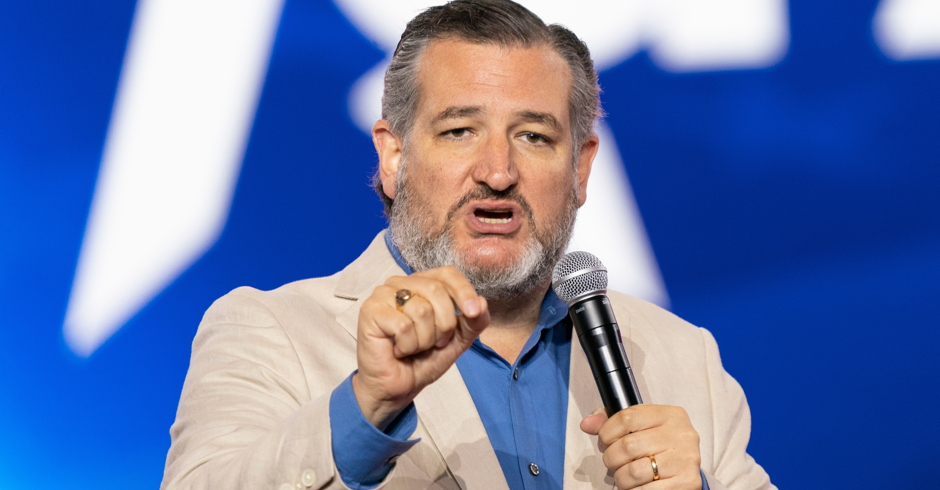
“It would be the biggest step we could do to counteract the massive inflation under Joe Biden and the Democrats and have a positive impact on affordability, particularly affordability of housing, between now and the midterms,” Senator Ted Cruz (R-TX) told Bloomberg.
Cruz argued that the proposal would encourage homeowners to sell existing homes, which could free up the housing supply. He also said it would encourage Americans to sell stocks.
READ MORE: ‘Mockery of the Law’: Supreme Court Weakens Voting Rights Act in ‘Earthquake’ Ruling
“Despite enthusiasm among key Republicans, the proposal faces challenges. For starters, another big tax and spending bill would require near unanimous support in the fractured GOP,” Bloomberg reported. “Republicans have discussed compiling a fresh tax-cut package this year to serve as a follow-up to Trump’s 2025 ‘One Big Beautiful Bill’ to demonstrate to voters that they are taking steps to address unease about the economy.”
Bloomberg reported that the “disproportionate benefit for the wealthy would hand Democrats another attack line heading into a midterms where the party has already painted Republicans’ recent sweeping budget law as a give-away to the rich.”
Brendan Duke, Senior Director for Federal Budget Policy at the Center on Budget and Policy Priorities, noted: “Only 1% of the benefits would go to the bottom 80%–after raising taxes on them thru tariffs, cutting Medicaid & SNAP, and letting ACA enhancements expire.”
Critics slammed the GOP proposal.
“I can’t think of a better indictment of the Republican party and the con they’ve played on working class people than their go-to idea for addressing affordability is a capital gains tax cut,” wrote Neera Tanden, who served as the Director of the Domestic Policy Council under President Joe Biden.
“Not for nothing, but this is another broken trickle-down hack idea,” declared Lincoln Project co-founder Reed Galen.
READ MORE: King Charles Discreetly Rebukes Trump in Historic Address to Congress: Report
Image via Shutterstock
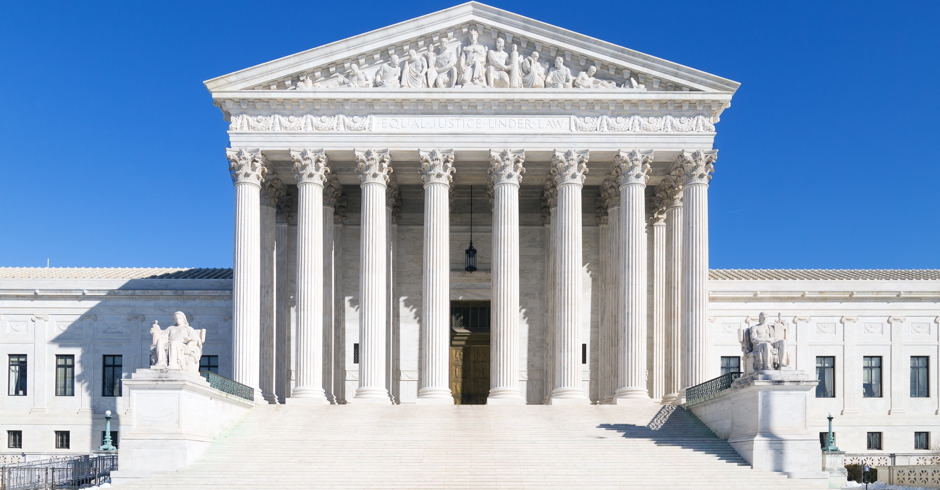
The majority-conservative Roberts Supreme Court on Wednesday further eroded the Voting Rights Act, tossing out Louisiana’s congressional district map after a group of non-African American voters sued, arguing the map constituted an unconstitutional racial gerrymander. Legal experts are warning the decision “will threaten Black and brown political representation for generations in Southern states.”
Justice Samuel Alito wrote the 6-3 ruling in the case, Louisiana v. Callais, with all six Republican-appointed justices in the majority and all three Democratic appointees dissenting. Justice Elena Kagan, writing for the dissenters, warned that the consequences would be “far-reaching and grave” and that Section 2 of the Voting Rights Act was now “all but a dead letter.”
USA Today reported that the “decision could ultimately reduce the number of Black and Hispanic members of Congress and boost Republicans’ chances of winning more seats in the U.S. House, where they have a thin majority.”
“It will now be easier for Republicans to draw maps that favor their party,” the paper observed, “particularly in the South where a voter’s race closely aligns with party preference.”
Critics and legal experts blasted the Court’s decision.
“Today’s VRA decision is intellectually dishonest and wrong,” wrote noted Democratic attorney Marc Elias. “The conservatives basically said: Black people can vote for their preferred candidates, as long as they prefer the right candidates — which will be Republicans. An [absolute] mockery of the law and stain on the court.”
READ MORE: King Charles Discreetly Rebukes Trump in Historic Address to Congress: Report
Elias also wrote that in its decision, the Supreme Court “kneecapped the Voting Rights Act (VRA), the landmark civil rights law that restricted racial gerrymandering and racial discrimination in voting for more than fifty years.”
The Democracy Docket social media account added: “Today’s decision will threaten Black and brown political representation for generations in Southern states.”
Democracy Docket, which was founded by Elias, also warned that today’s Supreme Court decision could usher in an additional 27 Republican-held seats in Congress and secure “GOP House control for at least a generation.”
Election law expert Rick Hasen slammed the Alito decision.
“It is hard to overstate what an earthquake this will be for American politics,” he wrote at his Election Law Blog. “Justice Alito knows exactly what he’s doing: make it seem like he’s not gutting the Voting Rights Act through technical language, turning both the statute and the Constitution on its head. It’s the product of his long mission: to favor the white Republicans he seems to think he represents on the Supreme Court, rather than all Americans.”
NAACP President Derrick Johnson wrote that the decision “is a devastating blow to what remains of the Voting Rights Act, and a license for corrupt politicians who want to rig the system by silencing entire communities.”
“The Supreme Court betrayed Black voters, they betrayed America, and they betrayed our democracy,” he added, calling it “a major setback for our nation” that “threatens to erode the hard-won victories we’ve fought, bled, and died for.”
READ MORE: Trump ‘Frustrated’ by Ballroom Legal Battles — So GOP Wants You to Pay for It: Report
Image via Shutterstock

‘Mockery of the Law’: Supreme Court Weakens Voting Rights Act in ‘Earthquake’ Ruling

Trump Running Out of Options in $83 Million Case After Court Rejects Rehearing Bid

GOP’s Midterm Fix for Voter Anxiety Is Tax Cuts — For the Wealthy: Report
Trump Running Out of Options in $83 Million Case After Court Rejects Rehearing Bid
GOP’s Midterm Fix for Voter Anxiety Is Tax Cuts — For the Wealthy: Report
‘Mockery of the Law’: Supreme Court Weakens Voting Rights Act in ‘Earthquake’ Ruling

King Charles Discreetly Rebukes Trump in Historic Address to Congress: Report

Trump White House Blames Democrats’ ‘Unhinged Rhetoric’ for Inciting WHCD Attack

 News2 days ago
Trump ‘Frustrated’ by Ballroom Legal Battles — So GOP Wants You to Pay for It: Report

 News3 days ago
‘Hateful’: Melania Trump Demands ABC ‘Take a Stand’ Against Jimmy Kimmel
 News3 days ago
‘This Will Backfire’: DeSantis’s New Redistricting Map Is Already in Trouble
 News1 day ago
King Charles Discreetly Rebukes Trump in Historic Address to Congress: Report
 News3 days ago
Democrats Still Haven’t Fixed Why Voters Dislike Them — And It Could Cost Them: Columnist
 News2 days ago
Coming Price Spike Made Worse by Trump Could Deal ‘Fatal Blow’ to GOP: Report

 News2 days ago
FCC Poised to Review Disney Licenses Amid Trump Pressure Over Kimmel Joke: Report
 News1 day ago
Trump White House Blames Democrats’ ‘Unhinged Rhetoric’ for Inciting WHCD Attack