“Obamacare” — How The Affordable Care Act Helps Gays
The Affordable Care Act, aka “Obamacare,” does a lot to help gay men, lesbians, transgender and bisexual Americans, and our families. If the Supreme Court ends up declaring Obamacare or any portion of it unconstitutional, all Americans, and especially minorities, will be grossly, negatively affected. And for the recored, the Obama administration has announced they are embracing the term, “Obamacare.”
Today, Kellan Baker, a Health Policy Analyst at the Center for American Progress (CAP), posted this list, the “Top 10 Things Health Reform Does for Gay and Transgender Americans,” and quotes Health and Human Services Secretary Kathleen Sebeliusas saying, “The Affordable Care Act may represent the strongest foundation we have ever created to begin closing LGBT health disparities.†Baker adds, “We should all be fighting to protect it.” Agreed!
And before you get to the list, a quick note: Joan McCarter at Daily Kos last week noted, “States fighting Affordable Care Act have highest populations of uninsured.” Of course!
Here is CAP’s list of the Top 10 Things Health Reform Does for Gay and Transgender Americans, including abbreviated descriptions. Please visit the Center For American Progress for more details. Our thanks for their excellent analysis.
1. Data collection to better understand LGBT health disparities:
In June 2011 Secretary Sebelius announced a plan for including sexual orientation and gender identity in national data collection efforts starting in 2013, in addition to the law’s required categories of race, ethnicity, primary language, sex, and disability status.
2. Patient’s Bill of Rights to end insurance company abuses
As of 2014 it also prohibits insurance companies from denying coverage on the basis of a pre-existing condition such as HIV or a transgender medical history and from arbitrarily canceling a sick person’s coverage.
3. Expansion of public insurance coverage
The new national eligibility threshold also eliminates the disability requirement for Medicaid coverage for people living with HIV.
4. Expansion of private insurance coverage
The law also requires every state to put in place a health insurance exchange starting in 2014. The exchanges will offer subsidies that make it possible for small employers and individuals who make between $15,000 and $43,000 per year to purchase affordable private coverage. Exchanges may not discriminate on the basis of sexual orientation or gender identity in any of their activities, and all exchange plans must offer comprehensive benefits across 10 essential health benefit categories, including prescription drugs, hospital stays, and mental and behavioral health services.
5. Coverage of preventive care
Under the Affordable Care Act all Medicare beneficiaries receive free annual checkups, and insurance companies may not charge copays or other fees for preventive services that are recommended by the U.S. Preventive Services Task Force. Of particular importance for gay and transgender people, these services include HIV and other sexually transmitted infection testing, depression screening, vaccinations, tobacco-use screening, and cholesterol and high blood pressure screening.
6. Easy-to-find information about health care reform and you
This website (also in Spanish), which was one of the consumer-friendly reforms the Affordable Care Act required, is the one-stop shop the Department of Health and Human Services maintains for all things related to health care reform. … Same-sex couples, many of whom do not have access to health insurance through their own or their partner’s employer, can use a built-in filter to find plans offering coverage for domestic partners.
7. A diverse and culturally competent health care workforce
What’s more, a new $11 billion fund supports new community health centers and expansion of existing centers, and the law requires the exchanges to ensure access to “essential community providers,†including community health centers that have expertise providing care to underserved populations such as the gay and transgender community.
8. Services for people living with HIV or AIDS
A major aspect of the Affordable Care Act is making prescription drugs more affordable, which will help people living with HIV or AIDS afford the medications they need. The law phases out the Medicare Part D “donut hole†by 2020 and requires pharmaceutical companies to provide a 50 percent discount on brand-name drugs in the donut hole. It also allows ADAP, or the AIDS Drug Assistance Program, contributions to count toward Medicare Part D’s True Out of Pocket Spending Limit, which will help people with HIV move out of the donut hole more quickly.
9. Nondiscrimination protections
Section 1557 …protections include the Americans with Disabilities Act and the Rehabilitation Act, which protect individuals living with HIV or AIDS, and Title IX of the education amendments of 1972, which offer protections on the basis of sex. A national trend in case law interprets Title IX to include gender identity and sex stereotyping, though not sexual orientation. The Equal Opportunity Employment policies at several federal agencies, including the Department of Health and Human Services, also include gender identity under sex protections.
10. Community-based prevention programs
According to the National Prevention Strategy, which was created under the Affordable Care Act, “all Americans should have the opportunity to live long, healthy, independent, and productive lives, regardless of their … sexual orientation or gender identity; geographic location; or other characteristics.â€
Â

Enjoy this piece?
… then let us make a small request. The New Civil Rights Movement depends on readers like you to meet our ongoing expenses and continue producing quality progressive journalism. Three Silicon Valley giants consume 70 percent of all online advertising dollars, so we need your help to continue doing what we do.
NCRM is independent. You won’t find mainstream media bias here. From unflinching coverage of religious extremism, to spotlighting efforts to roll back our rights, NCRM continues to speak truth to power. America needs independent voices like NCRM to be sure no one is forgotten.
Every reader contribution, whatever the amount, makes a tremendous difference. Help ensure NCRM remains independent long into the future. Support progressive journalism with a one-time contribution to NCRM, or click here to become a subscriber. Thank you. Click here to donate by check.
 |


A federal appeals court handed President Donald Trump a loss on Wednesday in his quest for the entire court to re-hear his appeal in the $83 million E. Jean Carroll civil defamation case.
CNN reports that the court’s decision now allows the president to petition the U.S. Supreme Court to hear his claims arguing presidential immunity. The high court established broad criminal immunity for all presidents in 2024 for official acts.
A panel of judges earlier had affirmed a jury verdict that Trump had defamed Carroll in 2022 when he “denied her allegations of sexual assault, said she wasn’t his type, and suggested she made up the allegations to sell copies of her new book,” according to CNN.
Separately, the following year, a jury found Trump liable for sexual abuse and defamation “over an alleged assault that occurred in the mid-1990s at a New York department store and for statements he made in 2019 denying it happened.”
Trump has argued that the U.S. Department of Justice should have been substituted for him as the defendant. Since the DOJ cannot be sued for defamation, the case would have been ended.
Courthouse News adds that the majority of judges on Wednesday “concluded the court had correctly held that presidential immunity is waivable and that had Trump indeed waived it in the Carroll case.”
“If any other litigant had failed to raise an affirmative defense in this way, there would be no question as to whether he waived his right to assert it,” U.S. Circuit Judge Denny Chin wrote.
Trump has denied all wrongdoing.
READ MORE: ‘Mockery of the Law’: Supreme Court Weakens Voting Rights Act in ‘Earthquake’ Ruling
Image via Reuters

Republicans are reaching back into their old playbook to try to attract voters to support them in the midterms: tax cuts.
But their efforts are tied to lowering taxes on capital gains — such as stocks and homes — which could disproportionately favor wealthy Americans.
Bloomberg News reports that some Republicans want to tie capital gains taxes to inflation, which could reduce the tax burden.
“It would be the biggest step we could do to counteract the massive inflation under Joe Biden and the Democrats and have a positive impact on affordability, particularly affordability of housing, between now and the midterms,” Senator Ted Cruz (R-TX) told Bloomberg.
Cruz argued that the proposal would encourage homeowners to sell existing homes, which could free up the housing supply. He also said it would encourage Americans to sell stocks.
READ MORE: ‘Mockery of the Law’: Supreme Court Weakens Voting Rights Act in ‘Earthquake’ Ruling
“Despite enthusiasm among key Republicans, the proposal faces challenges. For starters, another big tax and spending bill would require near unanimous support in the fractured GOP,” Bloomberg reported. “Republicans have discussed compiling a fresh tax-cut package this year to serve as a follow-up to Trump’s 2025 ‘One Big Beautiful Bill’ to demonstrate to voters that they are taking steps to address unease about the economy.”
Bloomberg reported that the “disproportionate benefit for the wealthy would hand Democrats another attack line heading into a midterms where the party has already painted Republicans’ recent sweeping budget law as a give-away to the rich.”
Brendan Duke, Senior Director for Federal Budget Policy at the Center on Budget and Policy Priorities, noted: “Only 1% of the benefits would go to the bottom 80%–after raising taxes on them thru tariffs, cutting Medicaid & SNAP, and letting ACA enhancements expire.”
Critics slammed the GOP proposal.
“I can’t think of a better indictment of the Republican party and the con they’ve played on working class people than their go-to idea for addressing affordability is a capital gains tax cut,” wrote Neera Tanden, who served as the Director of the Domestic Policy Council under President Joe Biden.
“Not for nothing, but this is another broken trickle-down hack idea,” declared Lincoln Project co-founder Reed Galen.
READ MORE: King Charles Discreetly Rebukes Trump in Historic Address to Congress: Report
Image via Shutterstock
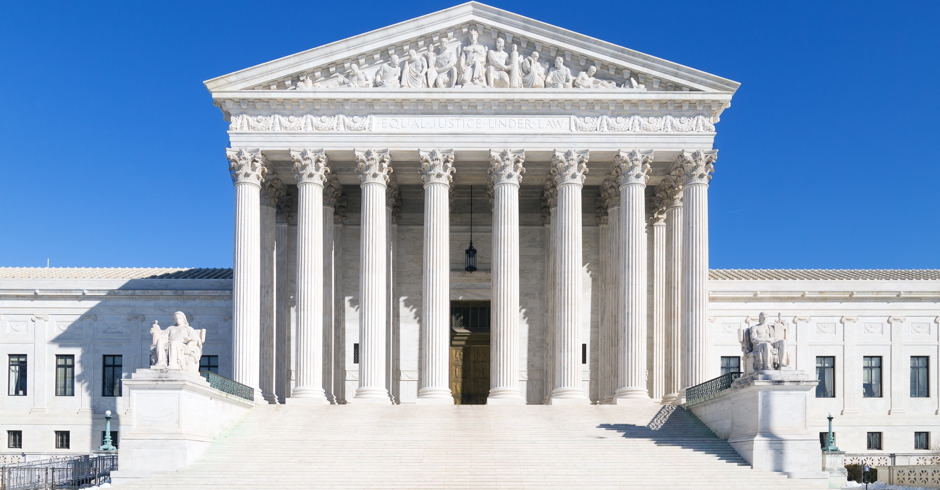
The majority-conservative Roberts Supreme Court on Wednesday further eroded the Voting Rights Act, tossing out Louisiana’s congressional district map after a group of non-African American voters sued, arguing the map constituted an unconstitutional racial gerrymander. Legal experts are warning the decision “will threaten Black and brown political representation for generations in Southern states.”
Justice Samuel Alito wrote the 6-3 ruling in the case, Louisiana v. Callais, with all six Republican-appointed justices in the majority and all three Democratic appointees dissenting. Justice Elena Kagan, writing for the dissenters, warned that the consequences would be “far-reaching and grave” and that Section 2 of the Voting Rights Act was now “all but a dead letter.”
USA Today reported that the “decision could ultimately reduce the number of Black and Hispanic members of Congress and boost Republicans’ chances of winning more seats in the U.S. House, where they have a thin majority.”
“It will now be easier for Republicans to draw maps that favor their party,” the paper observed, “particularly in the South where a voter’s race closely aligns with party preference.”
Critics and legal experts blasted the Court’s decision.
“Today’s VRA decision is intellectually dishonest and wrong,” wrote noted Democratic attorney Marc Elias. “The conservatives basically said: Black people can vote for their preferred candidates, as long as they prefer the right candidates — which will be Republicans. An [absolute] mockery of the law and stain on the court.”
READ MORE: King Charles Discreetly Rebukes Trump in Historic Address to Congress: Report
Elias also wrote that in its decision, the Supreme Court “kneecapped the Voting Rights Act (VRA), the landmark civil rights law that restricted racial gerrymandering and racial discrimination in voting for more than fifty years.”
The Democracy Docket social media account added: “Today’s decision will threaten Black and brown political representation for generations in Southern states.”
Democracy Docket, which was founded by Elias, also warned that today’s Supreme Court decision could usher in an additional 27 Republican-held seats in Congress and secure “GOP House control for at least a generation.”
Election law expert Rick Hasen slammed the Alito decision.
“It is hard to overstate what an earthquake this will be for American politics,” he wrote at his Election Law Blog. “Justice Alito knows exactly what he’s doing: make it seem like he’s not gutting the Voting Rights Act through technical language, turning both the statute and the Constitution on its head. It’s the product of his long mission: to favor the white Republicans he seems to think he represents on the Supreme Court, rather than all Americans.”
NAACP President Derrick Johnson wrote that the decision “is a devastating blow to what remains of the Voting Rights Act, and a license for corrupt politicians who want to rig the system by silencing entire communities.”
“The Supreme Court betrayed Black voters, they betrayed America, and they betrayed our democracy,” he added, calling it “a major setback for our nation” that “threatens to erode the hard-won victories we’ve fought, bled, and died for.”
READ MORE: Trump ‘Frustrated’ by Ballroom Legal Battles — So GOP Wants You to Pay for It: Report
Image via Shutterstock

‘Mockery of the Law’: Supreme Court Weakens Voting Rights Act in ‘Earthquake’ Ruling

Trump Running Out of Options in $83 Million Case After Court Rejects Rehearing Bid

GOP’s Midterm Fix for Voter Anxiety Is Tax Cuts — For the Wealthy: Report
Trump Running Out of Options in $83 Million Case After Court Rejects Rehearing Bid
GOP’s Midterm Fix for Voter Anxiety Is Tax Cuts — For the Wealthy: Report
‘Mockery of the Law’: Supreme Court Weakens Voting Rights Act in ‘Earthquake’ Ruling

King Charles Discreetly Rebukes Trump in Historic Address to Congress: Report

Trump White House Blames Democrats’ ‘Unhinged Rhetoric’ for Inciting WHCD Attack

 News2 days ago
Trump ‘Frustrated’ by Ballroom Legal Battles — So GOP Wants You to Pay for It: Report

 News3 days ago
‘Hateful’: Melania Trump Demands ABC ‘Take a Stand’ Against Jimmy Kimmel

 News3 days ago
‘This Will Backfire’: DeSantis’s New Redistricting Map Is Already in Trouble
 News1 day ago
King Charles Discreetly Rebukes Trump in Historic Address to Congress: Report

 News3 days ago
Democrats Still Haven’t Fixed Why Voters Dislike Them — And It Could Cost Them: Columnist

 News2 days ago
Coming Price Spike Made Worse by Trump Could Deal ‘Fatal Blow’ to GOP: Report

 News2 days ago
FCC Poised to Review Disney Licenses Amid Trump Pressure Over Kimmel Joke: Report
 News2 days ago
Trump White House Blames Democrats’ ‘Unhinged Rhetoric’ for Inciting WHCD Attack