News
Grocery Price Surges Are Relative Says New Trump Fed Official
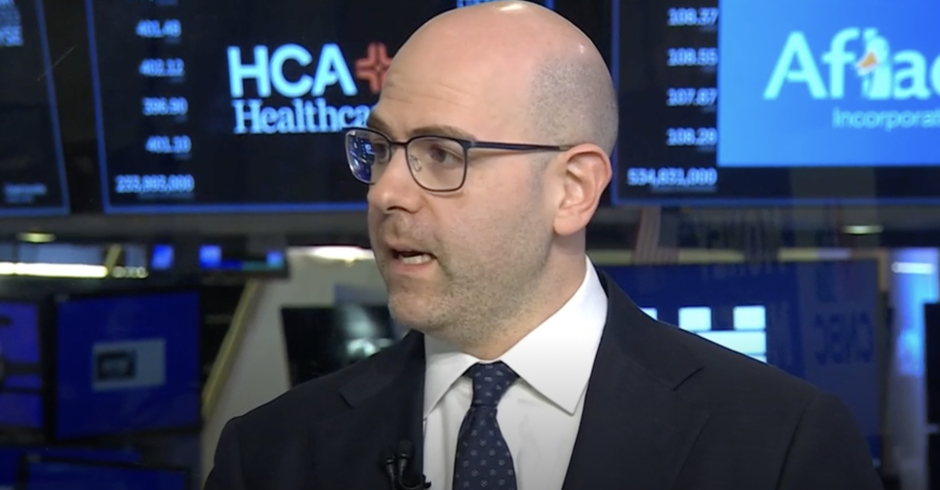
President Donald Trump’s new addition to the Federal Reserve’s Board of Governors, Stephen Miran, appeared to try to downplay the significant price increases Americans are seeing at grocery store checkout lines.
“Last month saw the biggest jump in grocery prices in almost three years,” NPR reported on Friday. “A survey this summer by The Associated Press and NORC found the cost of groceries has become a major source of stress for just over half of all Americans — outpacing rent, health care and student debt.”
Last week, Axios reported that grocery inflation is at the highest point “since 2022 as Trump tariffs pile up.”
“Virtually all major grocery categories are now more expensive than they were a year ago, some substantially so,” the news outlet reported. “Coffee is up 20.9% year-over-year, with a 3.1% monthly increase, per CPI. Uncooked beef steaks are up 16.6% year-over-year with a 3.3% monthly bump. While fruits and vegetable overall were up 2.3% year over year, apples rose 9.6% and bananas, 6.6%.”
READ MORE: White House Links Kimmel’s Comments to ‘Dangerous Rhetoric’ It Says ‘Drove’ Kirk’s Killer
NPR also noted that despite “Trump’s promise to lower prices, the overall cost of groceries is higher now than when he was sworn in. The president’s crackdown on illegal immigration — including targeting people who pick and process our food — could add to upward pressure on prices. Trump’s tariffs are also contributing to higher prices for imported staples like bananas and coffee.”
Miran was asked about the price of bananas and coffee, specifically, on Friday during an interview with CNBC.
“But we are seeing prices move up for things like food at the grocery,” the host stated. “I mean, you can’t deny that the rising price of tomatoes or coffee or bananas, the things that we don’t grow here, are going up for consumers.”
Miran’s response: “Oh, there will always be relative price changes.”
READ MORE: ‘Insanely Broad’: Bill Would Authorize an ‘Open-Ended’ Trump Narco-Terror War
“Relative price changes” is an economic term having to do with supply and demand and other factors.
“There will always be relative price changes, but whether or not it’s inflation that’s macroeconomically significant of the type that monetary policy should respond to is a different question,” Miran concluded.
CNBC reported that Miran told the network “that he doesn’t anticipate President Donald Trump’s tariffs will cause inflation,” and that he “also said he believes Trump’s border policies will give rise to disinflation.”
Host: You can’t deny that the price of tomatoes or coffee or bananas, the things that we don’t grow here, are going up for consumers.
Trump’s Fed Governor: There will always be relative price changes pic.twitter.com/buxQnBujv4
— FactPost (@factpostnews) September 19, 2025
READ MORE: ‘Massive Shift’: FCC Chair Says Local TV Will ‘Decide What the American People Think’
Enjoy this piece?
… then let us make a small request. The New Civil Rights Movement depends on readers like you to meet our ongoing expenses and continue producing quality progressive journalism. Three Silicon Valley giants consume 70 percent of all online advertising dollars, so we need your help to continue doing what we do.
NCRM is independent. You won’t find mainstream media bias here. From unflinching coverage of religious extremism, to spotlighting efforts to roll back our rights, NCRM continues to speak truth to power. America needs independent voices like NCRM to be sure no one is forgotten.
Every reader contribution, whatever the amount, makes a tremendous difference. Help ensure NCRM remains independent long into the future. Support progressive journalism with a one-time contribution to NCRM, or click here to become a subscriber. Thank you. Click here to donate by check.
 |


President Donald Trump’s latest rant contradicts the White House’s version of events surrounding his continued focus on renaming New York’s Penn Station “Trump Station” — as the president also continues to appear to tie funding for the already-approved New York-New Jersey Gateway Tunnel project to a potential name change.
White House press secretary Karoline Leavitt last week specifically stated that President Trump “floated” renaming Penn Station (and Washington-Dulles Airport) with Senate Democratic Minority Leader Chuck Schumer, as TIME reported.
Trump had claimed that it was Leader Schumer who made the suggestion.
Now, Trump is claiming that multiple politicians suggested the name change, as did various union leaders.
“Also, the naming of PENN Station (I LOVE Pennsylvania, but it is a direct competitor to New York, and ‘eating New York’s lunch!’) to TRUMP STATION, was brought up by certain politicians and construction union heads, not me – IT IS JUST MORE FAKE NEWS!”
READ MORE: ‘This Is Authoritarianism’: Experts Warn on US Midterm Elections
New York’s Pennsylvania Station was named for the Pennsylvania Railroad — which built the original terminal over a century ago — not the state of Pennsylvania.
The president also attacked the Gateway Tunnel project, calling it a “future boondoggle” that will “cost many BILLIONS OF DOLLARS more than projected or anticipated” and be “financially catastrophic for the region.”
Some mocked the president’s remarks.
“A completely unhinged tantrum from someone who didn’t get their way,” commented U.S. Senator Andy Kim (D-NJ). “ I don’t know one person in NJ, Republican or Democrat, who doesn’t see the power and value of the Gateway Tunnel Project.”
The Independent’s White House correspondent Andrew Feinberg asked, “Does he think Penn Station was named after the Commonwealth?”
READ MORE: Far Right Extremist Leader Puts Trump on Notice Over Epstein Files
Image via Reuters

The United States is facing a major test of American democracy as experts warn that the Trump administration is dragging the nation into “some form of autocracy,” NPR reports.
The U.S. has already crossed the threshold and become an “electoral autocracy,” Staffan I. Lindberg, the director of Sweden’s V-Dem Institute, told NPR.
“I would argue that the United States in 2025-26 has slid into a mild form of competitive authoritarianism,” said Steven Levitsky, a professor of government at Harvard University and co-author of How Democracies Die. “I think it’s reversible, but this is authoritarianism.”
“Under competitive authoritarianism,” NPR explained, “countries still hold elections, but the ruling party uses various tactics — attacking the press, disenfranchising voters, weaponizing the justice system and threatening critics — to tilt the electoral playing field in its favor.”
Levitsky cited several critical points in September as examples, including the Trump administration’s threat against ABC parent company Disney following host Jimmy Kimmel’s remarks on the killing of Charlie Kirk.
READ MORE: ‘Backtracking and Blowing Things Up’ Defines Trump’s ‘Whiplash’ Second Year: Report
“We can do this the easy way or the hard way,” Brendan Carr, the chairman of the Federal Communications Commission (FCC), said.
He also cited Trump’s proposal to use American cities as “training grounds” for troops.
“We should use some of these dangerous cities as training grounds for our military, National Guard, but military,” Trump said, as the Military Times reported.
The president “told the commanders that defending the homeland was the military’s ‘most important priority’ and suggested the leaders in attendance could be tasked with assisting federal law enforcement interventions against an ‘invasion from within’ Democratic-led cities, such as Chicago and New York City.”
“No different than a foreign enemy,” Trump said, “but more difficult in many ways because they don’t wear uniforms.”
Levitsky, NPR reported, “said this is the kind of language dictators in South America used in the 1970s — leaders like Augusto Pinochet in Chile.”
NPR notes that the “next big test” could come during the midterms.
Kim Scheppele, a Princeton University sociologist who has studied the authoritarian tactics of Hungarian Prime Minister Viktor Orbán, warned that in 2014 Orbán’s government “disenfranchised almost all the Hungarians in the U.K., most of whom were oppositional to Orbán,”
Dartmouth College professor of government Brendan Nyhan warned, “The way Election Day works in this country, there are no do-overs.”
READ MORE: Far Right Extremist Leader Puts Trump on Notice Over Epstein Files
Image via Shutterstock

If Americans during President Donald Trump’s first term were exhausted by his “controversy and chaos,” they now appear to be similarly distressed by his “backtracking and blowing things up,” according to a report by Politico.
In the second year of his second term, President Trump “intensified the volatility” from year one “with a succession of whiplash-inducing policy swings, several of which have almost immediately withered in the face of Republican opposition and public outcry.”
For example, the Trump administration just withdrew thousands of federal law enforcement officers from Minneapolis, following the two violent deaths of U.S. citizens and after “clashes with protesters turned the tide of public opinion against the president’s immigration crackdown.”
READ MORE: Far Right Extremist Leader Puts Trump on Notice Over Epstein Files
There is the Greenland gambit, which appears to be paused, at least for now. There were the “Liberation Day” tariffs he announced in April, only to partially, but quickly, lower them “within days following tremors in global bond markets.”
Trump threatened to decertify Canadian aircraft, then dropped the threat. He declared he would drop credit card interest rates to ten percent, then dropped that, too, and in a rare move, asked Congress for legislation to do so. His push to create 50-year mortgages appears to have subsided.
He paused millions of dollars in Centers for Disease Control and Prevention (CDC) funding for state programs, then reversed course about a day later.
“The whiplash has real implications,” Chrissie Juliano, the executive director of the Big Cities Health Coalition, told Politico. “It’s incredibly disruptive, even if you can get back to continuing the work, you know, two days later.”
Domestically and internationally, Trump’s “unpredictability” has become a “feature, not a bug.”
“In many matters, especially negotiations with other countries, his mercurial opacity is often an attempt to gain leverage, but his threats seemingly lead just as often to backtracking as blowing things up, be they Iranian missile depots, Venezuelan drug boats or the transatlantic alliance,” Politico reported.
READ MORE: ‘No Going Back’: Report Warns Post-MAGA America Will Never Be the Same
The risks are real.
“Even proposals that don’t ultimately move forward have consequences,” a financial industry insider, who was granted anonymity to speak candidly without fear of blowback from the White House, told Politico. “Markets react. Issuers reassess risk. When policymakers float price controls, it creates uncertainty that can translate into tighter underwriting and reduced access — particularly for higher-risk or lower-income consumers.”
Trump’s poll numbers are now at the lowest point of his second term, Republican pollster Whit Ayres told Politico.
“There’s a sense that this is a pretty chaotic administration and seems to remind people of the pandemic period in the first term,” Ayres said.
When a president’s approval rating is above 50 percent, the party in the White House loses House seats in the midterms, “but not that many,” Ayres noted. “When the president’s job approval is below, the average loss of seats is 32.”
Ayres “said that Trump’s approval numbers largely mirror those from his first term, when the public over four years grew exhausted by constant controversy and chaos.”
“Joe Biden’s fundamental message in 2020 was to restore normalcy,” Ayres said. “And that seemed to be persuasive to enough people to get him elected.”
READ MORE: ‘Political Stunt’: Trump Admin Rages After NYC Re-Raises Pride Flag at Stonewall
Image via Reuters

‘Backtracking and Blowing Things Up’ Defines Trump’s ‘Whiplash’ Second Year: Report

‘This Is Authoritarianism’: Experts Warn on US Midterm Elections

Trump Mocked for ‘Unhinged Tantrum’ as ‘Trump Station’ Story Shifts Again
Trump Mocked for ‘Unhinged Tantrum’ as ‘Trump Station’ Story Shifts Again
‘This Is Authoritarianism’: Experts Warn on US Midterm Elections
‘Backtracking and Blowing Things Up’ Defines Trump’s ‘Whiplash’ Second Year: Report

Rogan on Epstein Files: ‘Looks Terrible’ for Trump

Far Right Extremist Leader Puts Trump on Notice Over Epstein Files
 News4 days ago
‘Political Stunt’: Trump Admin Rages After NYC Re-Raises Pride Flag at Stonewall
 News3 days ago
Far Right Extremist Leader Puts Trump on Notice Over Epstein Files
 News3 days ago
Rogan on Epstein Files: ‘Looks Terrible’ for Trump

 News3 days ago
‘No Going Back’: Report Warns Post-MAGA America Will Never Be the Same
 News3 days ago
Trump’s Pardon ‘Blizzard’ Grows With Clemency for Five Former NFL Players
 News4 hours ago
‘Backtracking and Blowing Things Up’ Defines Trump’s ‘Whiplash’ Second Year: Report
 News2 hours ago
‘This Is Authoritarianism’: Experts Warn on US Midterm Elections
 News13 minutes ago
Trump Mocked for ‘Unhinged Tantrum’ as ‘Trump Station’ Story Shifts Again