journalism
Nearly Two-Thirds of Journalists Say They’ve Been Threatened On the Job: Report
Nearly two-thirds of journalists have been faced verbal or physical threats while working, according to a new study.
Out of 1,600 American journalists, 61.4 percent reported being threatened, according to a poll conducted by the Newhouse School of Public Communications at Syracuse University. The study was conducted in 2022 as part of the school’s American Journalist study, which builds on studies conducted roughly every decade since 1971.
The study broke out the different kinds of threats. The most common were verbal threats, with the majority, 54%, occurring online, but over a third, 38%, were in person. Threats of physical violence were experienced online by 20% of respondents, compared to 14.9% offline. Online threats to a journalist’s career were nearly twice as common at 30.5% than offline (15.5%).
READ MORE: Rather Than Pay News Orgs, Facebook Bans Article Sharing in Canada
While less common, more serious threats were also made against a number of journalists. Nearly 12% reported online death threats, and 6% reported offline ones. A tenth of journalists reported threats of physical abuse—and roughly the same amount faced these threats both on- and offline. Nearly 6% were threatened with sexual violence online, but that fell to 2.3% offline.
When demographics are taken into consideration, the study shows that women faced between seven and 14 times the harassment in categories like sexism—30.5% in person for women compared to 2.2% for men—and threats of sexual violence. Most of the sexual violence threats against women were online (12.5% to men’s 1.3%), but 4.8% of women received these threats in person, compared to just 0.5% of men. The margin of error for this study is 3%.
This is the first year the study has asked about threats, so historical data is not available. However, a different study funded by Thomson Reuters and made by the Tow Center for Digital Journalism showed an increase in threats against journalists worldwide. And in America, last year, Jeff German, a journalist with the Las Vegas Review-Journal was killed; the lead suspect in the case was a subject German had previously reported on, according to NPR.
Threats have also come from the government, with reports of police arresting journalists covering protests or other police actions. And former President Donald Trump has repeatedly called journalists untrustworthy, banging the drum of “fake news” whenever negative coverage appears.
“I see the way they write. They’re so damn dishonest,” Trump said at a 2018 rally. “And I don’t mean all of them, because some of the finest people I know are journalists really. Hard to believe when I say that. I hate to say it, but I have to say it. But 75 percent of those people are downright dishonest. Downright dishonest. They’re fake. They’re fake. They make the sources up. They don’t exist in many cases.”
Trump’s comments have inspired his followers as well. There have been multiple cases of his supporters attacking journalists assigned to cover his rallies.
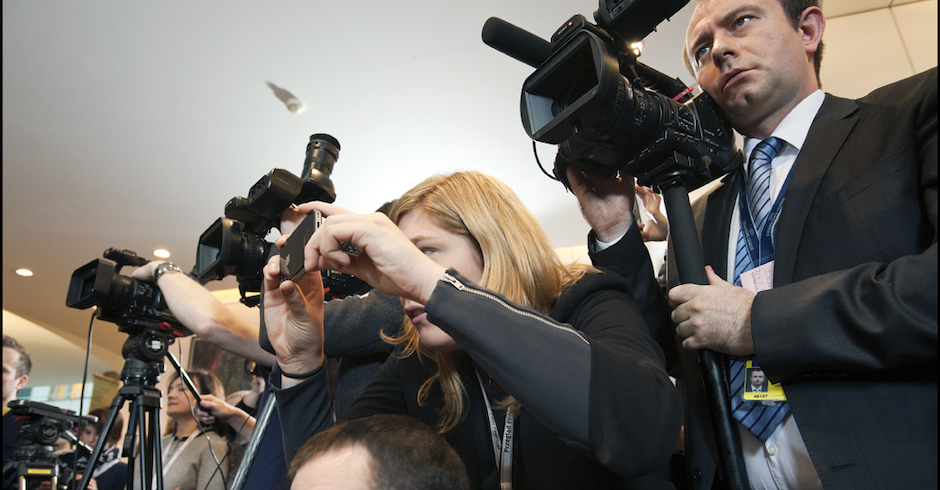
Featured image by the European Parliament/Flickr, used under Creative Commons.
Enjoy this piece?
… then let us make a small request. The New Civil Rights Movement depends on readers like you to meet our ongoing expenses and continue producing quality progressive journalism. Three Silicon Valley giants consume 70 percent of all online advertising dollars, so we need your help to continue doing what we do.
NCRM is independent. You won’t find mainstream media bias here. From unflinching coverage of religious extremism, to spotlighting efforts to roll back our rights, NCRM continues to speak truth to power. America needs independent voices like NCRM to be sure no one is forgotten.
Every reader contribution, whatever the amount, makes a tremendous difference. Help ensure NCRM remains independent long into the future. Support progressive journalism with a one-time contribution to NCRM, or click here to become a subscriber. Thank you. Click here to donate by check.
 |











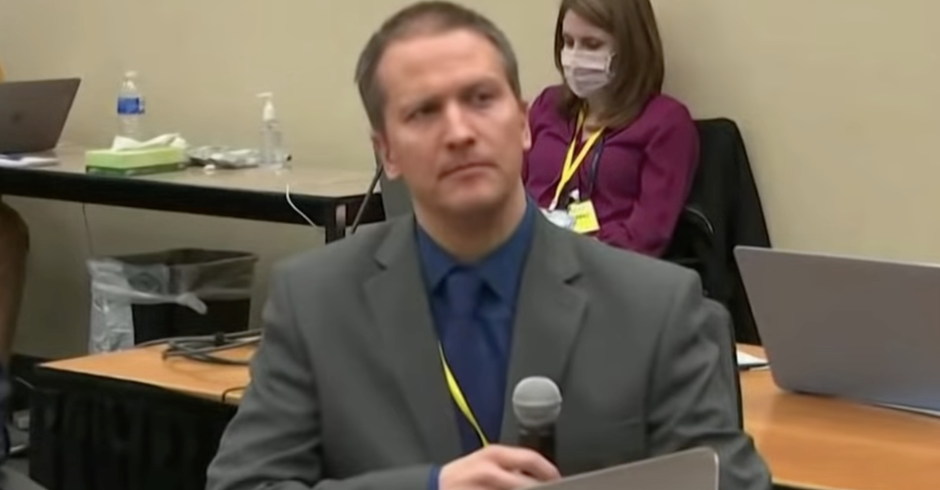
Minnesota Governor Tim Walz didn’t mince words when asked what the motivation was for the new movement among MAGA Republicans to convince President Donald Trump to pardon Derek Chauvin, the former police officer who killed George Floyd in 2020.
“Racism. It’s racist. OK? That’s what I believe,” Walz said in an interview with Semafor published Wednesday.
The calls to pardon Chauvin started with an online petition earlier this month, according to The Independent. The pardon push picked up steam this week when conservative commentator Ben Shapiro of the Daily Wire launched a webseries, “The Case of Derek Chauvin.” Shapiro claims the officer was convicted on “extraordinarily scanty evidence,” saying Floyd did not die from having Chauvin’s knee on his neck for over nine minutes, but rather from drugs in Floyd’s system and heart disease.
Walz, however, disputes this interpretation of events.
“This was a man who murdered George Floyd on TV,” Walz said, adding that a pardon “would undermine the faith in the system.”
The White House, however, has denied that a Chauvin pardon is in Trump’s plans. Earlier this month, Trump said he hadn’t even heard about a push to pardon Floyd’s killer, and on Wednesday, Press Secretary Karoline Leavitt repeated that a pardon is “not something he’s considering at this time,” according to The Grio.
However, some commentators, like The Hill’s Juan Williams are skeptical, pointing out that Trump has pardoned two police officers convicted of killing a Black man in the first days of his second term.
In 2020, after the killing, Trump condemned Chauvin.
“We all saw what we saw. It’s hard to conceive anything other than what we did see. It should have never happened,” Trump said.
If Trump were to pardon Chauvin, it would be largely moot. Presidents can only pardon those convicted on federal charges. Chauvin was convicted on both federal and Minnesota state charges. In the event Trump cleared the federal charges, the main thing that would happen is that Chauvin would be moved from the federal prison in Big Spring, Texas to a Minnesota state prison.
Minnesota sentenced Chauvin to 22 and a half years for murder; on the federal level, he was sentenced to 21 years for violating Floyd’s civil rights. Barring a federal pardon, the two sentences are running concurrently, not consecutively.
Image via Shutterstock

Marjorie Taylor Greene Says She’s ‘Done Supporting’ The GOP: ‘Party Betrays Its Voters’

Donald Trump Says Iran ‘Will Agree to Major Weapons Inspections’ to Ensure ‘Nuclear Honesty’
Marjorie Taylor Greene Says She’s ‘Done Supporting’ The GOP: ‘Party Betrays Its Voters’
Donald Trump Says Iran ‘Will Agree to Major Weapons Inspections’ to Ensure ‘Nuclear Honesty’

Federal Judge Quashes ‘Retaliatory’ Subpoenas Against Minnesota Gov. Tim Walz

GOP Rep Demands Biden’s Pardons to Be ‘Declared Null and Void’

Large Majority of Americans Say Iran Conflict Should End, Hasn’t Met Any of Trump’s Goals

 News4 days ago
Trump White House Turns on ‘Moron’ MAGA Loyalist ‘Begging for an Additional Brain Cell’

 News4 days ago
Veteran Journalist War-Games Trump’s ‘Rolling Coup’ — and How It Fails
 News21 hours ago
Marjorie Taylor Greene Says She’s ‘Done Supporting’ The GOP: ‘Party Betrays Its Voters’
 IDIOCY1 day ago
GOP Rep Demands Biden’s Pardons to Be ‘Declared Null and Void’
 BAD PRESIDENT1 day ago
Large Majority of Americans Say Iran Conflict Should End, Hasn’t Met Any of Trump’s Goals
 News1 day ago
Federal Judge Quashes ‘Retaliatory’ Subpoenas Against Minnesota Gov. Tim Walz
 News22 hours ago
Donald Trump Says Iran ‘Will Agree to Major Weapons Inspections’ to Ensure ‘Nuclear Honesty’