
News
‘Tickling the Wire’: Counter-Intel Expert Says Special Counsel May Have New Info on Trump
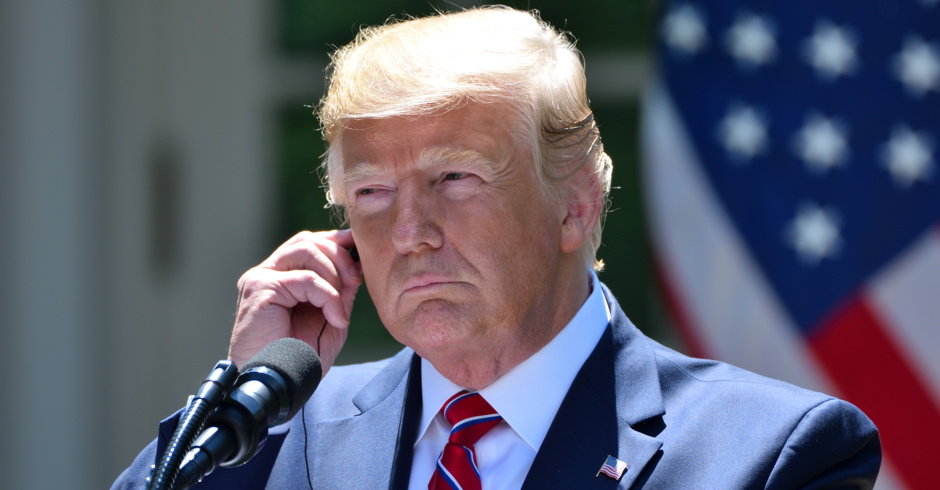
Frank Figliuzzi, former FBI assistant director for counter-intelligence, highlighted the recent report that special counsel Jack Smith is looking into financial information for Donald Trump’s international businesses in seven countries, and said it’s possible Smith has additional info about information sharing.
Speaking to MSNBC’s Nicolle Wallace on Tuesday, Figliuzzi explained that the statements from Trump in the CNN town hall were more admissions, in a line of confessions, that he took the documents he should not have.
“But that crucial period after that sobering subpoena is slapped on you is that I have a choice,” explained Figliuzzi. “I’ll either comply with the law, or I’m not. And everything he’s done after that has involved non-compliance with the law, and, in fact, thumbing his nose at the law. And as recently as the CNN town hall meeting, he actually said, ‘I took those documents. I had every right to. And if I did show them to somebody, and I can’t remember if I did or not, I had every right to.’ This is defiance that goes towards criminal intention. It is there. And, by the way, if the reports are accurate, this case is all but done.”
Figliuzzi’s reference was to the Wall Street Journal reporting that Smith is finishing up his probe and all interviews have been done.
Wallace walked through the timeline of how much Trump handed over and when. She pointed to the New York Times reporting of the foreign Trump businesses and recalled that it was part of the documents case at the DOJ.
“Do we assume that people we maybe haven’t heard about, going in to talk to Jack Smith and his investigators, are part of the fabric of this part of the probe — foreign business dealings and Trump classified documents?” she asked.
He explained the depth of the collection of intelligence that would surround the Trump documents case.
“We know Trump doesn’t use email, but he is a prolific user of the phones, right?” explained Figliuzzi. “And so, guaranteed there have been subpoenas for phone carriers for his phone records throughout this period and watching his response to a visit from the head of the National Security Secretary, DOJ, then here come FBI agents, and there’s a subpoena. And you’re watching this, they call it ‘tickling the wire.’ See what responses — who is he calling? Who’s calling each other?”
He said that it isn’t about the protected privilege content of lawyers’ conversations, but it outlines who else he’s speaking with.
“So, you can develop sources,” Figliuzzi continued. “So, when there is great confidence that they have the goods on him, it is because they are targeting people who know for a fact what is going on. Now, let’s fast forward and tie that into this subpoena for whether or not the Trump Organization was doing any business with one or more, or seven nations. There is an interesting piece in the Washington Post that actually puts a post on it. And it is last month. If that is true, that is intriguing because it may imply that this is a pro forma routine thing. Let’s make sure there’s no surprises because the defense will say, ‘Look, you have no evidence that committed espionage, right? That he actually disseminated national security information to a foreign country?’ Well, we better look.”
The alternative is that one could be reading the story and think that some intelligence may have recently “maybe from those phone calls, maybe from those from sources, where we think, no, we better look at Saudi, or China, or Turkey. I don’t know. But it would go toward motive,” he closed. “And it would be explosive if he would have actually shown documents, and what if those documents involved those very countries that are on the list? It’s even more concerning. And now you’re looking at maybe real-life espionage. We don’t know.”
See the full conversation with Figliuzzi below or at the link here.
Image via Shutterstock
Enjoy this piece?
… then let us make a small request. The New Civil Rights Movement depends on readers like you to meet our ongoing expenses and continue producing quality progressive journalism. Three Silicon Valley giants consume 70 percent of all online advertising dollars, so we need your help to continue doing what we do.
NCRM is independent. You won’t find mainstream media bias here. From unflinching coverage of religious extremism, to spotlighting efforts to roll back our rights, NCRM continues to speak truth to power. America needs independent voices like NCRM to be sure no one is forgotten.
Every reader contribution, whatever the amount, makes a tremendous difference. Help ensure NCRM remains independent long into the future. Support progressive journalism with a one-time contribution to NCRM, or click here to become a subscriber. Thank you. Click here to donate by check.
 |





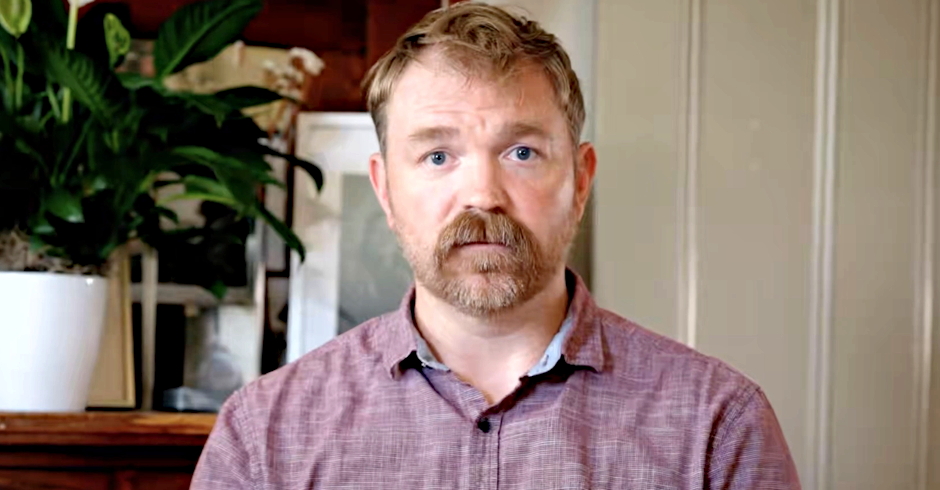
Maine Democratic U.S. Senate nominee Graham Platner is under fire after releasing a video declaring that new allegations against him are false, yet he is “taking time to reflect” on a path forward.
Politico on Monday afternoon reported that a woman who dated Platner, Jenny Racicot, “says he forced her to have sex with him nearly five years ago despite her repeated objections, an allegation Platner denies.”
“Racicot said she had an on-and-off relationship with Platner,” Politico reported, “for more than two years before he entered her rural Maine home uninvited one night in late 2021, deeply intoxicated, and forced himself on her while she repeatedly told him to stop. She said she cut off contact with him after telling him the encounter was not consensual.”
In a video posted to social media eleven minutes after the Politico story dropped, Platner says, “I wanted to directly address the troubling, serious, and false allegations against me. Any accusation of nonconsensual behavior is categorically false.”
He said he and his supporters “were united in a love of Maine, a belief that our politics must change, in a focus on defeating Susan Collins.”
“So, regardless of the inaccuracy of the reporting, but mindful the political reality will inflict, we are taking the time to reflect on the best path forward for the state that I love, the people that I love, the movement I belong to, and the goal of defeating Susan Collins.”
“Those were the goals when we launched this campaign. And they remain my goals today.”
“Throughout it all, you never turned your back on me. And I will not turn my back on you now. Every one of you deserves to see that vision come to fruition and see Susan Collins defeated. And we will use every tool at our disposal to do so.”
The Bulwark’s Tim Miller, a political commentator who served as the communications director for the Jeb Bush 2016 presidential campaign, blasted Platner.
“I’m sorry but ‘we are taking time to reflect on the best path forward’ is not an option on the table,” Miller wrote. “Either it’s false and you campaign with vigor or it’s true and you get out / apologize to everyone you let down.”
Journalist Ryan Grim, commenting on Platner’s video, noted that Platner “strongly suggests he is considering dropping out. Already Troy Jackson and Chellie Pingree, both gubernatorial candidates, are being kicked around in Maine circles as potential replacements.”
Several others, including Puck News’ Peter Hamby, predicted Platner will be dropping out.
Platner had postponed several campaign events before the Politico story was published.
— Graham Platner for Senate (@grahamformaine) July 6, 2026

President Donald Trump is facing backlash after posting a video of children — including showing their unblurred faces — graduating from kindergarten, with some of the girls purportedly wearing hijabs.
“President Trump posted a captionless video of graduating kindergarteners on Truth Social on Monday, goading his supporters into verbally attacking little children simply for being Muslim,” The New Republic reported. “The clip is from Gateway STEM Academy, a majority-Black K-8 public charter school in St. Paul, Minnesota. It shows about 21 children in caps and gowns on stage singing a song together. Most of the girls are wearing hijabs.”
The original post of the video which Trump reposted reads: “Public school in St. Paul, Minnesota. Every girl is in a hijab … in kindergarten.”
Trump did not add any comments. TNR called the post “Islamophobic, weird, and creepy,” while noting that the comments section of Trump’s post was filled with calls “by racist, xenophobic MAGA supporters” to “deport the children and ban hijabs.”
TNR also noted that it “should come as no surprise that Trump isn’t above attacking children who just learned how to read, but this post is still particularly discomforting—and will certainly contribute to the already potent level of anti-Muslim sentiment in the U.S. and in Minnesota.”
Critics blasted Trump.
“There is something deeply unsettling about the president of the United States—the most powerful person in the world—going after kindergarten schoolchildren in Minnesota because they wore hijabs, as Trump has done this morning on his website,” The Bulwark’s Sam Stein wrote.
One social media commentator wrote, “Trump posted an unblurred video of more than a dozen Muslim kindergartners to Truth Social, exposing the children’s faces while targeting them for their religion.”
Another added, “Trump is a bigot. The president took to Truth Social to attack kindergarteners in hijabs. These are little kids. The president isn’t just a bigot, he’s also a coward.”
The original video was posted to the X social media platform in June.
U.S. Rep. Nancy Mace (R-SC) at the time commented, “If you are in a public school in America, you should be speaking english.”
Image via Reuters
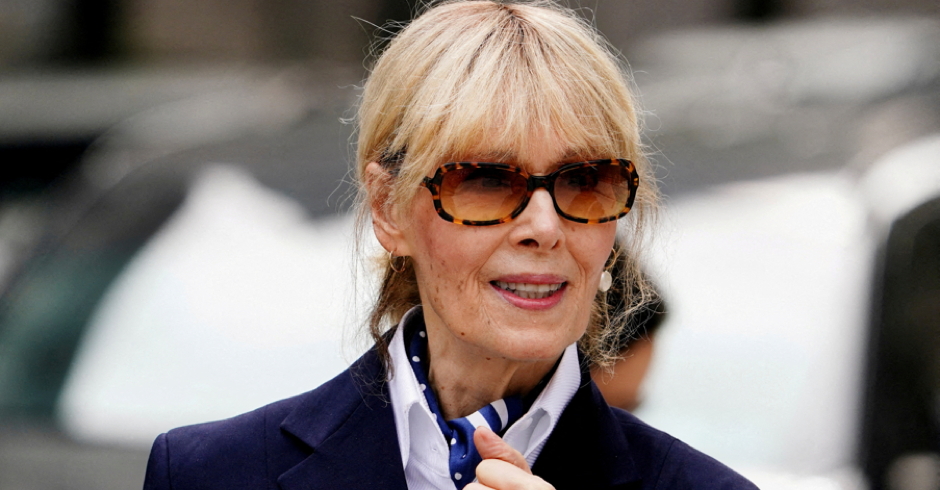
President Donald Trump’s apparent efforts to delay releasing the $5.8 million civil judgment to E. Jean Carroll are being met with a warning by the journalist’s legal team, who suggest there could be a legal maneuver for Trump to employ to forgo paying the judgment in either of the two cases he lost.
According to The Guardian, on July 4, U.S. District Judge Lewis Kaplan ordered Trump to release the $5.8 million judgment, which is in escrow, to Carroll by this coming Tuesday — or explain why he would not do so.
Carroll’s attorneys think Trump may be trying to buy time to mount another legal strategy, telling the judge that Trump’s request for an extension “appears to be little more than yet another play for time.”
“The case is separate from Trump’s appeal of a Manhattan civil jury’s 2024 award of $83.3m to Carroll for defamation,” The Guardian explains. “But her lawyers have suggested a legal scenario in which the president might seek to conjoin the cases and further delay payment of both.”
Carroll’s attorney Roberta Kaplan (no relation to the judge) wrote, “We can only assume that defendant is seeking … to buy time so he can try to concoct some new basis to put off paying plaintiff presumably in connection with his forthcoming petition and motion for a rehearing.”
Trump’s former attorney, Justin Smith, in one of his final acts, wrote to the Supreme Court suggesting that his client would be appealing the $83.3 million civil judgment.
Smith argued that the Supreme Court “may wish to consider the petitions together,” given they involve the same parties.
The larger judgment case involves possible questions of presidential immunity, and that has Carroll’s attorneys concerned.
“A conjoined case, Carroll’s lawyers fear, could result in both judgments being wiped out,” The Guardian reports.
The president has also made clear he is no fan of Judge Kaplan, after the jurist made several rulings that “angered” Trump.
“What else can you expect from a Trump Hating, Clinton appointed judge, who went out of his way to make sure that the result was as negative as it could possible be,” Trump wrote on Truth Social in 2023, “speaking to, and in control of, a jury from an anti-Trump area which is probably the worst place in the US for me to get a fair ‘trial’.”
Image via Reuters

Platner Scorched Over ‘Taking Time’ Video After New Accusation

Trump Sparks Fury Online After Posting Unblurred Video of Muslim Kindergartners in Hijabs

One Legal Maneuver Threatens to Undo Everything E. Jean Carroll Won

Inside the Group Helping MAGA Voters Walk Away — And What Finally Pushed Them