
News
No Indictment in the Trump Hush Money Payoff Case for at Least Another Month
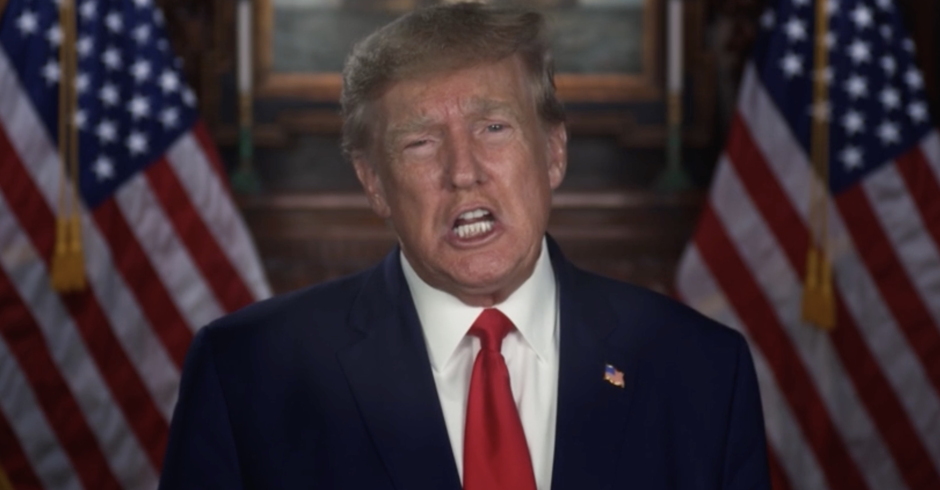
Despite his false claim he would be indicted last week, Donald Trump isn’t going to see any indictment any time soon – at least not by New York District Attorney Alvin Bragg’s grand jury investigating his role in the hush money payoff to Stormy Daniels.
The grand jury will be on hiatus from the Trump case for the next month, according to Politico, which says the break was previously planned.
Jurors are not expected to hear any evidence in the case this week or next week, and will break for the Passover holiday next Thursday. They will be off for the following two weeks, Politico’s source says, citing a schedule drawn up in January.
“There is no official deadline for bringing an indictment against Trump, although there were indications in recent weeks that the grand jury’s activity was nearing a vote, particularly when prosecutors offered Trump the chance to testify before the panel. That is typically one of the final steps of a criminal investigation,” Politico notes.
There is one caveat to the “no official deadline” claim. Journalist Marcy Wheeler notes, if the grand jury “were to charge witness tampering in conjunction with the Costello [communications] to [Michael] Cohen, they would create a hard deadline before the end of April.”
Costello is Robert Costello, who Trump asked the grand jury to interview, hoping he would refute his longtime former attorney’s testimony.
Of course, anything is possible and DA Bragg could call the grand jury into session at any time.
There is also the unlikely possibility that he will not ask them to vote on an indictment in the case. They could also vote against indicting Trump.
Enjoy this piece?
… then let us make a small request. The New Civil Rights Movement depends on readers like you to meet our ongoing expenses and continue producing quality progressive journalism. Three Silicon Valley giants consume 70 percent of all online advertising dollars, so we need your help to continue doing what we do.
NCRM is independent. You won’t find mainstream media bias here. From unflinching coverage of religious extremism, to spotlighting efforts to roll back our rights, NCRM continues to speak truth to power. America needs independent voices like NCRM to be sure no one is forgotten.
Every reader contribution, whatever the amount, makes a tremendous difference. Help ensure NCRM remains independent long into the future. Support progressive journalism with a one-time contribution to NCRM, or click here to become a subscriber. Thank you. Click here to donate by check.
 |





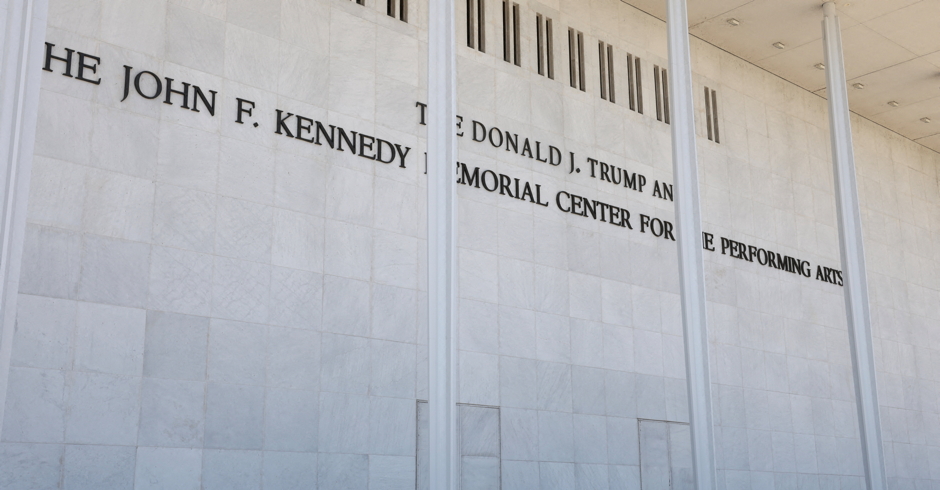
A judge on Friday tossed out a lawsuit brought by the Kennedy Center against an artist who withdrew from a performance after the organization’s board voted to add President Donald Trump’s name to the venue, The Washington Post reports.
The artist, jazz musician Chuck Redd, pulled out over what he called “the defiant and illegal name change happening to the Kennedy Center,” according to the Post.
But, as D.C. Superior Court Judge Tanya Jones Bosier found, Kennedy Center officials had not made a legally binding agreement with Redd, and there could be no breach of contract claim as a result.
“There’s no dispute that he did not sign the 2025 agreement,” the judge said.
In a statement, Redd’s attorney, Lisa Banks, said Redd had been sued “because he publicly and rightly objected to adding Donald Trump’s name to the Kennedy Center, a living memorial to former President John F. Kennedy.”
Banks called the lawsuit “political retribution, pure and simple, by the Trump Kennedy Center,” and said that “the Court correctly saw it as such in dismissing the case with prejudice.”
According to the Post, after Redd withdrew, then-Kennedy Center president Richard Grenell said in a letter to Redd, “This is your official notice that we will seek $1 million in damages from you for this political stunt.”
In December, Redd told the Associated Press, “When I saw the name change on the Kennedy Center website and then hours later on the building, I chose to cancel our concert.”
On Thursday, the general counsel for the John F. Kennedy Center for the Performing Arts ordered Trump’s name to “immediately” be removed from the building after a federal judge found adding the president’s name to the Center was unlawful, The New York Times reported.
“The memo gave staff members detailed instructions on the materials that needed to be updated, including social media accounts, email signatures and voice mail messages,” the Times reported. “It specified that outdoor and indoor signage with the barred name must be altered by June 12.”
Late last month, a federal judge ordered that President Donald Trump could not rename the Kennedy Center, nor could he close it for what the Trump administration said were two years of renovations.
“The Kennedy Center’s organic statute makes crystal clear that the Center is to be named for President Kennedy, and it cannot bear any other formal name or public memorial based on the Board’s unilateral say-so,” the judge wrote, CNBC reported. “Congress gave the Kennedy Center its name, and only Congress can change it.”
Image via Reuters

“All presidents lose. Trump loses more often, on more things, than most,” says political scientist Jonathan Bernstein in a written conversation with New York Times Opinion editor John Guida.
Bernstein argues that Trump is an “inept” president who “actually gets worse at all of this as he goes along.”
“Trump thinks winning elections is like winning a prize — the United States of America — to do with as he pleases,” he writes. “But what actually happens in elections is that the voters hire you to do a job. It’s a job with some 340 million bosses. And like all jobs, it has constraints and obligations.”
Trump “just doesn’t see that,” says Bernstein, who also notes that “Trump has hardly had a week where his approval exceeded his disapproval.”
What Trump is actually good at is being “a really good reality TV star.”
“He’s very good at grabbing attention,” which “can help a president set the agenda,” Bernstein says. “Political scientists have found that presidents aren’t very good at changing what people think, but they can be good at changing what people think about.”
Trump has been good at creating “a Democratic Party eager to fight — and that may even, in time, undermine the 50 years of successful G.O.P. gains in the courts,” but he has not worked to get his agenda passed in Congress.
“With the power to set the agenda, skilled presidents can get things done: by pressing Congress to vote on something they would rather not vote on or by pressing the bureaucracy to pay attention to their directives,” says Bernstein. “Trump is an inept president, so he mostly squanders the attention he gets — and at least half the time, he winds up drawing attention to things that don’t help him at all.”
Trump has not been successful at getting Congress to pass his most important legislation: the SAVE America Act, or at getting the Senate to kill the filibuster. Recently, even some GOP lawmakers crossed the aisle in a significant rebuke of the president — namely the War Powers Act legislation — and some have balked at Trump’s $1.8 billion anti-weaponization fund.
Meanwhile, “Trump has managed to do a lot of damage that will be truly hard to undo,” says Bernstein. “Legal talent has drained from the Justice Department. The same thing is happening virtually everywhere in the federal Civil Service, especially after work force cuts.”
It will “take time to rebuild,” but it will “be hard for any future president to recover from the foreign policy debacles,” he warns.
Image via Reuters

Democratic political consultant James Carville wants Maine voters to back Graham Platner despite the candidate’s flaws — and partly because of some of them. Platner is currently the likely Democratic nominee in Maine’s U.S. Senate race. If Platner wins the primary, he will face Republican Senator Susan Collins, who was first elected in 1996.
“I understand he’s f—— up,” said Carville on his Politicon podcast. “Yeah, maybe we need a combat veteran right on that Senate floor, who is f—— up.”
Carville berated Senator Collins by calling her “the most pliable member in the history of the United States Senate.”
He warned that he believes the country is “in imminent peril — I mean, imminent peril,” and asked: “Who is most likely to slow this criminal in charge?”
“I think it’s Graham Platner.”
“I ask all of you to understand his flaws, and understand the peril that this nation is in, and maybe he might be the right guy at the right time,” said Carville.
“Graham Platner grew up, I think, pretty privileged,” Carville said, sharing some of the likely Democratic nominee’s backstory. “He went to some kind of fancy fancy boarding school. He graduated, he joined the United States Marine Corps. He was in for eight years. He had three combat deployments. He gets out of the Marine Corps, and he goes to GW.”
Then Platner “joined the Maryland National Guard. Oh, you know what happened? He gets deployed a fourth time.”
“He’s f—— up,” said Carville. “He’s been shot at. He’s a veteran. All right? He’s got a little bit weird. He’s an oysterman. I know what oystermen do. I live in Louisiana. I think that oyster harvesting is the same the world over, it’s hard a—— work.”
Carville acknowledged that he has concerns, but said that maybe senators “need to look at this guy before they start sending young people off to fight wars, and see what the consequence of it is. Maybe he ought to run and say, ‘You don’t know, I’m gonna be on a veterans affairs committee, and I wanna be on a mental health subcommittee, ’cause I know something about… Yeah, I might be five degrees off dead center. So f—— what?’ They need that.”
He said he doesn’t agree with Platner’s economic stances, that they are “to the left of anything I’d say I’m for.”
“But you know what? He recognizes this horrific inequality in this country. And it actually would do some good to have somebody in there.”
Carville called Platner’s tattoo “very troubling.”
He said, “what I have to consider first, is this country is about to lose it. The whole goddamn thing.”
“Okay, we gotta win this,” Carville concluded. “And if we got a person who’s understandably got issues, yeah, good. And maybe people ought to see it, and maybe we ought to just be reminded of what these stupid wars have brought about in the consequence of said stupid wars. It’s [what] stupid Susan Collins been for all her political life.”
Image via Reuters

How Trump Turned America Into a Nation the World No Longer Needs: Economist

How MAGA’s Rise Could Cost the GOP in Future Elections: Report

Why James Carville Says Voters Should Back Graham Platner — Despite His ‘Flaws’

Judge Tosses Kennedy Center’s Lawsuit Against Artist Who Canceled Over Trump’s Name

How ‘Inept’ Trump Is Getting ‘Worse at All of This’: Political Scientist
Judge Tosses Kennedy Center’s Lawsuit Against Artist Who Canceled Over Trump’s Name
How ‘Inept’ Trump Is Getting ‘Worse at All of This’: Political Scientist
Why James Carville Says Voters Should Back Graham Platner — Despite His ‘Flaws’
How MAGA’s Rise Could Cost the GOP in Future Elections: Report
How Trump Turned America Into a Nation the World No Longer Needs: Economist

 News3 days ago
Trump Just Earned a Brutal New Title: ‘Commander in Thief’ Says Columnist
 News2 days ago
Trump Resurfaces With a New Medical Malady He Can’t Hide

 News3 days ago
This Platner Scandal Looks Different — And Damaging: CNN Analyst

 News3 days ago
How These Red State Governors Are Trying to Replace LGBTQ Pride Month

 News2 days ago
Democrats’ Dissatisfaction With Democrats in Congress Has ‘Never Been Higher’: CNN Analyst
 News1 day ago
Karl Rove Has a Warning for Democrats Counting on a Blue Wave This November
 News3 days ago
Why Trump Wins Even If Republicans Lose the Midterms: Columnist

 News2 days ago
‘Lingering Concerns’: Prominent Physician Wants Trump’s Doctor to Hold Press Conference