GLAAD To CNN: No More Anti-Gay Hate Groups. CNN: No.
CNN, like other major news media outlets, uses representatives from the professional anti-gay industry, including certified hate groups, to present what has become known as “balanced” coverage. We’ve all see these right-wing anti-gay extremists be invited on CNN, FOX, and other networks, supposedly representing a valid point of view. They are not, especially when they are tools of the anti-gay industry. GLAAD, the Gay and Lesbian Alliance Against Defamation has decided enough is enough, and has targeted CNN for its refusal to end this ludicrous practice.
(Even MSNBC is not immune from these tactics. Its own veteran anchor Chris Matthews last month told Tony Perkins, the president of the hate-group the Family Research Council, “Tony, you’re always welcome here.”)
Think of it this way: If you had a child molester debate a district attorney about whether or not child molestation was OK, would you consider that a valid journalistic piece? At some point, the “opinions” of certain groups of people just aren’t valid.
GLAAD often works behind the scenes, trying to educate people and organizations as to what is appropriate when it comes to the LGBTQ community. Often, they are successful, the organization makes changes and the public doesn’t need to get involved. It’s when organizations or companies, in this case, CNN, refuse to make changes to how they operate that GLAAD goes public. In this case, they are absolutely right to do so.
In a public petition GLAAD says, “CNN has long been one of America’s most respected journalistic organizations on many issues, but for several years, it has had a giant blind spot when it comes to issues that impact the LGBT community. On December 21, John King USA ran a segment featuring Peter Sprigg from Family Research Council, but there are countless other examples. Out of a desire for ‘balance’ on these issues, CNN turned – as they often do – to the anti-gay industry to provide the counterpoint. Except all too frequently, the network doesn’t book these people because they provide any actual expertise or experience on issues that impact LGBT people; their only qualification is that they are anti-gay.”
“During that John King segment on the pending repeal of “Don’t Ask, Don’t Tell” and its implementation, King featured openly gay former service member Alex Nicholson, alongside Sprigg, who is a “senior fellow for policy studies” at the Family Research Council.
“Nicholson’s qualifications were clear. As an openly gay, former Army intelligence officer, he gave firsthand accounts of how the policy played out in the day-to-day lives of gay and lesbian service members.Sprigg’s qualifications, however, came exclusively from his job at the Family Research Council. There, Sprigg has worked to advance some of the most hurtful, dangerous, and demonstrably false notions about the lives of LGBT people that our country has seen in recent years. And yet, by pairing him with Nicholson in this segment, CNN told its millions of viewers that both of these men should be seen as equally valuable to this discussion.
“Is it important for the media to take these groups on? Of course it is. But that’s not what CNN and other media organizations are doing when it invites these groups to take part in otherwise reasonable discussions. The media is elevating their hurtful messages and attitudes to the level of rational discourse. The media is saying that people like Alexander Nicholson, who can speak to real-life experience and firsthand facts, need to be “balanced” by people like Peter Sprigg, whose claim to fame is arguing that being gay should be outlawed. If CNN wants to interview a gay person who believes being straight should be outlawed, THEN Peter Sprigg would be an acceptable “balance.”
“CNN and the rest of the media are doing nothing but exposing their viewers to dangerous anti-gay rhetoric when they invite members of these anti-gay groups onto their programming.”
CNN offered a terse response (via TV Newser):
“CNN appreciates GLAAD’s concern for objective and fair reporting. CNN will continue to strive for the best bookings of experts who have opinions that reflect different points of view across the country.â€
In other words, buzz off.
CNN has struggled with ratings for well over a year now. Is this approach, using know hate-mongers to gin up opinion and emotion the best way to rebrand itself? I think not. What do you think? Should professional hate-mongers be elevated to share the same platform as those who have a real-world, valid point of view?

Enjoy this piece?
… then let us make a small request. The New Civil Rights Movement depends on readers like you to meet our ongoing expenses and continue producing quality progressive journalism. Three Silicon Valley giants consume 70 percent of all online advertising dollars, so we need your help to continue doing what we do.
NCRM is independent. You won’t find mainstream media bias here. From unflinching coverage of religious extremism, to spotlighting efforts to roll back our rights, NCRM continues to speak truth to power. America needs independent voices like NCRM to be sure no one is forgotten.
Every reader contribution, whatever the amount, makes a tremendous difference. Help ensure NCRM remains independent long into the future. Support progressive journalism with a one-time contribution to NCRM, or click here to become a subscriber. Thank you. Click here to donate by check.
 |

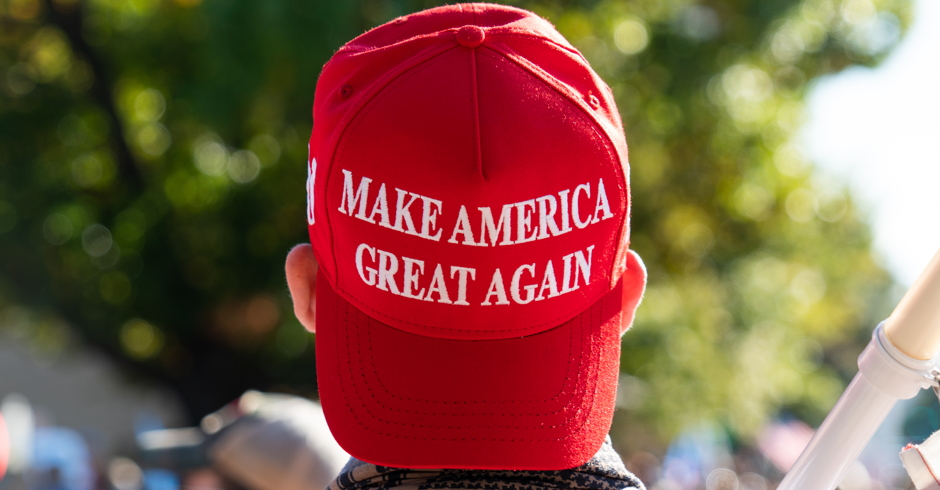
The Dispatch‘s national correspondent, Kevin D. Williamson, wants to ask Republicans a question.
He points to the $270 it takes to fill up the tank of a Ford Super Duty truck in his neighborhood — 48 gallons at $5.60 a gallon for diesel — and asks, “Do you feel smart?”
Citing a column by The New York Times’ Bret Stephens, Williamson weighs the pros and cons of voters electing candidates to achieve results over voters choosing “paragons of moral rectitude.”
“There is something to be said for that approach,” writes Williamson. “One of the problems with our politics is that politicians—especially presidents—are treated as embodiments of the nation, the people, and our values, to such an extent that members of a party feel alienated and humiliated when the other party’s leader occupies the White House.”
He concludes that for partisans, “inconvenient facts necessitate a kind of rhetorical two-step.”
“There are proud Trump cultists and there are embarrassed Trump cultists, and, if you press one of the latter on Trump’s viciousness—his dishonesty, his infidelity, his venality, his susceptibility to flattery, his inconstancy—he often will retreat into comfortable pragmatism,” Williamson writes.
They will say they like Trump’s “policies,” which, Williamson charges, “mainly indicates the economic conditions coincident with Trump’s first term in office, pre-COVID, which were only to a very minor degree the result of any Trump policy.”
But press the embarrassed Trump cultist further — like on the $270 tank fill-up — and they will “retreat into moralism, albeit a negative kind of moralism based in the perceived deficiencies of the Democrats rather than in any of Trump’s particular moral virtues, which, it is plain, simply do not exist.”
When Republicans insist Americans “think of the policies,” Williamson says he wonders “what those beneficial policies are.”
“The illegally initiated and incompetently executed war in Iran that is the proximate cause of that $270 diesel bill? The obviously criminal massacres of civilians on the high seas? The gross self-dealing and corruption? The elevation of wildly unqualified yes-men such as Bill Pulte to high office? The deepening debt? The rising inflation?”
Williamson says that they like the policies, “Except for the inflation, and the trade chaos, and the war, and the corruption, and the enshrinement of utter incompetence.”
He says that you “can two-step around reality any way you like, but the fact is that right now Republicans are offering both Ken Paxton and $5.60 diesel. And so I repeat the question to my Republican friends: ‘Do you feel smart?'”
Image via Shutterstock
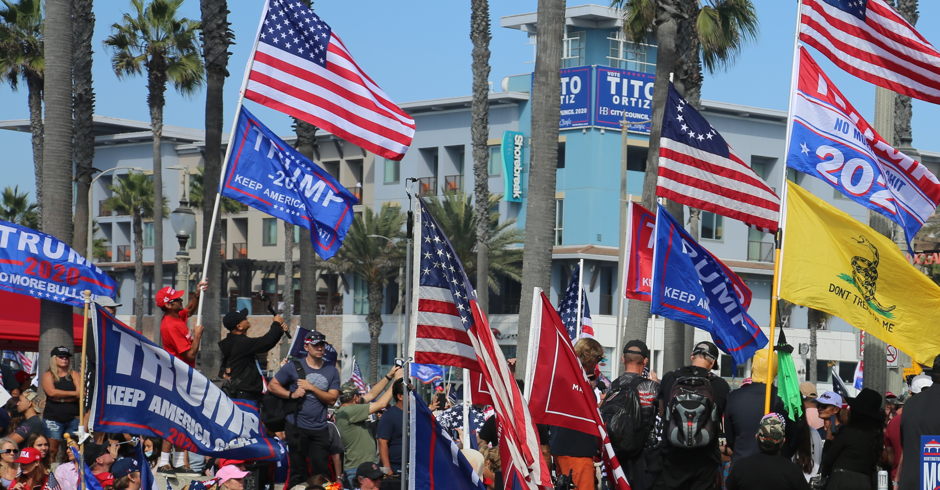
Port Charlotte, Florida, is part of Charlotte County — which voted for President Donald Trump by a solid two-to-one margin in 2024. It was named one of the top ten places to retire in 2012.
Still seen as a deeply red state, Democrats are making inroads into the Sunshine State. Ahead of the August primary, in the race for governor, Republican Byron Donalds often polls ahead of Democrat David Jolly but only by single digits, according to data from The New York Times. Donald Trump won the state by 13 points in 2024.
A letter to the editor highly critical of President Donald Trump and his MAGA base in a Port Charlotte news outlet could be seen as surprising.
“MAGA crowd, Trump are all about winning,” reads the headline.
“Donald Trump and the MAGA movement have turned American politics into a fan-based team sport,” writes its author, Gayle Yarnall.
“Governing has become an us versus them rivalry regardless of the consequences. It is all about winning,” she laments.
“The 2024 election is long over. Yet, there are Trump signs, banners, and flags still posted around. It is akin to displaying the flag of your favorite teams like the Patriots or the Buckeyes. What is the purpose except to express that, ‘I’m on a winning team’?” Yarnall asks.
“No one will be persuaded to vote for Trump. The election is done and he won. Is there any memory of Reagan, Biden, Bush, Obama, or Clinton flags or signs posted months or years after the election? Of course not.”
Yarnall calls the still-flying banners and flags “visual reminders” for “those with low self-esteem, feeling left out and unheard.”
“They scream, ‘look at me, we won, I’m on a winning team,'” she says.
“Even when gas prices spike, the cost of tariffs are passed on, a war continues, inflation is rising in all sectors it matters not because my team won.”
In a last-ditch plea, Yarnall asks her neighbors, “Please remember to vote!”
Image via Shutterstock

Right-wing journalist Ben Domenech isn’t aligned with GOP wisdom that the Republican Party should do well in the November midterm elections. In a lengthy written conversation with The New York Times, Domenech says he is “skeptical.”
“Republicans still seem to think that, thanks to redistricting and their advantages in fund-raising, they could buck historical trends and hold on, perhaps even in the House,” Domenech told the Times’ John Guida. “They’re just scared about gas prices. Personally, I’m skeptical.”
Looking specifically at Maine, which Republicans see as the “linchpin” to holding the Senate majority, according to Guida, Domenech also sends a warning. The race will be between U.S. Senator Susan Collins (R-ME) and Democratic insurgent newcomer Graham Platner, who has already faced numerous scandals.
“The interesting thing about this whole focus on Maine is that if you talk to Senate Republican staff and consultants, they’re actually less worried about it than other states,” says Domenech. “This is partially because of Platner’s shall we say unique collection of scandals and challenges, but it’s also because of enormous faith in Collins as a survivor.”
Collins, 73, is running for her sixth term after being first elected in 1996.
Guida points to a Politico report on a memo that states: “the political fundamentals in Maine remain challenging, and it is a fatal mistake to assume Platner is too damaged to win.”
“I think that’s correct,” says Domenech, “and top Republicans should actually be more concerned.”
“Platner clearly has energy behind him. He speaks to a desire on the left for a strong message, and he’s shown no signs of bowing to pressure to get out for a more centrist-coded candidate,” he adds. “Collins is absolutely capable of winning, but national assumptions are taking over based on her last election, in 2020, when she came back from what seemed like a deep hole by keeping her campaign hyperlocal.”
Domenech says that Republicans do have some concerns, specifically about three states Donald Trump won by double digits in 2024: Alaska, Iowa and Ohio.
In Ohio, former U.S. Senator Sherrod Brown is seeking to return to the Senate, and is running against “an appointee who has never won a Senate election, Jon Husted.”
In Alaska, Democrat Mary Peltola is running against Dan Sullivan, the Republican incumbent who “has the advantage there, but again, we’re talking about a unique state, and Peltola is an Alaska Native,” says Domenech. That race is now considered a “toss up” by The Center for Politics’ “Crystal Ball,” which also now rates the Ohio race as a “toss up.”
Iowa could become a difficult race for Republicans as well. Domenech warns it “could turn out to be a real test for Trump’s tariff policies, which have been a decidedly mixed bag in many of the states that backed him. The president will probably have to take that argument to the people of Iowa himself.”
Overall, says Domenech, Republicans’ confidence “comes from a belief that Democratic radicalism, particularly the various examples of what they view as a renewed cultural leftism in opposition to Trump during his first term, will play in their favor.”
Image via Shutterstock

Conservative Insider Throws Cold Water on GOP’s Midterm Confidence

Letter From Deep Red Florida Torches ‘Low Self-Esteem’ MAGA Voters

Conservative Columnist Torches Trump ‘Cultists’ Over Their ‘Two-Step Around Reality’
Conservative Columnist Torches Trump ‘Cultists’ Over Their ‘Two-Step Around Reality’
Letter From Deep Red Florida Torches ‘Low Self-Esteem’ MAGA Voters
Conservative Insider Throws Cold Water on GOP’s Midterm Confidence

Conservative Talk Radio Host’s Brutal New Label for Trump: ‘Clown’

What Democratic Voters Actually Want

 News2 days ago
Helicopter Circles as Gloved Officers Test Grass Over Apparent ?86 47? Mall Message

 News4 days ago
Hard-Right Groups Expanded Power Across the Trump Administration in 2025: Report

 News3 days ago
Johnson Scrambles to Defend Trump’s ‘I Love the Inflation’ Remark — Critics Don’t Buy It
 News4 days ago
CNN Fact-Checker Scorches Trump Over the Price of Gas
 News3 days ago
GOP Leader Skips Trump’s Bill Signing—Then Pins Three-Year High Inflation on His Iran War

 News3 days ago
‘Hated and Alone’: Steve Schmidt Scorches Trump Ahead of His 80th Birthday

 News2 days ago
Historian Warns Trump’s Military May Be Committing War Crimes

 News3 days ago
Steve Schmidt Slams ‘Decrepit’ Trump as a ‘Human Malignancy’ on America