Gays, Abortion, and Islamists: Top Ten Religion Stories of 2009

I always thought the role of religion was to tend to the poor, the sick, and mankind’s soul. Those days are gone. Religion in the America of 2009 focused on gays, abortion, and Islamists. Not healing the sick, not feeding the hungry, not saving man’s soul. Just gays, abortion, and Islamists.
The Religion Newswriters Association just released its list of Top Ten Religion Stories of 2009 (via USNews & World Report.). Four of the top ten stories are about gays: gay marriage or gay clergy. Three are about abortion, and two about Muslims. Oh, the last one? The impact of the recession on faith-based fundraising. So, really, Religion this year focused on gays, abortion, Muslims, and money. Nice job there, religious leaders.
Here’s the list:
1. President Obama pledges a new beginning in Muslim-U.S. relations and reaches out to the world’s Muslims during a major speech at Cairo University.
2. Health-care reform, the No. 1 topic in Congress for most of the year, involves faith-based groups appealing strongly for action to help “the least of these,” and others, such as the Roman Catholic bishops, for restrictions on abortion funding.
3. Because Maj. Nidal Hasan, the accused gunman in the Fort Hood massacre, was considered a devout Muslim, the role of that faith in terrorism again comes under review; some fear a backlash.
4. Dr. George [sic: Carl] Tiller, regarded as the country’s leading abortion doctor, is gunned down while ushering in his Wichita Lutheran church. Scott Roeder, charged with his murder, is described as a man suffering from delusions and professing radical religious beliefs.
5. Mormons in California come under attack from some supporters of gay rights because of their lobbying efforts in the November 2008 election on behalf of Prop. 8, which outlawed gay marriage. Later in the year, Iowa, Vermont and New Hampshire approve gay marriage, but it is overturned by voters in Maine.
6. President Obama receives an honorary degree and gives the commencement speech at Notre Dame after fierce debates at the Roman Catholic university over Obama’s views on abortion.
7. The Evangelical Lutheran Church in America votes to ordain gay and lesbian clergy who are in a committed monogamous relationship, leading a number of conservative churches—known as the Coalition for Renewal—to move toward forming a new denomination.
8. The recession forces cutbacks at a great variety of faith-related organizations—houses of worship, relief agencies, colleges and seminaries, publishing houses.
9. The Episcopal Church Triennial Convention votes to end a moratorium on installing gay bishops, ignoring a request from the archbishop of Canterbury. At year’s end Los Angeles chooses a lesbian, Mary Glasspool, as assistant bishop. Earlier, an elected bishop in Upper Michigan, Kevin Thew Forrester, is rejected because of his extreme liberal views.
10. President Obama’s inauguration includes a controversial invocation by Rick Warren and a controversial benediction by Joseph Lowery, as well as a pre-ceremony prayer by gay Bishop Gene Robinson.
* * *
Addendum: Compare The Religion Newswriters Association’s list of “Top Ten Religion Stories of 2009” with Time Magazine’s “Top Ten Religion Stories of 2009,” which takes a more international, even, “universal” approach. You’ll see much overlap in the two lists, and, a few surprises.

Enjoy this piece?
… then let us make a small request. The New Civil Rights Movement depends on readers like you to meet our ongoing expenses and continue producing quality progressive journalism. Three Silicon Valley giants consume 70 percent of all online advertising dollars, so we need your help to continue doing what we do.
NCRM is independent. You won’t find mainstream media bias here. From unflinching coverage of religious extremism, to spotlighting efforts to roll back our rights, NCRM continues to speak truth to power. America needs independent voices like NCRM to be sure no one is forgotten.
Every reader contribution, whatever the amount, makes a tremendous difference. Help ensure NCRM remains independent long into the future. Support progressive journalism with a one-time contribution to NCRM, or click here to become a subscriber. Thank you. Click here to donate by check.
 |


President Donald Trump and the GOP have an affordability crisis on their hands, and they are dealing with it — not by solving it, as a “normal” political party would do — but by “denying reality,” argues Nobel laureate economist Paul Krugman.
After all, Trump promised to make prices drop on “day one.” He vowed to cut energy costs in half. That has not happened.
“He has instead presided over rising inflation — the Federal Reserve’s preferred measure is running almost a percentage point higher than it was when he took office — and his Iran debacle has caused a spike in gasoline and diesel prices,” Krugman writes.
Krugman points to several prominent Republicans who over the past few days have taken to the nation’s airwaves to claim that gas prices are falling.
CNN put the falsehoods in focus:
U.S. Senator Tim Scott (R-SC) on Thursday claimed “gas prices continue to come down.” CNN’s fact-checker Daniel Dale noted that “average gas prices in the US as a whole and in his home state of South Carolina had actually gone up over the last day, week, month and year, according to AAA data.”
READ MORE: Whistleblower Says DOJ Ordered Prosecutors to Rush SPLC Indictment: Report
House Majority Leader Steve Scalise, Dale found, “falsely claimed Thursday that gas prices are much lower now than they were ‘two years ago,’ when, he claimed, they were ‘$6.’ Thursday’s AAA national average, $4.30 per gallon, was actually higher, not lower, than the average two years prior, when it was $3.66 per gallon.”
One day earlier, CNN notes, Secretary of Defense Pete Hegseth “falsely suggested” the average gas price in California was $8 per gallon right before the Iran war started. “The state average at the time was actually $4.64 per gallon, according to AAA.”
Krugman calls it “striking” that Republicans are “lying” by trying to create an “alternate reality” about a fact that most Americans can see on a daily basis, on “giant signs all around America,” namely, at the gas station.
So why do they, apparently, think these lies will work?
Krugman argues Republicans are pretending that President Donald Trump’s second term in office started during President Joe Biden’s term in office, “after the inflation surge of 2021-2022,” and not after what he calls the “immaculate disinflation” that followed.
Calling that effort “games with the timeline,” Krugman notes that it will not work: “That ship has already sailed (and sunk).”
So who is it for?
An “audience of one”: President Donald Trump, who, “swaddled in his Mar-a-Lago bubble,” doesn’t know that prices at the pump and inflation are up.
“Trump says that we have no inflation,” Krugman notes. “He recently insisted that inflation was 5 percent at the end of Biden’s term and took credit for falling inflation before he took office. So Republicans determined to say whatever he wants to hear — which means everyone still in the party — feel obliged to praise his inflation record, the facts be damned.”
READ MORE: ‘Lying’ Samuel Alito Is a ‘Coward’: Elections Expert
Image via Reuters
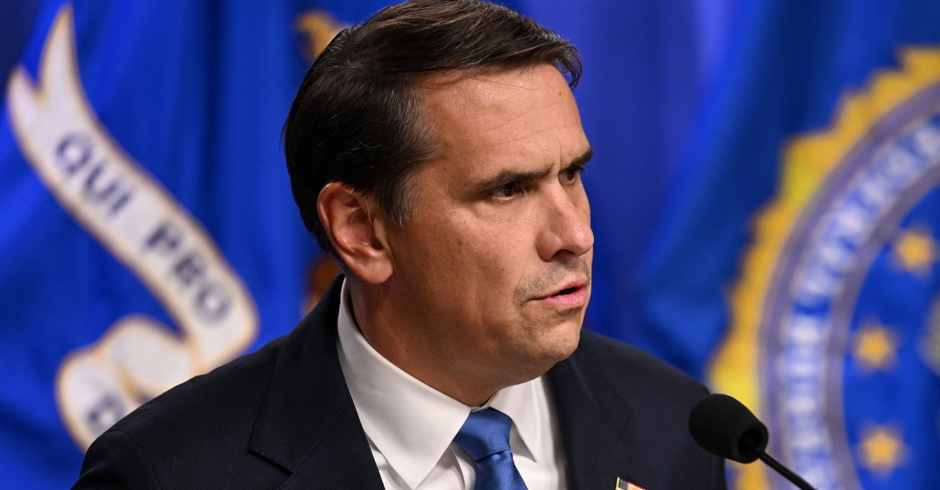
Several Democratic members of Congress are demanding answers from the Department of Justice after a whistleblower alleged that prosecutors were ordered to rush the controversial indictment of a prominent left-leaning civil rights organization, the Southern Poverty Law Center. The SPLC has long drawn fire from some on the right who label it a hate group — a charge rooted in opposition to the organization’s work tracking discrimination and extremism.
MS NOW reports that it exclusively obtained a description of the whistleblower’s allegations, which state that prosecutors had concerns about the strength of the case against the SPLC. Former federal fraud prosecutor Andrew Weissmann, an MS NOW contributor and a former Mueller team member, called the legal theory behind the indictment “exceedingly far-fetched.”
“According to whistleblower information provided to this Committee, Associate Deputy Attorney General Aakash Singh ordered your office, the U.S. Attorney’s Office for the Middle District of Alabama, to rush through the indictment of the SPLC, despite serious concerns about the strength of the case,” reads a letter from U.S. Rep. Jamie Raskin, ranking Democrat on the House Judiciary Committee, and U.S. Rep. Mary Gay Scanlon, ranking Democrat on the Subcommittee on the Constitution and Limited Government.
MS NOW reports that current and former DOJ officials describe Singh as an “enforcer” for acting Attorney General Todd Blanche, who has pushed U.S. attorneys to bring cases of interest to Trump.
Raskin and Scanlon’s letter alleges “systemic flaws” in the indictment.
READ MORE: ‘Lying’ Samuel Alito Is a ‘Coward’: Elections Expert
“As you are well aware,” the Democrats’ letter continues, “it is a violation of Department of Justice (DOJ) regulations to commence a prosecution when an attorney for the government does not believe ‘that the admissible evidence will probably be sufficient to obtain and sustain a conviction.’ It is also a violation of federal law to intimidate or injure individuals or organizations for exercising their constitutional rights, including their right to free speech.”
The letter was sent to Kevin Davidson, the acting U.S. attorney for the Middle District of Alabama.
The Southern Poverty Law Center was indicted by a federal grand jury last month in Alabama’s Middle District on charges including fraud and money laundering. The indictment alleges the 54-year old organization, which worked to bankrupt the Ku Klux Klan through lawsuits, paid more than $3 million to informants working in extremist groups.
“The indictment alleged that those informants furthered the hateful aims of the various groups, including the Ku Klux Klan and Nazi groups,” MS NOW reports. The SPLC denies any wrongdoing, saying its informants fed intelligence to the FBI and DOJ for years.
Weissmann noted that the indictment does not specify what the SPLC told donors that was fraudulent.
“DOJ’s exercise in gaslighting-by-indictment also requires America to bury its head in the sand and pretend SPLC’s payments to infiltrate white nationalist groups were meant to support them, despite evidence to the contrary presented in its charging document,” Raskin wrote to Singh.
Raskin, a former constitutional law professor, charged that federal prosecutors are “bringing cases without probable cause or any reasonable expectation of winning at trial.”
“Instead, the clear purpose of your directive and the onslaught of bogus cases is to intimidate and stifle criticism of this Administration’s policies,” Raskin said.
READ MORE: Trump Attacks ‘Very Disloyal’ GOP Senator — Calls for Him to Lose Primary
Image via Reuters

Professor of Law Richard Hasen, an elections law expert, is denouncing Supreme Court Justice Samuel Alito as a “coward” who is either lying to himself or the American public, after authoring what has been called the “earthquake” decision in Louisiana v. Callais, which sharply erodes the Voting Rights Act.
Alito’s “disastrous” majority opinion in Callais “essentially gutted what remains of the Voting Rights Act,” but he “claims to have done no such thing. The question is why,” Hasen posits.
Hasen charges that Justice Alito was too “afraid” to share his actual opinion, and so he found ways to “get away with overturning Section 2 of the Voting Rights Act through technical minutiae rather than through a direct hit.”
Section 2, passed in 1965, is the provision of the Voting Rights Act that protects minority voters from discriminatory voting laws and maps.
Hasen argues that Alito’s opinions in both Callais and Brnovich v. Democratic National Committee “necessarily imply” that “Congress cannot do anything to protect minority voting rights short of banning intentional discrimination despite the 14th Amendment’s equal protection guarantee, despite the 15th Amendment’s ban on race discrimination in voting, and despite the fact that both amendments explicitly give Congress the power to enforce the measures by ‘appropriate legislation.'”
READ MORE: Trump Attacks ‘Very Disloyal’ GOP Senator — Calls for Him to Lose Primary
He notes that Alito managed to render Section 2 of the Voting Rights Act “essentially toothless,” while leaving the six-decade-old landmark law on the books.
“Since Brnovich,” he writes, “no plaintiffs have brought successful suits under Section 2 challenging a law alleged to suppress votes.”
Indeed, Alito’s opinions in both cases are “extreme overkill,” handing states “multiple pathways” to defeat a Section 2 claim.
Hasen explains that for Alito, “to discriminate against Louisiana Democrats is not to discriminate against Louisiana’s Black voters, despite the overwhelming overlap between the two groups.”
But for Hasen, the most “galling” issue is that Alito “goes out of his way to disclaim he is making radical change while putting multiple stakes through the heart of Section 2.”
He offers some possibilities of why Alito has acted in this way.
“Maybe Alito is worried that a ruling forthrightly saying what he is doing would sully the reputation of the court, which has already faced public criticism for killing off another key part of the Voting Rights Act in 2013’s Shelby County decision,” Hasen writes. “Perhaps he is worried that a frontal kill of Section 2 would energize Democrats, leading to greater losses for Republicans in the midterm elections and in future elections.”
Regardless, Hasen concludes, no one “is fooled by Justice Alito’s act of cowardice, unless it is Justice Alito himself. If that’s the case, he is more deluded than he seems to think the rest of us are.”
READ MORE: Trump Stalls J6 Lawsuits From Officers and Lawmakers With Immunity Push: Report
Image via Reuters

‘Lying’ Samuel Alito Is a ‘Coward’: Elections Expert

Trump Attacks ‘Very Disloyal’ GOP Senator — Calls for Him to Lose Primary

Whistleblower Says DOJ Ordered Prosecutors to Rush SPLC Indictment: Report

‘Denying Reality’ Is MAGA’s Plan to Deal With the Affordability Crisis: Economist
‘Denying Reality’ Is MAGA’s Plan to Deal With the Affordability Crisis: Economist
Whistleblower Says DOJ Ordered Prosecutors to Rush SPLC Indictment: Report
‘Lying’ Samuel Alito Is a ‘Coward’: Elections Expert
Trump Attacks ‘Very Disloyal’ GOP Senator — Calls for Him to Lose Primary

Trump Stalls J6 Lawsuits From Officers and Lawmakers With Immunity Push: Report

 News4 days ago
Trump ‘Frustrated’ by Ballroom Legal Battles — So GOP Wants You to Pay for It: Report

 News3 days ago
King Charles Discreetly Rebukes Trump in Historic Address to Congress: Report
 News4 days ago
‘This Will Backfire’: DeSantis’s New Redistricting Map Is Already in Trouble

 News2 days ago
Trump Running Out of Options in $83 Million Case After Court Rejects Rehearing Bid

 News3 days ago
FCC Poised to Review Disney Licenses Amid Trump Pressure Over Kimmel Joke: Report
 News3 days ago
Coming Price Spike Made Worse by Trump Could Deal ‘Fatal Blow’ to GOP: Report

 News3 days ago
Trump White House Blames Democrats’ ‘Unhinged Rhetoric’ for Inciting WHCD Attack
 News2 days ago
‘Mockery of the Law’: Supreme Court Weakens Voting Rights Act in ‘Earthquake’ Ruling