Out October: My Journey To Lesbianhood: I Came Out Twice
Editor’s note:
This is the second in our month-long series, “The Out October Project,” designed to “help bring realization into people’s lives that there are others out there,” and that, “there is hope in numbers, there is strength in support.” You can see all the stories here.
Today’s story is by Tanya Domi, a former Army Captain who served for fifteen years and was
honorably discharged in 1990. During her career, she survived the Ft. Deven’s witchhunt (1974-1975) and later was investigated as a Captain. She works at Columbia University in New York City and lives with her partner Deborah Kasner and Bailey, her golden retriever.
I grew up in Indianapolis, Indiana, an enclave of intolerance for any difference, but especially so during the 1960s and 1970s.
When one grows up in an oppressive environment, you are either subsumed into that intolerance—collapsed into espousing it actively or by complicity in active silence—or you push back and resist and become an “outlaw,†which I became, although, even as a teen I was respected by many peers for my vocal advocacy of equality for African Americans and women.
It took a long time for me to figure out I was a lesbian. I think my journey began in the fifth grade when I played basketball and softball in an Indianapolis city parks program. I was totally enthralled with my coach—Lynda, who I will never forget—and did everything imaginable to secure her attention and obtain her approval. She was a great basketball player and an even better fast pitch softball player. Here was this strong woman, who was self-possessed and was distinctly identified in the world for her athletic prowess, not through marriage. Her existence opened up my world to other possibilities that were not espoused for women in the 1960s. One of my sweetest memories is sitting next to Lynda on the bench and smelling her, as she wore “Tabu,†one of the popular fragrances of that era.
If I had “grown†out of my crush on Lynda, it would have been dismissed as a phase, but I never grew up or out of it. Looking back, I now know that Lynda was my first crush on a woman.
At the beginning of my sophomore year in college I became aware that I was on the horns of self-discovery—something was different for me—it was clear to me that I was not interested in men. I became aware that Karen, the resident assistant on my floor at Indiana University, was in a very close relationship with a woman. I became envious of their intimacy and finally realized that I really wanted a similar kind of relationship. And yet, I had not become conscious of my sexual feelings for women. A passing caress by one of IU swimmers toward me during a study session so frightened me that I ran out of her room, never discussing it again. I loved the feeling of her touch, but I ran away because of its unfamiliarity and taboo. If I wanted her touch, what would that make me? I could not go there just yet.
By the time I enlisted in the Army in 1974 (an accidental career precipitated by the pending divorce of my parents), I was headed toward a total embrace of lesbianism, although unbeknownst to me.
When I arrived to Ft. McClellan, Alabama, it was nearly midnight. As new privates in the U.S. Army, we were efficiently lined up and issued linens, towels, and promptly sent to bed in the early hours of the morning. I heard the cries of women around me before falling into a short and restless sleep. Suddenly, the bay lights came on for the first full day in basic training as the platoon sergeant shouted “all you sleeping beauties, rise and shine!”
Despite many misgivings about my career choice, I enjoyed the regiment and the rhythm of training. Saturday nights in the laundry room were sessions in shoe shining, ironing and sharing platoon gossip. Finally, one night, Nancy, sitting on the floor next to me as we leaned against the dryer, told me she was a “lesbian†and tilted over to kiss me. I did not resist. I was wowed and thrilled by her boldness. Her kiss and our mutual crush through basic training, culminated in a thrilling and frustrating night of clumsy love making in an Army issued pup tent during our field training exercise before graduation. Those moments changed me forever.
By the time I arrived to Ft. Devens, Massachusetts in March 1974, I was in the early days of loving women—the lovely days of discovering “true love†and of having found oneself. Not knowing or fully appreciating the dangers of the love, we dare not speak of; I went to Boston for the weekend with a group of women, which included my first visit to a gay bar called “The Other Side.†It was a weekend that furthered self-discovery, completely innocent and full of excitement.
Upon our return to base, all of us who went to the gay bar were called into security and read our Miranda rights—the accusation was for being a homosexual, a lesbian. I was so young, and not fully out to myself and not to the world. The investigation began and would not end for 15 months. And yet, while the infamous Ft. Devens witch-hunt continued, unabated in its viciousness, I persisted in my dangerous exploration and fell in love with Karen, my first love. This genuine love affair of the heart prompted a phone call to my mother, who I thought would be supportive and embrace my new self-discovery.
I remember how happy I was—so joyful in really knowing love for the first time. The moment I told my mother I had fallen in love with a woman and I felt I was gay, she responded by telling me: “your life will be so terrible and lonely.†I was shocked by her response—immediately changing the moment to a bittersweet one. Her response would create another wall between us, which would lengthen over the years.
I finished out my enlistment and went back to university to complete my bachelor’s degree and obtained my officer’s commission, while I remained in the Army Reserves.
Because of the Reagan recession, I reentered the Army in 1982 and remained in the closet. Yes, I knew I was gay, but I thought I could make a career in the Army because I was good at it and I loved the life of being a soldier. I did not fully understand how the Army’s enforcement of the gay ban would affect me emotionally. While I remained in the closet hiding, I would establish a successful career as an Army officer that would lead to my nomination to teach at West Point. And yet despite all the success, an investigation into my sexuality, triggered by a report I had made about a colleague who had sexually harassed me, finally woke me up to the belief that I would never have a healthy and happy personal life in the Army. It would only be a matter of time before I was “caught†being a lesbian and my life could be ruined.
I paid an incredibly high price for remaining in the military closet for all those years. Consequently, I never had a healthy, intimate relationship until several years after I left the Army behind, well into my late 30s. As the gay military ban issue began to heat up because of public demands for repeal of the discriminatory policy by returning veterans who served in Desert Storm, I proudly and publicly joined out military colleagues at the Pentagon on Veterans Day in 1991 declaring myself a lesbian, while we engaged in a protest. The pride of being out, being honest and truthful about who I am was a relief and removed a burden that has never returned. Being truthful for the first time in my adult life about being lesbian, created the emotional space for my horizons to expand and put me on a trajectory that has made for a purposive, thrilling at times, engaging and interesting life. I only wish I had come out sooner.

Enjoy this piece?
… then let us make a small request. The New Civil Rights Movement depends on readers like you to meet our ongoing expenses and continue producing quality progressive journalism. Three Silicon Valley giants consume 70 percent of all online advertising dollars, so we need your help to continue doing what we do.
NCRM is independent. You won’t find mainstream media bias here. From unflinching coverage of religious extremism, to spotlighting efforts to roll back our rights, NCRM continues to speak truth to power. America needs independent voices like NCRM to be sure no one is forgotten.
Every reader contribution, whatever the amount, makes a tremendous difference. Help ensure NCRM remains independent long into the future. Support progressive journalism with a one-time contribution to NCRM, or click here to become a subscriber. Thank you. Click here to donate by check.
 |

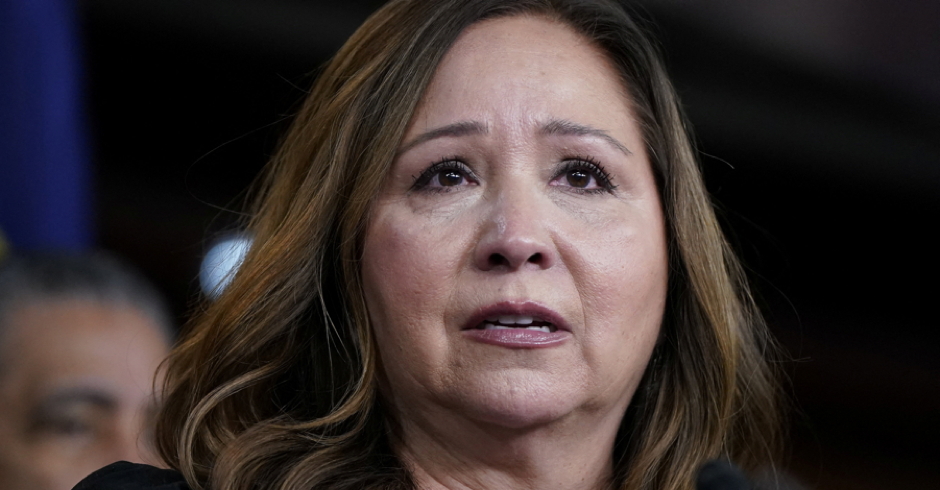
U.S. Rep. Adelita Grijalva (D-AZ) is accusing U.S. Immigration and Customs Enforcement (ICE) agents of pepper-spraying her in her face while she was at a local Tucson, Arizona restaurant.
Rep. Grijalva in a video on social media said she saw about 40 mostly-masked ICE agents at a restaurant she frequents weekly.
The agents were “in several vehicles that the community had stopped right here, right in the middle of the street, because they were afraid that they were taking people without due process, without any kind of notice.”
READ MORE: Warning Signs Flash as Trump Slump Raises Fears of 2018 Blue Wave Rerun: Conservative
She said that the community was “protecting their people” when she was “sprayed in the face by a very aggressive agent,” and “pushed around by others when I literally was not being aggressive.”
“I was asking for clarification, which is my right as a member of Congress,” she continued. “So, once I introduced myself, once I did, I assumed that it would be a little calmer, but there was literally only one person that was trying to speak to me in any kind of civil tone, and everyone else was being rude and disrespectful, and I just can only imagine if they’re going to treat me like that, how they’re treating everybody else.”
Congresswoman Grijalva said she saw “people directly sprayed,” including “members of our press” and staff members.
She blasted President Donald Trump, saying that he “has no regard for any due process, the rule of law, the Constitution — they’re literally disappearing people from the streets.”
Critics slammed the agents’ action.
READ MORE: Trump: Democrats Are Plotting ‘Total Obliteration’ of Supreme Court
U.S. Senator Ruben Gallego (D-AZ) wrote that Rep. Grijalva “was doing her job, standing up for her community.”
“Pepper-spraying a sitting member of Congress is disgraceful, unacceptable, and absolutely not what we voted for. Period,” he added.
“This is unacceptable and outrageous,” observed Arizona Attorney General Kris Mayes. “Enforcing the rule [of] law does not mean pepper spraying a member of Congress for simply asking questions. Effective law enforcement requires restraint and accountability, not unchecked aggression.”
The Bulwark’s Sam Stein noted, “quite the beginning for Grijalva, who wasn’t seated for weeks, [cast] the decisive vote to get the Epstein files, and now has apparently been pepper sprayed in the face by immigration agents.”
Also calling the action “outrageous,” U.S. Rep. Pramila Jayapal (D-WA) wrote: “We are Members of Congress with oversight authority of ICE. Rep Grijalva was completely within her rights to stand up for her constituents. ICE is completely lawless.”
“First they tackle a sitting Senator,” noted U.S. Rep. Adriano Espaillat (D-NY). “Now they’re pepper spraying a Representative. It’s clear ICE is spinning out of control. We will hold the agency accountable.”
ICE just conducted a raid by Taco Giro in Tucson – a small mom-and-pop restaurant that has served our community for years.
When I presented myself as a Member of Congress asking for more information, I was pushed-aside and pepper sprayed. pic.twitter.com/gPx0p3IXP2
— Rep. Adelita Grijalva (@Rep_Grijalva) December 5, 2025
READ MORE: Trump’s Ballroom Seen as ‘Key Evidence’ He’s Out of Touch as Cost of Living Spikes
Image via Reuters
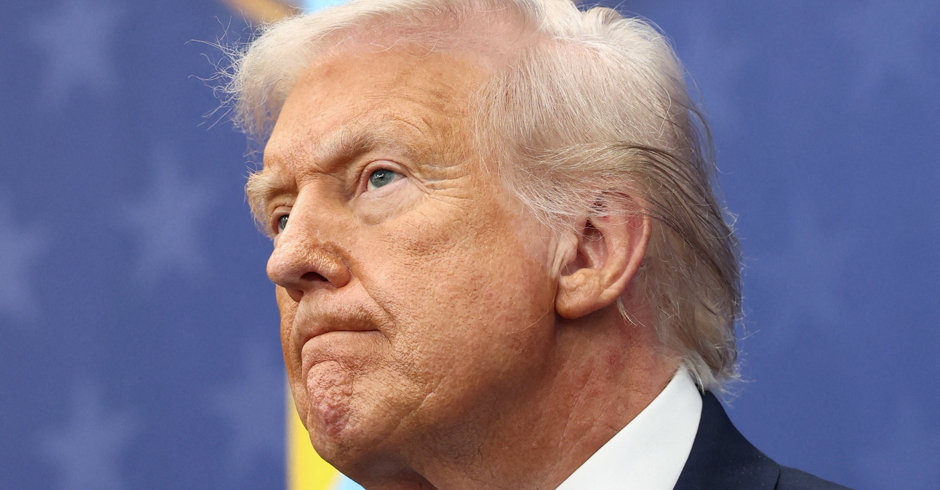
A well-known conservative commentator has a warning for the Republican Party: take action now or face a repeat of the 2018 midterms when the GOP lost 41 House seats in a landslide. And this time, he says, the Senate could go to the Democrats as well.
Award-winning writer and journalist Bernard Goldberg reminded readers at The Hill that in 2018, during President Donald Trump’s first term, “Republicans got walloped … and a good chunk of that had President Trump’s name written all over it.”
Trump’s “approval ratings were in the low 40s, and independents — the folks who usually decide elections — had seen enough. They broke hard for the Democrats,” Goldberg noted. “Now here we are, staring down 2026, and you can almost hear history clearing its throat, getting ready to repeat itself.”
READ MORE: Trump: Democrats Are Plotting ‘Total Obliteration’ of Supreme Court
Goldberg noted that Trump’s approval rating is currently the lowest it’s been this term.
“Among Republicans, his support dropped from 91 percent right after the 2024 election to 84 percent last month. Among independents, it cratered — from 42 percent to just 25 percent.”
“If the trend continues,” he warned, “Republicans could be headed for another blue wave — and this time, it could wash away not just the House majority, but control of the Senate too.”
Why?
“It’s the economy — still,” he wrote.
“Trump is out there saying the economy is humming. Biden said the same thing before him. But voters didn’t buy it then, and they’re not buying it now. Why? Because it’s not GDP numbers that matter. It’s affordability,” Goldberg noted.
READ MORE: Trump’s Ballroom Seen as ‘Key Evidence’ He’s Out of Touch as Cost of Living Spikes
That’s a word that President Trump continues to call a “con job,” while his own administration tries to claim he is focused on.
He pointed to a Karl Rove Wall Street Journal column and wrote: “The Republicans may have ‘avoided disaster’ in Tennessee, but the result should be a wake-up call for Republicans. He’s right.”
Goldberg asked: “will anyone in the Republican Party actually pick up the phone?”
“Because if Republicans don’t wake up — and fast — they’re going to find out the hard way what happens when you keep rerunning the same movie and expecting a different ending. To lose in 2026, all they have to do is nothing. And right now, that’s pretty much what they’re doing.”
READ MORE: Trump Urges Judge Aileen Cannon to Keep Jack Smith Report Secret

President Donald Trump is claiming that the top priority of Democrats is the “total obliteration” of the U.S. Supreme Court. His remarks came just hours after SCOTUS gave Republicans a 6-3 win along partisan lines, in the form of approving Texas’s redrawn mid-decade congressional maps that could help add five GOP-held seats to the U.S. House of Representatives. A lower court had ruled the redrawn Texas maps were likely racially biased.
Although there are different ways to measure, one study by Court Accountability this fall found that the Supreme Court has ruled in Trump’s favor 90% of the time.
“Most of these wins for the president came from the court’s ‘shadow docket’ slate of opinions — where the court has typically, in the past, only ruled on administrative measures,” according to Truthout. “However, in recent years, the Supreme Court has been making announcements on cases, issuing injunctions or allowances of actions to remain in place, that have the same effect, essentially, as a final decision.”
READ MORE: White House Touts Trump’s ‘Track Record’ on Affordability
On Friday, the president declared that the “Democrats number one policy push is the complete and total OBLITERATION of our great United States Supreme Court.”
“They will do this on their very first day in office, through the simple Termination of the Filibuster, SHOULD THEY WIN THE UPCOMING ELECTIONS,” he wrote.
Trump has strongly advocated for Republicans to eliminate the Senate filibuster.
“The Radical Left Democrats are looking at 21 Justices, with immediate ascension,” he wrote, claiming that Democrats would more than double the current size of the court.
“This would be terrible for our Country. Fear not, however, Republicans will not let it, or any of their other catastrophic policies, happen. Our Country is now in very good hands. MAGA!!!”
Some court reform advocates have suggested the Supreme Court be expanded to 13 justices, one for each of the thirteen U.S. Courts of Appeals.
READ MORE: Trump’s Ballroom Seen as ‘Key Evidence’ He’s Out of Touch as Cost of Living Spikes
Image via Reuters

‘Disgraceful’: ICE Slammed After Allegedly Pepper-Spraying US Congresswoman

Warning Signs Flash as Trump Slump Raises Fears of 2018 Blue Wave Rerun: Conservative

Trump: Democrats Are Plotting ‘Total Obliteration’ of Supreme Court

White House Touts Trump’s ‘Track Record’ on Affordability

Trump’s Ballroom Seen as ‘Key Evidence’ He’s Out of Touch as Cost of Living Spikes
 News3 days ago
Trump’s Ballroom Seen as ‘Key Evidence’ He’s Out of Touch as Cost of Living Spikes
 News2 days ago
‘Disgraceful’: ICE Slammed After Allegedly Pepper-Spraying US Congresswoman

 News3 days ago
Speaker Johnson Insists ‘Best Days Ahead’ as GOP Infighting Boils Into Open Revolt
 News2 days ago
Trump: Democrats Are Plotting ‘Total Obliteration’ of Supreme Court

 News3 days ago
Inside Trump’s ‘Golden Age’: Troubling New Trends Emerge

 News3 days ago
Suspect Arrested in J6 DNC and RNC Pipe Bomb Case: Report
 News2 days ago
White House Touts Trump’s ‘Track Record’ on Affordability
 News2 days ago
Warning Signs Flash as Trump Slump Raises Fears of 2018 Blue Wave Rerun: Conservative