News
Nazis’ Lawyers Accuse Charlottesville Victims of Being Communist Sympathizers in Sixth Day of Wild Trial
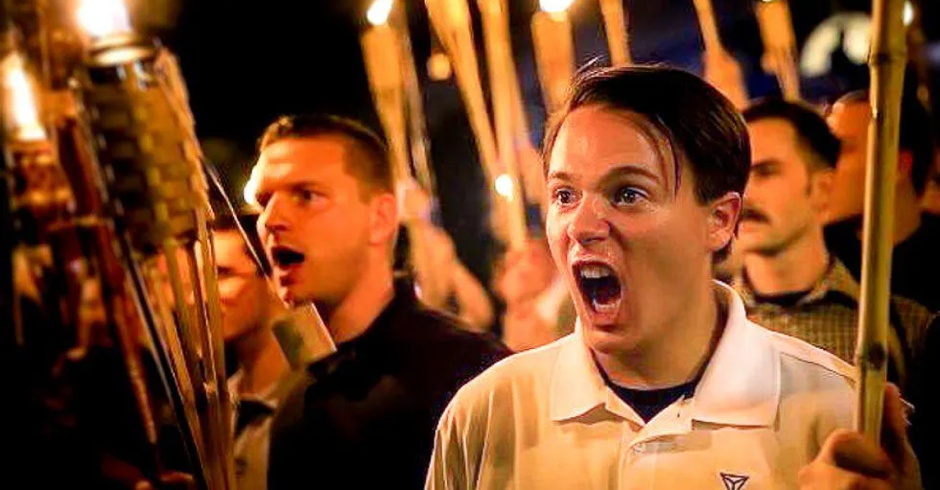
CHARLOTTESVILLE, Virginia — As the second witness in the landmark lawsuit against white nationalist organizers of the 2017 Unite the Right rally took the stand on Monday, defendants sought to discredit the victims of violence that engulfed the city in August 2017 by attempting to make strained connections to violent left-wing counter-protesters and communists.
During jury selection, several prospective jurors expressed negative opinions about “antifa,” revealing how deeply right-wing conspiracy theories falsely portraying left-wing, antiracist activists as uniformly violent have become entrenched since the election of Donald Trump. Lawyers for the plaintiffs were able to get several of the prospective jurors with the most extreme views of “antifa” struck.
Defense counsel began cross-examination of Devin Willis, a plaintiff who was an 18-year-old African-American student at the University of Virginia in August 2017, on Monday morning. Willis and fellow plaintiff Natalie Romero, who testified on Oct. 29, were the only people of color among a group of counter-protesters who were surrounded by a torch-bearing mob as they linked arms around the statue of Thomas Jefferson on the University of Virginia campus on Aug. 11, 2017.
White nationalists in the mob yelled, “Go back to where you came from,” made monkey noises at them, and hurled lit torches at their feet.
A member of the Black Student Alliance at the University of Virginia, Willis helped organize a respite area in nearby McGuffey Park, where antiracist counter-protesters could find food and water, listen to poetry or take time for meditation, during the day of the Unite the Right rally on Aug. 12, 2017.
Defendants questioned him about the language in a press release announcing the project by asking him to distinguish between “nonviolent civil protest” and “direct action.” Through cross-examination, the defendants attempted to cast the respite effort in a sinister light by highlighting the fact that Willis also went to what was then Emancipation Park and stood with a group of people who attempted to block the white nationalists from traversing the street.
Richard Spencer, the one-time figurehead of the alt-right movement, asked Willis if his intention of maintaining a “safe space” at McGuffey Park would “have included blocking people from traveling to a permitted rally.”
“I don’t think so,” Willis replied. “The first thing is the safe space was in McGuffey Park. I think what you’re referring to took place somewhere else.”
But Willis also rejected the defendants’ attempt to characterize his participation in the blockade as “direct action,” instead describing it as “a symbolic gesture,” similar to when he joined counter-protesters to surround the Jefferson statue the previous evening.
“That’s why there was space left to walk around,” he added.
Bryan Jones, counsel for the two League of the South defendants, used his cross-examination of Willis to attempt to undermine the plaintiffs’ characterization of themselves as peaceful counter-protesters. Jones presented images of the counter-protesters blocking Market Street adjacent to Emancipation Park that included at least two individuals holding sticks or flagpoles. Others in the line were wearing red bandannas, which Jones suggested in his cross-examination were indicative of support for communism.
Willis acknowledged on the stand that he joined what Jones called “this human barricade” on at least two occasions.
During direct examination, Willis had testified that he had witnessed people using sticks and poles as weapons to hit people near Emancipation Park. When Jones showed Willis a photo of person who appeared to be a counter-protester in the human chain holding a flagpole, Willis acknowledged that it was consistent with, as Jones worded it, “the type of weapons you saw used during the confrontation and conflict that day.”
Willis also identified co-plaintiff Romero in a photograph of people on the line.
Jones referenced Romero’s earlier testimony when she said that white nationalists spit at her and threw her against a police car next to Emancipation Park on the morning of Aug. 12. She testified that she couldn’t understand why they assaulted her because there was plenty of room to go around her.
“If someone were to say that Natalie was only standing on the side of the road, that would be incorrect, wouldn’t it?” Jones asked.
“I don’t think that invalidates the other thing she said,” Willis responded.
Jones also questioned Willis about red bandannas worn by people in the line blocking Market Street.
“You didn’t realize that there were communist supporters?” Jones asked.
“I wasn’t really paying much attention to that,” Willis replied.
Jones’s questioning also sought to shift blame for the violence from the defendants to members of law enforcement, who stood on the sideline as hand-to-hand combat raged on the Market Street on the morning of Aug. 12, before declaring the event an unlawful assembly and ordering people to leave.
Jones contrasted the police handling of Unite the Right with their response to a rally a month earlier by the Loyal White Knights of the Ku Klux Klan. Willis agreed with Jones that the Klan rally was relatively uneventful and that there was a significant police presence at the earlier rally, in comparison with Unite the Right. In contrast to Unite the Right, during the Klan rally, police kept the two groups separated.
“Could it be that one of the reasons you experienced violence at the August rally is that you were standing with other counter-protesters blocking a roadway, but in July you didn’t do that?” Jones asked.
Willis responded: “I don’t think standing in the roadway is an invitation to be attacked, but you could say that, yes.”
Before the trial started, Jones had unsuccessfully sought to introduce the 220-page Heaphy Report, an independent review of the breakdown of order during the Unite the Right rally that was commissioned by the former city manager, into evidence in entirety.
The Heaphy Report concluded that the city of Charlottesville failed to protect both free expression and public safety on Aug. 12, 2017.
“The city was unable to protect the right of free expression and facilitate the permit holder’s offensive speech,” the report said. “This represents a failure of one of government’s core functions — the protection of fundamental rights. Law enforcement also failed to maintain order and protect citizens from harm, injury and death.”
Timothy Heaphy, the lead author of the report, is a former US attorney for the Western District of Virginia who was recently hired as chief investigative counsel for the US House Select Committee to Investigate the January 6th Attack on the US Capitol.
The plaintiffs have argued that the Unite the Right organizers sought to use the report “as a central pillar in their defense at trial” in an effort “to shift the blame of their racially motivated violence onto others.”
Judge Moon turned down the defendants’ request, ruling the report inadmissible as hearsay.
The defendants are likely to sharpen questions about plaintiffs allegedly impeding their access to Emancipation Park, where they held a permit for a rally, when the Rev. Seth Wispelwey takes the stand. Wispelwey, who is a plaintiff in the case, organized a response from clergy. As Wispelwey and other clergy members, including Professor Cornel West, marched arm-in-arm to Emancipation Park, white nationalists charged through them, knocking Wispelwey into a bush.
Defendant Christopher Cantwell, a neo-Nazi podcaster, took the defendants’ efforts to link plaintiffs to violent left-wing activists a step further by extensively questioning Willis about various individuals who counter-protested the Aug. 11 torch march. At one point, Cantwell asked Willis to name the people who were in the car with him when he traveled to campus to counter-protest the torch march. During his direct examination, Willis had explained that when the white nationalists attacked them at the Jefferson statue he covered his face to avoid being doxed.
Responding to Cantwell’s question on Monday about his fellow counter-protesters, he told the court: “I’m hesitant to name them. Some of them live here.”
“You have to name them,” Judge Moon told Willis.
Plaintiffs’ counsel asked to approach the bench for a conference.
Cantwell resumed his line of questioning, and Willis asked if he had to respond.
“This is your lawsuit, and this is information they need to ask,” Moon said.
Cantwell, whose legal strategy has occasionally earned the scorn of counsel for his fellow defendants, has aggressively cross-examined the first two plaintiff-witnesses, running the risk of alienating jurors who sympathize with the injuries they incurred during the weekend of violence. At times, Cantwell’s courtroom comments have seemed more directed towards his white nationalist podcast audience than the court.
Jordan Green covers right-wing extremism for Raw Story. A Kentucky native, he now lives in North Carolina, where he spent 16 years writing for alt-weeklies and freelancing for the Washington Post and other publications.
Image: Peter Cvjetanovicm (Twitter)
Enjoy this piece?
… then let us make a small request. The New Civil Rights Movement depends on readers like you to meet our ongoing expenses and continue producing quality progressive journalism. Three Silicon Valley giants consume 70 percent of all online advertising dollars, so we need your help to continue doing what we do.
NCRM is independent. You won’t find mainstream media bias here. From unflinching coverage of religious extremism, to spotlighting efforts to roll back our rights, NCRM continues to speak truth to power. America needs independent voices like NCRM to be sure no one is forgotten.
Every reader contribution, whatever the amount, makes a tremendous difference. Help ensure NCRM remains independent long into the future. Support progressive journalism with a one-time contribution to NCRM, or click here to become a subscriber. Thank you. Click here to donate by check.
 |


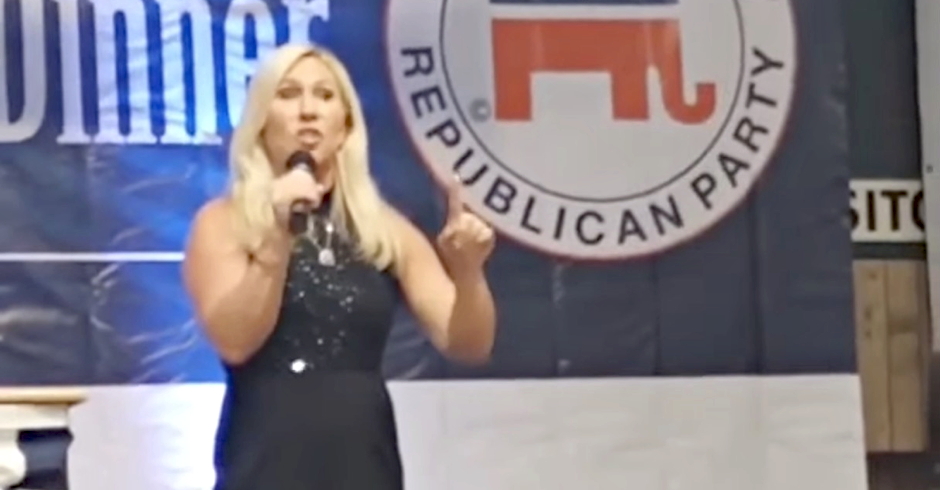
Former Republican Rep. Marjorie Taylor Greene said on Monday that she is “done supporting” her former party—but don’t expect her to join the Democratic party anytime soon.
Greene announced her disillusionment with the GOP on Monday afternoon in a tweet.
“Tucker is not the only one who is done supporting the Republican Party. There is A LOT of us that are absolutely fed up and will not support a party that betrays its voters and country. That does not mean we are turning into Democrats either. But we are DONE with the America LAST Republican Party,” Greene wrote.
Tucker is not the only one who is done supporting the Republican Party.
There is A LOT of us that are absolutely fed up and will not support a party that betrays its voters and country.
That does not mean we are turning into Democrats either.
But we are DONE with the America…
— Marjorie Taylor Greene 🇺🇸 (@mtgreenee) June 22, 2026
She referred to comments made last week by pundit Tucker Carlson. Carlson appeared on the Can’t Be Censored podcast Thursday, saying he would refrain from supporting either major party, and admitted “I’m not sure what I’m going to do.”
READ MORE: ‘Gaslight America’: Marjorie Taylor Greene Blasts Trump Ahead of His Trip to Georgia
“How could I or any American voter support a political party that’s not loyal to the United States. That puts the interests of a foreign country above those of its own citizens. It’s not possible to vote for people like that, and I’m not going to,” Carlson said, according to Mediaite, referring to America’s long-time ally Israel.
Greene famously broke with President Donald Trump earlier this year when she called for the release of the FBI files relating to disgraced financier and sex criminal Jeffrey Epstein. A former staunch ally of Trump, the two started trading barbs. Greene resigned from the House this January. Greene has long called for an isolationist foreign policy, criticizing America’s involvement in Ukraine as well as the current conflict with Iran.
Given that Greene said she has no plans on moving leftward in her politics, it’s unclear if she will refrain from voting or if she’ll throw her lot in with a third party. While American politics are primarily driven by the two major parties, a number of smaller parties also exist.
Greene may find a home in the Libertarian party, the third-largest party by voter registration. The Libertarian party has drifted rightward since its founding in 1971. While initially economically conservative but politically liberal, after 2022, the paleolibertarian Mises Caucus gained control of the party. Paleolibertarianism was developed by anarcho-capitalists, and embraces cultural conservatism. Some of the most widely known paleolibertarians include former Representative Ron Paul and the current president of Argentina, Javier Milei.
Third parties struggle to gain traction in the United States. The closest a third party has come to widespread support was the Reform Party, founded by H. Ross Perot during the 1996 presidential election after he won 18.9% of the popular vote in the 1992 presidential election as an independent candidate. Reform won 8.4% of the popular vote in the 1996 election, but no third-party or independent candidate has been as successful as Perot since.
However, the electoral college makes it difficult for a third-party presidential candidate to be elected at all. Third-party presidential candidates are often seen as spoilers for the major candidates. Perot is often believed to have won votes away from President George H.W. Bush in 1992, giving the election to President Bill Clinton. In 2000, Green Party candidate Ralph Nader was similarly accused of acting as a spoiler for Vice President Al Gore, leading to the election of President George W. Bush.
Third parties, however, have a better track record in down-ballot races. For example, Kshama Sawant won election to the Seattle City Council in 2014 as a member of the Socialist Alternative party. She held office until 2024, when she declined to seek reelection. She is currently running for a seat in the House of Representatives as an independent.
Image via Shutterstock
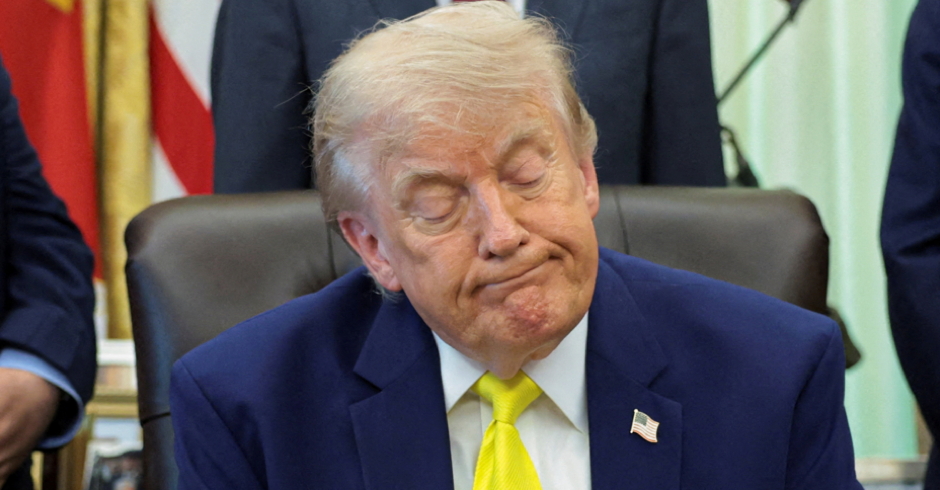
President Donald Trump announced on Monday that Iran “will agree” to allow weapon inspectors into the country in a slightly confusing social media post.
“Everybody is fully aware that Iran will agree to have Major Weapons Inspections in order to ensure ‘Nuclear Honesty’ long into the future,” the president wrote on his social media platform Truth Social.
Vice President JD Vance has been handling the negotiations with Iran to end the military conflict started by the United States and Israel at the end of February. Vance said earlier today that inspectors from the International Atomic Energy Agency would be allowed to enter Iran. The inspectors could be in the country as soon as Monday, according to the Washington Post.
READ MORE: Large Majority of Americans Say Iran Conflict Should End, Hasn’t Met Any of Trump’s Goals
Trump’s wording, however, is somewhat hard to parse. When he says “everyone is fully aware,” is Trump referring to Vance’s Monday announcement that had been widely reported? Or is Trump attempting to cast doubt, suggesting Iran may somehow be pulling a fast one, allowing inspections to provide cover for a weapons program?
Either way, the allowing of weapons inspectors into Iran is similar to what former President Barack Obama’s administration negotiated for in 2015. The Obama-era deal called for IAEA inspectors to make sure Iran was complying with the deal, and was not developing nuclear weapons. But in 2018, after Trump ended the agreement, Iran started to block IAEA inspectors from parts of their nuclear program. Since then, IAEA inspectors do not know the status of Iran’s enriched uranium, according to the Washington Post.
One year ago from Monday, the U.S. struck Iranian sites believed to hold stockpiles of enriched uranium. Since then, Trump has claimed that the strike “completely and totally obliterated” the country’s nuclear enrichment facilities, however, this has never been verified. Even at the time, the Pentagon said that Iran’s nuclear program had only been “degraded…by two years.” Trump’s national intelligence director testified prior to the strike that there was no evidence that Iran’s existing nuclear program was meant to build weapons, according to the Military Times.
Iran has long promised not to build or obtain nuclear weapons. In 1970, Iran signed the Nuclear Non-Proliferation Treaty which deemed the country a non-nuclear state.
While Trump has warned that Iran could have a nuclear bomb “within six months,” the first report from the International Atomic Energy Agency since the Iran conflict started says that there has been no major change to the country’s nuclear program, according to Reuters.
Image via Reuters

Six grand jury subpoenas were quashed by a federal judge Wednesday, when it was decided that the subpoenas were filed to retaliate against Democratic Minnesota Gov. Tim Walz’s administration and the city governments of Minneapolis and St. Paul.
Chief Judge Patrick J. Schiltz of the District of Minnesota made his ruling public on Monday, granting the motion requested by the Minnesota officials to quash grand jury subpoenas related to Minnesota declaring itself to be a “sanctuary” state.
Last December, the Department of Homeland Security deployed over 3,000 agents to Minnesota as part of the largest immigration-related operation in the department’s history, Operation Metro Surge. After the killings of Renee Good and Alex Pretti by DHS agents, the state of Minnesota as well as the twin cities challenged Operation Metro Surge in court, prompting President Donald Trump to rail against the local officials on social media.
READ MORE: Trump Dangles Another Insurrection Act Threat for Minnesota
Days after Minnesota, Minneapolis and St. Paul filed suit, news reports revealed that the Department of Justice had begun to investigate Walz and Minnesota Mayor Jacob Frey. Trump administration officials said that by not supporting the actions of DHS, Walz and Frey were breaking the law.
The Minnesotan officials argued that the subpoenas were “issued as part of an unconstitutional effort to coerce” them into working with DHS and ICE.
Judge Schiltz found that though grand juries traditionally “have broad investigatory powers,” the subpoenas had exceeded those powers. Schiltz agreed that the subpoenas were in violation of the Tenth Amendment, allowing states some degree of autonomy from the federal government.
Schiltz wrote that he had “no doubt” the subpoenas were issued for the “forbidden purposes” of attempting to “harass” or “coerce” Walz and Frey “into taking official action…. a blatantly unlawful and unethical use the grand-jury process.”
“On the one hand, the evidence that the challenged subpoenas were issued for unlawful reasons is overwhelming. On the other hand, the Department has struggled-without success-to identify a single plausible investigatory justification for the subpoenas,” Schiltz wrote, pointing out that the “public record… is replete with direct evidence of the Trump administration—including the highest-ranking officials of the Department—threatening and attempting to punish states and localities that have adopted ‘sanctuary’ policies.”
“To be clear, the Court agrees with the Department that a grand-jury subpoena need not be supported by probable cause. At the same time, a grand-jury subpoena cannot be issued for an improper purpose. The fact that connections between the information sought in the subpoenas and any possible criminal violation range from extremely weak to nonexistent only adds to the overwhelming evidence that these subpoenas were not issued to investigate, but to harass, coerce, and retaliate,” Schiltz added.
Image via Shutterstock

Marjorie Taylor Greene Says She’s ‘Done Supporting’ The GOP: ‘Party Betrays Its Voters’

Donald Trump Says Iran ‘Will Agree to Major Weapons Inspections’ to Ensure ‘Nuclear Honesty’

Federal Judge Quashes ‘Retaliatory’ Subpoenas Against Minnesota Gov. Tim Walz

GOP Rep Demands Biden’s Pardons to Be ‘Declared Null and Void’

Large Majority of Americans Say Iran Conflict Should End, Hasn’t Met Any of Trump’s Goals
 News1 day ago
Marjorie Taylor Greene Says She’s ‘Done Supporting’ The GOP: ‘Party Betrays Its Voters’
 IDIOCY1 day ago
GOP Rep Demands Biden’s Pardons to Be ‘Declared Null and Void’
 News1 day ago
Federal Judge Quashes ‘Retaliatory’ Subpoenas Against Minnesota Gov. Tim Walz
 BAD PRESIDENT2 days ago
Large Majority of Americans Say Iran Conflict Should End, Hasn’t Met Any of Trump’s Goals
 News1 day ago
Donald Trump Says Iran ‘Will Agree to Major Weapons Inspections’ to Ensure ‘Nuclear Honesty’