The Last Closet: Why I Won’t Be Home For Christmas
var addthis_config = {“data_track_addressbar”:true};
“Just don’t tell grandpa.†It’s been my family’s constant refrain throughout the entirety of my out, public queerdom. It should be easy enough, right? We just… won’t tell him. But no matter how well you keep it, a secret won’t stay contained. It seeps from the black box where we tried to censor it out of our lives, growing little tendrils that infect everything they touch. Any other thing your secret would change is a secret now too. We always end up with more than we bargained for, until we’re desperately leaping across the chasms it leaves in our world.
My grandpa doesn’t know I’m a woman. How am I supposed to hide something like that?
Sure, it was easier when I was 19 and came out to my family as a “gay man.†As I tearfully hugged my mom and sister, I was so grateful just to be accepted that I probably would have gone along with anything in return. But it was my own cowardice too. It did seem safer, after all. What was the harm in letting grandpa – racist, Palin-loving grandpa who goes to church every morning and evening and gets mailers about the UN’s “homosexual agenda†– keep believing whatever he wants?
The holidays and birthday parties at his house, the weekly dinners together that had become a tradition for us since grandma passed away, the avoidance of politics as we barely concealed our disgust, everything continued as usual. It’s not like I ever had any boyfriends to hide, anyway. Maybe that should have told us all something.
By the time I first came out, I was well on my way to feminine territory. But breaking out of assumptions, especially big ones like what gender you are, can take some work. You’ve lived as a guy all your life, you find you have an attraction to men (even if not an exclusive one), you lean toward the effeminate, and that’s the role society offers you: gay man. It was just the nearest place I could find for myself. I wasn’t yet ready to consider that I might actually want to be a woman instead.
Sometimes I wish I were one of the people who had “always known†in some sense that they were really a man or a woman, the people who eventually have that epiphany all at once, and know exactly what their path is if they choose to take it. Sure, I knew what it would mean to be trans – and people who knew me online were already starting to see me that way – but I had to carve away at the space of possibilities until the only remaining option was too obvious to ignore.
So I spent two years putting myself together into what I wanted to be, for the first real time in my life. Two years of going by “he or she, either’s fine,†while being she’d and ma’amed in public more and more often. Two years of growing into something more than a gay guy. “Drag,†I jokingly called it. But really, it was just… me.
You’d think people would notice their child, their grandchild, their sibling becoming a woman right before their eyes. It’s obvious in retrospect, but you might not recognize what’s happening if you don’t know what to look for. For my little midwestern family, the idea that one of us could be trans wasn’t even on their radar. “Sex changes†were just some abstract thing that happened to other people, somewhere else, in the realm of Jerry Springer and Maury and bad comedy movies. When something is so utterly remote from your experience, you don’t even consider the possibility that it could happen in your own home. Not even if you see it every day.
And that’s how things stayed, with nobody really sure what was going on, not even me. I settled into what I had begun to call the “gender demilitarized zone,†not quite trans but maybe, definitely not a guy but still partially “he†for no reason other than the inertia of the years, not yet countered by enough of an opposing force to push me over the hump into outright womanhood.
Then I met Heather. We hung out in the same queer chatroom, but we hadn’t really noticed each other until we both ended up arguing with some guy who thought all LGBT people should come out, no matter the personal cost. She’d recently realized that she really was lesbian after all, and that things weren’t going to work out between her and her husband. And somehow, once we started talking with each other, we couldn’t stop. We marveled at having finally found someone we could talk to on the same level, who truly understood what the other was saying, who never ever got tired of being around us. We talked for hours each day, only parting when we had to, staying up late into the night, inexorably growing together. And she called me “she.†It felt so right, for both of us.
 After just a few months of the closest friendship I’d ever known, we decided we had to meet. We counted down the days – 63, 62, 61… – until she arrived in Chicago for a long weekend together. We dreamed of what it would be like, of holding hands and holding each other, of looking out on the world from the top of the Sears Tower and promising we’d be together forever.
I’m nothing if not oblivious. Maybe it runs in my family. Afterward, she told me she’d been afraid of telling me how she really felt and scaring me away. Me, I’d just never been in love before, not like this. I didn’t know what it looked like. I couldn’t put a name to it, even when it was right in front of me.
She ran to me and swept me up into a hug the moment she saw me, holding me tighter than I’d ever been held. It was like everything I needed in life came together as we embraced, bathed in the light of that moment we’d dreamed of, finally made real. We held hands and ventured off into the city, not caring where we ended up as long as we were together, stopping at whatever bookstores and sculptures and museums we encountered along the way. At the end of the day, we closed our eyes and leaned on each other in a dark room at the Art Institute, ignoring some black and white film about tunnels.
It wasn’t long before we found ourselves in bed, lips against lips against skin against skin for hours until the night descended. Neither of us expected that. We didn’t know where this was going, and it didn’t matter. If this was where we’d been heading the entire time, then it was right. I never wanted to let her go.
Before she had to go back to Florida, she asked if I would be her girlfriend. Sometimes, all it takes is one question to put everything in perspective. I was not a boyfriend, I would not be a boyfriend, and we both knew it. We were nothing like a straight couple. And I was nothing like a guy. I cried as she got into her taxi and promised her we’d be together again.
When you’ve already come out to your family as a gay guy, it can be kind of awkward to tell them you have a girlfriend now. It felt like taking something back, even if I was actually queerer than ever. But it would have been even more awkward to give them the full story, explaining the intricacies of gender identities and the true nature of our relationship. It wasn’t until months later, when I was about to move to Florida to be with Heather and her kids, that my famously non-confrontational mom finally asked if I was still gay. The most I could bring myself to say was “…yeah, just not only gay.†We were both content to leave it at that.
 Adjusting to life as a stay-at-home mom was one of the hardest things I’d ever done, but it’s so normal for me now that I can’t really remember what made it such a struggle. My family was worried that this was a big step for me, being so far away from home for the first time. Really, it was better for me than I ever expected. I was with Heather every day, and I was finally in a place where everyone had always known me as a woman. She’d even taught her kids about “girls in boy bodies and boys in girl bodies.†I didn’t know how valuable this kind of unconditional support was, until I experienced it firsthand and found out what I had been missing.
Being with someone who had been through her own journey of self-discovery, who had dated trans women before, who saw me unambiguously as a woman, I knew that she understood me. I knew that I was safe with her. When I finally reached a point where I had to find a therapist, a doctor, to take the leap into starting hormones, to file for my name change, to pick out my first bra, she was there with me. And when I decided to call up my mom and sister and explain that I’d really been her girlfriend all this time, she held my hand as they spoke those same words: “Don’t tell grandpa.â€
Where does all this leave grandpa, anyway? He never knew I was gay – back when I was the other kind of gay – so it came as no surprise to him that I have a girlfriend now, that I have kids, that I have my own family. We still talk sometimes, and he loves to hear about how we’re all doing. “It’s almost like you’re the mom,†he said as I told him about Heather’s new job. Yeah, almost. I don’t have to hide anything about my new life, except for this one little detail that could tear everything apart.
I haven’t seen my family for over a year. Even if we had room in our finances and our schedules for a trip across the country, I don’t think I could do it, not while I’m still some secret they’re keeping. Not if I’d have to pretend to be someone else. For all the ridiculous fearmongering about how any mention of transgender people will just “confuse†children, I’m certain my sons would be much more confused to see their stepmom treated like a man, called by a name they’ve never known.
I won’t put us through that. I’m not going to act like Heather and I are straight, I’m not going to be a “stepdad†or a “husband,†and I’m not going to hide what my body has become. When I see my family again, I won’t be the person they want to pretend I am. I won’t be someone else. This is too important to compromise, so until something changes, I just won’t be there. I can’t do it.
 Despite how scary it is, how likely to end in disaster, I still want to tell him. I’m convinced that he deserves to know, even if he hasn’t necessarily earned it. When Heather and I get married, I want him to be there. The alternative, the ultimate passive-aggression of leaving him out of it all or waiting for him to die without ever knowing who I really am, is even more unthinkable. I want him to know that he has a granddaughter, that I’m making the most of myself and I’m finally, truly happy for the first time. He’s our last connection to the grandma we all miss so much, who never got to see me grow up, and I know she’d want to be a part of my life no matter what.
I still keep putting it off, and I don’t know why. Maybe I just want to have as many days as I can where I know I’m still loved and appreciated, even if it’s on false pretenses. Maybe I don’t want to have it confirmed that my own grandpa would hate me for who I am. Maybe I want to hold on to the hope that it might not be so bad. But every day he doesn’t know is a day I won’t get back, and that’s the price I’m paying for this secret.
It’s not that big of a deal… is it? I’m still the person he’s always known. The rest of my family treats me just the same – it hasn’t changed anything between us. It’s just who I am, and it should be the least important thing in the world. Why does it have to matter so much?
This can’t last, and we all know it. Everyone in my family has always valued keeping the peace above all else, and none of us are looking forward to blowing the whole thing wide open. But it has to happen. Some things are more important than peace, and too valuable to hide away forever. What am I waiting for? Just courage – the courage to put that missing piece back into my life, to wipe out that spreading ink blot of secrecy. This time, I’ll be the one to fill it in with the truth.
Â
 Zinnia Jones is an atheist activist, writer, and video blogger focusing on LGBTQ rights and religious belief. Originally from Chicago, she’s currently living in Florida with her partner Heather and their two children.
Enjoy this piece?
… then let us make a small request. The New Civil Rights Movement depends on readers like you to meet our ongoing expenses and continue producing quality progressive journalism. Three Silicon Valley giants consume 70 percent of all online advertising dollars, so we need your help to continue doing what we do.
NCRM is independent. You won’t find mainstream media bias here. From unflinching coverage of religious extremism, to spotlighting efforts to roll back our rights, NCRM continues to speak truth to power. America needs independent voices like NCRM to be sure no one is forgotten.
Every reader contribution, whatever the amount, makes a tremendous difference. Help ensure NCRM remains independent long into the future. Support progressive journalism with a one-time contribution to NCRM, or click here to become a subscriber. Thank you. Click here to donate by check.
 |


Former Republican Rep. Marjorie Taylor Greene said on Monday that she is “done supporting” her former party—but don’t expect her to join the Democratic party anytime soon.
Greene announced her disillusionment with the GOP on Monday afternoon in a tweet.
“Tucker is not the only one who is done supporting the Republican Party. There is A LOT of us that are absolutely fed up and will not support a party that betrays its voters and country. That does not mean we are turning into Democrats either. But we are DONE with the America LAST Republican Party,” Greene wrote.
Tucker is not the only one who is done supporting the Republican Party.
There is A LOT of us that are absolutely fed up and will not support a party that betrays its voters and country.
That does not mean we are turning into Democrats either.
But we are DONE with the America…
— Marjorie Taylor Greene 🇺🇸 (@mtgreenee) June 22, 2026
She referred to comments made last week by pundit Tucker Carlson. Carlson appeared on the Can’t Be Censored podcast Thursday, saying he would refrain from supporting either major party, and admitted “I’m not sure what I’m going to do.”
READ MORE: ‘Gaslight America’: Marjorie Taylor Greene Blasts Trump Ahead of His Trip to Georgia
“How could I or any American voter support a political party that’s not loyal to the United States. That puts the interests of a foreign country above those of its own citizens. It’s not possible to vote for people like that, and I’m not going to,” Carlson said, according to Mediaite, referring to America’s long-time ally Israel.
Greene famously broke with President Donald Trump earlier this year when she called for the release of the FBI files relating to disgraced financier and sex criminal Jeffrey Epstein. A former staunch ally of Trump, the two started trading barbs. Greene resigned from the House this January. Greene has long called for an isolationist foreign policy, criticizing America’s involvement in Ukraine as well as the current conflict with Iran.
Given that Greene said she has no plans on moving leftward in her politics, it’s unclear if she will refrain from voting or if she’ll throw her lot in with a third party. While American politics are primarily driven by the two major parties, a number of smaller parties also exist.
Greene may find a home in the Libertarian party, the third-largest party by voter registration. The Libertarian party has drifted rightward since its founding in 1971. While initially economically conservative but politically liberal, after 2022, the paleolibertarian Mises Caucus gained control of the party. Paleolibertarianism was developed by anarcho-capitalists, and embraces cultural conservatism. Some of the most widely known paleolibertarians include former Representative Ron Paul and the current president of Argentina, Javier Milei.
Third parties struggle to gain traction in the United States. The closest a third party has come to widespread support was the Reform Party, founded by H. Ross Perot during the 1996 presidential election after he won 18.9% of the popular vote in the 1992 presidential election as an independent candidate. Reform won 8.4% of the popular vote in the 1996 election, but no third-party or independent candidate has been as successful as Perot since.
However, the electoral college makes it difficult for a third-party presidential candidate to be elected at all. Third-party presidential candidates are often seen as spoilers for the major candidates. Perot is often believed to have won votes away from President George H.W. Bush in 1992, giving the election to President Bill Clinton. In 2000, Green Party candidate Ralph Nader was similarly accused of acting as a spoiler for Vice President Al Gore, leading to the election of President George W. Bush.
Third parties, however, have a better track record in down-ballot races. For example, Kshama Sawant won election to the Seattle City Council in 2014 as a member of the Socialist Alternative party. She held office until 2024, when she declined to seek reelection. She is currently running for a seat in the House of Representatives as an independent.
Image via Shutterstock
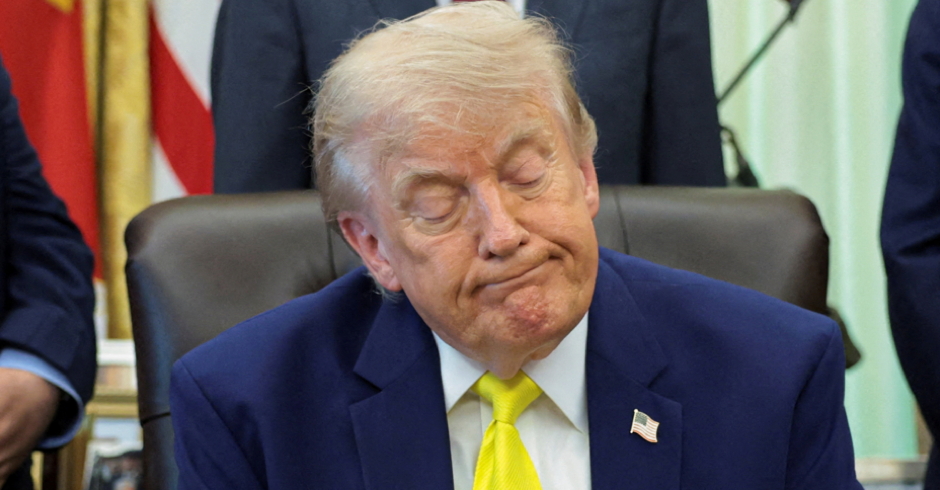
President Donald Trump announced on Monday that Iran “will agree” to allow weapon inspectors into the country in a slightly confusing social media post.
“Everybody is fully aware that Iran will agree to have Major Weapons Inspections in order to ensure ‘Nuclear Honesty’ long into the future,” the president wrote on his social media platform Truth Social.
Vice President JD Vance has been handling the negotiations with Iran to end the military conflict started by the United States and Israel at the end of February. Vance said earlier today that inspectors from the International Atomic Energy Agency would be allowed to enter Iran. The inspectors could be in the country as soon as Monday, according to the Washington Post.
READ MORE: Large Majority of Americans Say Iran Conflict Should End, Hasn’t Met Any of Trump’s Goals
Trump’s wording, however, is somewhat hard to parse. When he says “everyone is fully aware,” is Trump referring to Vance’s Monday announcement that had been widely reported? Or is Trump attempting to cast doubt, suggesting Iran may somehow be pulling a fast one, allowing inspections to provide cover for a weapons program?
Either way, the allowing of weapons inspectors into Iran is similar to what former President Barack Obama’s administration negotiated for in 2015. The Obama-era deal called for IAEA inspectors to make sure Iran was complying with the deal, and was not developing nuclear weapons. But in 2018, after Trump ended the agreement, Iran started to block IAEA inspectors from parts of their nuclear program. Since then, IAEA inspectors do not know the status of Iran’s enriched uranium, according to the Washington Post.
One year ago from Monday, the U.S. struck Iranian sites believed to hold stockpiles of enriched uranium. Since then, Trump has claimed that the strike “completely and totally obliterated” the country’s nuclear enrichment facilities, however, this has never been verified. Even at the time, the Pentagon said that Iran’s nuclear program had only been “degraded…by two years.” Trump’s national intelligence director testified prior to the strike that there was no evidence that Iran’s existing nuclear program was meant to build weapons, according to the Military Times.
Iran has long promised not to build or obtain nuclear weapons. In 1970, Iran signed the Nuclear Non-Proliferation Treaty which deemed the country a non-nuclear state.
While Trump has warned that Iran could have a nuclear bomb “within six months,” the first report from the International Atomic Energy Agency since the Iran conflict started says that there has been no major change to the country’s nuclear program, according to Reuters.
Image via Reuters

Six grand jury subpoenas were quashed by a federal judge Wednesday, when it was decided that the subpoenas were filed to retaliate against Democratic Minnesota Gov. Tim Walz’s administration and the city governments of Minneapolis and St. Paul.
Chief Judge Patrick J. Schiltz of the District of Minnesota made his ruling public on Monday, granting the motion requested by the Minnesota officials to quash grand jury subpoenas related to Minnesota declaring itself to be a “sanctuary” state.
Last December, the Department of Homeland Security deployed over 3,000 agents to Minnesota as part of the largest immigration-related operation in the department’s history, Operation Metro Surge. After the killings of Renee Good and Alex Pretti by DHS agents, the state of Minnesota as well as the twin cities challenged Operation Metro Surge in court, prompting President Donald Trump to rail against the local officials on social media.
READ MORE: Trump Dangles Another Insurrection Act Threat for Minnesota
Days after Minnesota, Minneapolis and St. Paul filed suit, news reports revealed that the Department of Justice had begun to investigate Walz and Minnesota Mayor Jacob Frey. Trump administration officials said that by not supporting the actions of DHS, Walz and Frey were breaking the law.
The Minnesotan officials argued that the subpoenas were “issued as part of an unconstitutional effort to coerce” them into working with DHS and ICE.
Judge Schiltz found that though grand juries traditionally “have broad investigatory powers,” the subpoenas had exceeded those powers. Schiltz agreed that the subpoenas were in violation of the Tenth Amendment, allowing states some degree of autonomy from the federal government.
Schiltz wrote that he had “no doubt” the subpoenas were issued for the “forbidden purposes” of attempting to “harass” or “coerce” Walz and Frey “into taking official action…. a blatantly unlawful and unethical use the grand-jury process.”
“On the one hand, the evidence that the challenged subpoenas were issued for unlawful reasons is overwhelming. On the other hand, the Department has struggled-without success-to identify a single plausible investigatory justification for the subpoenas,” Schiltz wrote, pointing out that the “public record… is replete with direct evidence of the Trump administration—including the highest-ranking officials of the Department—threatening and attempting to punish states and localities that have adopted ‘sanctuary’ policies.”
“To be clear, the Court agrees with the Department that a grand-jury subpoena need not be supported by probable cause. At the same time, a grand-jury subpoena cannot be issued for an improper purpose. The fact that connections between the information sought in the subpoenas and any possible criminal violation range from extremely weak to nonexistent only adds to the overwhelming evidence that these subpoenas were not issued to investigate, but to harass, coerce, and retaliate,” Schiltz added.
Image via Shutterstock

Large Majority of Americans Say Iran Conflict Should End, Hasn’t Met Any of Trump’s Goals

GOP Rep Demands Biden’s Pardons to Be ‘Declared Null and Void’

Federal Judge Quashes ‘Retaliatory’ Subpoenas Against Minnesota Gov. Tim Walz

Donald Trump Says Iran ‘Will Agree to Major Weapons Inspections’ to Ensure ‘Nuclear Honesty’

Marjorie Taylor Greene Says She’s ‘Done Supporting’ The GOP: ‘Party Betrays Its Voters’
Marjorie Taylor Greene Says She’s ‘Done Supporting’ The GOP: ‘Party Betrays Its Voters’
Donald Trump Says Iran ‘Will Agree to Major Weapons Inspections’ to Ensure ‘Nuclear Honesty’
Federal Judge Quashes ‘Retaliatory’ Subpoenas Against Minnesota Gov. Tim Walz
GOP Rep Demands Biden’s Pardons to Be ‘Declared Null and Void’
Large Majority of Americans Say Iran Conflict Should End, Hasn’t Met Any of Trump’s Goals

 News3 days ago
Trump White House Turns on ‘Moron’ MAGA Loyalist ‘Begging for an Additional Brain Cell’

 News4 days ago
Administration Orders Federal Workers to Wear Pins From Trump’s Freedom 250 Group: Report

 News3 days ago
Trump Is a ‘Mountain of Degeneracy’ Driving America’s ‘Dignity Crisis’: Steve Schmidt

 News3 days ago
Trump Used Vulgar Epithet to Attack His Own Commerce Secretary: Report

 News3 days ago
‘Be Very Afraid’: Carville Warns Trump ‘Everybody Is Out for You’

 News3 days ago
Veteran Journalist War-Games Trump’s ‘Rolling Coup’ — and How It Fails
 BAD PRESIDENT7 hours ago
Large Majority of Americans Say Iran Conflict Should End, Hasn’t Met Any of Trump’s Goals
 IDIOCY6 hours ago
GOP Rep Demands Biden’s Pardons to Be ‘Declared Null and Void’