Nepal: New Prime Minister Must Keep Promise To LGBTI Community
Last week marked the coming out party for one of the world’s newest heads of state. Baburam Bhattarai, the newly-elected Prime Minister of Nepal, visited New York and Washington, D.C. to meet and greet world leaders, and introduce himself to the United Nations.
Bhattarai has had a lot on his plate since taking office, so leaving the country was a questionable move in the first place. The deadline for Nepal’s new constitution, just two months away, looms on the horizon, and the Constituent Assembly — the 600-some strong body charged with delivering the draft of a new constitution for the Himalayan nation — has been mired in deadlock for nearly a year. In addition, Bhattarai makes this trip on the heels of his first bold proclamation that has human rights groups reeling: he wants blanket amnesty for all crimes committed during the ten-year internal armed conflict that wracked Nepal until 2006. (Bhattarai’s party, the Maoist Party, emerged out of the Maoist rebel group that started the “People’s Revolution,†in which over 10,000 people died.)
But while concerns over transitional justice issues will no doubt be on the agendas of many world leaders as they meet Bhattarai in the U.S., another troubling human rights issue lurks, waiting now four years for proper implementation. To put it simply: Nepal should have some of the most gay- and trans-friendly laws in the world, but it doesn’t. Bhattarai holds the keys to making this happen.
 In 2007, Nepal’s leading LGBTI rights activist, Sunil Babu Pant, won a Supreme Court Case demanding full, fundamental equality for all sexual and gender minority citizens. It was a landmark, comprehensive decision. The world watched as Nepal, a traditional and conservative society by many measures, emerged onto the global LGBT rights stage as an example of effective activism and advocacy for sexual and gender minorities.
Bhattarai’s power to implement these laws is crucial. Government bureaucracy in Nepal is thick and chaotic; ministries change personnel so frequently that lobbying them can seem pointless. Since the 2007 Supreme Court decision, for example, four people have served as Home Minister. The Home Ministry is responsible for, among other things, issuing citizenship identification cards, without which many basic services are out of reach for Nepali people.
The Court decision mandated that the government issue ID cards that allow citizens to identify as third gender (the term used in Nepal for transgender or binary gender non-conforming people.) To date, only a handful of people have successfully done this, and all succeeded by putting up a hearty fight.

Nepal
A simple directive letter from Prime Minister Bhattarai could change this for the entire country. Just before the Parliament voted on a new PM, Bhattarai promised to do this while seeking support from CPN (United), a party with five votes in the Parliament, one of which belonged to Pant, who has been a Member of Parliament since 2008. Advocates and activists were encouraged by Bhattarai’s promise.
In fact, Bhattarai, when he was Finance Minister in 2008 under the first Maoist regime, did something no other government of Nepal had ever done: he created a budget line for programs geared toward sexual and gender minorities. Sunil Babu Pant’s non-governmental organization, Blue Diamond Society, has been using some of these funds to build a LGBTI community center in Kathmandu modeled on the New York LGBT Center. It would be the first such community center in South Asia.
In an additional progressive move, the 2011 Nepali census was the first in the world to allow citizens to identify as male, female, or third gender. The process was highly flawed, and the inclusion of the category appears to have been mostly a superficial gesture at this point (the data on people who identified themselves as third gender is not linked to any other demographic numbers), but such steps toward implementation indicate a growing level of acceptance of the LGBTI community in Nepal, and presage the comprehensive reform expected.
As a Member of Parliament and the Constituent Assembly, Sunil Pant sits on the fundamental rights chapter drafting committee in the Constituent Assembly. The fundamental rights chapter is finished, and follows the Court’s orders to be completely inclusive of LGBTI citizens in all rights and protections. Now it sits rotting as a special sub-committee debates the details of power sharing and state structure. Since the constitutional deadline was last extended, Pant has refused to take his salary from the government, saying he cannot take money if no work is being done on the draft.
Whether the constitution drafting process will be completed by the extended deadline – just over two months away – is certainly on Bhattarai’s mind. But in the meantime if he wants to show the Nepali people that he takes human rights and his own judiciary seriously, he has an easy way to do that: a flick of his pen could order all administrative offices across the country to obey the law and recognized third gender citizens.
The Court decision demonstrated substantial progress, but the LGBTI community has been waiting for too long for something real to happen.
On Friday, Bhattari spoke at The New School. I asked him via Twitter when he would keep his promise. He replied: “We have in principal agreed that we will provide citizenship – even our Supreme Court has given a ruling in that context. So the government is committed to implement that.â€
Hari Phuyal, the prominent Kathmandu lawyer who tried the 2007 Supreme Court case says, “the Court decision came at such a crucial time, when the LGBTI community was misused and mishandled by the law enforcement agencies in Nepal.†The violence against LGBTI people has largely ceased thanks to successful advocacy and publicity, but now is another crucial moment, and there is one man who can make the difference.
 (Image: Baburam Bhattarai)
Kyle Knight is a Fulbright Scholar in Nepal where his research focuses on the LGBTI rights movement. He previously worked at Human Rights Watch, where he focused on children’s rights issue. For three years, he worked as a suicide prevention counselor for LGBTQ youth at the Trevor Project in New York City. He currently sits on the Trevor Project’s Advocacy and Public Policy Committee, is the president of the Duke University LGBT Network, and a is lecturer in Gender Studies at Tribhuvan University, Nepal’s state-run university in Kathmandu. You can follow him on Twitter @knightktm.

Enjoy this piece?
… then let us make a small request. The New Civil Rights Movement depends on readers like you to meet our ongoing expenses and continue producing quality progressive journalism. Three Silicon Valley giants consume 70 percent of all online advertising dollars, so we need your help to continue doing what we do.
NCRM is independent. You won’t find mainstream media bias here. From unflinching coverage of religious extremism, to spotlighting efforts to roll back our rights, NCRM continues to speak truth to power. America needs independent voices like NCRM to be sure no one is forgotten.
Every reader contribution, whatever the amount, makes a tremendous difference. Help ensure NCRM remains independent long into the future. Support progressive journalism with a one-time contribution to NCRM, or click here to become a subscriber. Thank you. Click here to donate by check.
 |


Republican Governor Kristi Noem of South Dakota, a top potential Trump vice presidential running mate pick, revealed in a forthcoming book she “hated” her 14-month old puppy and shot it to death. Massive online outrage ensued, including accusations of “animal cruelty” and “cold-blooded murder,” but the pro-life former member of Congress is defending her actions and bragging she had the media “gasping.”
“Cricket was a wirehair pointer, about 14 months old,” Noem writes in her soon-to-be released book, according to The Guardian which reports “the dog, a female, had an ‘aggressive personality’ and needed to be trained to be used for hunting pheasant.”
“By taking Cricket on a pheasant hunt with older dogs, Noem says, she hoped to calm the young dog down and begin to teach her how to behave. Unfortunately, Cricket ruined the hunt, going ‘out of her mind with excitement, chasing all those birds and having the time of her life’.”
“Then, on the way home after the hunt, as Noem stopped to talk to a local family, Cricket escaped Noem’s truck and attacked the family’s chickens, ‘grabb[ing] one chicken at a time, crunching it to death with one bite, then dropping it to attack another’.”
READ MORE: President Hands Howard Stern Live Interview After NY Times Melts Down Over Biden Brush-Off
“Cricket the untrainable dog, Noem writes, behaved like ‘a trained assassin’.”
Except Cricket wasn’t trained. Online several people with experience training dogs have said Noem did everything wrong.
“I hated that dog,” Noem wrote, calling the young girl pup “untrainable,” “dangerous to anyone she came in contact with,” and “less than worthless … as a hunting dog.”
“At that moment,” Noem wrote, “I realized I had to put her down.”
“It was not a pleasant job,” she added, “but it had to be done. And after it was over, I realized another unpleasant job needed to be done.”
The Guardian reports Noem went on that day to slaughter a goat that “smelled ‘disgusting, musky, rancid’ and ‘loved to chase’ Noem’s children, knocking them down and ruining their clothes.”
She dragged both animals separately into a gravel pit and shot them one at a time. The puppy died after one shell, but the goat took two.
On social media Noem expressed no regret, no sadness, no empathy for the animals others say did not need to die, and certainly did not need to die so cruelly.
READ MORE: ‘Assassination of Political Rivals as an Official Act’: AOC Warns Take Trump ‘Seriously’
But she did use the opportunity to promote her book.
We love animals, but tough decisions like this happen all the time on a farm. Sadly, we just had to put down 3 horses a few weeks ago that had been in our family for 25 years.
If you want more real, honest, and politically INcorrect stories that’ll have the media gasping,… pic.twitter.com/bKhpUkchHV
— Kristi Noem (@KristiNoem) April 26, 2024
Attorney and legal analyst Jeffrey Evan Gold says Governor Noem’s actions might have violated state law.
“You slaughtered a 14-month-old puppy because it wasn’t good at the ‘job’ you chose for it?” he asked. “SD § 40-1-2.3. ‘No person owning or responsible for the care of an animal may neglect, abandon, or mistreat the animal.'”
The Democratic National Committee released a statement saying, “Kristi Noem’s extreme record goes beyond bizarre rants about killing her pets – she also previously said a 10-year-old rape victim should be forced to carry out her pregnancy, does not support exceptions for rape or incest, and has threatened to throw pharmacists in jail for providing medication abortions.”
Former Trump White House Director of Strategic Communications Alyssa Farah Griffin, now a co-host on “The View” wrote, “There are countless organizations that re-home dogs from owners who are incapable of properly training and caring for them.”
The Lincoln Project’s Rick Wilson blasted the South Dakota governor.
“Kristi Noem is trash,” he began. “Decades with hunting- and bird-dogs, and the number I’ve killed because they were chicken-sharp or had too much prey drive is ZERO. Puppies need slow exposure to birds, and bird-scent.”
“She killed a puppy because she was lazy at training bird dogs, not because it was a bad dog,” he added. “Not every dog is for the field, but 99.9% of them are trainable or re-homeable. We have one now who was never going in the field, but I didn’t kill her. She’s sleeping on the couch. You down old dogs, hurt dogs, and sick dogs humanely, not by shooting them and tossing them in a gravel pit. Unsporting and deliberately cruel…but she wrote this to prove the cruelty is the point.”
Melissa Jo Peltier, a writer and producer of the “Dog Whisperer with Cesar Millan” series, also heaped strong criticism on Noem.
“After 10+ years working with Cesar Millan & other highly specialized trainers, I believe NO dog should be put down just because they can’t or won’t do what we decide WE want them to,” Peltier said in a lengthy statement. “Dogs MUST be who they are. Sadly, that’s often who WE teach them to be. And our species is a hot mess. I would have happily taken Kristi Noem’s puppy & rehomed it. What she did is animal cruelty & cold blooded murder in my book.”
READ MORE: ‘Blood on Your Hands’: Tennessee Republicans OK Arming Teachers After Deadly School Shooting
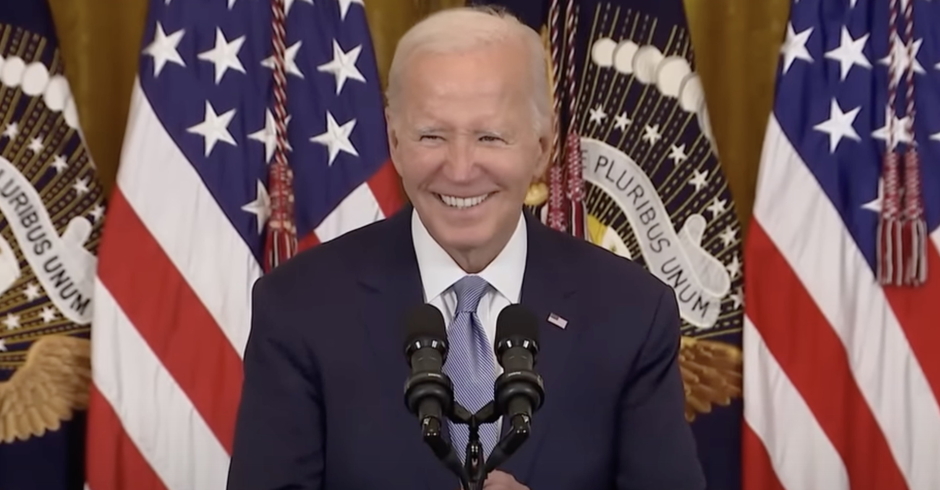
President Joe Biden gave an nearly-unannounced, last-minute, live exclusive interview Friday morning to Howard Stern, the SiriusXM radio host who for decades, from the mid-1990s to about 2015, was a top Trump friend, fan, and aficionado. But the impetus behind the President’s move appears to be a rare and unsigned statement from the The New York Times Company, defending the “paper of record” after months of anger from the public over what some say is its biased negative coverage of the Biden presidency and, especially, a Thursday report by Politico claiming Times Publisher A.G. Sulzberger is furious the President has refused to give the “Grey Lady” an in-person interview.
“The Times’ desire for a sit-down interview with Biden by the newspaper’s White House team is no secret around the West Wing or within the D.C. bureau,” Politico reported. “Getting the president on the record with the paper of record is a top priority for publisher A.G. Sulzberger. So much so that last May, when Vice President Kamala Harris arrived at the newspaper’s midtown headquarters for an off-the-record meeting with around 40 Times journalists, Sulzberger devoted several minutes to asking her why Biden was still refusing to grant the paper — or any major newspaper — an interview.”
“In Sulzberger’s view,” Politico explained, “only an interview with a paper like the Times can verify that the 81-year-old Biden is still fit to hold the presidency.”
But it was this statement that made Politico’s scoop go viral.
READ MORE: Justices’ Views on Trump Immunity Stun Experts: ‘Watching the Constitution Be Rewritten’
“’All these Biden people think that the problem is Peter Baker or whatever reporter they’re mad at that day,’ one Times journalist said. ‘It’s A.G. He’s the one who is pissed [that] Biden hasn’t done any interviews and quietly encourages all the tough reporting on his age.'”
Popular Information founder Judd Legum in March documented The New York Times’ (and other top papers’) obsession with Biden’s age after the Hur Report.
1. The media turned Robert Hur’s amateur assessment of Biden’s memory into a political crisis.
Collectively, the @washingtonpost, @nytimes, and @WSJ have run 66 articles quoting Hur: a “well-meaning, elderly man with a poor memory”
But when the transcript of the Biden interview… pic.twitter.com/cExzjuKeYz
— Judd Legum (@JuddLegum) March 14, 2024
Thursday evening the Times put out a “scorching” statement, as Politico later reported, not on the newspaper’s website but on the company’s corporate website, not addressing the Politico piece directly but calling it “troubling” that President Biden “has so actively and effectively avoided questions from independent journalists during his term.”
Media watchers and critics pushed back on the Times’ statement.
READ MORE: ‘To Do God Knows What’: Local Elections Official Reads Lara Trump the Riot Act
“NYT issues an unprecedented statement slamming Biden for ‘actively and effectively avoid[ing] questions from independent journalists during his term’ and claiming it’s their ‘independence’ that Biden dislikes, when it’s actually that they’re dying to trip him up,” wrote media critic Dan Froomkin, editor of Press Watch.
Froomkin also pointed to a 2017 report from Poynter, a top journalism site published by The Poynter Institute, that pointed out the poor job the Times did of interviewing then-President Trump.
Incidentally, when the NYT got a chance to interview Trump, they went belly up. https://t.co/fW5kx5868d pic.twitter.com/LbrhfYMtqf
— Dan Froomkin (PressWatchers.org) (@froomkin) April 25, 2024
Others, including former Biden Deputy Secretary of State Brian McKeon, debunked the Times’ claim President Biden hasn’t given interviews to independent journalists by pointing to Biden’s interviews with CBS News’ “60 Minutes” and a 20-minute sit-down interview with veteran journalist John Harwood for ProPublica.
Former Chicago Sun-Times editor Mark Jacob, now a media critic who publishes Stop the Presses, offered a more colorful take of Biden’s decision to go on Howard Stern.
This is the equivalent of putting a bag of dog poop on the New York Times’ doorstep and setting it on fire. https://t.co/RhGbHH9pU2
— Mark Jacob (@MarkJacob16) April 26, 2024
The Times itself just last month reported on a “wide-ranging interview” President Biden gave to The New Yorker.
Watch the video and read the social media posts above or at this link.
READ MORE: ‘Doesn’t Care if Pregnant Women Live or Die’: Alito Slammed Over Emergency Abortion Remarks

Donald Trump’s Friday morning claim Manhattan’s Criminal Courts Building is “heavily guarded” so his supporters cannot attend his trial was torched by a top CNN anchor. The ex-president, facing 34 felony charges in New York, had been urging his followers to show up and protest on the courthouse steps, but few have.
“I’m at the heavily guarded Courthouse. Security is that of Fort Knox, all so that MAGA will not be able to attend this trial, presided over by a highly conflicted pawn of the Democrat Party. It is a sight to behold! Getting ready to do my Courthouse presser. Two minutes!” Trump wrote Friday morning on his Truth Social account.
CNN’s Kaitlan Collins supplied a different view.
“Again, the courthouse is open the public. The park outside, where a handful of his supporters have gathered on trials days, is easily accessible,” she wrote minutes after his post.
READ MORE: ‘Assassination of Political Rivals as an Official Act’: AOC Warns Take Trump ‘Seriously’
Trump has tried to rile up his followers to come out and make a strong showing.
On Monday Trump urged his supporters to “rally behind MAGA” and “go out and peacefully protest” at courthouses across the country, while complaining that “people who truly LOVE our Country, and want to MAKE AMERICA GREAT AGAIN, are not allowed to ‘Peacefully Protest,’ and are rudely and systematically shut down and ushered off to far away ‘holding areas,’ essentially denying them their Constitutional Rights.”
On Wednesday Trump claimed, “The Courthouse area in Lower Manhattan is in a COMPLETE LOCKDOWN mode, not for reasons of safety, but because they don’t want any of the thousands of MAGA supporters to be present. If they did the same thing at Columbia, and other locations, there would be no problem with the protesters!”
After detailing several of his false claims about security measures prohibiting his followers from being able to show their support and protest, CNN published a fact-check on Wednesday:
“Trump’s claims are all false. The police have not turned away ‘thousands of people’ from the courthouse during his trial; only a handful of Trump supporters have shown up to demonstrate near the building,” CNN reported.
“And while there are various security measures in place in the area, including some street closures enforced by police officers and barricades, it’s not true that ‘for blocks you can’t get near this courthouse.’ In reality, the designated protest zone for the trial is at a park directly across the street from the courthouse – and, in addition, people are permitted to drive right up to the front of the courthouse and walk into the building, which remains open to the public. If people show up early enough in the morning, they can even get into the trial courtroom itself or the overflow room that shows near-live video of the proceedings.”
READ MORE: Justices’ Views on Trump Immunity Stun Experts: ‘Watching the Constitution Be Rewritten’

CNN Smacks Down Trump Rant Courthouse So ‘Heavily Guarded’ MAGA Cannot Attend His Trial

President Hands Howard Stern Live Interview After NY Times Melts Down Over Biden Brush-Off

Noem Defends Shooting Her 14-Month Old Puppy to Death, Brags She Has Media ‘Gasping’
Noem Defends Shooting Her 14-Month Old Puppy to Death, Brags She Has Media ‘Gasping’
President Hands Howard Stern Live Interview After NY Times Melts Down Over Biden Brush-Off
CNN Smacks Down Trump Rant Courthouse So ‘Heavily Guarded’ MAGA Cannot Attend His Trial

‘Assassination of Political Rivals as an Official Act’: AOC Warns Take Trump ‘Seriously’

Justices’ Views on Trump Immunity Stun Experts: ‘Watching the Constitution Be Rewritten’

 OPINION2 days ago
‘Doesn’t Care if Pregnant Women Live or Die’: Alito Slammed Over Emergency Abortion Remarks

 OPINION2 days ago
‘They Will Have Thugs?’: Lara Trump’s Claim RNC Will ‘Physically Handle the Ballots’ Stuns

 OPINION2 days ago
‘I Hope You Find Happiness’: Moskowitz Trolls Comer Over Impeachment Fail
 News1 day ago
‘Assassination of Political Rivals as an Official Act’: AOC Warns Take Trump ‘Seriously’

 News2 days ago
Gag Order Breach? Trump Targeted Cohen in Taped Interview Hours Before Contempt Hearing

 News1 day ago
‘To Do God Knows What’: Local Elections Official Reads Lara Trump the Riot Act

 News1 day ago
Justices Slam Trump Lawyer: ‘Why Is It the President Would Not Be Required to Follow the Law?’
 News1 day ago
Justices’ Views on Trump Immunity Stun Experts: ‘Watching the Constitution Be Rewritten’