LGBT Rights And The Dallas Principles: Now, More Than Ever?
Major changes within the LGBT community, such as the resignation of HRC’s Joe Solmonese, marriage equality in New York, and the official repeal of Don’t Ask Don’t Tell, remind us that now is a good time to re-visit The Dallas Principles.
Â
Given the news a few weeks ago of Human Rights Campaign President Joe Solmonese’s impending resignation and the possibility of a change of direction by HRC’s Board of Directors and his replacement, I think it is time to again take a look at The Dallas Principles, authored a little more than two and a quarter years ago.
For those not familiar with the Dallas Principles, on May 15-17, 2009 in Dallas, Texas twenty-four activists and donors, frustrated with the Obama administration’s pace of fulfilling its campaign promises to the LGBT community, gathered to discuss the immediate need for full equality for lesbian, gay, bisexual and transgender people in the United States. Collectively they prepared The Dallas Principles.
The Dallas Principles is a set of eight guiding principles to achieve full LGBT equality. The principles are:
- Full civil rights for lesbian, gay, bisexual and transgender individuals must be enacted now. Delay and excuses are no longer acceptable.
- We will not leave any part of our community behind.
- Separate is never equal.
- Religious beliefs are not a basis upon which to affirm or deny civil rights.
- The establishment and guardianship of full civil rights is a non-partisan issue.
- Individual involvement and grassroots action are paramount to success and must be encouraged.
- Success is measured by the civil rights we all achieve, not by words, access or money raised.
- Those who seek our support are expected to commit to these principles.
I think that especially the number two, “We will not leave any part of our community behind,” number six, “Individual involvement and grassroots action are paramount to success and must be encouraged,” and  number seven, “Success is measured by the civil rights we all achieve, not by words, access or money raised,” need to be considered carefully by HRC’s Board as they move forward.
Individual involvement and grassroots activism has not been encouraged by HRC and although the organization excels at raising money and gaining access, we have failed to achieve full federal equality. Many in our community feel that the organization has not been all-inclusive; that those who are transgender, people of color, the youth and women of our community have not been adequately represented. Some think that HRC has lost touch and is resistant to input from its constituency.
As a supporter of HRC, as well as the more grassroots-driven new kid on the block, GetEQUAL, I am encouraged by the possibility of a change in focus at HRC. Not that Joe Solmonese isn’t good, perhaps too good at what he does; HRC’s fundraising is impressive and many in the media and the establishment consider HRC to be the face of the LGBT community. Joe looks great on TV; he is urbane – well-mannered, well-spoken and well-dressed. Many in the beltway establishment saw us or still see us as affluent, urban dwellers in well-tailored suits and tuxes – at least those of us they choose to take seriously. The rest of us were easily dismissed as drag queens and dykes on bikes – at least that’s who they see spotlighted in the media at Pride-time.
The truth of this impression is reflected in Judge Antonin Scalia’s 1996 dissent in Romer, Governor of Colorado, et al. v. Evans et al. In Romer an amendment to the Colorado state constitution (“Amendment 2”) that would have prevented any city, town or county in the state from taking any legislative, executive, or judicial action to recognize gay and lesbian citizens as a protected class was passed by Colorado voters in a referendum. The decision in Romer set the stage for Lawrence v. Texas (2003), where the Court overruled its decision in Bowers v. Hardwick (1986), when the Court had ruled that a law criminalizing homosexual sex was constitutional.
Justice Scalia wrote (and Justices Clarence Thomas and Rehnquist concurred) that, “The problem (a problem, that is, for those who wish to retain social disapprobation of homosexuality) is that, because those who engage in homosexual conduct tend to reside in disproportionate numbers in certain communities… have high disposable income,… and of course care about homosexual rights issues much more ardently than the public at large, they possess political power much greater than their numbers, both locally and statewide.â€
This is an old, argument and sadly echoes an anti-Semitic one. In essence Scalia is regurgitating the myth and misperception that because the LGBT Community is urban, rich and vocal, it possesses disproportionate political power and is not entitled to the protections of The Equal Protection Clause of the 14th Amendment under guidelines established by previous decisions.
Is it any wonder that Scalia has this impression? For if HRC is perceived to be the face of our community, the face they have presented inside the beltway is as Scalia purported. When they concurred in their dissent, Scalia, Thomas and Rehnquist had obviously not encountered or chose to ignore the many transgender people, out rural lesbians, queer homeless youth, undocumented gay and lesbian students or African-American gay men from Mississippi, to name a few who don’t fit their stereotype of us as rich, politically powerful city dwellers.
But times have changed and a new generation of voices is demanding to be heard. Regardless of the image HRC next chooses to adopt, and I hope it will be less homogenous; the faces in our New Civil Rights Movement will be as diverse as the colors of the rainbow banners they carry and our new generation of young activists, be they lesbian, gay, bisexual, transgender, or straight allies, is much less patient and far more vocal than before.
The authors of the Dallas Principles are Juan Ahonen-Jover, Ken Ahonen-Jover, John Bare, Jarrett Barrios, Dana Beyer, Jeffrey H. Campagna, Mandy Carter, Michael Coe, Jimmy Creech, Allison Duncan, Michael Guest, Joanne Herman, Donald Hitchcock, Lane Hudson, Charles Merrill, Dixon Osburn, Lisa Polyak, Barbra Casbar Siperstein, Pam Spaulding, Andy Szekeres, Lisa Turner, Jon Winkleman, and Paul Yandura.
Â
 Stuart Wilber lives in Seattle with his partner and cat. Equality continues to elude them.
Â
Enjoy this piece?
… then let us make a small request. The New Civil Rights Movement depends on readers like you to meet our ongoing expenses and continue producing quality progressive journalism. Three Silicon Valley giants consume 70 percent of all online advertising dollars, so we need your help to continue doing what we do.
NCRM is independent. You won’t find mainstream media bias here. From unflinching coverage of religious extremism, to spotlighting efforts to roll back our rights, NCRM continues to speak truth to power. America needs independent voices like NCRM to be sure no one is forgotten.
Every reader contribution, whatever the amount, makes a tremendous difference. Help ensure NCRM remains independent long into the future. Support progressive journalism with a one-time contribution to NCRM, or click here to become a subscriber. Thank you. Click here to donate by check.
 |

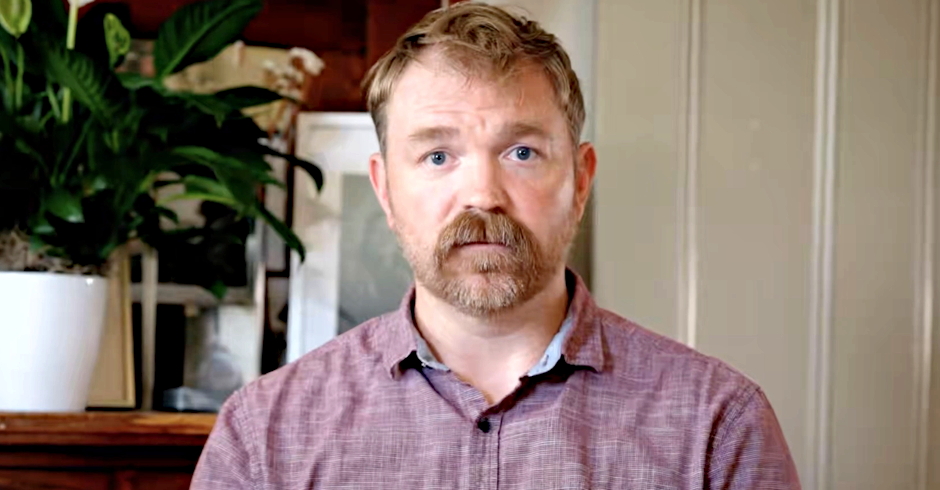
Maine Democratic U.S. Senate nominee Graham Platner is under fire after releasing a video declaring that new allegations against him are false, yet he is “taking time to reflect” on a path forward.
Politico on Monday afternoon reported that a woman who dated Platner, Jenny Racicot, “says he forced her to have sex with him nearly five years ago despite her repeated objections, an allegation Platner denies.”
“Racicot said she had an on-and-off relationship with Platner,” Politico reported, “for more than two years before he entered her rural Maine home uninvited one night in late 2021, deeply intoxicated, and forced himself on her while she repeatedly told him to stop. She said she cut off contact with him after telling him the encounter was not consensual.”
In a video posted to social media eleven minutes after the Politico story dropped, Platner says, “I wanted to directly address the troubling, serious, and false allegations against me. Any accusation of nonconsensual behavior is categorically false.”
He said he and his supporters “were united in a love of Maine, a belief that our politics must change, in a focus on defeating Susan Collins.”
“So, regardless of the inaccuracy of the reporting, but mindful the political reality will inflict, we are taking the time to reflect on the best path forward for the state that I love, the people that I love, the movement I belong to, and the goal of defeating Susan Collins.”
“Those were the goals when we launched this campaign. And they remain my goals today.”
“Throughout it all, you never turned your back on me. And I will not turn my back on you now. Every one of you deserves to see that vision come to fruition and see Susan Collins defeated. And we will use every tool at our disposal to do so.”
The Bulwark’s Tim Miller, a political commentator who served as the communications director for the Jeb Bush 2016 presidential campaign, blasted Platner.
“I’m sorry but ‘we are taking time to reflect on the best path forward’ is not an option on the table,” Miller wrote. “Either it’s false and you campaign with vigor or it’s true and you get out / apologize to everyone you let down.”
Journalist Ryan Grim, commenting on Platner’s video, noted that Platner “strongly suggests he is considering dropping out. Already Troy Jackson and Chellie Pingree, both gubernatorial candidates, are being kicked around in Maine circles as potential replacements.”
Several others, including Puck News’ Peter Hamby, predicted Platner will be dropping out.
Platner had postponed several campaign events before the Politico story was published.
— Graham Platner for Senate (@grahamformaine) July 6, 2026

President Donald Trump is facing backlash after posting a video of children — including showing their unblurred faces — graduating from kindergarten, with some of the girls purportedly wearing hijabs.
“President Trump posted a captionless video of graduating kindergarteners on Truth Social on Monday, goading his supporters into verbally attacking little children simply for being Muslim,” The New Republic reported. “The clip is from Gateway STEM Academy, a majority-Black K-8 public charter school in St. Paul, Minnesota. It shows about 21 children in caps and gowns on stage singing a song together. Most of the girls are wearing hijabs.”
The original post of the video which Trump reposted reads: “Public school in St. Paul, Minnesota. Every girl is in a hijab … in kindergarten.”
Trump did not add any comments. TNR called the post “Islamophobic, weird, and creepy,” while noting that the comments section of Trump’s post was filled with calls “by racist, xenophobic MAGA supporters” to “deport the children and ban hijabs.”
TNR also noted that it “should come as no surprise that Trump isn’t above attacking children who just learned how to read, but this post is still particularly discomforting—and will certainly contribute to the already potent level of anti-Muslim sentiment in the U.S. and in Minnesota.”
Critics blasted Trump.
“There is something deeply unsettling about the president of the United States—the most powerful person in the world—going after kindergarten schoolchildren in Minnesota because they wore hijabs, as Trump has done this morning on his website,” The Bulwark’s Sam Stein wrote.
One social media commentator wrote, “Trump posted an unblurred video of more than a dozen Muslim kindergartners to Truth Social, exposing the children’s faces while targeting them for their religion.”
Another added, “Trump is a bigot. The president took to Truth Social to attack kindergarteners in hijabs. These are little kids. The president isn’t just a bigot, he’s also a coward.”
The original video was posted to the X social media platform in June.
U.S. Rep. Nancy Mace (R-SC) at the time commented, “If you are in a public school in America, you should be speaking english.”
Image via Reuters
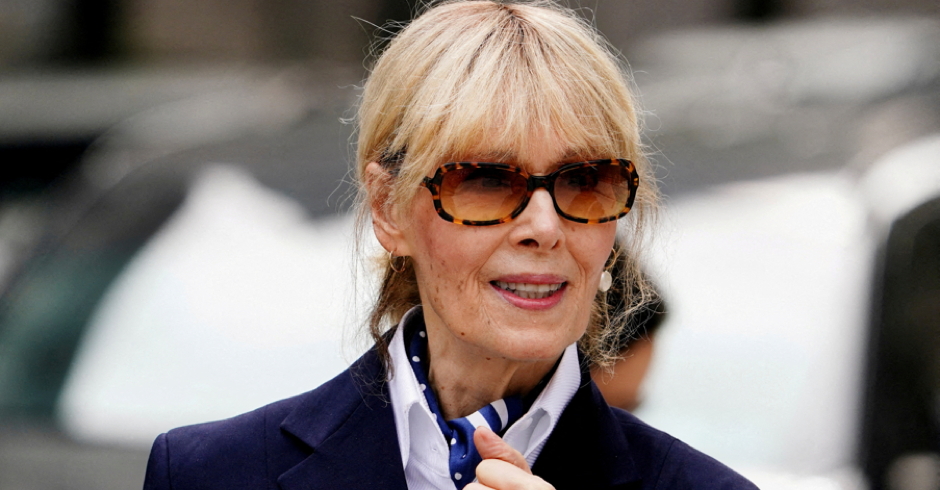
President Donald Trump’s apparent efforts to delay releasing the $5.8 million civil judgment to E. Jean Carroll are being met with a warning by the journalist’s legal team, who suggest there could be a legal maneuver for Trump to employ to forgo paying the judgment in either of the two cases he lost.
According to The Guardian, on July 4, U.S. District Judge Lewis Kaplan ordered Trump to release the $5.8 million judgment, which is in escrow, to Carroll by this coming Tuesday — or explain why he would not do so.
Carroll’s attorneys think Trump may be trying to buy time to mount another legal strategy, telling the judge that Trump’s request for an extension “appears to be little more than yet another play for time.”
“The case is separate from Trump’s appeal of a Manhattan civil jury’s 2024 award of $83.3m to Carroll for defamation,” The Guardian explains. “But her lawyers have suggested a legal scenario in which the president might seek to conjoin the cases and further delay payment of both.”
Carroll’s attorney Roberta Kaplan (no relation to the judge) wrote, “We can only assume that defendant is seeking … to buy time so he can try to concoct some new basis to put off paying plaintiff presumably in connection with his forthcoming petition and motion for a rehearing.”
Trump’s former attorney, Justin Smith, in one of his final acts, wrote to the Supreme Court suggesting that his client would be appealing the $83.3 million civil judgment.
Smith argued that the Supreme Court “may wish to consider the petitions together,” given they involve the same parties.
The larger judgment case involves possible questions of presidential immunity, and that has Carroll’s attorneys concerned.
“A conjoined case, Carroll’s lawyers fear, could result in both judgments being wiped out,” The Guardian reports.
The president has also made clear he is no fan of Judge Kaplan, after the jurist made several rulings that “angered” Trump.
“What else can you expect from a Trump Hating, Clinton appointed judge, who went out of his way to make sure that the result was as negative as it could possible be,” Trump wrote on Truth Social in 2023, “speaking to, and in control of, a jury from an anti-Trump area which is probably the worst place in the US for me to get a fair ‘trial’.”
Image via Reuters

Platner Scorched Over ‘Taking Time’ Video After New Accusation

Trump Sparks Fury Online After Posting Unblurred Video of Muslim Kindergartners in Hijabs

One Legal Maneuver Threatens to Undo Everything E. Jean Carroll Won

Inside the Group Helping MAGA Voters Walk Away — And What Finally Pushed Them