Kerry: GOP ‘Opposes Everything That Makes America Exceptional’
John Kerry, who ran for President but lost to George W. Bush in 2004, delivered an amazing speech at tonight’s Democratic National Convention, one packed with comedy, irony, and intellect — in better portions than those that lost him the White House. It was like Kerry found his soul tonight.
Make The New Civil Rights Movement your Democratic National Committee 2012 convention headquarters — read all our DNC 2012 articles here!
Kerry attacked Romney with comments and Romney/Ryan like, “The most inexperienced twosome in foreign policy to run for office in decades,” and, after detailing Romney’s Afghanistan positions — plural — said, “Talk about being for it before you were against it!,” an ironic use of the now iconic phrase that he uttered in 2004 that lost him the election.
And this:
“No nominee for President should fail during war to pay tribute to our troops in his acceptance speech.”
Below is Kerry’s speech — full text and video:
https://youtube.com/watch?v=cFuKcpOJu6o%3Fversion%3D3%26hl%3Den_US
In this campaign, we have a fundamental choice. Will we protect our country and our allies, advance our interests and ideals, do battle where we must and make peace where we can? Or will we entrust our place in the world to someone who just hasn’t learned the lessons of the last decade?
We’ve all learned Mitt Romney doesn’t know much about foreign policy. But he has all these “neocon advisors” who know all the wrong things about foreign policy. He would rely on them—after all, he’s the great outsourcer.
But I say to you: This is not the time to outsource the job of commander in chief. Our opponents like to talk about “American exceptionalism,” but all they do is talk. They forget that we are exceptional not because we say we are, but because we do exceptional things. We break out of the Great Depression, win two world wars, save lives fighting AIDS, pull people out of poverty, defend freedom, go to the moon—and produce exceptional people who even give their lives for civil rights and human rights.
Despite what you heard in Tampa, an exceptional country does care about the rise of the oceans and the future of the planet. That is a responsibility from the Scriptures—and that too is a responsibility of the leader of the free world. The only thing exceptional about today’s Republicans is that—almost without exception—they oppose everything that has made America exceptional in the first place. An exceptional nation demands the leadership of an exceptional president. And, my fellow Americans, that president is Barack Obama.
Just measure the disarray and disaster he inherited. A war of choice in Iraq had become a war without end, and a war of necessity in Afghanistan had become a war of neglect. Our alliances were shredded. Our moral authority was in tatters. America was isolated in the world. Our military was stretched to the breaking point. Iran was marching unchecked towards a nuclear weapon. And Osama bin Laden was still plotting.
It took President Obama to make America lead like America again. It took President Obama to restore our moral authority—and to ban torture. This president understands that our values do not limit our power—they magnify it. He showed that global leadership is a strategic imperative for America, not a favor we do for other countries.
And President Obama kept his promises. He promised to end the war in Iraq—and he has—and our heroes have come home. He promised to end the war in Afghanistan responsibly—and he is—and our heroes there are coming home. He promised to focus like a laser on al-Qaeda—and he has—our forces have eliminated more of its leadership in the last three years than in all the eight years that came before. And after more than ten years without justice for thousands of Americans murdered on 9/11, after Mitt Romney said it would be “naive” to go into Pakistan to pursue the terrorists, it took President Obama, against the advice of many, to give that order to finally rid this earth of Osama bin Laden. Ask Osama bin Laden if he is better off now than he was four years ago.
Barack Obama promised always to stand with Israel to tighten sanctions on Iran—and take nothing off the table.
Again and again, the other side has lied about where this president stands and what this president has done. But Prime Minister Netanyahu set the record straight—he said, our two countries have “exactly the same policy…”—”our security cooperation is unprecedented…” When it comes to Israel, I’ll take the word of Israel’s prime minister over Mitt Romney any day.
President Obama promised to work with Russia to reduce the threat of nuclear weapons and signed an historic treaty that does just that. He promised to lock down nuclear materials around the world, and he has done just that. He refused to accept the false choice between force without diplomacy or diplomacy without force. When a brutal dictator promised to kill his own people “like rats,” President Obama enlisted our allies, built the coalition and shared the burden, so that today—without a single American casualty—Moammar Gadhafi is gone and the people of Libya are free.
So on one side of this campaign, we have a president who has made America lead like America again. What is there on the other side? An extreme and expedient candidate, who lacks the judgment and vision so vital in the Oval Office. The most inexperienced foreign policy twosome to run for president and vice president in decades.
It isn’t fair to say Mitt Romney doesn’t have a position on Afghanistan. He has every position. He was against setting a date for withdrawal—then he said it was right—and then he left the impression that maybe it was wrong to leave this soon. He said it was “tragic” to leave Iraq, and then he said it was fine. He said we should’ve intervened in Libya sooner. Then he ran down a hallway to duck reporters’ questions. Then he said the intervention was too aggressive. Then he said the world was a “better place” because the intervention succeeded. Talk about being for it before you were against it!
Mr. Romney—here’s a little advice: Before you debate Barack Obama on foreign policy, you better finish the debate with yourself!
“President Mitt Romney”—three hypothetical words that mystified and alienated our allies this summer. For Mitt Romney, an overseas trip is what you call it when you trip all over yourself overseas. It wasn’t a goodwill mission—it was a blooper reel.
But a Romney-Ryan foreign policy would be anything but funny. Every president of both parties for 60 years has worked for nuclear arms control—but not Mitt Romney. Republican secretaries of state from Kissinger to Baker, Powell to Rice, President Bush, and 71 United States senators all supported President Obama’s New Start treaty. But not Mitt Romney. He’s even blurted out the preposterous notion that Russia is our “number one geopolitical foe.” Folks: Sarah Palin said she could see Russia from Alaska; Mitt Romney talks like he’s only seen Russia by watching Rocky IV.
So here’s the choice in 2012. Mitt Romney: out of touch at home, out of his depth abroad and out of the mainstream. Or Barack Obama: a president who is giving new life and truth to America’s indispensable role in the world; a commander-in-chief who gives our troops the tools and training they need in war, the honor and help they’ve earned when they come home; a man who will never ask other men and women to fight a war without a plan to win the peace.
And let me say something else. No nominee for president should ever fail in the midst of a war to pay tribute to our troops overseas in his acceptance speech. Mitt Romney was talking about America. They are on the front lines every day defending America, and they deserve our thanks.
Some of us from a prior war remember coming home was not always easy. President Obama has made it his mission that we welcome our troops home with care, and concern, and the respect they deserve. That is how an exceptional nation says “thank you” to its most exceptional men and women. Mitt Romney says he “believes in America” and he’ll restore “American exceptionalism.” I have news for him: We already have an exceptional American as president—and we believe in Barack Obama!

Enjoy this piece?
… then let us make a small request. The New Civil Rights Movement depends on readers like you to meet our ongoing expenses and continue producing quality progressive journalism. Three Silicon Valley giants consume 70 percent of all online advertising dollars, so we need your help to continue doing what we do.
NCRM is independent. You won’t find mainstream media bias here. From unflinching coverage of religious extremism, to spotlighting efforts to roll back our rights, NCRM continues to speak truth to power. America needs independent voices like NCRM to be sure no one is forgotten.
Every reader contribution, whatever the amount, makes a tremendous difference. Help ensure NCRM remains independent long into the future. Support progressive journalism with a one-time contribution to NCRM, or click here to become a subscriber. Thank you. Click here to donate by check.
 |

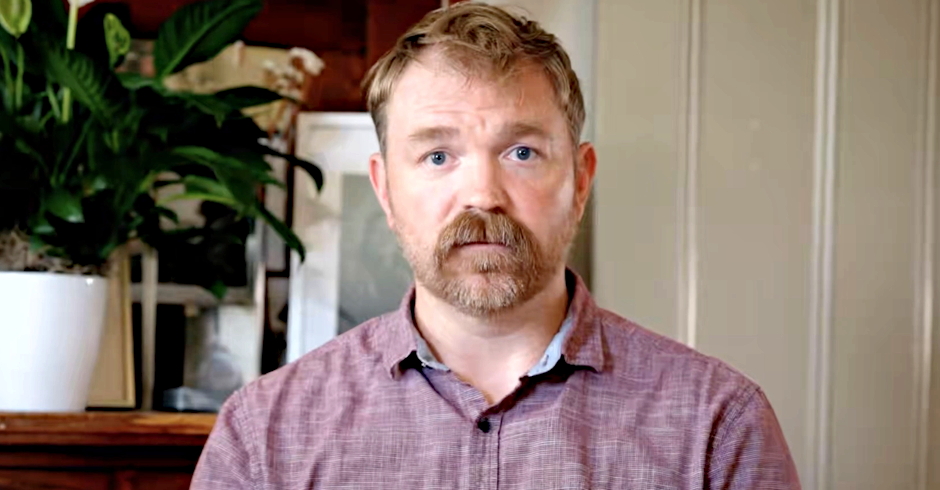
Maine Democratic U.S. Senate nominee Graham Platner is under fire after releasing a video declaring that new allegations against him are false, yet he is “taking time to reflect” on a path forward.
Politico on Monday afternoon reported that a woman who dated Platner, Jenny Racicot, “says he forced her to have sex with him nearly five years ago despite her repeated objections, an allegation Platner denies.”
“Racicot said she had an on-and-off relationship with Platner,” Politico reported, “for more than two years before he entered her rural Maine home uninvited one night in late 2021, deeply intoxicated, and forced himself on her while she repeatedly told him to stop. She said she cut off contact with him after telling him the encounter was not consensual.”
In a video posted to social media eleven minutes after the Politico story dropped, Platner says, “I wanted to directly address the troubling, serious, and false allegations against me. Any accusation of nonconsensual behavior is categorically false.”
He said he and his supporters “were united in a love of Maine, a belief that our politics must change, in a focus on defeating Susan Collins.”
“So, regardless of the inaccuracy of the reporting, but mindful the political reality will inflict, we are taking the time to reflect on the best path forward for the state that I love, the people that I love, the movement I belong to, and the goal of defeating Susan Collins.”
“Those were the goals when we launched this campaign. And they remain my goals today.”
“Throughout it all, you never turned your back on me. And I will not turn my back on you now. Every one of you deserves to see that vision come to fruition and see Susan Collins defeated. And we will use every tool at our disposal to do so.”
The Bulwark’s Tim Miller, a political commentator who served as the communications director for the Jeb Bush 2016 presidential campaign, blasted Platner.
“I’m sorry but ‘we are taking time to reflect on the best path forward’ is not an option on the table,” Miller wrote. “Either it’s false and you campaign with vigor or it’s true and you get out / apologize to everyone you let down.”
Journalist Ryan Grim, commenting on Platner’s video, noted that Platner “strongly suggests he is considering dropping out. Already Troy Jackson and Chellie Pingree, both gubernatorial candidates, are being kicked around in Maine circles as potential replacements.”
Several others, including Puck News’ Peter Hamby, predicted Platner will be dropping out.
Platner had postponed several campaign events before the Politico story was published.
— Graham Platner for Senate (@grahamformaine) July 6, 2026

President Donald Trump is facing backlash after posting a video of children — including showing their unblurred faces — graduating from kindergarten, with some of the girls purportedly wearing hijabs.
“President Trump posted a captionless video of graduating kindergarteners on Truth Social on Monday, goading his supporters into verbally attacking little children simply for being Muslim,” The New Republic reported. “The clip is from Gateway STEM Academy, a majority-Black K-8 public charter school in St. Paul, Minnesota. It shows about 21 children in caps and gowns on stage singing a song together. Most of the girls are wearing hijabs.”
The original post of the video which Trump reposted reads: “Public school in St. Paul, Minnesota. Every girl is in a hijab … in kindergarten.”
Trump did not add any comments. TNR called the post “Islamophobic, weird, and creepy,” while noting that the comments section of Trump’s post was filled with calls “by racist, xenophobic MAGA supporters” to “deport the children and ban hijabs.”
TNR also noted that it “should come as no surprise that Trump isn’t above attacking children who just learned how to read, but this post is still particularly discomforting—and will certainly contribute to the already potent level of anti-Muslim sentiment in the U.S. and in Minnesota.”
Critics blasted Trump.
“There is something deeply unsettling about the president of the United States—the most powerful person in the world—going after kindergarten schoolchildren in Minnesota because they wore hijabs, as Trump has done this morning on his website,” The Bulwark’s Sam Stein wrote.
One social media commentator wrote, “Trump posted an unblurred video of more than a dozen Muslim kindergartners to Truth Social, exposing the children’s faces while targeting them for their religion.”
Another added, “Trump is a bigot. The president took to Truth Social to attack kindergarteners in hijabs. These are little kids. The president isn’t just a bigot, he’s also a coward.”
The original video was posted to the X social media platform in June.
U.S. Rep. Nancy Mace (R-SC) at the time commented, “If you are in a public school in America, you should be speaking english.”
Image via Reuters

President Donald Trump’s apparent efforts to delay releasing the $5.8 million civil judgment to E. Jean Carroll are being met with a warning by the journalist’s legal team, who suggest there could be a legal maneuver for Trump to employ to forgo paying the judgment in either of the two cases he lost.
According to The Guardian, on July 4, U.S. District Judge Lewis Kaplan ordered Trump to release the $5.8 million judgment, which is in escrow, to Carroll by this coming Tuesday — or explain why he would not do so.
Carroll’s attorneys think Trump may be trying to buy time to mount another legal strategy, telling the judge that Trump’s request for an extension “appears to be little more than yet another play for time.”
“The case is separate from Trump’s appeal of a Manhattan civil jury’s 2024 award of $83.3m to Carroll for defamation,” The Guardian explains. “But her lawyers have suggested a legal scenario in which the president might seek to conjoin the cases and further delay payment of both.”
Carroll’s attorney Roberta Kaplan (no relation to the judge) wrote, “We can only assume that defendant is seeking … to buy time so he can try to concoct some new basis to put off paying plaintiff presumably in connection with his forthcoming petition and motion for a rehearing.”
Trump’s former attorney, Justin Smith, in one of his final acts, wrote to the Supreme Court suggesting that his client would be appealing the $83.3 million civil judgment.
Smith argued that the Supreme Court “may wish to consider the petitions together,” given they involve the same parties.
The larger judgment case involves possible questions of presidential immunity, and that has Carroll’s attorneys concerned.
“A conjoined case, Carroll’s lawyers fear, could result in both judgments being wiped out,” The Guardian reports.
The president has also made clear he is no fan of Judge Kaplan, after the jurist made several rulings that “angered” Trump.
“What else can you expect from a Trump Hating, Clinton appointed judge, who went out of his way to make sure that the result was as negative as it could possible be,” Trump wrote on Truth Social in 2023, “speaking to, and in control of, a jury from an anti-Trump area which is probably the worst place in the US for me to get a fair ‘trial’.”
Image via Reuters

Platner Scorched Over ‘Taking Time’ Video After New Accusation

Trump Sparks Fury Online After Posting Unblurred Video of Muslim Kindergartners in Hijabs

One Legal Maneuver Threatens to Undo Everything E. Jean Carroll Won

Inside the Group Helping MAGA Voters Walk Away — And What Finally Pushed Them