At DADT Hearings, Secretary Of Defense Is Fierce Gay Advocate
At today’s Senate hearing examining repeal of “Don’t Ask, Don’t Tell,” Secretary of Defense Robert Gates was the star and a fierce gay advocate pressing for repeal of DADT. Gates, who was appointed by President George W. Bush to his current position, and by President George H.W. Bush as the Director of Central Intelligence in 1991, had no trouble speaking to Republican Senators with great eloquence but also great firmness.
Speaking to presumed GOP presidential candidate John Thune (R-SD) and approaching frustration, Secretary Gates said about delaying repeal of Don’t Ask, Don’t Tell, “If not now, when? When we’re out of Afghanistan? As I look ahead I don’t see the world getting to be a safer, easier place to live.”
Senator Saxby Chambliss (R-GA) almost immediately took an amazingly hostile position, inquiring about Admiral Mike Mullen’s previous statement that he has servied with gays and lesbians for years. Chambliss came dangerously close to impugning the Admiral’s honor and all but suggested dereliction of duty for not outing and discharging service members he knew to be gay or lesbian. “Did you discharge everyone you knew was gay at that time?,” the Senator asked the Admiral. The Admiral was forced to say he had, indeed, discharged any known gay or lesbian service members.
Chambliss had the temerity to ask Secretary Gates if he had read the report. The Georgia Senator then cherry-picked certain sentences, though not complete thoughts, from the report.
“You’re basing your opinion on a 28% response to surveys that were went to 400,000 men and women. The question wasn’t even asked to them, do you think we ought to repeal this? The question was, can we implement it?”
With Senator Wicker (R-MS,) who suggested Secretary Gates didn’t do his job by conducting a wide-enough reaching survey and assuming that repeal should take place, the Secretary almost lost his composure. Folding his hands, then taking a breath, Gates said, “What the president did in his State of the Union was say he would like to see this law repealed. Now, there aren’t enough fingers and toes in this room to count all the times that a president has said that he wanted to see a law changed.”
The Secretary went on to blast the Senator. “I didn’t spend a career in the military but I can’t think of a single prescident in American history of doing a referendum of the armed forces of a policy issue. Are you going to ask them if they want fifteen-month tours? Are you going to ask them if they want to be part of the surge in Iraq?That’s not the way our civilian-led military has ever worked in our entire history. The ‘should’ question needs to be decided by the Congress or the courts.”
He then went on to say, “I think doing a referendum on a policy matter is a very dangerous path.”

Enjoy this piece?
… then let us make a small request. The New Civil Rights Movement depends on readers like you to meet our ongoing expenses and continue producing quality progressive journalism. Three Silicon Valley giants consume 70 percent of all online advertising dollars, so we need your help to continue doing what we do.
NCRM is independent. You won’t find mainstream media bias here. From unflinching coverage of religious extremism, to spotlighting efforts to roll back our rights, NCRM continues to speak truth to power. America needs independent voices like NCRM to be sure no one is forgotten.
Every reader contribution, whatever the amount, makes a tremendous difference. Help ensure NCRM remains independent long into the future. Support progressive journalism with a one-time contribution to NCRM, or click here to become a subscriber. Thank you. Click here to donate by check.
 |
News
Three of The Four Republicans Who Voted to Release The Epstein Files Won’t Be in the House in 2027

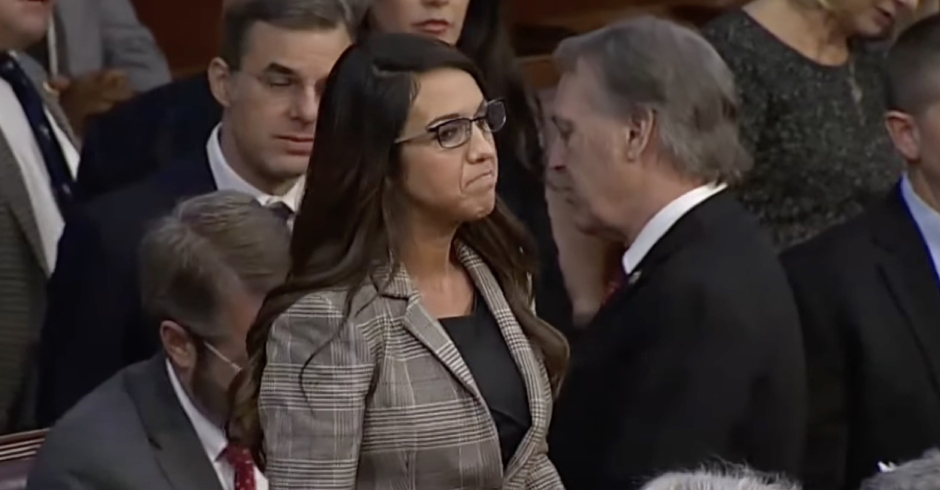
In 2025, four House Republicans broke ranks to vote in favor of releasing the files relating to disgraced financier and sex criminal Jeffrey Epstein. Three of them will not be returning in 2027.
While running for a second term, many of President Donald Trump’s surrogates on the campaign trail said that if elected, he would release the complete files on Epstein. Even though Trump himself was more cool on the idea—he’d called the files a “Democrat hoax that never ends“—his supporters were so outspoken about it that it became a de facto plank of his platform.
Throughout 2025, Speaker of the House Mike Johnson (R-LA) delayed the vote as long as he could. Representatives organized a discharge petition to force the vote, and Johnson even delayed swearing in Rep. Adelita Grijalva (D-AZ) for two months, as she promised to be the final signature needed. But in November, the House finally voted. All Democrats voted to release the Epstein files, but four Republicans—just enough to get it to pass—crossed party lines to vote in favor.
READ MORE: Marjorie Taylor Greene Says She’s ‘Done Supporting’ The GOP: ‘Party Betrays Its Voters’
Those congresspeople, Marjorie Taylor Greene of Georgia, Nancy Mace of South Carolina, Thomas Massie of Kentucky and Lauren Boebert of Colorado, had previously been staunch allies of Trump, and among the most conservative members of the House. However, after their vote, Trump and the MAGA movement turned on them.
Greene was the first to leave. She announced she’d be resigning a week after the Epstein vote, saying she didn’t want to put her family and constituents through “a hurtful and hateful primary against me by the president that we all fought for.” She resigned on January 5, the five-year anniversary of her first swearing in.
Massie was the next to fall. His primary was May 19, and he came in second to the Trump-backed Ed Gallrein, a former Navy SEAL. The election was hard-fought, with the candidates and their supporters spending the most money on advertising in a House race ever, according to NBC News. Massie lost by nearly 10 percentage points and a little more than 10,000 votes. After his loss, Trump said, “He was a bad guy. He deserves to lose.”
Though a Trump loyalist like Massie, Mace also positioned herself as the face of anti-LGBTQ activism. She railed against Rep. Sarah McBride (D-DE), the first openly trans member of Congress. Mace introduced a bill barring trans women from using the women’s restrooms, telling reporters the legislation was directed at McBride specifically. Mace ended up coming in fifth in her primary on June 9, earning just 12.1% of the vote. The top two vote-getters faced off June 23 in a primary, with the state Attorney General Alan Wilson triumphing over the Trump-backed Lt. Gov. Pamela Evette.
Massie and Mace are lame ducks—and the question remains, will Boebert join them? Boebert’s primary is June 30—and given that her district is the reddest in Colorado, it is nearly a foregone conclusion that the primary winner will ultimately land in Washington. That said, despite Trump calling for someone to run against her, he did so too late for anyone to file, and Boebert is running for her party’s nomination unopposed. So barring an unprecedented upset—she’s currently polling at 80% over her Democratic rival Eileen Laubacher—Boebert will be the last one standing.
Image via Shutterstock

Former Republican Rep. Marjorie Taylor Greene said on Monday that she is “done supporting” her former party—but don’t expect her to join the Democratic party anytime soon.
Greene announced her disillusionment with the GOP on Monday afternoon in a tweet.
“Tucker is not the only one who is done supporting the Republican Party. There is A LOT of us that are absolutely fed up and will not support a party that betrays its voters and country. That does not mean we are turning into Democrats either. But we are DONE with the America LAST Republican Party,” Greene wrote.
Tucker is not the only one who is done supporting the Republican Party.
There is A LOT of us that are absolutely fed up and will not support a party that betrays its voters and country.
That does not mean we are turning into Democrats either.
But we are DONE with the America…
— Marjorie Taylor Greene 🇺🇸 (@mtgreenee) June 22, 2026
She referred to comments made last week by pundit Tucker Carlson. Carlson appeared on the Can’t Be Censored podcast Thursday, saying he would refrain from supporting either major party, and admitted “I’m not sure what I’m going to do.”
READ MORE: ‘Gaslight America’: Marjorie Taylor Greene Blasts Trump Ahead of His Trip to Georgia
“How could I or any American voter support a political party that’s not loyal to the United States. That puts the interests of a foreign country above those of its own citizens. It’s not possible to vote for people like that, and I’m not going to,” Carlson said, according to Mediaite, referring to America’s long-time ally Israel.
Greene famously broke with President Donald Trump earlier this year when she called for the release of the FBI files relating to disgraced financier and sex criminal Jeffrey Epstein. A former staunch ally of Trump, the two started trading barbs. Greene resigned from the House this January. Greene has long called for an isolationist foreign policy, criticizing America’s involvement in Ukraine as well as the current conflict with Iran.
Given that Greene said she has no plans on moving leftward in her politics, it’s unclear if she will refrain from voting or if she’ll throw her lot in with a third party. While American politics are primarily driven by the two major parties, a number of smaller parties also exist.
Greene may find a home in the Libertarian party, the third-largest party by voter registration. The Libertarian party has drifted rightward since its founding in 1971. While initially economically conservative but politically liberal, after 2022, the paleolibertarian Mises Caucus gained control of the party. Paleolibertarianism was developed by anarcho-capitalists, and embraces cultural conservatism. Some of the most widely known paleolibertarians include former Representative Ron Paul and the current president of Argentina, Javier Milei.
Third parties struggle to gain traction in the United States. The closest a third party has come to widespread support was the Reform Party, founded by H. Ross Perot during the 1996 presidential election after he won 18.9% of the popular vote in the 1992 presidential election as an independent candidate. Reform won 8.4% of the popular vote in the 1996 election, but no third-party or independent candidate has been as successful as Perot since.
However, the electoral college makes it difficult for a third-party presidential candidate to be elected at all. Third-party presidential candidates are often seen as spoilers for the major candidates. Perot is often believed to have won votes away from President George H.W. Bush in 1992, giving the election to President Bill Clinton. In 2000, Green Party candidate Ralph Nader was similarly accused of acting as a spoiler for Vice President Al Gore, leading to the election of President George W. Bush.
Third parties, however, have a better track record in down-ballot races. For example, Kshama Sawant won election to the Seattle City Council in 2014 as a member of the Socialist Alternative party. She held office until 2024, when she declined to seek reelection. She is currently running for a seat in the House of Representatives as an independent.
Image via Shutterstock
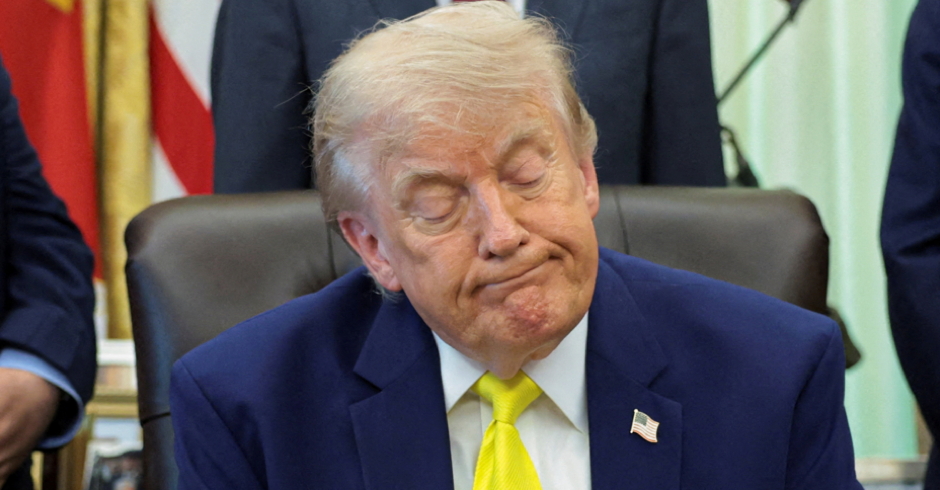
President Donald Trump announced on Monday that Iran “will agree” to allow weapon inspectors into the country in a slightly confusing social media post.
“Everybody is fully aware that Iran will agree to have Major Weapons Inspections in order to ensure ‘Nuclear Honesty’ long into the future,” the president wrote on his social media platform Truth Social.
Vice President JD Vance has been handling the negotiations with Iran to end the military conflict started by the United States and Israel at the end of February. Vance said earlier today that inspectors from the International Atomic Energy Agency would be allowed to enter Iran. The inspectors could be in the country as soon as Monday, according to the Washington Post.
READ MORE: Large Majority of Americans Say Iran Conflict Should End, Hasn’t Met Any of Trump’s Goals
Trump’s wording, however, is somewhat hard to parse. When he says “everyone is fully aware,” is Trump referring to Vance’s Monday announcement that had been widely reported? Or is Trump attempting to cast doubt, suggesting Iran may somehow be pulling a fast one, allowing inspections to provide cover for a weapons program?
Either way, the allowing of weapons inspectors into Iran is similar to what former President Barack Obama’s administration negotiated for in 2015. The Obama-era deal called for IAEA inspectors to make sure Iran was complying with the deal, and was not developing nuclear weapons. But in 2018, after Trump ended the agreement, Iran started to block IAEA inspectors from parts of their nuclear program. Since then, IAEA inspectors do not know the status of Iran’s enriched uranium, according to the Washington Post.
One year ago from Monday, the U.S. struck Iranian sites believed to hold stockpiles of enriched uranium. Since then, Trump has claimed that the strike “completely and totally obliterated” the country’s nuclear enrichment facilities, however, this has never been verified. Even at the time, the Pentagon said that Iran’s nuclear program had only been “degraded…by two years.” Trump’s national intelligence director testified prior to the strike that there was no evidence that Iran’s existing nuclear program was meant to build weapons, according to the Military Times.
Iran has long promised not to build or obtain nuclear weapons. In 1970, Iran signed the Nuclear Non-Proliferation Treaty which deemed the country a non-nuclear state.
While Trump has warned that Iran could have a nuclear bomb “within six months,” the first report from the International Atomic Energy Agency since the Iran conflict started says that there has been no major change to the country’s nuclear program, according to Reuters.
Image via Reuters

Three of The Four Republicans Who Voted to Release The Epstein Files Won’t Be in the House in 2027

Marjorie Taylor Greene Says She’s ‘Done Supporting’ The GOP: ‘Party Betrays Its Voters’

Donald Trump Says Iran ‘Will Agree to Major Weapons Inspections’ to Ensure ‘Nuclear Honesty’

Federal Judge Quashes ‘Retaliatory’ Subpoenas Against Minnesota Gov. Tim Walz

GOP Rep Demands Biden’s Pardons to Be ‘Declared Null and Void’
 News2 days ago
Marjorie Taylor Greene Says She’s ‘Done Supporting’ The GOP: ‘Party Betrays Its Voters’
 IDIOCY2 days ago
GOP Rep Demands Biden’s Pardons to Be ‘Declared Null and Void’
 News2 days ago
Federal Judge Quashes ‘Retaliatory’ Subpoenas Against Minnesota Gov. Tim Walz
 BAD PRESIDENT2 days ago
Large Majority of Americans Say Iran Conflict Should End, Hasn’t Met Any of Trump’s Goals
 News2 days ago
Donald Trump Says Iran ‘Will Agree to Major Weapons Inspections’ to Ensure ‘Nuclear Honesty’
 News17 minutes ago
Three of The Four Republicans Who Voted to Release The Epstein Files Won’t Be in the House in 2027