FIRST AMENDMENT? WHAT FIRST AMENDMENT?
‘We Don’t Promote That Here’: Kentucky School Administrators Force Students to Remove LGBTQ-Pride Tee Shirts
Student Says Principal Outed Several LGBTQ Students to Their Parents
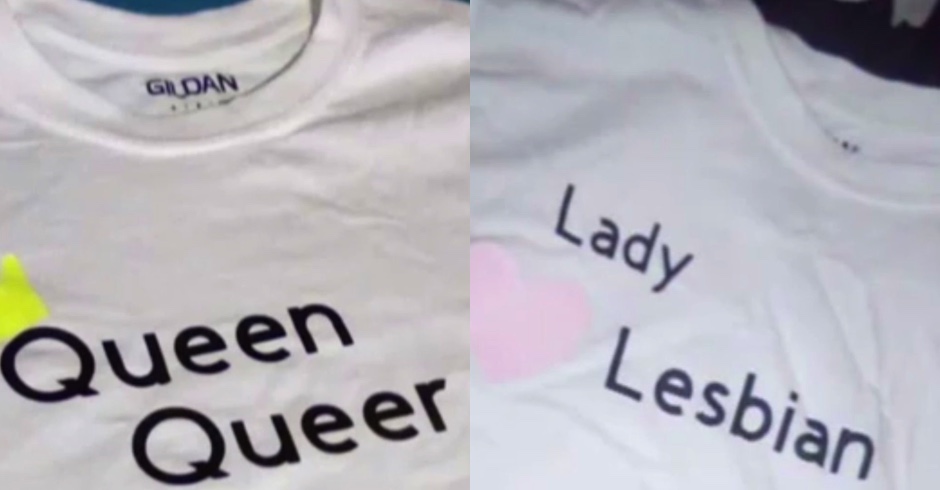
Administrators at a Kentucky high school reportedly forced several students to remove LGBTQ-affirming tee shirts,. The students say they were told “we don’t promote that here,” referring to being LGBTQ, and that the shirts were a “disruption.”
Administrators at Martin County High School reportedly claimed the tee shirts violate the school’s dress code, which says: “Clothing must be appropriate for school and must not interfere with the educational process.”
The tee shirts said “Queen Queer” and “Lady Lesbian,” according to Yahoo News.
The school administrators might have violated the students’ free speech, based on other similar cases (below).
The students are accusing the administration of refusing to allow a Gay-Straight Alliance (GSA), suggesting that words like “lesbian” or “queer” when used in a positive manner are “disruptive” and could put students in danger, and saying that school is not a place they can or should be open about who they are – while allowing students to flaunt their support of the Confederate flag or President Trump.
“The administrators stated to us that [students] were forced to change because [administrators] were ‘worried for the dangers of the students, and did not want to hear of any students coming back saying they were being bullied,” one of the students told Yahoo News. They added that the administrators said “That school was not a place for children to express their sexual orientation.”
Rather than working to protect free speech – an important lesson for all school students – the LGBTQ students were discriminated against, victimized, and might have had their civil rights violated by the school administrators.
“It was basically just [the principal] saying that we don’t need to advertise our orientations on a big billboard because that puts a target on us for bullying,” one of the students, Jessica, added. “She also said we didn’t need a [Gay-Straight Alliance because we already know who our friends are that support us.”
“We want the administration to really treat others equally because we want the ability to express our identities just like the students who wear Trump apparel, religious apparel or the Confederate flag. I know we are in a rural, Christian-Republican community, but we want tolerance. Our shirts aren’t hurting anyone. It’s unfair that because the staff have certain beliefs, they treat students differently and scare them into not speaking out,” Jessica also said. “We just want justice.”
Yahoo News adds that “Jessica even alleged that the principal outed some LGBTQ students to their parents when calling to warn about a possible walkout which never took place.”
The school appears to be ripe for an intervention from civil rights groups.
In 2016 The ACLU sued a Tennessee school district that had banned a student from wearing a tee shirt that said: “Some People Are Gay, Get Over It.” The ACLU won.
In a detailed look at pro-LGBTQ tees cases, including the 2016 Tennessee case, the Southern Poverty Law Center adds: “First and most importantly, a school cannot manufacture its own ‘disruption’ by overreacting to speech.”
The SPLC also offers more examples, including this one:
“In 2008, a Florida judge struck down a Pensacola-area school’s ban on logos including rainbows, pink triangles and the words ‘gay pride’ or ‘GP,’ which students began wearing in defense of a classmate bullied for being a lesbian.”
Here’s a video report from about the Martin County school administrators decision to ban the speech of several LGBTQ students, from WYMT:
Enjoy this piece?
… then let us make a small request. The New Civil Rights Movement depends on readers like you to meet our ongoing expenses and continue producing quality progressive journalism. Three Silicon Valley giants consume 70 percent of all online advertising dollars, so we need your help to continue doing what we do.
NCRM is independent. You won’t find mainstream media bias here. From unflinching coverage of religious extremism, to spotlighting efforts to roll back our rights, NCRM continues to speak truth to power. America needs independent voices like NCRM to be sure no one is forgotten.
Every reader contribution, whatever the amount, makes a tremendous difference. Help ensure NCRM remains independent long into the future. Support progressive journalism with a one-time contribution to NCRM, or click here to become a subscriber. Thank you. Click here to donate by check.
 |





FIRST AMENDMENT? WHAT FIRST AMENDMENT?
Justice Clarence Thomas Believes Media Criticism of Decisions ‘Jeopardizes Any Faith’ in the Supreme Court

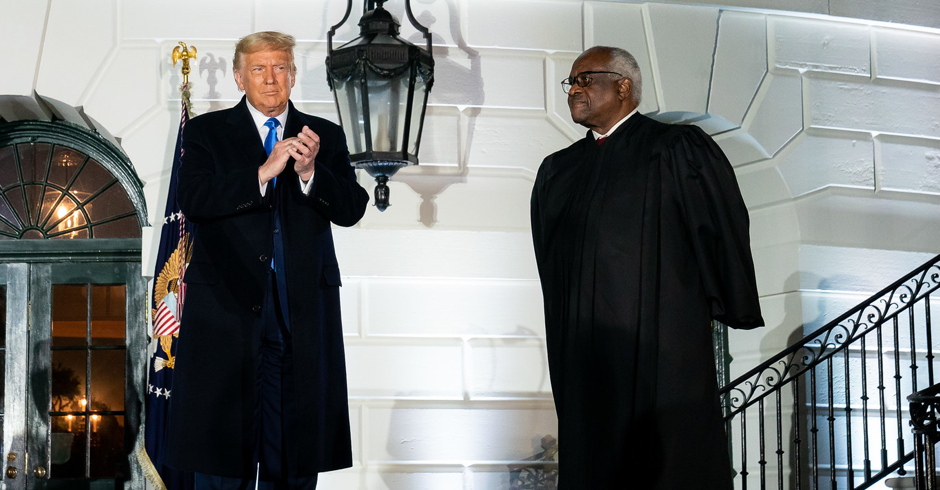
Justice Clarence Thomas complained about the harsh criticism the Supreme Court has received since allowing a controversial anti-abortion law to go into effect in Texas.
Thomas delivered the 2021 Tocqueville Lecture at the University of Notre Dame on Thursday, where he complained about media criticism, The Washington Post reported.
“I think the media makes it sound as though you are just always going right to your personal preference. So if they think you are anti-abortion or something personally, they think that’s the way you always will come out. They think you’re for this or for that. They think you become like a politician,” Thomas said.
“That’s a problem. You’re going to jeopardize any faith in the legal institutions,” he said.
A second Post report on the speech noted Thomas’ remarks on the ongoing mistrust of the court.
“The court was thought to be the least dangerous branch and we may have become the most dangerous,” Thomas said. “And I think that’s problematic.”
The newspaper noted the lecture was interrupted by protesters who yelled, “I still believe Anita Hill.”
FIRST AMENDMENT? WHAT FIRST AMENDMENT?
Four Cops ‘Drag’ Man From McCarthy Press Conference for Asking Question About Jan. 6 Committee

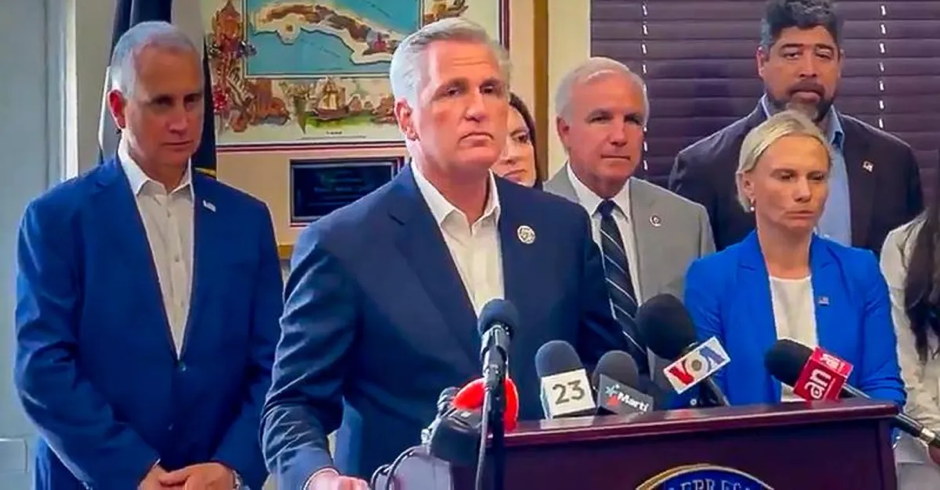
Four law enforcement officers reportedly removed a man from House Minority Leader Kevin McCarthy’s (R-CA) press conference on Thursday when he tried to ask a question about the Jan. 6 committee.
“I tried to ask @GOPLeader McCarthy a question after he decried Cuban police pickup up people in the streets,” Grant Stern explained in a tweet. “Why does he oppose the bipartisan #January6thCommission?”
“A Congressional staffer had four cops pick me up and drag me from the room,” he explained.
Stern’s bio indicates that he is an editor for the OccupyDemocrats organization.
Watch the video below
I tried to ask @GOPLeader McCarthy a question after he decried Cuban police pickup up people in the streets.
Why does he oppose the bipartisan #January6thCommission?
A Congressional staffer had four cops pick me up and drag me from the room.
I still asked the question. pic.twitter.com/HDqrhvARaC
— Grant Stern is fully vaccinated (@grantstern) August 5, 2021
FIRST AMENDMENT? WHAT FIRST AMENDMENT?
GOP Launches Witch Hunt Demanding Investigation Into Highly-Respected University Professor’s Tweets
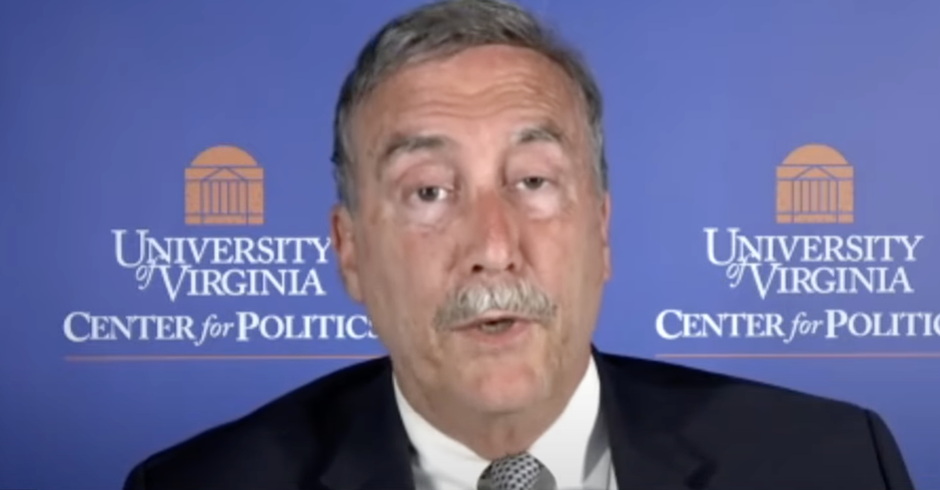
Republicans in Virginia are demanding that University of Virginia President James E. Ryan open an investigation into tweets by Center for Politics founder Dr. Larry Sabato.
“A reasonable taxpaying citizen can readily conclude that Dr. Sabato is demonstrating the rankest form of bitter partisanship,” Virginia GOP Chair Rich Anderson wrote in a letter printed on Republican Party of Virginia letterhead.
“In order to have faith in our institutions, it is essential that Virginians hold accountable those public employees and officials who violate institutional values, codes of conduct, and other guidelines of professional behavior.”
A spokesperson for the university said Sabato has done nothing wrong.
“There is nothing in our Code of Conduct that limits University employees from engaging in expression that is protected under the First Amendment,” the spokesman said.
Anderson complained about eight tweets by Sabato. The first noted Donald Trump’s refusal to release his tax returns.
It is a disgrace that Trump became the first major-party presidential candidate since the 1970s to avoid releasing his tax returns. This critical information should have been available for voters to consider in 2016. Never again! #TrumpTaxReturns https://t.co/5liLizaGGw
— Larry Sabato (@LarrySabato) September 27, 2020
The second tweet concerned Trump’s fact-free approach to presidential debates.
CANCEL THE REMAINING PRESIDENTIAL DEBATES. It is impossible to have an orderly, productive exchange with Donald Trump. Stop pretending otherwise. #Debate2020
— Larry Sabato (@LarrySabato) September 30, 2020
The third tweet was in the context of Trump hoping to bring back executions by firing squad while facing accusations of extreme tax fraud. It was in the comments of a Daily Beast story.
It’s just amazing to me that I am reading this! Is there not a person that will find a law against this! @LarrySabato
— Wahoo UVA (@uvaseg) November 30, 2020
Extreme tax fraud deserves a firing squad.
— Larry Sabato (@LarrySabato) November 30, 2020
The fourth tweet questioned Trump’s sanity after he released a 46-minute video pushing his “Big Lie” of voter fraud.
Cuckoo, cuckoo! Does the plush presidential suite at Walter Reed offer psychiatric treatments? Maybe time to helicopter Trump over again. https://t.co/rpMkk2mVuE
— Larry Sabato (@LarrySabato) December 3, 2020
The fifth tweet praised a return to normalcy “after 4 years of the bizarre and disturbing.”
I’m watching President-elect @JoeBiden‘s press conference. It’s so refreshingly NORMAL. After 4 years of the bizarre and the disturbing, we really are going to have a return to normalcy.
— Larry Sabato (@LarrySabato) December 4, 2020
The sixth tweet returned to the question of Trump’s mental health in the context of the delusional conspiracy theory that he will be “reinstated” as president in August in violation of the Constitution.
Of course it’s true. Trump, who governed on the edge of insanity for four long years, has gone over the edge. Yet millions of people and 90%+ of GOP members of Congress, still genuflect before this false god. https://t.co/MQ6LarvR2F
— Larry Sabato (@LarrySabato) June 3, 2021
The seventh tweet concerned Glenn Youngkin, who is worth hundreds of millions after working as the co-CEO of the private-equity firm The Carlyle Group. Youngkin is now running for governor of Virginia.
I wonder if @GlennYoungkin is still “honored” to have received Trump’s enthusiastic endorsement for VA Governor?
Trump told chief of staff Hitler ‘did a lot of good things’, book says | Donald Trump | The Guardian https://t.co/EdnKiUIjyJ
— Larry Sabato (@LarrySabato) July 7, 2021
The final tweet the GOP believes should result in an investigation concerned Trump’s choice of music at his campaign-style rallies.
Trump as usual ends with the song “YMCA”, a completely inappropriate song for him even during Pride Month. Try “Highway to Hell”. That fits. #OhioRally #revengetour
— Larry Sabato (@LarrySabato) June 27, 2021

‘To Do God Knows What’: Local Elections Official Reads Lara Trump the Riot Act

Justices Slam Trump Lawyer: ‘Why Is It the President Would Not Be Required to Follow the Law?’

Justices’ Views on Trump Immunity Stun Experts: ‘Watching the Constitution Be Rewritten’

‘Assassination of Political Rivals as an Official Act’: AOC Warns Take Trump ‘Seriously’
‘Assassination of Political Rivals as an Official Act’: AOC Warns Take Trump ‘Seriously’
Justices’ Views on Trump Immunity Stun Experts: ‘Watching the Constitution Be Rewritten’
Justices Slam Trump Lawyer: ‘Why Is It the President Would Not Be Required to Follow the Law?’
‘To Do God Knows What’: Local Elections Official Reads Lara Trump the Riot Act

‘I Hope You Find Happiness’: Moskowitz Trolls Comer Over Impeachment Fail
 News2 days ago
‘Cutting Him to Shreds’: ‘Pissed’ Judge Tells Trump’s Attorney ‘You’re Losing All Credibility’
 News2 days ago
‘Blood on Your Hands’: Tennessee Republicans OK Arming Teachers After Deadly School Shooting
 News2 days ago
Biden Campaign Hammers Trump Over Infamous COVID Comment
 OPINION1 day ago
‘They Will Have Thugs?’: Lara Trump’s Claim RNC Will ‘Physically Handle the Ballots’ Stuns
 OPINION2 days ago
Trump Complains He’s ‘Not Allowed to Talk’ as He Gripes Live on Camera

 OPINION1 day ago
‘Doesn’t Care if Pregnant Women Live or Die’: Alito Slammed Over Emergency Abortion Remarks

 News1 day ago
Gag Order Breach? Trump Targeted Cohen in Taped Interview Hours Before Contempt Hearing
 OPINION1 day ago
‘I Hope You Find Happiness’: Moskowitz Trolls Comer Over Impeachment Fail