Uganda President Will Sign Anti-Homosexuality Life-In-Jail Bill Into Law
var addthis_config = {“data_track_addressbar”:true};Yoweri Museveni, the president of Uganda, in an about face clearly tied to his upcoming re-election efforts, has decided to sign the highly-contested and highly-controversial Anti-Homosexuality Bill (AHB) into law. The legislation, which the president had stated was passed illegally late last year, was formerly known worldwide as the “Kill The Gays” bill. Many believe — although it is still unconfirmed — that the death penalty provision has been removed.
LOOK: Comparing Gays To ‘Mongols,’ Ugandan President Ridiculously ‘Explains’ Homosexuality
Buzzfeed, which broke the news today, just reported that “Museveni had been facing stiff pressure from his colleagues to accept the bill.”
Museveni had told lawmakers he would sign the bill if “I have got confirmation from scientists that this condition is not genetic.â€
The committee chairman of Museveni’s party, the National Resistance Movement, told BuzzFeed yesterday, “Speaking as a medical doctor … homosexuality is just deviant behavior. It can be learned, and it can be unlearned.â€
Of course, every major medical organization in the United States, if not the Western World, has stated that is false, and that homosexuality is neither a “behavior” nor “deviant.”
Ugandan parliament Speaker Rebecca Kadaga late last year kept her promise — one year late — to pass Uganda’s internationally infamous “Anti-Homosexuality Bill†as a Christmas present to her country’s Christians. She did so reportedly without a quorum in place and without advance notice.
The bill is largely the result of America’s Christian Evangelicals working in Uganda and other underdeveloped countries around the world, especially in Africa.
One in particular, hate group leader Scott Lively, on trial in the U.S. for crimes against humanity, has bragged about his work in Uganda against the LGBT community. In late 2012, with the death penalty believed to be still attached, Lively called the AHB’s expected passage a “huge blessing.”
Another hate group leader, Tony Perkins of the Family Research Council, has voiced support for the legislation. In 2010, when the bill still had the death penalty included, Perkins claimed the legislation merely was an effort “to uphold moral conduct that protects others.â€
And in late 2012, again, with the death penalty still believed to have been included, Perkins praised President Museveni for “leading his nation†with the “Kill The Gays†bill, and called Uganda “a modern example of a nation prospered by God.â€
The Anti-Homosecuality bill today provides for life in prison for “aggravated homosexuality,” a broad and legally insufficiently defined term. It also provides for mandatory jail terms for those who engage in sexual activities with a member of the same gender. The AHB also demands that any person who knows of someone who is gay must report them to law enforcement or face jail themselves, and provides for stiff penalties for any person, company, corporation, media outlet or other entity that knows or supports LGBT people or LGBT civil rights.
The law will also extend beyond Uganda’s borders, mandating extradition for Ugandans who violate the law abroad.

Enjoy this piece?
… then let us make a small request. The New Civil Rights Movement depends on readers like you to meet our ongoing expenses and continue producing quality progressive journalism. Three Silicon Valley giants consume 70 percent of all online advertising dollars, so we need your help to continue doing what we do.
NCRM is independent. You won’t find mainstream media bias here. From unflinching coverage of religious extremism, to spotlighting efforts to roll back our rights, NCRM continues to speak truth to power. America needs independent voices like NCRM to be sure no one is forgotten.
Every reader contribution, whatever the amount, makes a tremendous difference. Help ensure NCRM remains independent long into the future. Support progressive journalism with a one-time contribution to NCRM, or click here to become a subscriber. Thank you. Click here to donate by check.
 |

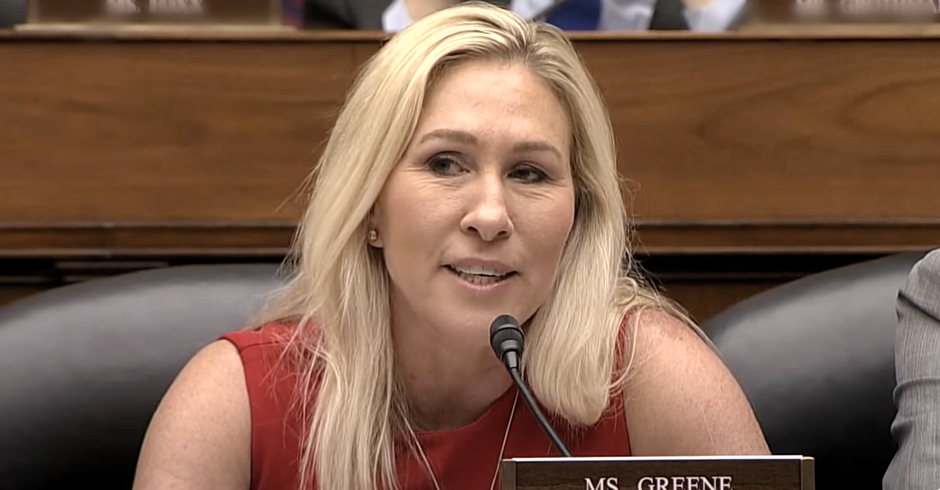
For years U.S. Rep. Marjorie Taylor Greene (R-GA) has been called “Pro-Putin.” As far back as 2021, her first year as a member of Congress, the question had been raised on social media: “Is Marjorie Taylor Greene a Russian asset?”
In 2022 The Annenberg Public Policy Center’s FactCheck.org reported: “Marjorie Taylor Greene Parrots Russian Talking Point on Ukraine.”
Back then, as the article highlighted, Greene had said, “there is no doubt that [Russian President Vladimir] Putin’s actions in Ukraine are despicable and evil.”
Now, she promotes a far more favorable view of President Vladimir Putin and his illegal war against Ukraine, a sovereign nation which the Russian autocrat wants to incorporate – at least partly – into Russia.
Just last week Greene spread demonstrably false pro-Russia talking points about a “war on Christianity” while defending and promoting President Vladimir Putin.
READ MORE: ‘Afraid and Intimidated’: Trump Trial Juror Targeted by Fox News Dismissed
“This is a war on Christianity,” Greene told far-right propagandist Steve Bannon. “The Ukrainian government is attacking Christians, the Ukrainian government is executing priests. Russia is not doing that.”
That’s just plain false, as NCRM reported.
Largely in response to her strong opposition to the U.S. supporting Ukraine, and her spreading Russian disinformation and flat-out pro-Putin falsehoods, Greene’s fondness for Putin and Russia has been making headlines.
“Republicans Who Like Putin,” was the headline last month at The New York Times, which observed: “A few Republicans have gone so far as [to] speak about Ukraine and its president, Volodymyr Zelensky, in ways that mimic Russian propaganda. Representative Marjorie Taylor Greene has accused Ukraine of having ‘a Nazi army,’ echoing language Putin used to justify the invasion.”
“The Putin Republicans Have the Upper Hand” warned Washington Monthly‘s David Atkins on Wednesday, reporting on “conservative extremists led by Representative Marjorie Taylor Greene.”
“They admire the strongman as a Christian nationalist leader, and won’t support Ukraine. The global consequences of their besotted love affair with the Russian strongman could be cataclysmic.”
“Russia Is Buying Politicians in Europe. Is It Happening Here Too?” The New Republic‘s Alex Finley wrote last week. The photo at the top of the page? Marjorie Taylor Greene.
READ MORE: ‘Used by the Russians’: Moskowitz Mocks Comer’s Biden Impeachment Failure
Finley pointed to Greene’s interview with Bannon, “about Ukraine’s persecution of Christians, which is a Kremlin talking point aimed at boosting the pro-Moscow wing of Ukraine’s Orthodox Church. The U.S. should be spending money on the border with Mexico, not on Ukraine aid? That’s a Kremlin talking point. Russia invaded Ukraine to defend itself against an expanding NATO? That’s a Kremlin talking point. Call for a cease-fire, and give Russia Crimea and eastern Ukraine? That’s a Kremlin talking point.”
Rupert Murdoch’s New York Post last week ran this headline: “Rep. Marjorie Taylor Greene says she ‘seriously hates’ people who support sending more aid to Ukraine: ‘Most repulsive, disgusting thing happening’.”
Then there is Greene’s obsession with Nazis. Specifically, equating Ukrainians with Nazis, which she did several times over the past week, including on Wednesday. That earned her the condemnation and wrath of U.S. Rep. Jared Moskowitz (D-FL), who demanded: “Stop bringing up Nazis and Hitler.”
Wednesday night, Congressman Moskowitz, known for his use of humor and sarcasm to make his points, declared: “Just submitted an amendment to Bill drafting appointing MTG [Marjorie Taylor Greene] as Putin’s Special Envoy to the United States Congress.”
Moskowitz’s amendment was in response to Congresswoman Greene’s amendments requiring members to “conscript in the Ukrainian military” if they vote for the Ukraine military funding bill, as Juliegrace Brufke reported.
READ MORE: ‘Big Journalism Fail’: Mainstream Media Blasted Over Coverage of Historic Trump Trial
The Florida Democrat wasn’t joking, as Axios’ Andrew Solender pointed out Thursday morning.
He actually did it https://t.co/i5C28l9Kb9 pic.twitter.com/LotBrLNzZI
— Andrew Solender (@AndrewSolender) April 18, 2024
Moskowitz did not stop there.
He drafted legislation on Thursday to name the Capitol Hill offices occupied by Congresswoman Greene after the British Prime Minister Neville Chamberlain, infamous for promoting appeasement in dealing with Adolf Hitler.
Chamberlain also signed the Munich Agreement, which allowed Hitler to annex part of Czechoslovakia.
Big day for British history references on Capitol Hill as @JaredEMoskowitz has proposed renaming Marjorie Taylor Greene’s office after Neville Chamberlain pic.twitter.com/VVfZySblHz
— Ben Jacobs (@Bencjacobs) April 18, 2024
See the social media posts above or at this link.

One of seven jurors selected to serve on the New York criminal trial of Donald Trump has been dismissed after telling the judge she became concerned about her ability to remain impartial. That concern came after too many identifying details about potential jurors this week were reported by the press, leading the judge to admonish the media Thursday morning.
“Although the jurors’ names are being kept confidential, the woman, a nurse, ‘conveyed that after sleeping on it overnight she had concerns about her ability to be fair and impartial in this case,’ New York Supreme Court Judge Juan Merchan said before calling her into the room for questioning,” the Associated Press reports. “The woman said her family members and friends were questioning her about being a juror.”
Judge Merchan, after he had questioned the juror, chastised the media, specifically directing reporters to “abide by common sense” and not report jurors’ identifying information, as some in the press had done as soon as jury selection began.
“As evidenced by what’s happened already, it’s become a problem,” Judge Merchan said.
“We just lost what probably would have been a very good juror,” he noted. “She said she was afraid and intimidated by the press, all the press.”
RELATED: ‘Big Journalism Fail’: Mainstream Media Blasted Over Coverage of Historic Trump Trial
Alexander Panetta of Canada’s CBC News adds, “Merchan wants changes in the juror info that gets out to the public. He says jurors’ employer name will be redacted from court records.”
But he also reports the now-excused juror “says family and friends [said] that she had been easy to identify, based on publicly available info about her from the court. She said she definitely has concerns now.”
Merchan also “lamented that media reported another juror has an Irish accent. He asked media in the room to be more careful.”
Responding to the loss of the juror, The Atlantic’s David Drum remarked, “[Trump] juror intimidation gets results.”
The dismissed juror had been targeted by Fox News’ Jesse Watters on Tuesday (video below).
“I’m not so sure about Juror No. 2,” Watters told Fox News views.
Watters: She says no one is above the law. I’m not so sure about her pic.twitter.com/w6t1kOVWuX
— Acyn (@Acyn) April 17, 2024
Trump on Wednesday, appearing to violate his gag order, had targeted the jurors.
READ MORE: ‘Stop Bringing Up Nazis and Hitler’: Marjorie Taylor Greene Smacked Down by Democrats
Former state and federal prosecutor Ron Filipkowski, the editor-in-chief of MeidasTouch Network, commented, “Fox & Trump are coordinating to intimidate jurors.”
Mediate reported, “Donald Trump appeared to violate the gag order set forth by Judge Juan Merchan.”
“On Wednesday, Trump took to Truth Social and quoted comments made about potential jurors by Fox News host Jesse Watters on The Five Wednesday night.”
Trump quoted Watters, posting: “They are catching undercover Liberal Activists lying to the Judge in order to get on the Trump Jury.”
“That post appears to be in direct violation of Merchan’s gag order, a reality highlighted by JustSecurity’s Ryan Goodman,” Mediate added.
On Wednesday Watters had gone even further and presented biographical and identifying details of all seven jurors. That video is currently at the top of a pinned post on the Fox News website.
READ MORE: Fox Personality’s Tweet Called ‘Jury Tampering’ by US Congressman
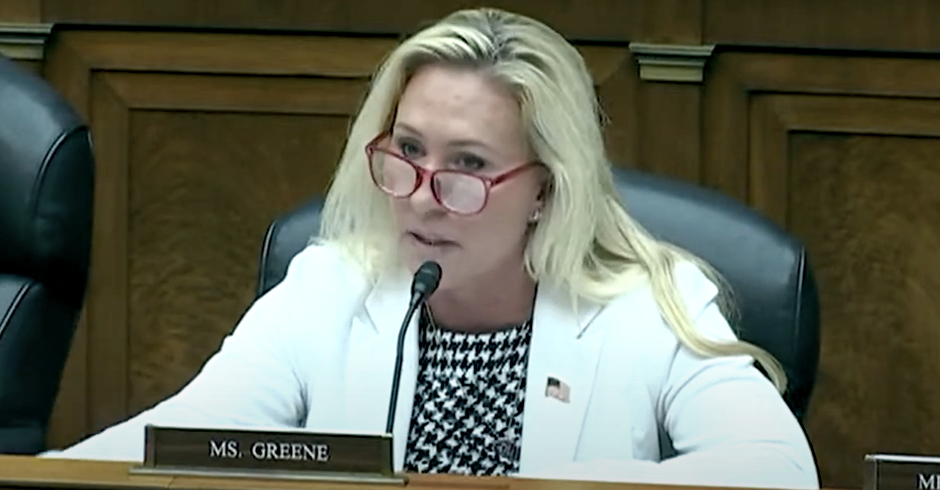
U.S. Rep. Marjorie Taylor Greene was strongly criticized by two Democratic Congressmen after the Georgia Republican’s remarks about “Ukrainian Nazis” and her attempts to paint Ukrainians as Nazis.
“Stop bringing up Nazis and Hitler,” U.S. Rep. Jared Moskowitz (D-FL) urged, after Greene’s remarks suggesting there is a large Nazi problem in Ukraine, during a House Oversight Committee hearing. “The only people who know about Nazis and Hitler are the 10 million people and their families who lost their loved ones, generations of people who were wiped out. It is enough of this disgusting behavior, using Nazis as propaganda. You want to talk about Nazis, get yourself over to the Holocaust Museum. You go see what Nazis did. It’s despicable that we use that and we allow it and we sit here like somehow it’s regular.”
Moskowitz began by telling the Committee his “grandparents escaped the Holocaust.”
“So my grandmother was part of the Kindertransport out of Germany. Her parents were killed in Auschwitz. My grandfather, her husband escaped Poland, from the pogroms,” he continued.
READ MORE: ‘Used by the Russians’: Moskowitz Mocks Comer’s Biden Impeachment Failure
“There are no concentration camps in Ukraine. They’re not taking babies and shooting them in the air ’cause they’re Jewish. There’s no gas chambers. There’s no ovens. They’re not railing people in, they’re not ripping gold out of people’s mouth. They’re not taking stuff out of their home. They’re not trying to erase a people. They’re Ukrainians.”
Moskowitz responds to comments made by Greene: I say this as someone whose grandparents escaped the holocaust… There’s no gas chambers in Ukraine. They’re not railing people in. They’re not trying to erase a people. Stop bringing up Nazis and Hitler. You want to talk about… pic.twitter.com/udnHk568eM
— Acyn (@Acyn) April 17, 2024
Greene’s remarks over the weekend had caused anger.
“It’s antisemitic to make Israeli aid contingent on funding Ukrainian Nazis,” Congresswoman Greene declared Sunday from her official government social media account, as legislation to support Israel, Ukraine, and Taiwan moved to the top of Speaker Mike Johnson’s priority list in the wake of Iran’s attack on Israel. Her implication appeared to be Ukrainians are Nazis – a Putin talking point.
Greene on Wednesday spent several minutes again implying there are many Nazis in Ukraine, as she was refuted by a top scholar, Yale professor of history Timothy Snyder. Dr. Snyder is the author of a dozen books, including two on Nazis and the Holocaust, and is an expert on the Holocaust, Central and Eastern Europe, the Soviet Union, and serves on the Council on Foreign Relations.
Responding to Greene’s remarks, Snyder told the lawmakers, “no far-right party has ever crossed three percent” in a Ukrainian election.
READ MORE: ‘Scared to Death’: GOP Ex-Congressman Brings Hammer Down on ‘Weak’ Trump
Greene was also criticized by U.S. Rep. Maxwell Frost (D-FL), who called her out for her “hypocrisy” and reminded her that in 2022 she “spoke at event led by white supremacists.”
Maxwell Frost responds to Marjorie Taylor Greene: It’s interesting to hear my colleague talk about disavowing white supremacists when in 2022, she spoke at event led by white supremacists… so get out of here with that hypocrisy pic.twitter.com/FMxFJfHvFK
— Acyn (@Acyn) April 17, 2024
That event was hosted by white supremacist Nick Fuentes:
#MTG Nick Fuentes cheering Hitler & Russia while introducing Marjorie Taylor Greene @TheJusticeDept @FBI @POTUS @VP @HouseDemocrats @SenateDems pic.twitter.com/PjZiwMoywW
— 🌻Justice⚖Now 🌟🇺🇸 (@ChrisJustice01) January 17, 2023
Watch the videos above or at this link.
READ MORE: ‘Big Journalism Fail’: Mainstream Media Blasted Over Coverage of Historic Trump Trial

‘Used by the Russians’: Moskowitz Mocks Comer’s Biden Impeachment Failure

‘Stop Bringing Up Nazis and Hitler’: Marjorie Taylor Greene Smacked Down by Democrats

‘Afraid and Intimidated’: Trump Trial Juror Targeted by Fox News Dismissed

Marjorie Taylor Greene, ‘Putin’s Envoy’? Democrat’s Bills Mock Republican’s Actions
Marjorie Taylor Greene, ‘Putin’s Envoy’? Democrat’s Bills Mock Republican’s Actions
‘Afraid and Intimidated’: Trump Trial Juror Targeted by Fox News Dismissed
‘Stop Bringing Up Nazis and Hitler’: Marjorie Taylor Greene Smacked Down by Democrats
‘Used by the Russians’: Moskowitz Mocks Comer’s Biden Impeachment Failure
‘Big Journalism Fail’: Mainstream Media Blasted Over Coverage of Historic Trump Trial

 News3 days ago
‘Your Client Is a Criminal Defendant’: Judge Denies Trump Request to Skip Trial for SCOTUS

 News3 days ago
‘What Will Happen in the Situation Room?’: Trump Appearing to Sleep in Court Fuels Concerns

 News2 days ago
‘Something’s Fishy Here’: Trump’s Latest $175 Million Bond Filings Questioned by Experts

 News2 days ago
‘I Have a Bucket of Water’: Dems to Save Johnson’s Job Over GOPer Who Wants ‘World to Burn’

 OPINION2 days ago
SCOTUS Justices Appear to Want to Toss Obstruction Charges Against Some J6 Defendants: Experts
 OPINION1 day ago
‘Big Journalism Fail’: Mainstream Media Blasted Over Coverage of Historic Trump Trial
 News23 hours ago
‘Used by the Russians’: Moskowitz Mocks Comer’s Biden Impeachment Failure
 OPINION21 hours ago
‘Stop Bringing Up Nazis and Hitler’: Marjorie Taylor Greene Smacked Down by Democrats