Donald Sterling’s Personal Beliefs Are None Of Your Business — Right?
Billionaire Donald Sterling is the subject of widespread scorn, disdain, and outrage this weekend after TMZ released a nine-minute audio recording allegedly of the L.A. Clippers owner and his girlfriend arguing — exposing his racist beliefs. Magic Johnson, about whom in part the wealthy couple’s fight centered, condemned Sterling. So did LeBron James, Charles Barkley, and many other public personalities and most of the online world.
The audio, which you can hear in full below, includes a voice alleged to be Sterling, making vile, disgusting, and racist comments about Blacks and Hispanics.
“It bothers me a lot that you want to broadcast that you’re associating with black people,” the man in the audio, believed to be Sterling, says. “Do you have to?”
And more.
“You can sleep with [black people]. You can bring them in, you can do whatever you want. The little I ask you is not to promote it on that … and not to bring them to my games.”
“I’m just saying, in your lousy f******* Instagrams, you don’t have to have yourself with, walking with black people.”
“Don’t put him [Magic] on an Instagram for the world to have to see so they have to call me. And don’t bring him to my games.”
Here’s the audio:
http://cdnapi.kaltura.com/index.php/kwidget/wid/1_c25g47iu/uiconf_id/6740162/st_cache/78129?&
– Watch More
Celebrity Videos
or
Subscribe
Right now, many are demanding Sterling be sanctioned, many more want him to be forced to sell the Clippers.
But shouldn’t Andrew Sullivan, Maggie Gallagher, Brian Brown, Bryan Fischer, Tony Perkins, AEI fellow Charles Murray, Legal Insurrection blogger William A. Jacobson, former GOP chair Ken Mehlman, Washington Post blogger Eugene Volokh, Slate’s Will Saletan, and PayPal co-founder Peter Thiel, among many others, voice support for Sterling?
Shouldn’t they be rushing to his defense?
They all certainly were defending Brendan Eich just a few weeks ago. Some, in a strange reverse exercise of “hate the sin, love the sinner” act, even this week.
“Intolerance” was the charge Eich’s supporters used to condemn liberals.
Eich of course is — or was — the Mozilla CEO who resigned (some say was forced, Mozilla says not) after a small software startup and a handful of Mozilla employees expressed upset that Eich, a co-founder of Mozilla, had been promoted to CEO after having donated $1000 to support Prop 8 in 2008. Three of Mozilla’s board members resigned, at least two in protest.
Some private citizens expressed their desire that Eich resign, some made a personal decision to boycott Mozilla and remove Firefox from their computers in protest.
No LGBT organization demanded Eich resign. Ever. There was no organized boycott of Mozilla — from LGBT groups (and sorry, OkCupid doesn’t count.) There were boycotts after Eich resigned, protesting his “ouster,” via NOM, the National Organization For Marriage, and the Family Research Council. Peter LaBarbera. RedState. Breitbart. Even Fox News pundit Charles Krauthammer got in on the post-resignaton outrage boycott of Mozilla.
But for the most part, while there was an outcry about the decision to promote Eich, there was not widespread organized liberal uprising. The public square, the marketplace, spoke.
And yet weeks later, 58 Republicans and libertarians who say they support same-sex marriage but were so upset by the “illiberal impulse…to punish rather than to criticize or to persuade those who disagree,” that they signed an open letter of protest attacking liberals who applauded Eich’s resignation.
“Disagreement Should Not Be Punished,” they wrote, adding emphatically that “the consequence of holding a wrong opinion should not be the loss of a job.”
The freedom—not just legal but social—to express even very unpopular views is the engine that propelled the gay-rights movement from its birth against almost hopeless odds two generations ago. A culture of free speech created the social space for us to criticize and demolish the arguments against gay marriage and LGBT equality. For us and our advocates to turn against that culture now would be a betrayal of the movement’s deepest and most humane values.
Brendan Eich made a very public gesture to be anti-gay. Conservatives insist money is speech. Eich spoke $1000 worth of anti-gay words that are part of the public record, and directly supported ugly efforts to marginalize and disparage gay people.
Donald Sterling was (allegedly) secretly recorded making ugly, racist, and frankly stupid remarks.
Should he be “punished”?
If you think Brendan Eich should still be the CEO of Mozilla, or should not have been the subject of scorn and upset, then you have to support Donald Sterling.
And if not, you really have to ask yourself, what’s the difference, and why?
How are Donald Sterling’s very private (alleged) racist remarks less offensive than Brendan Eich’s very public support of Prop 8? Why should Eich’s “personal beliefs” not be subject to the same disqualification for running an organization as Sterling’s?
Is being racist not acceptable, but being anti-gay acceptable?
Because actively working to deny same-sex couples the right to marry is anti-gay. So is actively supporting having the state legally annul 18,000 same-sex marriages — it’s about as anti-gay as you can get. Both were what Prop 8 was attempting to do.
I think Brendan Eich should have resigned. I think Donald Sterling should be forced to sell the Clippers. I’m very comfortable with both beliefs, and both are in harmony.
What do you think?
Enjoy this piece?
… then let us make a small request. The New Civil Rights Movement depends on readers like you to meet our ongoing expenses and continue producing quality progressive journalism. Three Silicon Valley giants consume 70 percent of all online advertising dollars, so we need your help to continue doing what we do.
NCRM is independent. You won’t find mainstream media bias here. From unflinching coverage of religious extremism, to spotlighting efforts to roll back our rights, NCRM continues to speak truth to power. America needs independent voices like NCRM to be sure no one is forgotten.
Every reader contribution, whatever the amount, makes a tremendous difference. Help ensure NCRM remains independent long into the future. Support progressive journalism with a one-time contribution to NCRM, or click here to become a subscriber. Thank you. Click here to donate by check.
 |

The U.S. Supreme Court heard oral arguments in a case centered on the question, can the federal government require states with strict abortion bans to allow physicians to perform abortions in emergency situations, specifically when the woman’s health, but not her life, is in danger?
The 1986 federal Emergency Medical Treatment and Active Labor Act (EMTALA), signed into law by Republican President Ronald Reagan, says it can. The State of Idaho on Wednesday argued it cannot.
U.S. Solicitor General Elizabeth Prelogar, The Washington Post’s Kim Bellware reported, “made a clear delineation between Idaho law and what EMTALA provides.”
“In Idaho, doctors have to shut their eyes to everything except death,” Prelogar said, according to Bellware. “Whereas under EMTALA, you’re supposed to be thinking about things like, ‘Is she about to lose her fertility? Is her uterus going to become incredibly scarred because of the bleeding? Is she about to undergo the possibility of kidney failure?’ ”
READ MORE: Gag Order Breach? Trump Targeted Cohen in Taped Interview Hours Before Contempt Hearing
Attorney Imani Gandy, an award-winning journalist and Editor-at-Large for Rewire News Group, highlighted an issue central to the case.
“The issue of medical judgment vs. good faith judgment is a huge one because different states have different standards of judgment,” she writes. “If a doctor exercises their judgment, another doctor expert witness at trial could question that. That’s a BIG problem here. That’s why doctors are afraid to provide abortions. They may have an overzealous prosecutor come behind them and disagree.”
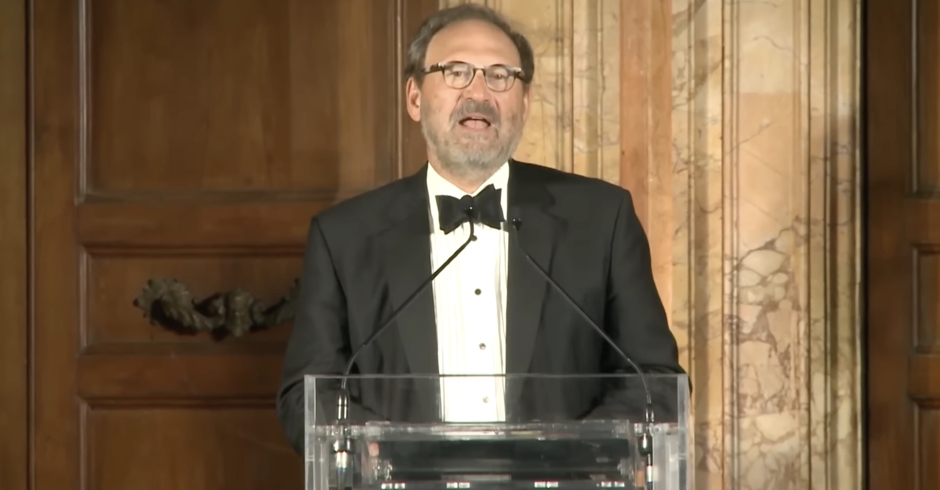
Right-wing Justice Samuel Alito appeared to draw the most fire from legal experts, as his questioning suggested “fetal personhood” should be the law, which it is not.
“Justice Alito is trying to import fetal personhood into federal statutory law by suggesting federal law might well prohibit hospitals from providing abortions as emergency stabilizing care,” observed Constitutional law professor Anthony Michael Kreis.
Paraphrasing Justice Alito, Kreis writes: “Alito: How can the federal government restrict what Idaho criminalizes simply because hospitals in Idaho have accepted federal funds?”
Appearing to answer that question, Georgia State University College of Law professor of law and Constitutional scholar Eric Segall wrote: “Our Constitution unequivocally allows the federal gov’t to offer the states money with conditions attached no matter how invasive b/c states can always say no. The conservative justices’ hostility to the spending power is based only on politics and values not text or history.”
Professor Segall also served up some of the strongest criticism of the right-wing justice.
READ MORE: ‘They Will Have Thugs?’: Lara Trump’s Claim RNC Will ‘Physically Handle the Ballots’ Stuns
He wrote that Justice Alito “is basically making it clear he doesn’t care if pregnant women live or die as long as the fetus lives.”
Earlier Wednesday morning Segall had issued a warning: “Trigger alert: In about 20 minutes several of the conservative justices are going to show very clearly that that they care much more about fetuses than women suffering major pregnancy complications which is their way of owning the libs which is grotesque.”
Later, predicting “Alito is going to dissent,” Segall wrote: “Alito is dripping arrogance and condescension…in a case involving life, death, and medical emergencies. He has no bottom.”
Taking a broader view of the case, NYU professor of law Melissa Murray issued a strong warning: “The EMTALA case, Moyle v. US, hasn’t received as much attention as the mifepristone case, but it is huge. Not only implicates access to emergency medical procedures (like abortion in cases of miscarriage), but the broader question of federal law supremacy.”
READ MORE: ‘Blood on Your Hands’: Tennessee Republicans OK Arming Teachers After Deadly School Shooting
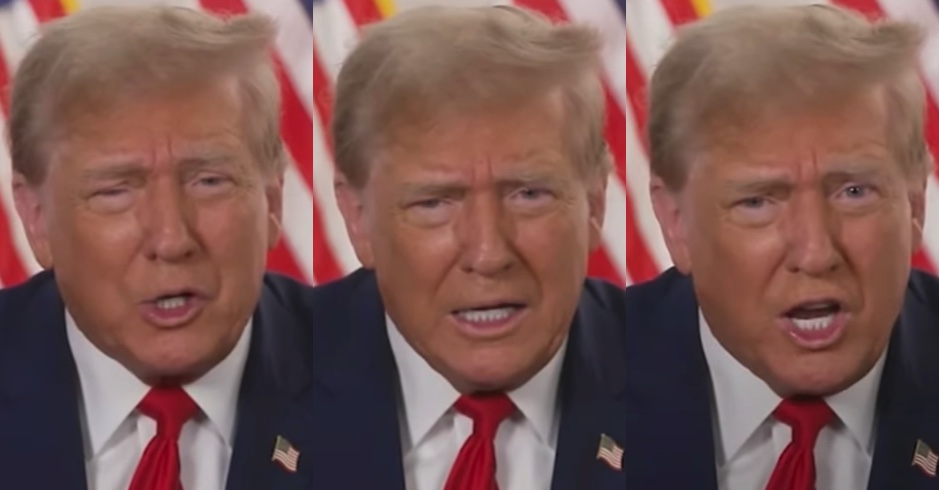
Hours before his attorneys would mount a defense on Tuesday claiming he had not violated his gag order Donald Trump might have done just that in a 12-minute taped interview that morning, which did not air until later that day. It will be up to Judge Juan Merchan to make that decision, if prosecutors add it to their contempt request.
Prosecutors in Manhattan District Attorney Alvin Bragg’s office told Judge Juan Merchan that the ex-president violated the gag order ten times, via posts on his Truth Social platform, and are asking he be held in contempt. While the judge has yet to rule, he did not appear moved by their arguments. At one point, Judge Merchan told Trump’s lead lawyer Todd Blanche he was “losing all credibility” with the court.
And while Judge Merchan directed defense attorneys to provide a detailed timeline surrounding Trump’s Truth Social posts to prove he had not violated the gag order, Trump in an interview with a local television station appeared to have done so.
READ MORE: ‘They Will Have Thugs?’: Lara Trump’s Claim RNC Will ‘Physically Handle the Ballots’ Stuns
The gag order bars Trump from “commenting or causing others to comment on potential witnesses in the case, prospective jurors, court staff, lawyers in the district attorney’s office and the relatives of any counsel or court staffer, as CBS News reported.
“The threat is very real,” Judge Merchan wrote when he expanded the gag order. “Admonitions are not enough, nor is reliance on self-restraint. The average observer, must now, after hearing Defendant’s recent attacks, draw the conclusion that if they become involved in these proceedings, even tangentially, they should worry not only for themselves, but for their loved ones as well. Such concerns will undoubtedly interfere with the fair administration of justice and constitutes a direct attack on the Rule of Law itself.”
Tuesday morning, Trump told ABC Philadelphia’s Action News reporter Walter Perez, “Michael Cohen is a convicted liar. He’s got no credibility whatsoever.”
He repeated that Cohen is a “convicted liar,” and insisted he “was a lawyer for many people, not just me.”
READ MORE: ‘Old and Tired and Mad’: Trump’s Demeanor in Court Detailed by Rachel Maddow
Since Cohen is a witness in Trump’s New York criminal case, Judge Merchan might decide Trump’s remarks during that interview violated the gag order, if prosecutors bring the video to his attention.
Enter attorney George Conway, who has been attending Trump’s New York trial.
Conway reposted a clip of the video, tagged Manhattan District Attorney Bragg, writing: “cc: @ManhattanDA, for your proposed order to show cause why the defendant in 𝘗𝘦𝘰𝘱𝘭𝘦 𝘷. 𝘛𝘳𝘶𝘮𝘱 should not spend some quiet time in lockup.”
Trump has been criminally indicted in four separate cases and is facing a total of 88 felony charges, including 34 in this New York criminal trial for alleged falsification of business records to hide payments of “hush money” to an adult film actress and one other woman, in an alleged effort to suppress their stories and protect his 2016 presidential campaign, which experts say is election interference.
Watch the video below or at this link.
NEW: Trump’s Team let him do a lengthy interview with PA’s biggest TV station @6abc today.
It did not go well. In addition to some horrible abortion mansplaining, Trump:
– called the NY judge corrupt
– attacked witnesses personally
– committed to taking the stand at his trial pic.twitter.com/ePKckyQi76— J.J. Abbott 🦅 (@jjabbott) April 23, 2024
READ MORE: ‘Blood on Your Hands’: Tennessee Republicans OK Arming Teachers After Deadly School Shooting
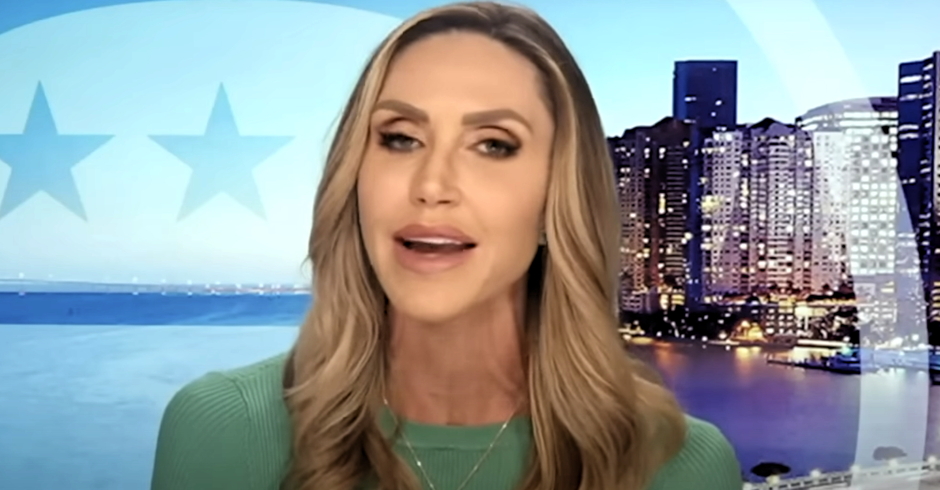
Minutes before Donald Trump addressed his MAGA crowd at the Ellipse on January 6, 2021 his daughter-in-law, Lara Trump spoke to his supporters, vowing to “take our country back” because the Trump “family didn’t get in this fight for just four years. We are in this fight to the bitter end.”
Fast forward to April, 2024.
Lara Trump is now co-chair of the Republican National Committee, after Donald Trump’s efforts to install her and his hand-picked RNC chairman, Michael Whatley. Whatley is a North Carolina Republican who served on George W. Bush’s Florida recount team for the 2000 presidential election that was decided at the U.S. Supreme Court. Years later Whatley declared, “it was really the first time that Republicans got down into the trenches and fought,” and claimed, “if we were not there, they were going to steal it.”
Now both Michael Whatley and Lara Trump are leading the RNC, and with Donald Trump as the presumptive GOP presidential nominee, they are continuing the ex-president’s focus on “election integrity.”
Tuesday night Lara Trump served up some insight into what they’re planning.
READ MORE: Trump Complains He’s ‘Not Allowed to Talk’ as He Gripes Live on Camera
“We now have the ability at the RNC not just to have poll watchers, people standing in polling locations, but people who can physically handle the ballots. We want people all across this country –” she said before host Eric Bolling interrupted her.
“I want to hear this, this is really fascinating to me,” Bolling said. “You have 100,000 people who are, I think I saw paid at one point, but whatever – irrelevant, but, so they will be stationed inside polling places? I didn’t even know you can do that. Tell us about it.”
Trump replied, “there was a moratorium for about 40 years on the RNC actually training people to work in these polling locations in the tabulation centers where the mail-in ballots come in. And last year, the judge who implemented that passed away, so that was lifted, and that gives us a great ability as we head into what I assume everyone understands is the most important election of our lifetime.”
Lara Trump: We now have the ability at the RNC not just to have poll watchers… but people who can physically handle the ballots… pic.twitter.com/xd06medJal
— Acyn (@Acyn) April 24, 2024
Bolling went on to ask, “Will these people, will they be allowed to physically handle the ballots as well, Lara?”
“Yup,” Trump replied. “And that means Eric that they should know and they can count how many ballots come in, and how many ballots should go out of every single polling location.”
READ MORE: ‘I’m Not Suicidal’: Kari Lake Pushes Hillary Clinton Murder Conspiracy Theory
She went on to say if anyone cheats, “we will prosecute you to the full extent of the law.”
“It is not worth it to cheat in a federal election, that is a crime my friends you do not want to commit.”
Bolling was referring to the more than 100,000 attorneys and volunteers the RNC reportedly has lined up to monitor vote counting. In a joint statement the Trump campaign and the RNC called it, “the most extensive and monumental election integrity program in the nation’s history.”
Former RNC Chairman Michael Steele blasted Lara Trump.
“Lara, you know why there was ‘a moratorium on the RNC for 40 years’? Because the RNC was caught cheating. The RNC was placed under a 1982 Consent decree for voter caging. Voter caging hinders an eligible voter’s ability to vote. The process involves efforts to identify and disenfranchise improperly registered voters solely on the basis of undeliverable mail. It often leads to the unwarranted purging of election rolls of otherwise eligible voters.”
“So,” Steele continued, “given the continued lies about the 2020 election and your daddy-in-law claiming if he loses in 2024 it’s because the election is rigged, you’re planning to have your people ‘physically handle the ballots’–and we’re supposed to think that’s a good idea?”
NYU professor of history Ruth Ben-Ghiat, a scholar on fascism, authoritarianism, propaganda, and the protection of democracy, also served up strong criticism.
“What does this mean, they will have thugs to physically take the ballots to make sure they are marked for Republican candidates?” Ben-Ghiat asked. “Sounds like a perfect authoritarian election plan to me.”
Watch the video above or at this link.
READ MORE: Biden Campaign Hammers Trump Over Infamous COVID Comment

‘Blood on Your Hands’: Tennessee Republicans OK Arming Teachers After Deadly School Shooting

‘They Will Have Thugs?’: Lara Trump’s Claim RNC Will ‘Physically Handle the Ballots’ Stuns

Gag Order Breach? Trump Targeted Cohen in Taped Interview Hours Before Contempt Hearing

‘Doesn’t Care if Pregnant Women Live or Die’: Alito Slammed Over Emergency Abortion Remarks
‘Doesn’t Care if Pregnant Women Live or Die’: Alito Slammed Over Emergency Abortion Remarks
Gag Order Breach? Trump Targeted Cohen in Taped Interview Hours Before Contempt Hearing
‘They Will Have Thugs?’: Lara Trump’s Claim RNC Will ‘Physically Handle the Ballots’ Stuns
‘Blood on Your Hands’: Tennessee Republicans OK Arming Teachers After Deadly School Shooting

Trump Complains He’s ‘Not Allowed to Talk’ as He Gripes Live on Camera

 News2 days ago
‘Rally Behind MAGA’: Trump Advocates Courthouse ‘Protests’ Nationwide
 News2 days ago
‘I’m Not Suicidal’: Kari Lake Pushes Hillary Clinton Murder Conspiracy Theory
 News2 days ago
‘Old and Tired and Mad’: Trump’s Demeanor in Court Detailed by Rachel Maddow
 News2 days ago
‘Election Interference’ and ‘Corruption’: Experts Explain Trump Prosecution Opening Argument
 News1 day ago
‘Cutting Him to Shreds’: ‘Pissed’ Judge Tells Trump’s Attorney ‘You’re Losing All Credibility’
 News1 day ago
Biden Campaign Hammers Trump Over Infamous COVID Comment
 News23 hours ago
‘Blood on Your Hands’: Tennessee Republicans OK Arming Teachers After Deadly School Shooting
 OPINION1 day ago
Trump Complains He’s ‘Not Allowed to Talk’ as He Gripes Live on Camera