Watch Obama’s Historic “Make-Or-Break” Osawatomie Speech – Full Text And Video
President Barack Obama Tuesday afternoon slammed the GOP as he delivered a feisty and populist speech reminiscent of former President Theodore Roosevelt, in the same Osawatomie, Kansas, that Roosevelt did 101 years ago. Positioning himself as a champion of the middle class, Obama called this point in history a “make-or-break” moment for America’s middle class as he challenged the GOP’s failed trickle-down economic theory.
“While never making an overt plea for a second term, Obama’s offered his most comprehensive lines of attack against the candidates seeking to take his job, only a month before Republican voters begin choosing a presidential nominee. He also sought to inject some of the long-overshadowed hope that energized his 2008 campaign, saying: “I believe America is on its way up,” The Huffington Post reported.
In small-town Osawatomie, in a high school gym where patriotic bunting lined the bleachers, Obama presented himself as the one fighting for shared sacrifice and success against those who would gut government and let people fend for themselves. He did so knowing the nation is riven over the question of whether economic opportunity for all is evaporating.
“Throughout the country, it’s sparked protests and political movements, from the tea party to the people who’ve been occupying the streets of New York and other cities,” Obama said.
“This is the defining issue of our time,” he said in echoing President Theodore Roosevelt’s famous speech here in 1910.
“This is a make-or-break moment for the middle class and all those who are fighting to get into the middle class,” Obama said. “At stake is whether this will be a country where working people can earn enough to raise a family, build a modest savings, own a home and secure their retirement.”
Here is the full video of President Obama’s Osawatomie speech, followed by the complete text:
http://www.c-spanvideo.org/videoLibrary/assets/swf/CSPANPlayer.swf?pid=303034-1
The White House
Office of the Press Secretary
For Immediate Release December 06, 2011
Remarks by the President on the Economy in Osawatomie, Kansas
Osawatomie High School
Osawatomie, Kansas
12:59 P.M. CST
THE PRESIDENT: Thank you, everybody. Please, please have a seat. Thank you so much. Thank you. Good afternoon, everybody.
AUDIENCE: Good afternoon.
THE PRESIDENT: Well, I want to start by thanking a few folks who’ve joined us today. We’ve got the mayor of Osawatomie, Phil Dudley is here. (Applause.) We have your superintendent Gary French in the house. (Applause.) And we have the principal of Osawatomie High, Doug Chisam. (Applause.) And I have brought your former governor, who is doing now an outstanding job as Secretary of Health and Human Services — Kathleen Sebelius is in the house. (Applause.) We love Kathleen.
Well, it is great to be back in the state of Tex — (laughter) — state of Kansas. I was giving Bill Self a hard time, he was here a while back. As many of you know, I have roots here. (Applause.) I’m sure you’re all familiar with the Obamas of Osawatomie. (Laughter.) Actually, I like to say that I got my name from my father, but I got my accent — and my values — from my mother. (Applause.) She was born in Wichita. (Applause.) Her mother grew up in Augusta. Her father was from El Dorado. So my Kansas roots run deep.
My grandparents served during World War II. He was a soldier in Patton’s Army; she was a worker on a bomber assembly line. And together, they shared the optimism of a nation that triumphed over the Great Depression and over fascism. They believed in an America where hard work paid off, and responsibility was rewarded, and anyone could make it if they tried — no matter who you were, no matter where you came from, no matter how you started out. (Applause.)
And these values gave rise to the largest middle class and the strongest economy that the world has ever known. It was here in America that the most productive workers, the most innovative companies turned out the best products on Earth. And you know what? Every American shared in that pride and in that success — from those in the executive suites to those in middle management to those on the factory floor. (Applause.) So you could have some confidence that if you gave it your all, you’d take enough home to raise your family and send your kids to school and have your health care covered, put a little away for retirement.
Today, we’re still home to the world’s most productive workers. We’re still home to the world’s most innovative companies. But for most Americans, the basic bargain that made this country great has eroded. Long before the recession hit, hard work stopped paying off for too many people. Fewer and fewer of the folks who contributed to the success of our economy actually benefited from that success. Those at the very top grew wealthier from their incomes and their investments — wealthier than ever before. But everybody else struggled with costs that were growing and paychecks that weren’t — and too many families found themselves racking up more and more debt just to keep up.
Now, for many years, credit cards and home equity loans papered over this harsh reality. But in 2008, the house of cards collapsed. We all know the story by now: Mortgages sold to people who couldn’t afford them, or even sometimes understand them. Banks and investors allowed to keep packaging the risk and selling it off. Huge bets — and huge bonuses — made with other people’s money on the line. Regulators who were supposed to warn us about the dangers of all this, but looked the other way or didn’t have the authority to look at all.
It was wrong. It combined the breathtaking greed of a few with irresponsibility all across the system. And it plunged our economy and the world into a crisis from which we’re still fighting to recover. It claimed the jobs and the homes and the basic security of millions of people — innocent, hardworking Americans who had met their responsibilities but were still left holding the bag.
And ever since, there’s been a raging debate over the best way to restore growth and prosperity, restore balance, restore fairness. Throughout the country, it’s sparked protests and political movements — from the tea party to the people who’ve been occupying the streets of New York and other cities. It’s left Washington in a near-constant state of gridlock. It’s been the topic of heated and sometimes colorful discussion among the men and women running for president. (Laughter.)
But, Osawatomie, this is not just another political debate. This is the defining issue of our time. This is a make-or-break moment for the middle class, and for all those who are fighting to get into the middle class. Because what’s at stake is whether this will be a country where working people can earn enough to raise a family, build a modest savings, own a home, secure their retirement.
Now, in the midst of this debate, there are some who seem to be suffering from a kind of collective amnesia. After all that’s happened, after the worst economic crisis, the worst financial crisis since the Great Depression, they want to return to the same practices that got us into this mess. In fact, they want to go back to the same policies that stacked the deck against middle-class Americans for way too many years. And their philosophy is simple: We are better off when everybody is left to fend for themselves and play by their own rules.
I am here to say they are wrong. (Applause.) I’m here in Kansas to reaffirm my deep conviction that we’re greater together than we are on our own. I believe that this country succeeds when everyone gets a fair shot, when everyone does their fair share, when everyone plays by the same rules. (Applause.) These aren’t Democratic values or Republican values. These aren’t 1 percent values or 99 percent values. They’re American values. And we have to reclaim them. (Applause.)
You see, this isn’t the first time America has faced this choice. At the turn of the last century, when a nation of farmers was transitioning to become the world’s industrial giant, we had to decide: Would we settle for a country where most of the new railroads and factories were being controlled by a few giant monopolies that kept prices high and wages low? Would we allow our citizens and even our children to work ungodly hours in conditions that were unsafe and unsanitary? Would we restrict education to the privileged few? Because there were people who thought massive inequality and exploitation of people was just the price you pay for progress.
Theodore Roosevelt disagreed. He was the Republican son of a wealthy family. He praised what the titans of industry had done to create jobs and grow the economy. He believed then what we know is true today, that the free market is the greatest force for economic progress in human history. It’s led to a prosperity and a standard of living unmatched by the rest of the world.
But Roosevelt also knew that the free market has never been a free license to take whatever you can from whomever you can. (Applause.) He understood the free market only works when there are rules of the road that ensure competition is fair and open and honest. And so he busted up monopolies, forcing those companies to compete for consumers with better services and better prices. And today, they still must. He fought to make sure businesses couldn’t profit by exploiting children or selling food or medicine that wasn’t safe. And today, they still can’t.
And in 1910, Teddy Roosevelt came here to Osawatomie and he laid out his vision for what he called a New Nationalism. “Our country,†he said, “…means nothing unless it means the triumph of a real democracy…of an economic system under which each man shall be guaranteed the opportunity to show the best that there is in him.†(Applause.)
Now, for this, Roosevelt was called a radical. He was called a socialist — (laughter) — even a communist. But today, we are a richer nation and a stronger democracy because of what he fought for in his last campaign: an eight-hour work day and a minimum wage for women — (applause) — insurance for the unemployed and for the elderly, and those with disabilities; political reform and a progressive income tax. (Applause.)
Today, over 100 years later, our economy has gone through another transformation. Over the last few decades, huge advances in technology have allowed businesses to do more with less, and it’s made it easier for them to set up shop and hire workers anywhere they want in the world. And many of you know firsthand the painful disruptions this has caused for a lot of Americans.
Factories where people thought they would retire suddenly picked up and went overseas, where workers were cheaper. Steel mills that needed 100 — or 1,000 employees are now able to do the same work with 100 employees, so layoffs too often became permanent, not just a temporary part of the business cycle. And these changes didn’t just affect blue-collar workers. If you were a bank teller or a phone operator or a travel agent, you saw many in your profession replaced by ATMs and the Internet.
Today, even higher-skilled jobs, like accountants and middle management can be outsourced to countries like China or India. And if you’re somebody whose job can be done cheaper by a computer or someone in another country, you don’t have a lot of leverage with your employer when it comes to asking for better wages or better benefits, especially since fewer Americans today are part of a union.
Â
This is Part I. Please click to continue to Part II.

Enjoy this piece?
… then let us make a small request. The New Civil Rights Movement depends on readers like you to meet our ongoing expenses and continue producing quality progressive journalism. Three Silicon Valley giants consume 70 percent of all online advertising dollars, so we need your help to continue doing what we do.
NCRM is independent. You won’t find mainstream media bias here. From unflinching coverage of religious extremism, to spotlighting efforts to roll back our rights, NCRM continues to speak truth to power. America needs independent voices like NCRM to be sure no one is forgotten.
Every reader contribution, whatever the amount, makes a tremendous difference. Help ensure NCRM remains independent long into the future. Support progressive journalism with a one-time contribution to NCRM, or click here to become a subscriber. Thank you. Click here to donate by check.
 |

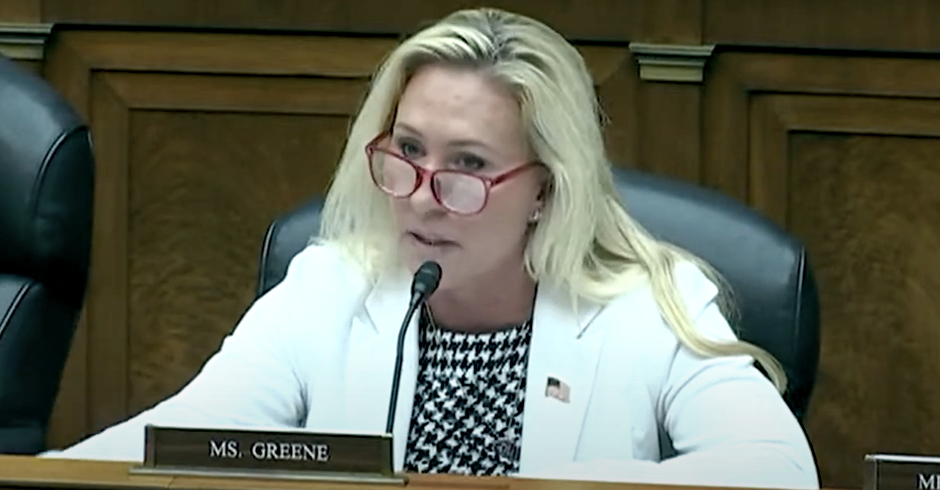
Some House Democrats and House Republicans are coming together toward a common opponent: far-right “pro-Putin” hardliners in the House Republican conference, who appear to be led by U.S. Rep. Marjorie Taylor Greene (R-GA).
Congresswoman Greene has been threatening to oust the Republican Speaker of the House, Mike Johnson. Last month she filed a “motion to vacate the chair.” If she chooses to call it up she could force a vote on the House floor to try to remove Speaker Johnson.
House Democrats say they are willing to vote against ousting Johnson, as long as the Speaker puts on the floor desperately needed and long-awaited legislation to fund aid to Ukraine and Israel. Johnson has refused to put the Ukraine aid bill on the floor for months, but after Iran attacked Israel Johnson switched gears. Almost all Democrats and a seemingly large number of Republicans want to pass the Ukraine and Israel aid packages.
RELATED: Marjorie Taylor Greene, ‘Putin’s Envoy’? Democrat’s Bills Mock Republican’s Actions
Forgoing the possibility of installing Democratic House Minority Leader Hakeem Jeffries as Speaker, which is conceivable given Johnson’s now one-vote majority, Democrats say if Johnson does the right thing, they will throw him their support.
“I think he’ll be in good shape,” to get Democrats to support him, if he puts the Ukraine aid bill on the floor, U.S. Rep. Raja Krishnamoorthi (D-IL) told CNN Thursday. “I would say that there’s a lot of support for the underlying bills. I think those are vital.”
“If these bills were delivered favorably, and the aid was favorably voted upon, and Marjorie Taylor Greene went up there with a motion to remove him, for instance, I think there’s gonna be a lot of Democrats that move to kill that motion,” Congressman Krishnamoorthi said. “They don’t want to see him getting punished for doing the right thing.”
“If these bills were delivered favorably and the aid was favorably vote upon and Marjorie Taylor Greene went up there with a motion to remove [Johnson]…I think there’s gonna be a lot of Democrats that move to kill that motion…”
Rep. Raja Krishnamoorthi joins @Boris_Sanchez. pic.twitter.com/WAAEZ07gUC
— CNN News Central (@NewsCentralCNN) April 18, 2024
“I think it is a very bad policy of the House to allow one individual such as Marjorie Taylor Greene, who is an arsonist to this House of Representatives,” U.S. Rep. Dan Goldman (D-NY) told CBS News’ Scott MacFarlane, when asked about intervening to save Johnson. He added he doesn’t want her “to have so much influence.”
U.S. Rep. Anthony D’Esposito, one of several Republicans who won their New York districts in 2022, districts that were previously held by Democrats, opposes Greene’s motion to vacate – although he praised the Georgia GOP congresswoman.
Rep. D’Esposito who represents a district that Biden won: Marjorie Taylor Greene, I respect her, she works hard for her district pic.twitter.com/TrfIcAQ8J5
— Acyn (@Acyn) April 18, 2024
CNN’s Manu Raju reports Republicans “say it’s time to marginalize hardliners blocking [their] agenda.”
D’Esposito, speaking to Raju, called for “repercussions for those who completely alienate the will of the conference. The people gave us the majority because they wanted Republicans to govern.”
U.S. Rep. Mike Lawler, like D’Esposito is another New York Republican who won a previously Democratic seat in 2022. Lawler spoke out against the co-sponsor of Greene’s motion to vacate, U.S. Rep. Tim Massie (R-KY), along with two other House Republicans who are working to block the Ukraine aid bill via their powerful seats on the Rules Committee.
Rs say it’s time to marginalize hardliners blocking agenda
GOP Rep. Mike Lawler says three Rs on Rules — Roy, Norman and Massie — should be “removed” if they don’t advance conference’s position.
D’Esposito calls for “repercussions”
Bacon backs changing motion-to-vacate rule pic.twitter.com/KS8cnuIY5I— Manu Raju (@mkraju) April 18, 2024
U.S. Rep. Mikie Sherrill (D-NJ), a former Navy pilot, blasted Congresswoman Greene.
RELATED: ‘They Want Russia to Win So Badly’: GOP Congressman Blasts Far-Right House Republicans
“Time is of the essence” for Ukraine, Rep. Sherrill told CNN Wednesday night. “The least we can do is support our Democratic allies, especially given what we know Putin to do. To watch a report and to think there are people like Marjorie Taylor Greene on the right that are pro-Putin? That are pro-Russia? It is really shocking.”
Ukraine needs our support to fight back against Putin.
They’re about to be at a 10-1 artillery disadvantage.
Marjorie Taylor Greene and her pro-Putin colleagues are sabotaging our national security and democracy worldwide. pic.twitter.com/EPBSk0Z8YV
— Rep. Mikie Sherrill (@RepSherrill) April 18, 2024
U.S. Rep. Dan Crenshaw (R-TX), as NCRM reported Thursday, had denounced Greene.
“I guess their reasoning is they want Russia to win so badly that they want to oust the Speaker over it,” he said, referring to the Ukraine aid bill Greene and her cohorts want to tank. “I mean that’s a strange position to take.”
The far-right hardliners are also causing chaos in the House.
“Things just got very heated on the House floor,” NBC News’ Julie Tsirkin reported earlier Thursday. “Group of hardliners were trying to pressure Johnson to only put Israel aid on the floor and hold Ukraine aid until the Senate passed HR2.”
HR2 is the House Republicans’ extremist anti-immigrant legislation that has n o chance of passage in the Senate nor would it be signed into law by President Biden.
“Johnson said he couldn’t do it, and [U.S. Rep. Derrick] Van Orden,” a far-right Republican from Wisconsin “called him ‘tubby’ and vowed to bring on the MTV [Motion to Vacate.]”
“No one in the group (Gaetz, Boebert, Burchett, Higgins, Donalds et al.) were threatening Johnson with an MTV,” Tsirkin added. “Van Orden seemed to escalate things dramatically…”
Despite Greene’s pro-Putin and anti-Ukraine positions, her falsehoods about “Ukrainian Nazis,” and Russians not slaughtering Ukrainian clergy, reporters continue to “swarm”:
A photo by CBS News’ @MacFarlaneNews captures the swarm of press around Rep. Marjorie Taylor Greene (R-GA) as she spoke on the steps of the U.S. Capitol Thursday morning.
Greene’s threat to oust House Speaker Mike Johnson gained momentum this week as another Republican, Rep.… pic.twitter.com/nDjKTGR0ZN
— CBS News (@CBSNews) April 18, 2024
Watch the videos above or at this link.
READ MORE: ‘Afraid and Intimidated’: Trump Trial Juror Targeted by Fox News Dismissed

A sitting Republican Congressman is harshly criticizing far-right House Republicans over their apparent support of Russia.
“I guess their reasoning is they want Russia to win so badly that they want to oust the Speaker over it. I mean that’s a strange position to take,” U.S. Rep. Dan Crenshaw, a three-term Texas Republican rated a hard-core conservative told CNN’s Manu Raju, in video posted Thursday. “I think they want to be in the minority too. I think that’s an obvious reality.”
Congressman Crenshaw was referring to the movement led by U.S. Rep. Marjorie Taylor Greene (R-GA), now joined by U.S. Rep. Thomas Massie (R-KY), over the Republican Speaker of the House Mike Johnson’s decision to finally put legislation on the floor to provide funding to Ukraine to support that sovereign nation in its fight against Russia.
“I’m still trying to process all the b*llsh*t,” Crenshaw added.
Crenshaw on Thursday also commented on Speaker Johnson’s remarks, stating he will hold the Ukraine funding vote regardless of attempts to oust him over it.
“To be clear, he’s being threatened for even allowing a vote to come to the floor. For allowing the constitutional process to play out as intended by our Founders. That’s a wild thing to consider, especially when his enemies consider themselves ‘conservative.’ Not conserving the painstaking constitutional process our Founders created, that’s for sure. Conserving Putin’s gains on the battlefield, more like it.”
Journalist Brian Beutler, a former editor-in-chief at Crooked Media, called it, “darkly funny to me that a pincer movement of MAGAns and leftists mock liberals for claiming the GOP works hand in glove with Russia, and then multiple conservative Republican dissenters are like ‘no it’s true, we’re lousy with Russian influence.'”
Watch Crenshaw’s remarks below or at this link.
GOP Rep. Dan Crenshaw on threats to oust Johnson: “I guess their reasoning is they want Russia to win so badly that they want to oust the speaker over it. I mean that’s a strange position to take… I think they want to be in the minority too. I think that’s an obvious reality.” pic.twitter.com/aPDGrgAGPm
— Manu Raju (@mkraju) April 18, 2024
READ MORE: Marjorie Taylor Greene, ‘Putin’s Envoy’? Democrat’s Bills Mock Republican’s Actions
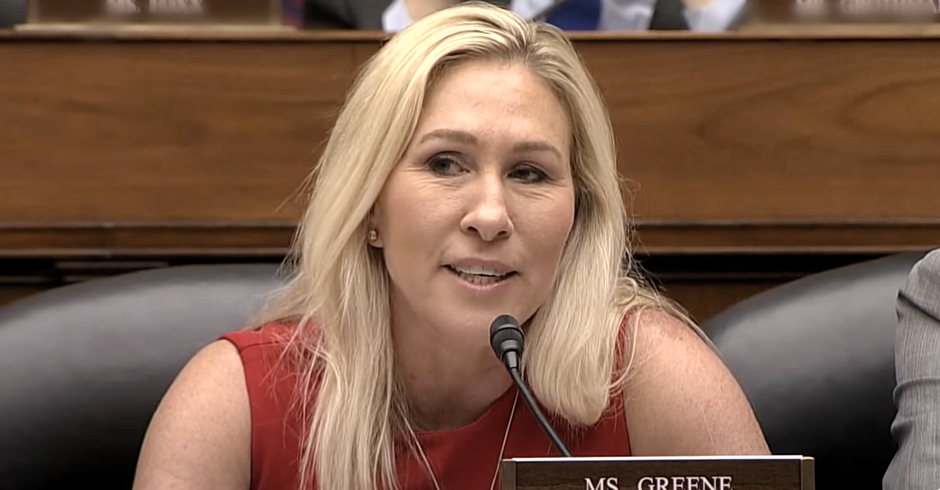
For years U.S. Rep. Marjorie Taylor Greene (R-GA) has been called “Pro-Putin.” As far back as 2021, her first year as a member of Congress, the question had been raised on social media: “Is Marjorie Taylor Greene a Russian asset?”
In 2022 The Annenberg Public Policy Center’s FactCheck.org reported: “Marjorie Taylor Greene Parrots Russian Talking Point on Ukraine.”
Back then, as the article highlighted, Greene had said, “there is no doubt that [Russian President Vladimir] Putin’s actions in Ukraine are despicable and evil.”
Now, she promotes a far more favorable view of President Vladimir Putin and his illegal war against Ukraine, a sovereign nation which the Russian autocrat wants to incorporate – at least partly – into Russia.
Just last week Greene spread demonstrably false pro-Russia talking points about a “war on Christianity” while defending and promoting President Vladimir Putin.
READ MORE: ‘Afraid and Intimidated’: Trump Trial Juror Targeted by Fox News Dismissed
“This is a war on Christianity,” Greene told far-right propagandist Steve Bannon. “The Ukrainian government is attacking Christians, the Ukrainian government is executing priests. Russia is not doing that.”
That’s just plain false, as NCRM reported.
Largely in response to her strong opposition to the U.S. supporting Ukraine, and her spreading Russian disinformation and flat-out pro-Putin falsehoods, Greene’s fondness for Putin and Russia has been making headlines.
“Republicans Who Like Putin,” was the headline last month at The New York Times, which observed: “A few Republicans have gone so far as [to] speak about Ukraine and its president, Volodymyr Zelensky, in ways that mimic Russian propaganda. Representative Marjorie Taylor Greene has accused Ukraine of having ‘a Nazi army,’ echoing language Putin used to justify the invasion.”
“The Putin Republicans Have the Upper Hand” warned Washington Monthly‘s David Atkins on Wednesday, reporting on “conservative extremists led by Representative Marjorie Taylor Greene.”
“They admire the strongman as a Christian nationalist leader, and won’t support Ukraine. The global consequences of their besotted love affair with the Russian strongman could be cataclysmic.”
“Russia Is Buying Politicians in Europe. Is It Happening Here Too?” The New Republic‘s Alex Finley wrote last week. The photo at the top of the page? Marjorie Taylor Greene.
READ MORE: ‘Used by the Russians’: Moskowitz Mocks Comer’s Biden Impeachment Failure
Finley pointed to Greene’s interview with Bannon, “about Ukraine’s persecution of Christians, which is a Kremlin talking point aimed at boosting the pro-Moscow wing of Ukraine’s Orthodox Church. The U.S. should be spending money on the border with Mexico, not on Ukraine aid? That’s a Kremlin talking point. Russia invaded Ukraine to defend itself against an expanding NATO? That’s a Kremlin talking point. Call for a cease-fire, and give Russia Crimea and eastern Ukraine? That’s a Kremlin talking point.”
Rupert Murdoch’s New York Post last week ran this headline: “Rep. Marjorie Taylor Greene says she ‘seriously hates’ people who support sending more aid to Ukraine: ‘Most repulsive, disgusting thing happening’.”
Then there is Greene’s obsession with Nazis. Specifically, equating Ukrainians with Nazis, which she did several times over the past week, including on Wednesday. That earned her the condemnation and wrath of U.S. Rep. Jared Moskowitz (D-FL), who demanded: “Stop bringing up Nazis and Hitler.”
Wednesday night, Congressman Moskowitz, known for his use of humor and sarcasm to make his points, declared: “Just submitted an amendment to Bill drafting appointing MTG [Marjorie Taylor Greene] as Putin’s Special Envoy to the United States Congress.”
Moskowitz’s amendment was in response to Congresswoman Greene’s amendments requiring members to “conscript in the Ukrainian military” if they vote for the Ukraine military funding bill, as Juliegrace Brufke reported.
READ MORE: ‘Big Journalism Fail’: Mainstream Media Blasted Over Coverage of Historic Trump Trial
The Florida Democrat wasn’t joking, as Axios’ Andrew Solender pointed out Thursday morning.
He actually did it https://t.co/i5C28l9Kb9 pic.twitter.com/LotBrLNzZI
— Andrew Solender (@AndrewSolender) April 18, 2024
Moskowitz did not stop there.
He drafted legislation on Thursday to name the Capitol Hill offices occupied by Congresswoman Greene after the British Prime Minister Neville Chamberlain, infamous for promoting appeasement in dealing with Adolf Hitler.
Chamberlain also signed the Munich Agreement, which allowed Hitler to annex part of Czechoslovakia.
Big day for British history references on Capitol Hill as @JaredEMoskowitz has proposed renaming Marjorie Taylor Greene’s office after Neville Chamberlain pic.twitter.com/VVfZySblHz
— Ben Jacobs (@Bencjacobs) April 18, 2024
See the social media posts above or at this link.

‘Afraid and Intimidated’: Trump Trial Juror Targeted by Fox News Dismissed

Marjorie Taylor Greene, ‘Putin’s Envoy’? Democrat’s Bills Mock Republican’s Actions

‘They Want Russia to Win So Badly’: GOP Congressman Blasts Far-Right House Republicans

‘Repercussions’: Democrats and Republicans Stand Against ‘Pro-Putin’ House GOP Faction
‘Repercussions’: Democrats and Republicans Stand Against ‘Pro-Putin’ House GOP Faction
‘They Want Russia to Win So Badly’: GOP Congressman Blasts Far-Right House Republicans
Marjorie Taylor Greene, ‘Putin’s Envoy’? Democrat’s Bills Mock Republican’s Actions
‘Afraid and Intimidated’: Trump Trial Juror Targeted by Fox News Dismissed
‘Stop Bringing Up Nazis and Hitler’: Marjorie Taylor Greene Smacked Down by Democrats

 News3 days ago
‘Something’s Fishy Here’: Trump’s Latest $175 Million Bond Filings Questioned by Experts

 News3 days ago
‘I Have a Bucket of Water’: Dems to Save Johnson’s Job Over GOPer Who Wants ‘World to Burn’

 OPINION3 days ago
SCOTUS Justices Appear to Want to Toss Obstruction Charges Against Some J6 Defendants: Experts
 OPINION2 days ago
‘Big Journalism Fail’: Mainstream Media Blasted Over Coverage of Historic Trump Trial
 OPINION2 days ago
‘Stop Bringing Up Nazis and Hitler’: Marjorie Taylor Greene Smacked Down by Democrats
 News2 days ago
‘Used by the Russians’: Moskowitz Mocks Comer’s Biden Impeachment Failure
- News20 hours ago
‘Afraid and Intimidated’: Trump Trial Juror Targeted by Fox News Dismissed
 OPINION18 hours ago
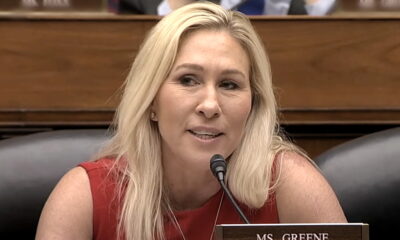
Marjorie Taylor Greene, ‘Putin’s Envoy’? Democrat’s Bills Mock Republican’s Actions