Watch: Hillary Clinton Unveils Blueprint For AIDS-Free Generation In World AIDS Day Speech
var addthis_config = {“data_track_addressbar”:true};Secretary of State Hillary Clinton today announced her “Blueprint for an AIDS-Free Generation.” While acknowledging “HIV may well be with us into the future,” Secretary Clinton posited that “the disease that it causes need not be.”
We can reach a point where virtually no children are born with the virus, and as these children become teenagers and adults, they are at a far lower risk of becoming infected than they are today. And if they do acquire HIV, they have access to treatment that helps prevent them from not only from developing AIDS, but from and passing the virus on to others.
Clinton, who will be departing as Secretary of State when her successor is chosen, is considered a likely candidate for president in 2016.
Clinton’s complete remarks, via the State Department:
Thank you all very much. Oh my goodness. Thank you. I think we could just end the program right now. (Laughter.)  Florence, thank you. Thank you for continuing to be a smiling advocate on behalf of an AIDS-free generation. And congratulations on those two sons of yours, who are the strongest evidence of what we can achieve. I’m very grateful to you for sharing your energy, your story, and your passion with us today.
Â
I am so pleased to have this opportunity to unveil, formally, the blueprint for an AIDS-free generation. And this could not have happened without Dr. Eric Goosby. I’ve known Eric a long time. When I decided to accept the President’s offer to become Secretary of State, I knew there was only one person that I would hope to recruit to become our Global AIDS Ambassador. Because Eric has both the firsthand experience, going back to the very beginning of his medical training and practice in San Francisco, to the vision he has as to continue to push us to do even more than we think we possibly can, and the drive to actually deliver that. He’s a unique human being, and we are so grateful for his service. And I want to return the favor, my friend, and thank you publicly for everything you have done. (Applause.)
Â
Also sitting in the front row is the man who has been leading the government’s research efforts from the very early days of the epidemic, Dr. Tony Fauci. Thank you for being here and thank you for everything you have done. (Applause.)
Â
From USAID, we have Dr. Ariel Pablos-Mendez, who has also been, along with everyone at USAID and the Centers for Disease Control and Prevention and other government agencies, one of those public servants who has dedicated his or her life to this work.
Â
So I am grateful to everyone in our government who has done what has made all the difference. We could not be making this announcement had it not been for the countless hours in laboratories, at bedsides, in the field, everything that people have contributed.
Â
And also let me thank Michel Sidibe, who has also been on the frontlines, and from UNAIDS, an absolutely essentially organization in playing the irreplaceable role in this fight.  Thank you so much, Michel. (Applause.)
Â
And Dr. Dlamini-Zuma, the first woman to chair the African Union Commission, a longtime public servant, government official, activist in South Africa. The AU is a critical partner in our work against HIV/AIDS, and I don’t think there’s anyone who is better positioned to lead the AU at this time. And the fact she’s the first women to lead the AU in its 50-year history is an additional benefit. Thank you so much, my friend. (Applause.)
Â
And to Senator Enzi and Congresswoman Lee and Congressman Bass, who truly have been leaders, but also represent members of Congress on both sides of the aisle. This is a program that really has had bipartisan support – the leadership of President Bush in creating PEPFAR, the commitment and leadership of President Obama. This is something that I think has really made a difference for Americans and for America. It represents our very best values in practice.
Â
So to all the members of Congress, the advocates and activists, the scientists, people living with HIV, thank you for joining us as we take this next step in the journey we began years ago, but which we formally announced a year ago, to change the course of this pandemic and usher in an AIDS-free generation.
Â
Now, make no mistake about it: HIV may well be with us into the future. But the disease that it causes need not be. We can reach a point where virtually no children are born with the virus, and as these children become teenagers and adults, they are at a far lower risk of becoming infected than they are today. And if they do acquire HIV, they have access to treatment that helps prevent them from not only from developing AIDS, but from and passing the virus on to others.
Â
Now earlier this year, at the International AIDS Conference here in Washington, I described some of the steps we have taken to achieve an AIDS-free generation. And today, I want to step back and make two broad points about this goal.
Â
First, let’s remember why, after so many years of discouraging news, this goal is now possible. By applying evidence-based strategies in the most effective combinations, we have cut the number of new infections dramatically. Just last week, UNAIDS announced that, over the past decade, the rate of new HIV infections has dropped by more than half in 25 low-and-middle-income countries, most of them in Sub-Saharan Africa. Just listen to these numbers: In Zimbabwe, a 50 percent reduction; in Namibia, a 68 percent reduction; and in Malawi, a 73 percent reduction in the rate of new infections.
Â
So as we continue to drive down the number of new infections and drive up the number of people on treatment, eventually we will be able to treat more people than become infected every year. That will be the tipping point. We will then get ahead of the pandemic, and an AIDS-free generation will be in our sight. Now, we don’t know how long it will take to do this everywhere, but we know that we can do it.
Â
And that brings me to the second point: We’ve set the goal. We know it’s possible. Now we have to deliver. That may sound obvious, but it isn’t, because the history of global health and development is littered with grand plans that never panned out. And that matters, because if we make commitments and then fail to keep them, not only will our credibility be diminished, but people will lose heart. They will conclude, wrongly, that progress just isn’t possible, and everyone will lose faith in each other. That will cost lives. And in the fight against HIV/AIDS, failing to live up to our commitments isn’t just disappointing, it is deadly.
Â
That’s why I am so relentlessly focused on delivering results. In July, I asked Eric Goosby and his team to produce a plan to show precisely how America will help achieve an AIDS-free generation. As I said then, I want the next Congress, the next Secretary of State, and our partners everywhere to know how we will contribute to achieving this goal. And the result is the blueprint we are releasing today. It lays out five goals and many specific steps we will take to accomplish those goals.
Â
First, we are committing to rapidly scaling up the most effective prevention and treatment interventions. And today, I can announce some new numbers that show how far we’ve already come. This year, through PEPFAR, we directly supported nearly 5.1 million people on antiretroviral treatment. (Applause.) That is a 200 percent increase since 2008.
Â
Now, think for a moment what this means. What did Florence say was the only hope she could give her fellow women living with HIV? She said it was the ARVs. And this year, the American people gave that hope to more than 5 million of their fellow citizens on this earth. And through them, we gave hope to their families and communities, and I think that should make every American profoundly proud.
Â
Now, our second goal is that the blueprint says we have to go where the virus is, targeting the populations at the greatest risk of contracting HIV, including people who inject drugs, sex workers, and those trafficked into prostitution, and men who have sex with men. (Applause.)
Â
When discrimination, stigma, and other factors drive these groups into the shadows, the epidemic becomes that much harder to fight. That’s why we are supporting country-led plans to expand services for key populations, and bolstering the efforts of civil society groups to reach out to them. And we are investing in research to identify the interventions that are most effective for each key population.
Â
As part of our effort to go where the virus is, we are focusing even more intently on women and girls, because they are still at higher risk then men of acquiring HIV because of gender inequity and violence. So we are working to ensure that HIV/AIDS programs recognize the particular needs of women and girls, for example, by integrating these efforts with family planning and reproductive health services. (Applause.)  We are also working to prevent and respond to gender-based violence, invest in girls’ education, address gender inequality, and take other steps that have been proven to lower their risk of contracting the virus.
Â
Third, we will promote sustainability, efficiency, and effectiveness. We’ve already saved hundreds of millions of dollars by switching to generic drugs in our treatment regimen. And we will continue to ensure that we get the most out of every dollar spent.
Â
Fourth, we will promote a global effort to achieve an AIDS-free generation, because this must be a shared responsibility. That means our partner countries must step up to the responsibilities of country ownership. And we look to our partner countries to define the services their people need the most, set priorities, and convene funding partners to coordinate. Donors must meet their funding commitments while also doing more to support country ownership.
Â
To drive all these efforts, the United States will continue to support the Global Fund, we will invest in global health diplomacy, and use our diplomatic leverage to support our goals and bring others to the table.
Â
And I have to say I was so impressed when I was in South Africa this summer. I went to Cape Town. We – Eric and I went together, Ambassador was there, along with the South African Minister of Health, who has been an exemplary leader. Let’s give the Minister of Health of South Africa a round of applause. (Applause.)
Â
He has worked so hard with a great team and with President Zuma’s full support to really take on the responsibility of country ownership and management. And when we were in the clinic in Cape Town, we saw some really impressive developments, including a more efficient way to dispense the drugs that are needed. And it was a great tribute to what the South African Government has been able to do in the last four years.
Â
Now finally – and this is really a call for the entire global health community – science and evidence must continue to guide our work. For our part, the United States will support research on innovative technologies for prevention and treatment, such as microbicides and approaches that stave off opportunistic infections like TB. We will set clear, measurable benchmarks and monitor our progress toward them so we can focus our funding on what works. It is science that has brought us to this point; it is science that will allow us to finish this job.
Â
So with this blueprint, I firmly believe we have laid out a plan that every American president and secretary and Congress will want to build on. And I urge other countries to develop their own blueprints, because to reach and AIDS-free generation, we have to keep moving forward.
Â
So if we have any doubt about the importance of this work, just think of the joy and that big smile on Florence’s face when she told us about giving birth to her two healthy HIV-negative sons. And think of that same sense of joy rippling out across an entire generation, tens of millions of mothers and fathers whose children will be born free of this disease, who will not know the horror of AIDS. That is the world we are working for, and nothing could be more exciting, more inspiring, more deserving of our dedication than that.
Â
So I thank everyone across our government, because I know this was a whole-of-government effort. I thank you all for everything you have done, are doing, and will do to deliver on this important goal.
Â
And now it’s my great pleasure to welcome my friend and partner in the effort to the stage, the leader of UNAIDS, Michel Sidibe. (Applause.)
Â
# # #
Editor’s note: A similar version of this article was originally published on November 29, 2012

Enjoy this piece?
… then let us make a small request. The New Civil Rights Movement depends on readers like you to meet our ongoing expenses and continue producing quality progressive journalism. Three Silicon Valley giants consume 70 percent of all online advertising dollars, so we need your help to continue doing what we do.
NCRM is independent. You won’t find mainstream media bias here. From unflinching coverage of religious extremism, to spotlighting efforts to roll back our rights, NCRM continues to speak truth to power. America needs independent voices like NCRM to be sure no one is forgotten.
Every reader contribution, whatever the amount, makes a tremendous difference. Help ensure NCRM remains independent long into the future. Support progressive journalism with a one-time contribution to NCRM, or click here to become a subscriber. Thank you. Click here to donate by check.
 |

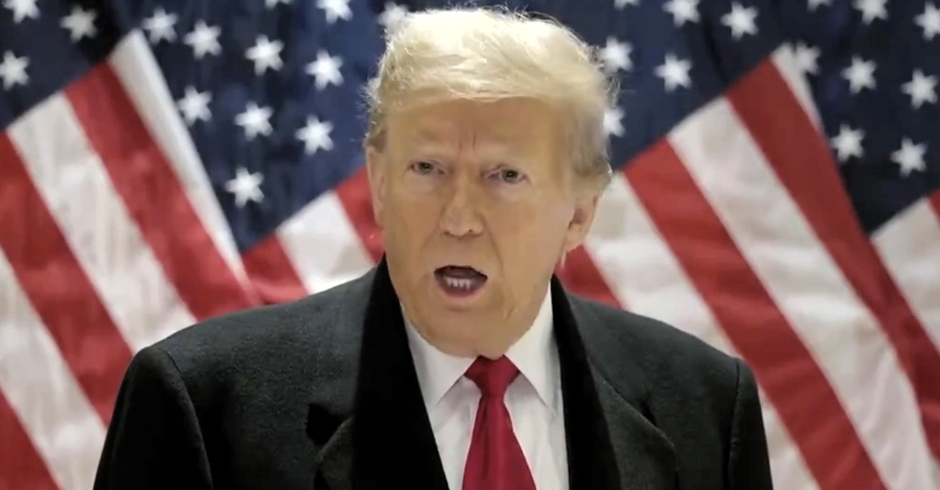
Legal experts appeared somewhat pleased during the first half of the Supreme Court’s historic hearing on Donald Trump’s claim he has “absolute immunity” from criminal prosecution because he was the President of the United States, as the justice appeared unwilling to accept that claim, but were stunned later when the right-wing justices questioned the U.S. Dept. of Justice’s attorney. Many experts are suggesting the ex-president may have won at least a part of the day, and some are expressing concern about the future of American democracy.
“Former President Trump seems likely to win at least a partial victory from the Supreme Court in his effort to avoid prosecution for his role in Jan. 6,” Axios reports. “A definitive ruling against Trump — a clear rejection of his theory of immunity that would allow his Jan. 6 trial to promptly resume — seemed to be the least likely outcome.”
The most likely outcome “might be for the high court to punt, perhaps kicking the case back to lower courts for more nuanced hearings. That would still be a victory for Trump, who has sought first and foremost to delay a trial in the Jan. 6 case until after Inauguration Day in 2025.”
Slate’s Mark Joseph Stern, who covers the courts and the law, noted: “This did NOT go very well [for Special Counsel] Jack Smith’s team. Thomas, Alito, and Kavanaugh think Trump’s Jan. 6 prosecution is unconstitutional. Maybe Gorsuch too. Roberts is skeptical of the charges. Barrett is more amenable to Smith but still wants some immunity.”
READ MORE: ‘To Do God Knows What’: Local Elections Official Reads Lara Trump the Riot Act
Civil rights attorney and Tufts University professor Matthew Segal, responding to Stern’s remarks, commented: “If this is true, and if Trump becomes president again, there is likely no limit to the harm he’d be willing to cause — to the country, and to specific individuals — under the aegis of this immunity.”
Noted foreign policy, national security and political affairs analyst and commentator David Rothkopf observed: “Feels like the court is leaning toward creating new immunity protections for a president. It’s amazing. We’re watching the Constitution be rewritten in front of our eyes in real time.”
“Frog in boiling water alert,” warned Ian Bassin, a former Associate White House Counsel under President Barack Obama. “Who could have imagined 8 years ago that in the Trump era the Supreme Court would be considering whether a president should be above the law for assassinating opponents or ordering a military coup and that *at least* four justices might agree.”
NYU professor of law Melissa Murray responded to Bassin: “We are normalizing authoritarianism.”
Trump’s attorney, John Sauer, argued before the Supreme Court justices that if Trump had a political rival assassinated, he could only be prosecuted if he had first been impeach by the U.S. House of Representatives then convicted by the U.S. Senate.
During oral arguments Thursday, MSNBC host Chris Hayes commented on social media, “Something that drives me a little insane, I’ll admit, is that Trump’s OWN LAWYERS at his impeachment told the Senators to vote not to convict him BECAUSE he could be prosecuted if it came to that. Now they’re arguing that the only way he could be prosecuted is if they convicted.”
READ MORE: Biden Campaign Hammers Trump Over Infamous COVID Comment
Attorney and former FBI agent Asha Rangappa warned, “It’s worth highlighting that Trump’s lawyers are setting up another argument for a second Trump presidency: Criminal laws don’t apply to the President unless they specifically say so…this lays the groundwork for saying (in the future) he can’t be impeached for conduct he can’t be prosecuted for.”
But NYU and Harvard professor of law Ryan Goodman shared a different perspective.
“Due to Trump attorney’s concessions in Supreme Court oral argument, there’s now a very clear path for DOJ’s case to go forward. It’d be a travesty for Justices to delay matters further. Justice Amy Coney Barrett got Trump attorney to concede core allegations are private acts.”
Due to Trump attorney’s concessions in Supreme Court oral argument, there’s now a very clear path for DOJ’s case to go forward.
It’d be a travesty for Justices to delay matters further.
Justice Amy Coney Barrett got Trump attorney to concede core allegations are private acts.⬇️ pic.twitter.com/F3qXi47ZT6
— Ryan Goodman (@rgoodlaw) April 25, 2024
NYU professor of history Ruth Ben-Ghiat, an expert scholar on authoritarians, fascism, and democracy concluded, “Folks, whatever the Court does, having this case heard and the idea of having immunity for a military coup taken seriously by being debated is a big victory in the information war that MAGA and allies wage alongside legal battles. Authoritarians specialize in normalizing extreme ideas and and involves giving them a respected platform.”
The Nation’s justice correspondent Elie Mystal offered up a prediction: “Court doesn’t come back till May 9th which will be a decision day. But I think they won’t decide *this* case until July 3rd for max delay. And that decision will be 5-4 to remand the case back to DC, for additional delay.”
Watch the video above or at this link.
READ MORE: ‘Doesn’t Care if Pregnant Women Live or Die’: Alito Slammed Over Emergency Abortion Remarks
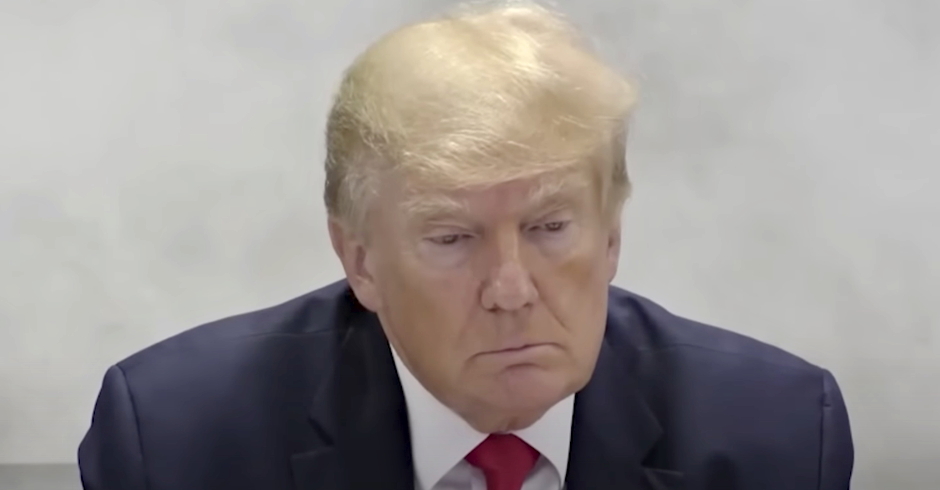
Justices on the U.S. Supreme Court hearing Donald Trump’s claim of absolute immunity early on appeared at best skeptical, were able to get his attorney to admit personal criminal acts can be prosecuted, appeared to skewer his argument a president must be impeached and convicted before he can be criminally prosecuted, and peppered him with questions exposing what some experts see is the apparent weakness of his case.
Legal experts appeared to believe, based on the Justices’ questions and statements, Trump will lose his claim of absolute presidential immunity, and may remand the case back to the lower court that already ruled against him, but these observations came during Justices’ questioning of Trump attorney John Sauer, and before they questioned the U.S. Dept. of Justice’s Michael Dreeben.
“I can say with reasonable confidence that if you’re arguing a case in the Supreme Court of the United States and Justices Alito and Sotomayor are tag-teaming you, you are going to lose,” noted attorney George Conway, who has argued a case before the nation’s highest court and obtained a unanimous decision.
But some are also warning that the justices will delay so Special Counsel Jack Smith’s prosecution of Trump will not take place before the November election.
READ MORE: ‘To Do God Knows What’: Local Elections Official Reads Lara Trump the Riot Act
“This argument still has a ways to go,” observed UCLA professor of law Rick Hasen, one of the top election law scholars in the county. “But it is easy to see the Court (1) siding against Trump on the merits but (2) in a way that requires further proceedings that easily push this case past the election (to a point where Trump could end this prosecution if elected).”
The Economist’s Supreme Court reporter Steven Mazie appeared to agree: “So, big picture: the (already slim) chances of Jack Smith actually getting his 2020 election-subversion case in front of a jury before the 2024 election are dwindling before our eyes.”
One of the most stunning lines of questioning came from Justice Ketanji Brown Jackson, who said, “If someone with those kinds of powers, the most powerful person in the world with the greatest amount of authority, could go into Office knowing that there would be no potential penalty for committing crimes. I’m trying to understand what the disincentive is, from turning the Oval Office into, you know, the seat of criminal activity in this country.”
READ MORE: ‘Doesn’t Care if Pregnant Women Live or Die’: Alito Slammed Over Emergency Abortion Remarks
She also warned, “If the potential for criminal liability is taken off the table, wouldn’t there be a significant risk that future presidents would be emboldened to commit crimes with abandon while they’re in office? It’s right now the fact that we’re having this debate because, OLC [Office of Legal Counsel] has said that presidents might be prosecuted. Presidents, from the beginning of time have understood that that’s a possibility. That might be what has kept this office from turning into the kind of crime center that I’m envisioning, but once we say, ‘no criminal liability, Mr. President, you can do whatever you want,’ I’m worried that we would have a worse problem than the problem of the president feeling constrained to follow the law while he’s in office.”
“Why is it as a matter of theory,” Justice Jackson said, “and I’m hoping you can sort of zoom way out here, that the president would not be required to follow the law when he is performing his official acts?”
Justice Jackson gets to the heart of it, “Why is it as a matter of theory, and I’m hoping you can sort of zoom way out here, that the president would not be required to follow the law when he is performing his official acts?” pic.twitter.com/9hMo948ufF
— Sarah Reese Jones (@PoliticusSarah) April 25, 2024
“So,” she added later, “I guess I don’t understand why Congress in every criminal statute would have to say and the President is included. I thought that was the sort of background understanding that if they’re enacting a generally applicable criminal statute, it applies to the President just like everyone else.”
Jackson: The most powerful person in the world could go into office knowing that there would be no potential penalty for committing crimes … I’m trying to understanding what the disincentive is from turning the Oval Office into the seat of criminal activity in this country pic.twitter.com/jC2yihYc54
— Acyn (@Acyn) April 25, 2024
Another critical moment came when Justice Elena Kagan asked, “If a president sells nuclear secrets to a foreign adversary, is that immune?”
Kagan: If a president sells nuclear secrets to a foreign adversary, is that immune?
Sauer: If it’s structured as an official act, he would have to be impeached and convicted first. pic.twitter.com/3JEgtW63Lz
— Acyn (@Acyn) April 25, 2024
Professor of law Jennifer Taub observed, “This is truly a remarkable moment. A former U.S. president is at his criminal trial in New York, while at the same time the U.S. Supreme Court is hearing his lawyer’s argument that he should be immune from prosecution in an entirely different federal criminal case.”
Watch the videos above or at this link.
READ MORE: ‘Blood on Your Hands’: Tennessee Republicans OK Arming Teachers After Deadly School Shooting
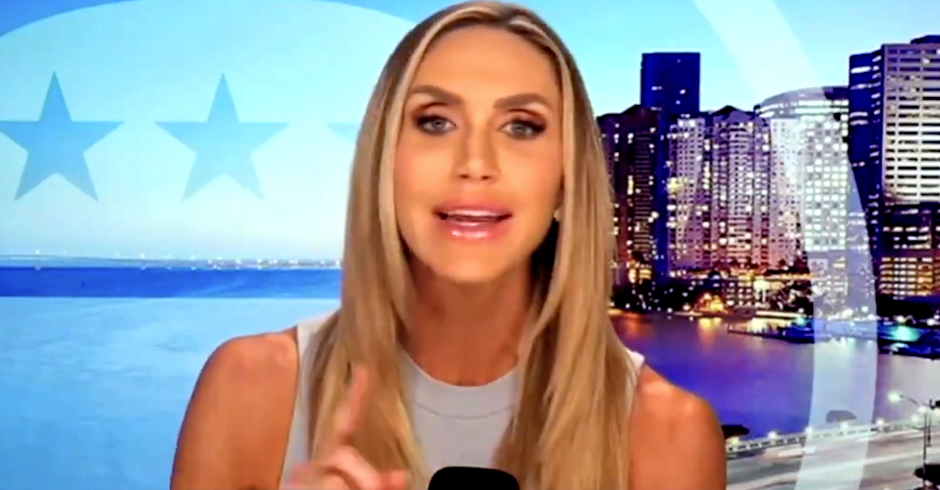
The county clerk for Ingham County, Michigan blasted Republican National Committee co-chair Lara Trump after the ex-president’s daughter-in-law bragged the RNC will have people to “physically handle” voters’ ballots in polling locations across the country this November.
“We now have the ability at the RNC not just to have poll watchers, people standing in polling locations, but people who can physically handle the ballots,” Trump told Newsmax host Eric Bolling this week, as NCRM reported.
“Will these people, will they be allowed to physically handle the ballots as well, Lara?” Bolling asked.
“Yup,” Trump replied.
Marc Elias, the top Democratic elections attorney who won 63 of the 64 lawsuits filed by the Donald Trump campaign in the 2020 election cycle (the one he did not win was later overturned), corrected Lara Trump.
READ MORE: ‘I Hope You Find Happiness’: Moskowitz Trolls Comer Over Impeachment Fail
“Poll observers are NEVER permitted to touch ballots. She is suggesting the RNC will infiltrate election offices,” Elias warned on Wednesday.
Barb Byrum, a former Michigan Democratic state representative with a law degree and a local hardware store, is the Ingham County Clerk, and thus the chief elections official for her county. She slammed Lara Trump and warned her the RNC had better not try to touch any ballots in her jurisdiction.
“I watched your video, and it’s riveting stuff. But if you think you’ll be touching ballots in my state, you’ve got another thing coming,” Byrum told Trump in response to the Newsmax interview.
“First and foremost, precinct workers, clerks, and voters are the only people authorized to touch ballots. For example, I am the County Clerk, and I interact with exactly one voted ballot: My own,” Byrum wrote, launching a lengthy series of social media posts educating Trump.
“Election inspectors are hired by local clerks in Michigan and we hire Democrats and Republicans to work in our polling places. We’re required by law to do so,” she continued. “In large cities and townships, the local clerks train those workers. In smaller cities and townships, that responsibility falls to County Clerks, like me.”
READ MORE: ‘Doesn’t Care if Pregnant Women Live or Die’: Alito Slammed Over Emergency Abortion Remarks
She explained, “precinct workers swear an oath to uphold the Constitution of the United States and the Constitution of the State of Michigan.”
“Among the provisions in the Michigan Constitution is the right to a secret ballot for our voters,” she added.
Byrum also educated Trump on her inaccurate representation of the consent decree, which was lifted by a court, not a judge’s death, as Lara Trump had claimed.
“It’s important for folks to understand what you’re talking about: The end of a consent decree that was keeping the RNC from intimidating and suppressing voters (especially in minority-majority areas).”
“With that now gone, you’re hoping for the RNC to step up their game and get people that you train to do god-knows what into the polling places.”
Byrum also warned Trump: “If election inspectors are found to be disrupting the process of an orderly election OR going outside their duties, local clerks are within their rights to dismiss them immediately.”
“So if you intend to train these 100,000 workers to do anything but their sacred constitutional obligation, they’ll find themselves on the curb faster than you can say ‘election interference.'”
READ MORE: ‘Blood on Your Hands’: Tennessee Republicans OK Arming Teachers After Deadly School Shooting

‘I Hope You Find Happiness’: Moskowitz Trolls Comer Over Impeachment Fail

‘To Do God Knows What’: Local Elections Official Reads Lara Trump the Riot Act

Justices Slam Trump Lawyer: ‘Why Is It the President Would Not Be Required to Follow the Law?’

Justices’ Views on Trump Immunity Stun Experts: ‘Watching the Constitution Be Rewritten’
Justices’ Views on Trump Immunity Stun Experts: ‘Watching the Constitution Be Rewritten’
Justices Slam Trump Lawyer: ‘Why Is It the President Would Not Be Required to Follow the Law?’
‘To Do God Knows What’: Local Elections Official Reads Lara Trump the Riot Act
‘I Hope You Find Happiness’: Moskowitz Trolls Comer Over Impeachment Fail

‘Doesn’t Care if Pregnant Women Live or Die’: Alito Slammed Over Emergency Abortion Remarks

 News3 days ago
‘I’m Not Suicidal’: Kari Lake Pushes Hillary Clinton Murder Conspiracy Theory
 News2 days ago
‘Cutting Him to Shreds’: ‘Pissed’ Judge Tells Trump’s Attorney ‘You’re Losing All Credibility’

 News2 days ago
‘Blood on Your Hands’: Tennessee Republicans OK Arming Teachers After Deadly School Shooting

 News2 days ago
Biden Campaign Hammers Trump Over Infamous COVID Comment
 OPINION1 day ago
‘They Will Have Thugs?’: Lara Trump’s Claim RNC Will ‘Physically Handle the Ballots’ Stuns
 OPINION2 days ago
Trump Complains He’s ‘Not Allowed to Talk’ as He Gripes Live on Camera
 OPINION1 day ago
‘Doesn’t Care if Pregnant Women Live or Die’: Alito Slammed Over Emergency Abortion Remarks

 News1 day ago
Gag Order Breach? Trump Targeted Cohen in Taped Interview Hours Before Contempt Hearing