Lez Get Real, Shall We?
The distance from Damascus to Edinburgh to Ohio totals about 10,000 miles, but for two straight American men pretending to be lesbian bloggers covering different continents around the world, the distance from the truth was immeasurable.
A conversation between Clinton Fein and Tanya Domi.
Â
Clinton: LezGetReal for a second. There are so many layers to this story that I don’t really know where to begin. In a nutshell, a State Department investigation into the sudden disappearance of Amina Abdallah Araf al Omari, a widely read Syrian woman blogging as “A Gay Girl in Damascus†turns out to be a hoax perpetrated by “A Straight Creep in Edinburgh,†Tom MacMaster, who is actually American.
In a half-hearted, non-apologetic apology, MacMaster, a Middle East activist from Georgia USA, claimed that despite leading everyone to believe he was Amina, he was dealing with very real issues and giving voice to things that needed to be spoken about. “I never expected this level of attention. While the narrative voice may have been fictional, the facts on this blog are true and not misleading as to the situation on the ground. I do not believe that I have harmed anyone – I feel that I have created an important voice for issues that I feel strongly about. I only hope that people pay as much attention to the people of the Middle East and their struggles in this year of revolutions. The events there are being shaped by the people living them on a daily basis. I have only tried to illuminate them for a western audience.” Seemingly unaware of the extent to which his elaborate hoax was diverting attention away from real issues facing actual Syrians in an increasingly brutal crackdown on protesters.
Then it turns out that the person who helped solve the case because her suspicion was aroused by the IP address of the “A Gay Girl in Damascus†site (although the State Department’s findings would have anyway), was Paula Brooks, the founder of the LezGetReal web site, who helped launch “A Gay Girl in Damascusâ€. Only, it turns out Paula Brooks is really a 58- year-old retired military veteran and construction worker, Bill Graber. (The picture of him that I used in the graphic for this article was provided to the Washington Post by Graber. but who verified that it’s him?)
Â
Tanya: Clinton, I do not know where to begin on the LGR and the “Gay Girl from Damascus†blog hoaxes. I am filled with such a range of emotions about this hoax—rage, anger, exasperation, shock and some disbelief. I mean, two white heterosexual American men who had the audacity to pose as lesbians. There is such disrespect and mockery in their actions and the presumption that they could pass as “gay girls†and in the course of propagating these blogs, played with women’s hearts and minds.
In the case of “Amina Abdallahâ€, MacMaster, the man behind the faux Syrian lesbian, has cruelly played all of us to be fools in his sport, with lesbians as his game. Bill Graber, who posed as “Paula Brooks†on LezGetReal blog, as a deaf lesbian mother—what a con! I do agree with feminist psychotherapist Susie Orbach who has called these lesbian personas a “double inversionâ€â€”exploiting the ‘illegitimacy’ of the person they were impersonating to give themselves legitimacyâ€.
Â
Clinton: “We Are All Khaled Said,†one of the social media activism success stories, to a large degree responsible for the overthrow of Mubarak in Egypt and the blossoming of the Arab Spring in the Middle East said this in response to this whole sordid affair: “I think this hoax is a stab in the back to Online activists and especially to those who need to hide their identity to protect themselves from dictators. I believe that many people’s trust in social activism have been shaken by this hoax.â€
I don’t even want to get into the whole pathology of heterosexual men posing as lesbians – yet!
Â
Tanya: Interestingly enough, I am reading Arabist Joseph Massad’s tour de force book titled Desiring Arabs at the moment, in which the author posits that “the Prophet prohibited suhaq, or sapphism, just as the Qu’an prohibited adulteryâ€. Knowing about such prohibitions under Sharia law, for Ammina publicly identifying as “A Gay Girl in Damascus†struck me as so, so audacious—a death wish, if true. And, unlikely, as well. It immediately raised a red flag to me. I was intrigued and decided to watch her alleged kidnapping play out, figuring if this woman really existed, she would most likely be murdered, execution style by zealot religious police.
And let me just add that I have always, always been uncomfortable with the LGR’s tagline: “A gay girl’s guide to the worldâ€. “A gay girl†is not the customary adjective and noun used by lesbians to refer to themselves. Younger women commonly call themselves “queer†and older women like myself call ourselves “lesbianâ€. But ‘gay girls’? I always thought that tag line was a bit off and odd—sort of discomforting. I fortunately was never pulled into the LGR and it never called out to me.
Â
Clinton: Samya from Muslimah Media Watch wrote a brilliant essay as to why this is damaging to the cause of global online activism and Arab women. And while I agree with her insights, I don’t agree with her conclusions, because with both “A Gay Girl in Damascus†and LezGetReal there were signs. Signs that we chose to ignore. And so I don’t think we get off the hook that easily without looking at what those were and why and how we missed them.
The first time I was exposed to LezGetReal was on Twitter, where we followed each other and briefly communicated. I have no idea who was managing their Twitter account. Although I found the word “lez†to be incongruent with the content, which I thought was sincere and smart actually – David Kato, Uganda, The Family. The same way you were uncomfortable with the LGR’s tagline. I have lots of friends who are lesbians and I have never, not once, heard any of them use the term “lez†to identify themselves. I always thought it was either a kind of derogatory term or one that you would see on porn sites to titillate straight men. Now it kind of makes sense in a way, as does the irony of the “GetReal.†It seems to me now the very name LezGetReal was a taunt – how could we have missed it?
A good few lesbian bloggers I have read in the last couple of days are understandably pissed. People are calling for global regulation to prevent this kind of hoax from happening again. Samaya wrote “[T]he MacMaster case should give rise to more serious global regulations to ensure that the Web, widely acclaimed as a window of opportunity for women aspiring for social and political advancement, would not be used for extortion and defamation.â€
I could not disagree more. What we need are smarter tools that enable us to authenticate voices and better filters, both technological and organic, not a global Big Brother. The need for anonymity trumps our desire to accept anything at face value. Yes, this may be a setback for global activism and Arab women in the short term, but in retrospect, this didn’t pass the smell test, and we should have caught on sooner Period.
Â
Tanya: As a feminist, I think people should read Samya’s essay to learn why it is so important to create space for them in the cyber public square –yield to vital Arab women’s voices during this seismic moment in Middle East history. So much of women’s lives are spent behind the doors of purdah in the Middle East. Like lesbians and gays, Middle East women are forced to hide by custom and law—finding an outlet online is vital to them, like breathing air. Therefore it is so shameful that MacMaster usurped a cyber platform by posing as a “gay girl†for his own amusement and uninformed purposes.
Nonetheless, I do share your opinion Clinton that we should not regulate blogs or the net to prevent these hijackings. Power put into the hands of a censor is quite dangerous and today’s hero could be tomorrow’s enemy. No regulating entity should have that kind of power. That is why we must build resilient democracies that provide multiple opportunities to make known these transgressions in the public square and let the chips fall where they may.
Â
Clinton: McMasters and Graber are both fraudulent, smug, self-important assholes with major issues and bizarre motivations I think need exploring, (which we will) but let’s own our willingness to be so successfully duped. Discernment is our responsibility, not the people creating content authentic enough to fool us.
Tanya: LGR is now a damaged brand and should be taken off life support and shut down. The key bloggers at LGR have seriously damaged credibility, perhaps irreparably harmed by the revelation that Paula Brooks never existed. Their claims that they never knew Paula Brooks were Bill Graber ring hollow. Pull the plug.
(Image: Clinton Fein)
Â
 Clinton Fein is an internationally acclaimed author, artist, and First Amendment activist, best-​known for his 1997 First Amendment Supreme Court victory against United States Attorney General Janet Reno. Fein has also gained international recognition for his Annoy​.com site, and for his work as a political artist. Fein is on the Board of Directors of the First Amendment Project, “a nonprofit advocacy organization dedicated to protecting and promoting freedom of information, expression, and petition.†Fein’s political and privacy activism have been widely covered around the world. His work also led him to be nominated for a 2001 PEN/Newman’s Own First Amendment Award.
Â
 Tanya L. Domi is an Adjunct Assistant Professor of International and Public Affairs at Columbia University, who teaches about human rights in Eurasia and is a Harriman Institute affiliated faculty member. Prior to teaching at Columbia, Domi worked internationally for more than a decade on issues related to democratic transitional development, including political and media development, human rights, gender issues, sex trafficking, and media freedom.

Enjoy this piece?
… then let us make a small request. The New Civil Rights Movement depends on readers like you to meet our ongoing expenses and continue producing quality progressive journalism. Three Silicon Valley giants consume 70 percent of all online advertising dollars, so we need your help to continue doing what we do.
NCRM is independent. You won’t find mainstream media bias here. From unflinching coverage of religious extremism, to spotlighting efforts to roll back our rights, NCRM continues to speak truth to power. America needs independent voices like NCRM to be sure no one is forgotten.
Every reader contribution, whatever the amount, makes a tremendous difference. Help ensure NCRM remains independent long into the future. Support progressive journalism with a one-time contribution to NCRM, or click here to become a subscriber. Thank you. Click here to donate by check.
 |


The county clerk for Ingham County, Michigan blasted Republican National Committee co-chair Lara Trump after the ex-president’s daughter-in-law bragged the RNC will have people to “physically handle” voters’ ballots in polling locations across the country this November.
“We now have the ability at the RNC not just to have poll watchers, people standing in polling locations, but people who can physically handle the ballots,” Trump told Newsmax host Eric Bolling this week, as NCRM reported.
“Will these people, will they be allowed to physically handle the ballots as well, Lara?” Bolling asked.
“Yup,” Trump replied.
Marc Elias, the top Democratic elections attorney who won 63 of the 64 lawsuits filed by the Donald Trump campaign in the 2020 election cycle (the one he did not win was later overturned), corrected Lara Trump.
READ MORE: ‘I Hope You Find Happiness’: Moskowitz Trolls Comer Over Impeachment Fail
“Poll observers are NEVER permitted to touch ballots. She is suggesting the RNC will infiltrate election offices,” Elias warned on Wednesday.
Barb Byrum, a former Michigan Democratic state representative with a law degree and a local hardware store, is the Ingham County Clerk, and thus the chief elections official for her county. She slammed Lara Trump and warned her the RNC had better not try to touch any ballots in her jurisdiction.
“I watched your video, and it’s riveting stuff. But if you think you’ll be touching ballots in my state, you’ve got another thing coming,” Byrum told Trump in response to the Newsmax interview.
“First and foremost, precinct workers, clerks, and voters are the only people authorized to touch ballots. For example, I am the County Clerk, and I interact with exactly one voted ballot: My own,” Byrum wrote, launching a lengthy series of social media posts educating Trump.
“Election inspectors are hired by local clerks in Michigan and we hire Democrats and Republicans to work in our polling places. We’re required by law to do so,” she continued. “In large cities and townships, the local clerks train those workers. In smaller cities and townships, that responsibility falls to County Clerks, like me.”
READ MORE: ‘Doesn’t Care if Pregnant Women Live or Die’: Alito Slammed Over Emergency Abortion Remarks
She explained, “precinct workers swear an oath to uphold the Constitution of the United States and the Constitution of the State of Michigan.”
“Among the provisions in the Michigan Constitution is the right to a secret ballot for our voters,” she added.
Byrum also educated Trump on her inaccurate representation of the consent decree, which was lifted by a court, not a judge’s death, as Lara Trump had claimed.
“It’s important for folks to understand what you’re talking about: The end of a consent decree that was keeping the RNC from intimidating and suppressing voters (especially in minority-majority areas).”
“With that now gone, you’re hoping for the RNC to step up their game and get people that you train to do god-knows what into the polling places.”
Byrum also warned Trump: “If election inspectors are found to be disrupting the process of an orderly election OR going outside their duties, local clerks are within their rights to dismiss them immediately.”
“So if you intend to train these 100,000 workers to do anything but their sacred constitutional obligation, they’ll find themselves on the curb faster than you can say ‘election interference.'”
READ MORE: ‘Blood on Your Hands’: Tennessee Republicans OK Arming Teachers After Deadly School Shooting
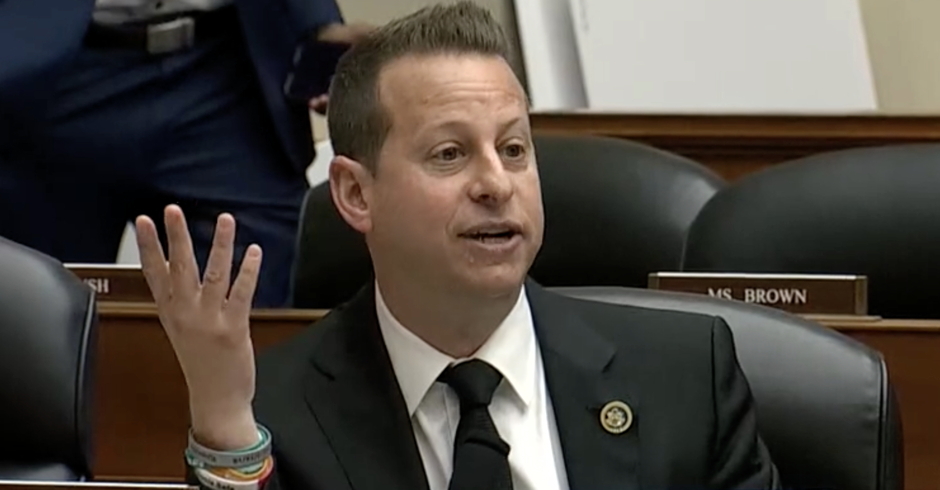
U.S. Rep. Jared Moskowitz (D-FL) is mocking House Oversight Committee Chairman Jim Comer over a CNN report revealing the embattled Kentucky Republican who has been alleging without proof President Joe Biden is the head of a vast multi-million dollar criminal bribery and influence-peddling conspiracy, has given up trying to impeach the leader of the free world.
CNN on Wednesday had reported, “after 15 months of coming up short in proving some of his biggest claims against the president, Comer recently approached one of his Republican colleagues and made a blunt admission: He was ready to be ‘done with’ the impeachment inquiry into Biden.” The news network described Chairman Comer as “frustrated” and his investigation as “at a dead end.”
One GOP lawmaker told CNN, “Comer is hoping Jesus comes so he can get out.”
“He is fed up,” the Republican added.
Despite the Chairman’s alleged remarks, “a House Oversight Committee spokesperson maintains that ‘the impeachment inquiry is ongoing and impeachment is 100% still on the table.'”
RELATED: ‘Used by the Russians’: Moskowitz Mocks Comer’s Biden Impeachment Failure
Last week, Oversight Committee Ranking Member Jamie Raskin (D-MD) got into a shouting match with Chairman Comer, with the Maryland Democrat saying, “You have not identified a single crime – what is the crime that you want to impeach Joe Biden for and keep this nonsense going?” and Comer replying, “You’re about to find out.”
Before those heated remarks, Congressman Raskin chided Comer, humorously threatening to invite Rep. Moskowitz to return to the hearing.
Congressman Moskowitz appears to be the only member of the House Oversight Committee who has ever made a motion to call for a vote on impeaching President Biden, which he did last month, although he did it to ridicule Chairman Comer.
Moskowitz: Make the motion to impeach President Biden. Go ahead…. No. Nothing. They’re never going to impeach him. It’s all fake. They’re lying to their base on Newsmax and Fox leading these people to believe that they’re going to impeach pic.twitter.com/WH375tkXtL
— Acyn (@Acyn) March 20, 2024
It appears the Moskowitz-Comer “bromance” may be over.
Wednesday afternoon Congressman Moskowitz, whose sarcasm is becoming well-known, used it to ridicule Chairman Comer.
“I was hoping our breakup would never become public,” he declared. “We had such a great thing while it lasted James. I will miss the time we spent together. I will miss our conversations. I will miss the pet names you gave me. I only wish you the best and hope you find happiness.”
Watch the video above or at this link.
READ MORE: ‘Doesn’t Care if Pregnant Women Live or Die’: Alito Slammed Over Emergency Abortion Remarks

The U.S. Supreme Court heard oral arguments in a case centered on the question, can the federal government require states with strict abortion bans to allow physicians to perform abortions in emergency situations, specifically when the woman’s health, but not her life, is in danger?
The 1986 federal Emergency Medical Treatment and Active Labor Act (EMTALA), signed into law by Republican President Ronald Reagan, says it can. The State of Idaho on Wednesday argued it cannot.
U.S. Solicitor General Elizabeth Prelogar, The Washington Post’s Kim Bellware reported, “made a clear delineation between Idaho law and what EMTALA provides.”
“In Idaho, doctors have to shut their eyes to everything except death,” Prelogar said, according to Bellware. “Whereas under EMTALA, you’re supposed to be thinking about things like, ‘Is she about to lose her fertility? Is her uterus going to become incredibly scarred because of the bleeding? Is she about to undergo the possibility of kidney failure?’ ”
READ MORE: Gag Order Breach? Trump Targeted Cohen in Taped Interview Hours Before Contempt Hearing
Attorney Imani Gandy, an award-winning journalist and Editor-at-Large for Rewire News Group, highlighted an issue central to the case.
“The issue of medical judgment vs. good faith judgment is a huge one because different states have different standards of judgment,” she writes. “If a doctor exercises their judgment, another doctor expert witness at trial could question that. That’s a BIG problem here. That’s why doctors are afraid to provide abortions. They may have an overzealous prosecutor come behind them and disagree.”
Right-wing Justice Samuel Alito appeared to draw the most fire from legal experts, as his questioning suggested “fetal personhood” should be the law, which it is not.
“Justice Alito is trying to import fetal personhood into federal statutory law by suggesting federal law might well prohibit hospitals from providing abortions as emergency stabilizing care,” observed Constitutional law professor Anthony Michael Kreis.
Paraphrasing Justice Alito, Kreis writes: “Alito: How can the federal government restrict what Idaho criminalizes simply because hospitals in Idaho have accepted federal funds?”
Appearing to answer that question, Georgia State University College of Law professor of law and Constitutional scholar Eric Segall wrote: “Our Constitution unequivocally allows the federal gov’t to offer the states money with conditions attached no matter how invasive b/c states can always say no. The conservative justices’ hostility to the spending power is based only on politics and values not text or history.”
Professor Segall also served up some of the strongest criticism of the right-wing justice.
READ MORE: ‘They Will Have Thugs?’: Lara Trump’s Claim RNC Will ‘Physically Handle the Ballots’ Stuns
He wrote that Justice Alito “is basically making it clear he doesn’t care if pregnant women live or die as long as the fetus lives.”
Earlier Wednesday morning Segall had issued a warning: “Trigger alert: In about 20 minutes several of the conservative justices are going to show very clearly that that they care much more about fetuses than women suffering major pregnancy complications which is their way of owning the libs which is grotesque.”
Later, predicting “Alito is going to dissent,” Segall wrote: “Alito is dripping arrogance and condescension…in a case involving life, death, and medical emergencies. He has no bottom.”
Taking a broader view of the case, NYU professor of law Melissa Murray issued a strong warning: “The EMTALA case, Moyle v. US, hasn’t received as much attention as the mifepristone case, but it is huge. Not only implicates access to emergency medical procedures (like abortion in cases of miscarriage), but the broader question of federal law supremacy.”
READ MORE: ‘Blood on Your Hands’: Tennessee Republicans OK Arming Teachers After Deadly School Shooting

‘They Will Have Thugs?’: Lara Trump’s Claim RNC Will ‘Physically Handle the Ballots’ Stuns

Gag Order Breach? Trump Targeted Cohen in Taped Interview Hours Before Contempt Hearing

‘Doesn’t Care if Pregnant Women Live or Die’: Alito Slammed Over Emergency Abortion Remarks

‘I Hope You Find Happiness’: Moskowitz Trolls Comer Over Impeachment Fail

‘To Do God Knows What’: Local Elections Official Reads Lara Trump the Riot Act
‘To Do God Knows What’: Local Elections Official Reads Lara Trump the Riot Act
‘I Hope You Find Happiness’: Moskowitz Trolls Comer Over Impeachment Fail
‘Doesn’t Care if Pregnant Women Live or Die’: Alito Slammed Over Emergency Abortion Remarks
Gag Order Breach? Trump Targeted Cohen in Taped Interview Hours Before Contempt Hearing
‘They Will Have Thugs?’: Lara Trump’s Claim RNC Will ‘Physically Handle the Ballots’ Stuns

 News3 days ago
‘I’m Not Suicidal’: Kari Lake Pushes Hillary Clinton Murder Conspiracy Theory

 News3 days ago
‘Old and Tired and Mad’: Trump’s Demeanor in Court Detailed by Rachel Maddow

 News3 days ago
‘Election Interference’ and ‘Corruption’: Experts Explain Trump Prosecution Opening Argument

 News2 days ago
‘Cutting Him to Shreds’: ‘Pissed’ Judge Tells Trump’s Attorney ‘You’re Losing All Credibility’

 News2 days ago
‘Blood on Your Hands’: Tennessee Republicans OK Arming Teachers After Deadly School Shooting

 News2 days ago
Biden Campaign Hammers Trump Over Infamous COVID Comment

 OPINION2 days ago
Trump Complains He’s ‘Not Allowed to Talk’ as He Gripes Live on Camera
 OPINION23 hours ago
‘They Will Have Thugs?’: Lara Trump’s Claim RNC Will ‘Physically Handle the Ballots’ Stuns