John Boehner Thinks Gay Marriage Should Be Banned Because Of Polygamy
Paul Clement, a high profile attorney hand-picked by John Boehner — who is spending 1.5 million tax dollars to defend a federal ban on gay marriage — Â is arguing DOMA must live because of polygamy.
Speaker of the U.S. House of Representatives, John Boehner, decided last year to invest $1.5 million — your tax dollars — to defend DOMA, the Defense of Marriage Act that bans the federal government from recognizing same-sex marriages, after President Obama and Attorney General Eric Holder both declared the 1996 law to be unconstitutional. Literally dozens of federal judges have weighed in since — and agreed with the President.
Speaker Boehner tasked the Bipartisan Legal Advisory Group (BLAG) to defend DOMA, and appointed a handpicked high profile private attorney, Paul Clement, to defend challenges to DOMA in federal court. Clement’s batting average for all the DOMA cases he’s defended is .000. Clement, who also famously lost the fight to strike down Obamacare, is a a former United States Solicitor General who served under President George W. Bush.
Now, Paul Clement, hand-picked by John Boehner, is arguing that DOMA must live because of polygamy.
In the heartbreaking case of Windsor v. United States, Edie Windsor, an 83-year old widow who is fighting — and has won in several federal courts — a “death tax” of $363,000 that, if the federal government recognized her legal marriage to her wife who passed away, she would not have pay. Windsor married Thea Syper two years before her death, although the couple had been together for 40 years.
“The lawyer [Paul Clement] for House Republican leaders had to reach all the way back to 1885 today when asked where the ‘traditional understanding’ of marriage could be found in federal case law — referring to a case dealing with polygamy in the Utah territory,” Chris Geidner, writing at Buzzfeed yesterday, reported on the Second Circuit Court of Appeals trial in New York:
That case, decided about polygamy in Utah before women were guaranteed the right to vote, came only 20 years after the end of the Civil War and more than 80 years before the court would strike down bans on interracial marriage. Today, it was one of the underlying arguments in House Republican leaders’ case that the Supreme Court recognizes a “traditional understanding” of marriage that the Defense of Marriage Act is seeking to uphold.
…
The arguments were at points similar to arguments heard in April before the First Circuit Court of Appeals in Boston, which determined that the law is unconstitutional. Today’s arguments, however, included an admission by Clement that if courts decide that laws targeting gays and lesbians should be viewed skeptically, like those based on race or sex, then it would be more difficult to justify DOMA.
“That said, I’ll try it,†Clement told the judges, noting that “there’s no way to preserve the definition of marriage [as one man and one woman] other than by preserving the definition. It becomes somewhat circular.â€
Geidner examines broad issues of DOMA and scrutiny — how the courts decide what standards to use in determining whether or not DOMA is unconstitutional — and concludes with this:
More than 30 years before the U.S. Constitution would be amended to prohibit voting discrimination based on sex, the Supreme Court upheld the constitutionality of a law that required those in the Utah territory to take an oath that included a statement that the male was violating bigamy or polygamy prohibitions.
The case, which cited the infamous Dred Scott Supreme Court decision declaring that slaves were not citizens under the U.S. Constitution as evidence of governmental powers in the territories, was mentioned by Clement. It’s the case, he told Judge Chester Straub, a Clinton appointee to the bench, where the Supreme Court referenced the “traditional understanding” of marriage.
The 1885 case takes a hard line on the role of marriage in the post-Civil War nation, in reference to the practice of polygamy in the Utah territory.
The court wrote that “no legislation can be supposed more wholesome and necessary in the founding of a free, self-governing commonwealth … than that which seeks to establish it on the basis of the idea of the family [is] consisting in and springing from the union for life of one man and one woman in the holy estate of matrimony.”
That definition of marriage, the court wrote in 1885, is “the sure foundation of all that is stable and noble in our civilization; the best guaranty of that reverent morality which is the source of all beneficent progress in social and political improvement.”
Steven Thrasher, writing “For Elderly Gay Widow Edith Windsor, The GOP Is All For High Taxes,” today in The Daily Beast, notes:
“When Barack Obama proved unwilling to hound an octogenarian widow for a tax bill she never should have been charged, House Speaker John Boehner proved more than willing to take up the task—even at a cost to taxpayers of far more than the money she owed.”
Death and taxes, and GOP hate and ignorance. Four things that you can aways count on.
Image circa 1877, via Wikipedia: Brigham Young’s 12 widows lament. Caricature in a newspaper about Mormon polygamy. Text: “In memoriam Brigham Young. And the place which knew him once shall know him no more.” It references the apocryphal “long bed” story (and illustration) found in chapter 15 of Mark Twain‘s 1872 book Roughing It.
Related:
Breaking: 145 House Democrats File Amicus Brief Denouncing DOMA
Breaking: DOMA Declared Unconstitutional Again — By A Bush Appointee
Fighting DOMA, Edie Windsor Now Takes Her Case To The Supreme Court
Breaking: DOMA Ruled ‘Unconstitutional’ In Lesbian Estate Tax Case

Enjoy this piece?
… then let us make a small request. The New Civil Rights Movement depends on readers like you to meet our ongoing expenses and continue producing quality progressive journalism. Three Silicon Valley giants consume 70 percent of all online advertising dollars, so we need your help to continue doing what we do.
NCRM is independent. You won’t find mainstream media bias here. From unflinching coverage of religious extremism, to spotlighting efforts to roll back our rights, NCRM continues to speak truth to power. America needs independent voices like NCRM to be sure no one is forgotten.
Every reader contribution, whatever the amount, makes a tremendous difference. Help ensure NCRM remains independent long into the future. Support progressive journalism with a one-time contribution to NCRM, or click here to become a subscriber. Thank you. Click here to donate by check.
 |

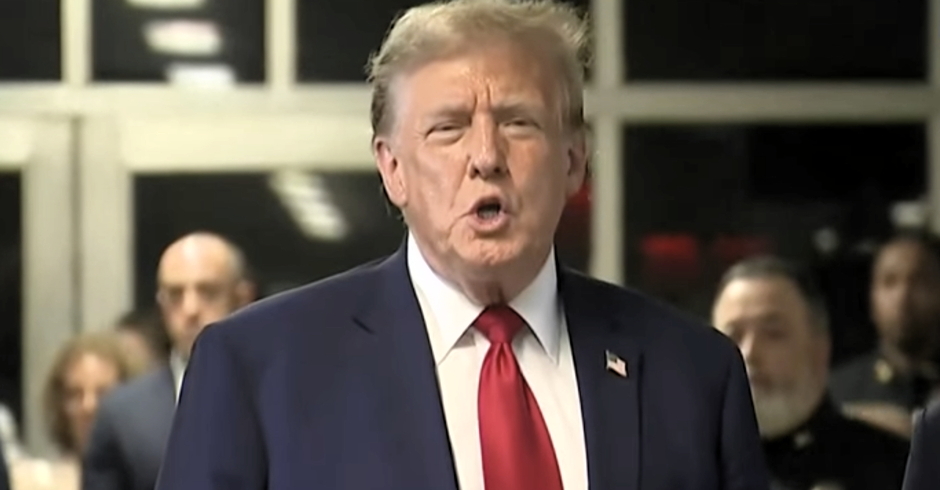
Barely hours after New York State Supreme Court Judge Juan Merchan gave Donald Trump the same set of rules requiring him to appear in court as all other criminal defendants, the ex-president’s attorney requested his client be allowed to skip trial next Thursday to attend the U.S. Supreme Court arguments on his immunity claim.
“If you do not show up there will be an arrest,” Judge Merchan had told Trump Monday at the start of his criminal trial, according to MSNBC’s Jesse Rodriguez. Trump is facing 34 felony charges for falsification of business records related to his alleged attempts to cover up hush money payments in an effort to protect his 2016 presidential campaign.
Judge Merchan had read from the same rules that apply to all defendants, but right at the end of day one of trial Trump attorney Todd Blanche made his request.
MSNBC’s Lisa Rubin reports, “after the potential jurors are gone, the fireworks start after Blanche asks Merchan to allow Trump to attend the SCOTUS argument on presidential immunity next Thursday, 4/25.”
READ MORE: ‘What Will Happen in the Situation Room?’: Trump Appearing to Sleep in Court Fuels Concerns
“The Manhattan DA’s office opposes the request, saying they have accommodated Trump enough,” MSNBC’s Katie Phang adds, citing Rubin’s reporting.
Judge Merchan “acknowledges a Supreme Court argument is a ‘big deal,’ but says that the jury’s time is a big deal too. Blanche says they don’t think they should be here at all, suggesting that the trial never should have been scheduled during campaign season.”
“That comment appeared to trigger Merchan, who asked, voice dripping with incredulity, ‘You don’t think you should be here at all?'” Rubin writes.
“He then softly asks Blanche to move along from that objection, on which he has already ruled. Merchan then got stern, ruling that Trump is not required to be at SCOTUS but is required, by law, to attend his criminal trial here.”
“Your client is a criminal defendant in New York. He is required to be here. He is not required to be in the Supreme Court. I will see him here next week,” Judge Merchan told Blanche, CBS News’ Scott MacFarlane reported.
That was not the only request Trump’s attorneys made to have their client excused from the criminal proceedings.
Lawfare managing editor Tyler McBrien reports, “Blanche says that the campaign has taken pains to schedule events on Wednesdays and asks Merchan if Trump be excused from any hearings that take place on Wednesdays, when the jury is in recess. Merchan says he will take this into consideration.”
READ MORE: ‘Scared to Death’: GOP Ex-Congressman Brings Hammer Down on ‘Weak’ Trump
Blanche also asked Judge Merchan to allow Trump to skip trial to attend his son Barron’s high school graduation. While the judge has yet to rule, Trump told reporters at the end of day one of trial, “it looks like the judge will not let me go to the graduation.”
The judge told Trump, “I cannot rule on those dates at this time.”
But Trump told reporters, “It looks like the judge isn’t going to allow me to escape this scam, it’s a scam trial.”
Watch below or at this link
.
Trump complains he won’t be able to attend his son Barron’s high school graduation because he has to attend his New York hush money trial:
“He’s very proud of the fact that he did so well and was looking forward for years to have graduation with his mother and father there.” pic.twitter.com/oM7dAo8ljv
— The Recount (@therecount) April 15, 2024
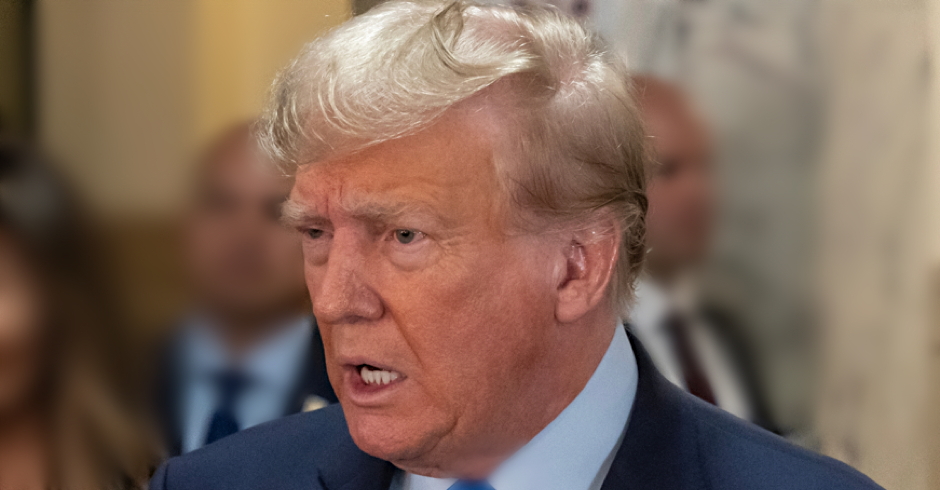
Donald Trump’s apparent sleeping in court on day one of his criminal trial for alleged business fraud related to a cover-up of “hush money” election interference has critics concerned.
While initial reactions to the news largely mocked him as “Sleepy Don,” or “Drowsy Don,” political and legal experts are wondering if the 77-year old ex-president would be able to stay awake during times of crisis, when an alert president would be critical to the nation’s security.
RIP Sleepy Joe.
Hello #DrowsyDon! pic.twitter.com/39KtsjYTOx
— Rep. Eric Swalwell (@RepSwalwell) April 15, 2024
The New York Times‘ Maggie Haberman, the longtime “Trump whisperer,” reported the ex-president “seemed alternately irritated and exhausted Monday morning,” “appeared to nod off a few times, his mouth going slack and his head drooping onto his chest.” She added the ex-president’s attorney “passed him notes for several minutes before Mr. Trump appeared to jolt awake and notice them.”
READ MORE: ‘Staged Photo Op’ of Trump With Black Chick-fil-A Patrons Was ‘True Retail Politics’ Says Fox News
Haberman followed up her Times article with a CNN appearance detailing more of what she saw. The Guardian‘s Victoria Bekiempis, MSNBC’s Katie Phang, and others also reported Trump was seen nodding off.
Critics raised concerns that question Trump’s ability to perform the duties of President.
“If Trump is too old and weak to stay awake at his own criminal trial, what do you think will happen in the Situation Room?” asked former senior advisor to President Barack Obama Dan Pfeiffer.
Philadelphia Inquirer columnist Will Bunch invoked Hillary Clinton’s famous “3 AM phone call” ad from the 2008 campaign, and wrote:
“2008: Which candidate can handle the 3 a.m. phone call?
2024: Which candidate can handle the 3 p.m. phone call?”
Several also noted that Clinton, the former U.S. Secretary of State, testified for 11 hours on live television before a congressional committee and did not fall asleep. Some also noted that President Joe Biden sat for a five-hour deposition with Special Consul Robert Hur and did not fall asleep.
READ MORE: ‘Not a Good Start’: Judge Slams Trump’s ‘Offensive’ Recusal Claims as a ‘Loose End’
Calling it “simply incredible,” professor of law, MSNBC/NBC News legal contributor and former U.S. Attorney Joyce Vance asked, “If he can’t keep his eyes open when his own liberty is at stake, why would Americans have confidence he’s capable of focus when our country’s interests require sound presidential leadership?”
MSNBC contributor Brian Tyler Cohen commented, “To be clear, ‘Sleepy Joe’ is awake and criss-crossing the country, while Trump is literally asleep at his own criminal trial.”
Former journalist Jennifer Schultz observed, “Moment of truth for all the legacy media outlets who hyped the Biden age stories. Now we have actual evidence of the other candidate falling asleep at a critical time.”
Image via Shutterstock
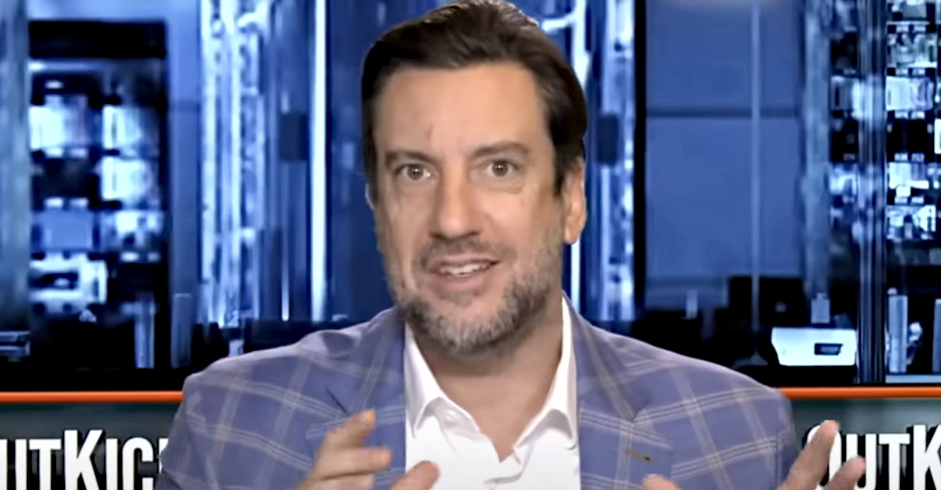
A Fox personality and Fox News contributor’s social media post on Monday is raising eyebrows, as one U.S. Congressman calls it “jury tampering” and a legal expert suggests it could be “conspiring to commit jury tampering.”
Clay Travis is an attorney and the founder of the conservative “sports and American culture” website Outkick, which was purchased by Fox Corporation in 2021.
His Fox News bio calls him “the founder of the fastest-growing national multimedia platform,” and, “One of the most electrifying and outspoken personalities in the industry,” who “provides his unfiltered opinion on the most compelling headlines throughout sports, culture, and politics.”
READ MORE: ‘Not a Good Start’: Judge Slams Trump’s ‘Offensive’ Recusal Claims as a ‘Loose End’
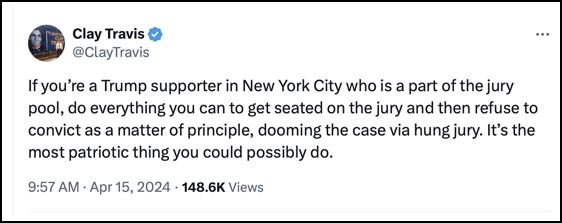
On Monday, Travis’ account on X, formerly Twitter, displayed a post that reads: “If you’re a Trump supporter in New York City who is a part of the jury pool, do everything you can to get seated on the jury and then refuse to convict as a matter of principle, dooming the case via hung jury. It’s the most patriotic thing you could possibly do.”
“Jury tampering. That’s what they do. *It’s a felony,” wrote U.S. Rep. Eric Swalwell (D-CA) in response.
National security attorney Bradley Moss weighed in, writing, “Clay is arguably conspiring to commit jury tampering here by encouraging someone to deliberately engage in jury nullification. Not a wise move by Clay.”
Former federal and state prosecutor Ron Filipkowski, now the editor-in-chief of MediasTouch, wrote simply, “This is MAGA.”
READ MORE: ‘Scared to Death’: GOP Ex-Congressman Brings Hammer Down on ‘Weak’ Trump
Sirius XM host Dean Obeidallah, also an attorney, commented, “Hoping Manhattan DA is aware of this attempted jury tampering by Fox News regular Clay Travis.” He also wrote: “This is the exact type of juror tampering I knew Trumpers would engage in. Next Clay will tell Trumpers to bribe jurors or witnesses. MAGA is a cancer!”
Travis, responding to Congressman Swalwell, denied the allegation:
“This isn’t jury tampering you imbecile. I would nullify if I were seated on this jury as a matter of principle. I think all Americans with a comprehension of basic justice should do the same.”

‘Scared to Death’: GOP Ex-Congressman Brings Hammer Down on ‘Weak’ Trump

‘Not a Good Start’: Judge Slams Trump’s ‘Offensive’ Recusal Claims as a ‘Loose End’

Fox Personality’s Tweet Called ‘Jury Tampering’ by US Congressman

‘What Will Happen in the Situation Room?’: Trump Appearing to Sleep in Court Fuels Concerns

‘Your Client Is a Criminal Defendant’: Judge Denies Trump Request to Skip Trial for SCOTUS
‘Your Client Is a Criminal Defendant’: Judge Denies Trump Request to Skip Trial for SCOTUS
‘What Will Happen in the Situation Room?’: Trump Appearing to Sleep in Court Fuels Concerns
Fox Personality’s Tweet Called ‘Jury Tampering’ by US Congressman
‘Not a Good Start’: Judge Slams Trump’s ‘Offensive’ Recusal Claims as a ‘Loose End’
‘Scared to Death’: GOP Ex-Congressman Brings Hammer Down on ‘Weak’ Trump
 News15 hours ago
‘Scared to Death’: GOP Ex-Congressman Brings Hammer Down on ‘Weak’ Trump
 News14 hours ago
‘Not a Good Start’: Judge Slams Trump’s ‘Offensive’ Recusal Claims as a ‘Loose End’
 News13 hours ago
Fox Personality’s Tweet Called ‘Jury Tampering’ by US Congressman
 News10 hours ago
‘What Will Happen in the Situation Room?’: Trump Appearing to Sleep in Court Fuels Concerns
 News8 hours ago
‘Your Client Is a Criminal Defendant’: Judge Denies Trump Request to Skip Trial for SCOTUS